dr.vision
The SMILEprocedure (Small Incision Lenticule Extraction) is a modern, minimally invasive laser eye treatment for correcting nearsightedness (myopia) and astigmatism (corneal curvature). It has been in use since 2016 and differs significantly in technique from other laser eye procedures such as LASIK and PRK.
This article is intended for patients who would like to learn about the SMILE procedure and understand what sets the SMILE procedure apart. Readers will find a factual and easy-to-understand presentation.
💡 What is SMILE?
SMILE is a minimally invasive laser procedure for correcting nearsightedness and astigmatism. A minimally invasive procedure is characterized by affecting as little tissue as possible.
📋 Key points
- SMILE is a minimally invasive laser procedure for correcting certain refractive errors.
- SMILE is particularly suitable for nearsightedness and astigmatism in suitable eyes.
- SMILE is particularly relevant for people looking for a gentle alternative to conventional laser eye procedures.
How does the SMILE procedure work?
In the SMILE procedure, a small piece of tissue is shaped inside the cornea with the laser and removed through a very small access incision.
The cornea is the transparent front surface of the eye through which light enters the eye. It contributes significantly to the refraction of light in the eye.
- A femtosecond laser (a high-precision laser with very short light pulses) shapes a precisely calculated, lens-shaped piece of tissue inside the cornea, known as a lenticule.
- The lenticule contains exactly the amount of tissue needed to correct the existing refractive error.
- The lenticule is then removed through a very small access incision, which changes the shape of the cornea so that light is correctly focused on the retina again. The retina is the light-sensitive layer at the back of the eye, on which the sharp image is meant to form.
The procedure in three steps:
- Small access incision: A very small incision is made in the cornea (usually under 4 mm).
- Formation of the lenticule: The laser shapes the lenticule inside the cornea.
- Gentle removal: The lenticule is carefully removed through the small access incision.
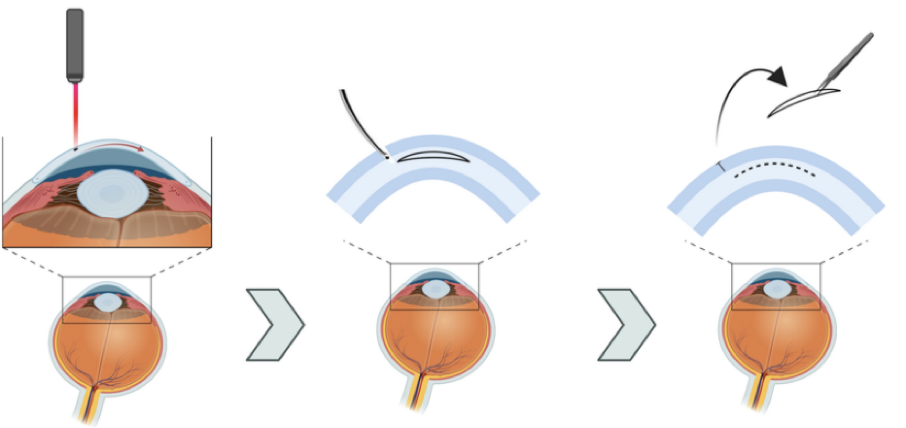
Figure 1 Schematic representation of the three steps of the SMILEprocedure
What distinguishes SMILE from alternative procedures such as LASIK and PRK?
SMILE does not require a corneal flap and works almost entirely inside the cornea.
In detail, this means:
- The corneal surface remains largely intact
- Only a very small incision is necessary, which is created not with a scalpel but with a laser
These characteristics can shorten the healing phase and reduce the risk of certain complications (including flap-related complications). SMILE can reduce the risk of disturbing visual phenomena after treatment. Some people experience disturbing visual effects after laser eye treatment, including halos around lights or glare in backlight. SMILE is associated with fewer of these effects.
Which refractive errors can be treated with SMILE?
SMILE is primarily used for the Correction of nearsightedness and astigmatism:
- Nearsightedness (Myopia): A refractive error in which distant objects appear blurry because the focal point of light lies in front of the retina
- SMILE is used for nearsighted eyes up to approx. -10 diopters (dpt), the unit of measurement for refractive errors).
- Astigmatism (Astigmatism): A refractive error in which the cornea is unevenly curved. As a result, light is refracted in a distorted way and vision appears blurry or distorted. Astigmatism can be corrected up to approx. -3 dpt.
Recently, the correction of Farsightedness has also become possible in a few specialized centers, including dr.vision.
For patients with farsightedness, near objects appear blurry because the focal point of light lies behind the retina. Distance vision is unaffected.
What is the difference between SMILE and SMILE Pro?
SMILE Pro is a technical advancement of the classic SMILE procedure:
- Shorter treatment time with the laser: The laser usage time is shortened with SMILE Pro. A shorter laser time can reduce the strain during the procedure.
- Guided centering: The laser is aligned more precisely to the individual optical center of the eye. Accurate centering is important, as deviations could affect the visual outcome.
How long does a SMILE treatment take?
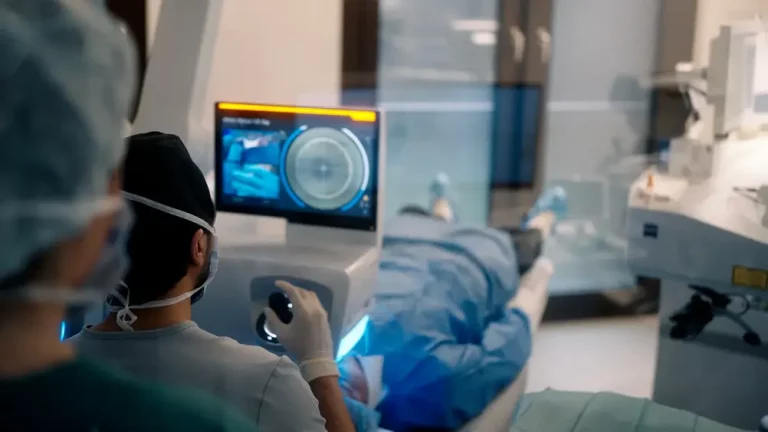
The actual laser treatment takes only a few minutes.
- Both eyes together usually take about 10 to 20 minutes treated.
- The entire stay at the practice is a little longer, as a detailed preliminary examination takes place.
How is vision immediately after SMILE treatment?
Many patients notice early on an improvement in their vision.
- Often, shortly after the procedure clearer vision is apparent.
- In the following days and weeks, vision can stabilize further.
How quickly do you recover from SMILE?
Relatively quickly. A normal daily routine is often possible again after a short time:
- Many patients feel able to resume normal activities within the first 24 hours .
- Normal activities can usually be resumed quickly.
Who is SMILE suitable for?
SMILE is suitable for adults with nearsightedness (myopia) and corneal curvature (astigmatism) who would like to be less dependent on glasses in everyday life. It is important that your eyes meet certain medical requirements. The procedure can be particularly worthwhile for people who have an increased risk of eye injuries due to their job or sports (for example, contact sports).
What else is checked during the preliminary examination?
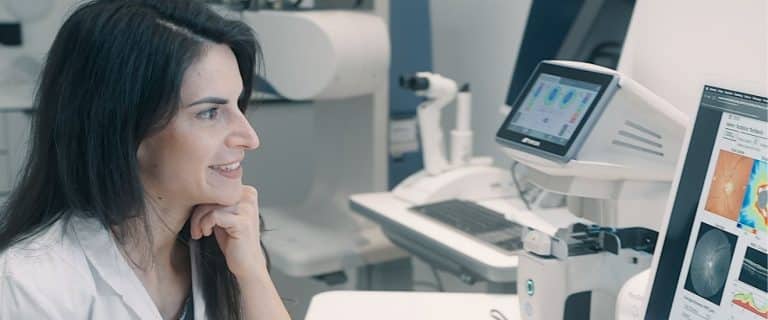
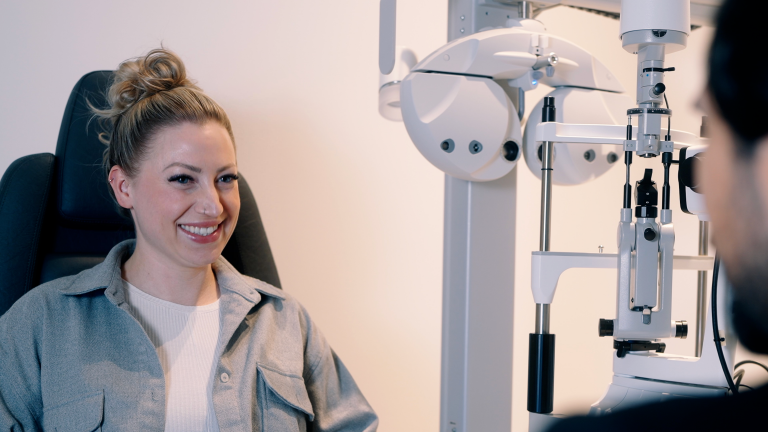
In addition to your refractive error alone, we also check other characteristics of your eyes in order to ensure the safest possible treatment.
- Stable refraction: It is important that your glasses prescription has barely changed for at least one year, apart from minor fluctuations.
- Your pupil size in low light: In dim light, your pupils should not dilate to more than about 7 mm.
- Suitable corneal thickness: The overall thickness of the cornea should be sufficient to retain enough stability even after the procedure.
Can SMILE be performed on people with dry eyes?
For patients with symptoms of dry eyes, SMILE is compared with alternative procedures such as LASIK or PRK often preferred.
The reason:
- The corneal surface remains more intact than with alternative procedures.
- The regeneration of the fine nerve fibers occurs generally faster.
If symptoms of dry eye should nevertheless occur after the procedure, they are usually milder and generally subside quickly.
Who is SMILE not suitable for?
SMILE is rather not suitable, if certain eye diseases are present or medical factors increase the risk of the treatment. SMILE is not a suitable procedure if:
- Diseases with reduced Corneal stability are present, e.g. keratoconus (progressive thinning and bulging of the cornea)
- The Cornea too thin is, in order to still be sufficiently stable after the procedure
- An uncontrolled glaucoma or active uveitis is present
- A pronounced Lens clouding (cataract) or relevant corneal scars are present
- Functional Vision in one eye only is present
- Inflammations or Infections are present in the eye
- If severe symptoms of dry eyes or pronounced ocular allergies are present
Potential reasons for exclusion that require individual assessment:
In some cases, SMILE is not generally ruled out, but a careful preliminary examination is needed to determine suitability for the procedure.
These include:
- Irregular corneal shapes
- Uncontrolled Diabetes or problems with delayed wound healing exist
- Diseases of the immune system
Situations in which SMILE is temporarily not recommended:
SMILE may also be unsuitable in particular life situations.
- Pregnancy and breastfeeding: Hormonal changes can temporarily affect your visual acuity, which is why SMILE treatment is not recommended in this life situation.
What complications can occur with the SMILE procedure?
The SMILE procedure is considered a safe laser eye procedure; potential complications are rare and mostly temporary. However, as with any medical procedure, in rare cases Complications may occur.
Most of the complications described are mild, temporary and easily treatable. Serious or permanent impairments are rare.
Possible complications at a glance:
- Temporary fluctuations in vision or sensitivity to glare
- Feeling of dryness in the eyes
- Superficial irritation of the cornea
- Rarely, inflammatory reactions or infections
Some complications are related to the technical performance of the procedure and occur mainly when the surgeon has limited experience.
What is normal after SMILE and when you should contact a doctor
✅ What is normal after SMILE
- Slightly blurred vision in the first hours or days
- Increased sensitivity to light
- Foreign body sensation or feeling of dryness
- Short-term fluctuations in vision
- Slightly watery eyes
- Mild pressure or itching
These changes are often part of the normal healing process and usually subside within a few days.
⚠️ When you should contact your doctor
- If your visual acuity suddenly becomes significantly worse
- In case of severe or increasing pain
- In case of persistent redness or swelling
- If glare or light effects increase
- Excessive tearing
Checklist: Aftercare following SMILE
- Do not rub your eyes (approx. 1–2 weeks)
- Use the prescribed eye drops regularly
- Keep water, shampoo and soap out of your eyes
- Wear sunglasses outdoors
- No eye makeup, sauna or swimming pool (approx. 2 weeks)
- Sports and driving only after medical clearance
What can SMILE not do?
SMILE does not treat eye diseases, does not prevent age-related changes of the eye and does not guarantee permanently perfect vision.
Even after a successful SMILE treatment, your vision may change over the course of your life.
Helpful videos about SMILE
The day of surgery: the process step by step
Costs: What does insurance cover?
FAQ – Frequently asked questions about the SMILE procedure
How safe is the SMILE procedure?
SMILE is considered a safe procedure. Because no corneal flap is created, the risk of flap-related complications, as can occur with LASIK, is eliminated. This contributes to greater stability of the cornea. Studies show that SMILE has a very low complication rate. The biomechanical stability of the cornea is better preserved than with LASIK, as the surface remains largely intact. The procedure has been used successfully worldwide for over 10 years, with millions of treatments performed. The most common side effects are temporary dry eyes and slight fluctuations in vision during the first few days, which usually subside quickly. Serious complications such as infections are extremely rare (under 0.1%). At Dr. Vision, we minimize risks even further through state-of-the-art technology and the many years of experience of Prof. Dr. Shajari.
Which refractive errors can be corrected with SMILE?
SMILE can be used to correct myopia (nearsightedness) and astigmatism (corneal curvature). Correction of hyperopia (farsightedness) is now also possible at some vision centers. The treatment range for nearsightedness is typically between -0.5 and -10 diopters. For astigmatism, up to -3 diopters can be corrected. The combination of nearsightedness and astigmatism can also be treated. At Dr. Vision, we are among the first users of the SMILE Pro procedure, which also enables the correction of farsightedness. Important: Not everyone with nearsightedness is automatically suitable for SMILE. Corneal thickness, corneal shape and other individual factors play a decisive role. A comprehensive preliminary examination is necessary to determine suitability.
Is there an age limit for SMILE?
The procedure is generally used for people between the ages of 18 and 40. Whether treatment is possible is assessed individually on the basis of various preliminary examinations. Minimum age 18 years: Eye growth should be complete and your vision values stable. Flexible upper age limit: Patients over 40 can in principle also be suitable for SMILE if they do not have age-related farsightedness (presbyopia) or if this is taken into account separately. From around the age of 45, most people begin to develop age-related farsightedness, which SMILE cannot correct. In this case, other procedures such as Presbyond (multifocal laser treatment) or a refractive lens exchange may be more suitable. The decision ultimately depends on the health of your eyes, the stability of your vision values and your personal goals.
Is SMILE a permanent treatment?
SMILE is considered a treatment for the permanent correction of refractive errors; however, studies are currently investigating whether reversing the procedure could be possible if needed. SMILE does not prevent age-related changes of the eye. The change in the shape of the cornea achieved by SMILE is permanent and stable. The corrected visual acuity generally remains. However: the natural aging of the eye continues. From about the age of 45, presbyopia (age-related farsightedness) develops, which may make reading glasses necessary – even after successful SMILE treatment. Very rarely, a slight regression can occur, in which vision worsens minimally. In such cases, a follow-up correction is often possible. Interesting: Unlike with LASIK, research is being done on whether SMILE lenticules (the removed pieces of tissue) could possibly be reinserted in order to reverse the procedure. However, this is still experimental.
Is there a risk of acute and chronic infections after the procedure?
Strict hygiene measures and infection control protocols are observed. The use of disposable materials and following clear guidelines to prevent reuse help to minimize the risk of infection. The risk of infection with SMILE is extremely low, at below 0.1% (fewer than 1 in 1000 cases). Acute infections usually occur in the first few days after the surgery and can be recognized by redness, pain and reduced vision. They are treated with antibiotic eye drops and usually heal without any lasting effects. Chronic infections are even rarer. Preventive measures: All instruments are sterilized or are disposable items, the surgical area is disinfected, antibiotic eye drops are administered prophylactically, and strict aftercare instructions (do not rub your eyes, no water in the eye) must be followed. At Dr. Vision, we follow the highest hygiene standards in line with international guidelines.
When should contact lenses be removed before the procedure?
Soft contact lenses should no longer be worn three to four days before the preliminary examination and the procedure. Rigid gas-permeable (RGP/semi-soft) contact lenses should be discontinued about three weeks beforehand. The reason: contact lenses can temporarily change the shape of the cornea. These deformations must fully subside so that the natural shape of the cornea can be measured at the preliminary examination. Only then can the treatment be planned precisely. Detailed recommendations: Soft contact lenses (daily/monthly): 3-4 days without lenses before the preliminary examination and surgery. Rigid/hard contact lenses (RGP): 3 weeks without lenses. Orthokeratology lenses (night lenses): 4-6 weeks without lenses. In the meantime, you should wear your glasses. If you do not have up-to-date glasses, a temporary pair can be prescribed. Observing this lens-free period is crucial for the success of the treatment.
Is a follow-up treatment possible after SMILE?
Yes, if a follow-up correction is required, it can be performed, depending on the findings, using a suitable procedure, for example LASIK or PRK. Important to know: A repeat SMILE treatment is technically not possible, because the tissue inside the cornea has already been removed. Follow-up corrections are rarely necessary with SMILE – the precision is over 95%. If a follow-up correction is nevertheless needed, there are two options: PRK (surface treatment) is the most common choice after SMILE, as it does not require a flap and works well. LASIK is also possible, but requires careful planning, as a flap has to be created. Requirements for follow-up corrections: stable vision values (wait at least 3-6 months after SMILE), sufficient corneal thickness for further treatment, and the deviation should be at least 0.5-1.0 diopters. At dr. vision, we carry out a thorough analysis to determine the best follow-up correction option.
For dr.vision belongs Prof. Dr. Mehdi Shajari is one of the leading SMILE experts in Germany and offers both classic SMILE and SMILE pro. Make an appointment for a comprehensive preliminary examination.
References
- American Academy of Ophthalmology. (2025). Astigmatism. https://www.aao.org/eye-health/diseases/what-is-astigmatism
- American Academy of Ophthalmology. (2025). Myopia (nearsightedness). https://www.aao.org/eye-health/diseases/myopia-nearsightedness
- Carl Zeiss Vision GmbH. SMILE laser eye surgery. https://www.zeiss.de/vision-care/augenoperationen
- Moshirfar, M., Somani, S. N., & Patel, B. C. (2024). Small incision lenticule extraction. StatPearls. https://www.ncbi.nlm.nih.gov/books/
- Zhu, X., et al. (2017). Comparison of postoperative visual quality after SMILE and LASEK for high myopia. PloS one, 12(8), e0182251.