 dr.vision
Does the insurer pay?
No. According to the G-BA directive, refractive eye surgery is excluded from statutory health insurance benefits, even for high values.
Why notStart here
What suits you?
Find out in 2 minutes which procedure suits your eyes.
Start the Suitability CheckOr by age:
< 45yearsGet rid of glasses & contact lenses 45–64yearsGet rid of reading glasses 65+yearsCataract & glasses-free★★★★★ 5.0 · 376 Google reviews · 20,000+ procedures
Decide well
What you should know beforehand.
Who operates?Prof. Dr. Mehdi ShajariFOCUS Top Doctor · operates on every patient personally What does it cost?Laser from €3,498 · Lenses from €6,886Prices for both eyes Is it safe?Safety & risks When will I be fit again?Work, sports, driving Would you rather read in peace first?Decision Guide Freedom from GlassesProcedures
Laser or lens?
Laser eye surgery
SMILE ProSmartSightFemto-LASIKTrans-PRKPRKPresbyond (laser away your reading glasses)All laser procedures at a glanceLaser procedures compared ›Lens surgery
ICLLens exchange (reading glasses)Cataract surgery with premium lensLens types: trifocal, EDOF, toricLens types compared ›Start here
Something wrong with your eyes?
A thorough eye check-up with us clarifies what is behind it.
Book an eye check-up★★★★★ 5.0 · 376 Google reviews
Laser eye surgery health insurance
Does the health insurer pay for laser eye surgery? Honestly: no.
Statutory health insurers do not pay for laser eye surgery; as a private practice, we treat you as a self-paying patient. At dr.vision, laser eye surgery costs from €3,498 for both eyes as a guide price, with 12 months interest-free on request. Supplemental insurance or taxes can cover part of it.

 12× FOCUSTop Doctor
No. Under the Richtlinie Methoden vertragsärztliche Versorgung of the Federal Joint Committee (Anlage II Nr. 13), “procedures of refractive eye surgery” may not be provided at the expense of statutory health insurers. This applies to SMILE, LASIK and PRK. For the ICL, the Federal Social Court likewise denied an entitlement, because the G-BA did not recommend it as a new method. Real exceptions exist only for treatments of corneal diseases, not for nearsightedness or farsightedness. At dr.vision, patients with statutory health insurance pay themselves, from €3,498 for both eyes, can finance with 0% over 12 months and, where applicable, claim the costs for tax purposes.
Sources: G-BA, MVV-RL Anlage II Nr. 13 (last amended June 18, 2026, in force since September 9, 2026); BSG, judgment of May 5, 2009, B 1 KR 15/08 R. Medically reviewed by Prof. Dr. Mehdi Shajari, specialist in ophthalmology. General information, not tax or legal advice. As of November 2026. Laws, forms and the practice of the authorities may change. Clarify your case with your tax advisor or your insurer.
376 reviews. Average 5.0.
376 Google reviews give dr.vision an average of 5.0 out of 5 stars. dr.vision does not check whether Google reviews come from treated patients.
“I am a statutory health insurance patient. I was welcomed by very friendly staff and, without an appointment, I was able to get immediate treatment.”
“Very friendly already at registration, and also at the appointment I was greeted and treated very courteously and kindly.”
“Since I came as a self-paying patient, Dr. Shajari advised me on which examinations are necessary for my complaints and which I do not need.”
“Both the examination and the final conversation were very thorough and competent. I can therefore recommend this practice without reservation.”
In five answers.
For everyone who has two minutes. Each answer leads to the detailed chapter.
No. According to the G-BA directive, refractive eye surgery is excluded from statutory health insurance benefits, even for high values.
Why notOnly for the treatment of corneal diseases (PTK), not for refractive error. The optional cost-reimbursement plan does not help either.
Exceptions explainedFrom €3,498 (PRK/Trans-PRK) to €5,198 (SMILE Pro, SmartSight) for both eyes, including pre-operative examination and aftercare, on request 0% over 12 months.
Prices and installmentsOften, if you take it out before the treatment is recommended or planned. Usually a fixed subsidy, often with a waiting period.
ChecklistMedical costs you bear yourself may be deductible as extraordinary expenses, to the extent they exceed the reasonable burden.
Briefly explainedBecause the G-BA has excluded it.
What statutory health insurance pays is determined by the Federal Joint Committee (G-BA). In the Richtlinie Methoden vertragsärztliche Versorgung, in Anlage II, number 13, it lists the “procedures of refractive eye surgery” as methods that may not be provided at the expense of the health insurers. The directive itself gives no reason. The entry comes from an earlier list of non-recognized treatment methods.
| Basis | What it says | Consequence for you |
|---|---|---|
| G-BA, MVV-RL Anlage II Nr. 13 | “Procedures of refractive eye surgery” may not be provided as a contract-physician service at the expense of the health insurers. | No insurance coverage for SMILE, LASIK and PRK to correct refractive error. |
| BSG, judgment of May 5, 2009, B 1 KR 15/08 R | No entitlement to cost coverage for a toric ICL; a cost reimbursement does not go further than the entitlement to benefits in kind. | The insurer does not pay for lens implants for freedom from glasses either. |
| § 33 SGB V (visual aids) | Adults receive visual aids only in cases of severe visual impairment or more than 6 D (nearsightedness/farsightedness) or 4 D (astigmatism); no frame. | The glasses subsidy cannot be used for laser surgery. |
| § 13 para. 2 SGB V (cost reimbursement) | Reimbursement at most up to the amount of the remuneration that the insurer would bear as a benefit in kind. | With €0 benefit in kind, the reimbursement is also €0. |
Richtlinie Methoden vertragsärztliche Versorgung, last amended June 18, 2026, in force since September 9, 2026, g-ba.de, retrieved November 15, 2026. No legal advice.
Glasses yes, laser no.
The insurer covers examination and treatment of eye diseases, cataract surgery with a standard lens and, for adults, a subsidy for eyeglass lenses only with more than 6 D, more than 4 D astigmatism or severe visual impairment. Everything that serves freedom from glasses is paid by patients with statutory health insurance themselves: laser eye surgery, ICL, lens exchange without cataract, Presbyond and premium lenses.
| Service | In insurance-accredited practices | At dr.vision (private practice) |
|---|---|---|
| Laser eye surgery (SMILE Pro, Femto-LASIK, Trans-PRK) | ✗ excluded (G-BA Anlage II Nr. 13) | Self-paying patient · €3,498 – €5,198 |
| ICL for high nearsightedness | ✗ excluded (BSG B 1 KR 15/08 R) | Self-paying patient · from €6,886 |
| Presbyond / lens exchange against reading glasses | ✗ excluded | Self-paying patient · €6,398 / from €6,998 |
| Cataract surgery with a standard lens | ✓ covered by insurance | Self-paying patient · €6,998 with monofocal lens |
| Premium lens (EDOF, trifocal) for cataract | Surgery covered by insurer, extra lens costs yourself | Self-paying patient · €7,242 / €7,876 |
| Glasses (lenses) for adults | only > 6 D or > 4 D astigmatism or severe visual impairment; no frame | – |
| Contact lenses | only in medically compelling exceptional cases | – |
| PTK (laser for corneal disease) | ✓ for erosion, scars, dystrophy and others | Self-paying under the GOÄ |
| Examination for symptoms, glaucoma therapy | ✓ covered by insurance | Self-paying patient under the German fee schedule for physicians (GOÄ) · Ophthalmology costs |
| Glaucoma screening without suspicion, OCT preventive care | usually IGeL (individual health services, self-pay) | Self-paying under the GOÄ |
Sources: G-BA MVV-RL Anlagen I und II; § 33 SGB V; Verbraucherzentrale „Grauer Star: Kostentransparenz vor der OP“ (April 28, 2026) and „Neue Brille? Krankenkasse zahlt nur in Ausnahmefällen“. Prices: dr.vision guide prices for both eyes under GOÄ.
For refractive error: no.
For the correction of nearsightedness, farsightedness or astigmatism, there is no exception, not even for high diopters, contact lens intolerance or professional reasons. The excimer laser is covered by statutory health insurance only as phototherapeutic keratectomy (PTK) for certain corneal diseases. Many guides promise “exceptions in individual cases”; we have not found a reliable source for this.
Even above −8 D, laser eye surgery or ICL remains excluded; in 2009 the BSG denied an entitlement to an ICL (B 1 KR 15/08 R). You may then receive a glasses subsidy.
Does not establish an entitlement to laser surgery. In compelling cases, the insurer can subsidize contact lenses or glasses.
Professional reasons do not make laser eye surgery a service covered by statutory health insurance. What applies to individual professions: Work and sports.
Reimburses only services from the insurer's benefits catalog. Laser eye surgery is not part of it, so €0.
Laser to treat recurrent corneal erosion, superficial scars, dystrophies or degenerations is covered by insurance under narrow conditions, for example when other treatments have not helped.
If an eye injury is the result of a work accident, the employers' liability insurance association (Berufsgenossenschaft) is responsible; whether it covers a refractive correction is decided in each individual case.
Lawsuits seeking coverage of costs for laser eye surgery or phakic lenses have, as a rule, failed in the social courts so far, because the G-BA (Federal Joint Committee) has excluded refractive eye surgery and the health insurer is bound by that. In 2009, the Federal Social Court did not see an entitlement even for a toric ICL (B 1 KR 15/08 R). We therefore do not advise applying for cost coverage; it is better to plan with supplementary insurance, financing and tax.
Private insurers often reimburse laser eye surgery, but check the eyes when the contract is concluded: for higher diopters, many require a medical certificate or a risk surcharge, and a treatment that is already planned is usually excluded. Switching only because of the procedure is therefore rarely worthwhile. In any case, generally only self-employed people, civil servants and employees with an income above the compulsory insurance threshold can switch to private health insurance. What privately insured patients should note: Private health insurance.
Yes. As a self-paying patient, with transparent costs.
Yes. dr.vision is a private practice without a statutory insurance license; patients with statutory health insurance are self-paying patients with us and are treated exactly like those with private health insurance. In advance, you receive a written cost estimate based on the GOÄ (German fee schedule for physicians) and afterward an invoice that you can use for tax purposes or supplementary insurance. About 4 in 10 of our patients come from more than 150 km away.
After the pre-operative examination, in writing, itemized according to the GOÄ. Only then do you decide.
No difference between patients with statutory and private health insurance: the same surgeon, the same equipment, the same aftercare.
The conversation about freedom from glasses is free of charge. The pre-operative examination is included in the guide price; without a procedure, it is billed separately.
We bill examinations under the German fee schedule for physicians (GOÄ), with cost information in advance. What does a private eye doctor cost?
Especially if you take it out early.
Supplementary eye insurance for laser eye surgery usually pays a fixed subsidy, not the full costs of €3,498 to €5,198; waiting periods often apply, and benefits are limited in the first contract years. This makes sense mainly if you plan the procedure only in a few years. If the treatment has already been recommended or planned, it is generally excluded from coverage.
| Item | What to look for | Why it matters |
|---|---|---|
| Subsidy for laser eye surgery | Fixed amount per eye or a percentage, one-time or recurring | Determines how much of €3,498 – €5,198 remains |
| Waiting period | Months until the first benefit | If you want to have surgery soon, you often get nothing |
| Benefit scale | Limited reimbursement in the first years of the contract | Full benefit often only after several years |
| Ongoing or recommended treatment | Usually excluded | Take out the policy first, then plan the pre-operative examination |
| Procedures | Only LASIK, or also SMILE, PRK, ICL, lens? | Some plans name individual procedures |
| Premiums over the years | Total of the premiums until the planned surgery | Subsidy minus premiums gives the real benefit |
General features of supplementary eye plans; specific amounts are in your plan's terms. We do not recommend any particular insurance.
One guide price. Both eyes. Everything included.
Patients with statutory health insurance pay the same guide price at dr.vision as everyone: €3,498 (PRK/Trans-PRK), €4,298 (Femto-LASIK) or €5,198 (SMILE Pro, SmartSight) for both eyes, including pre-operative examination, the procedure by Prof. Dr. Mehdi Shajari and aftercare. With 0% over 12 months, that is from €433 a month for SMILE Pro; through medipay, up to 72 months are possible (fixed borrowing rate 9.49% p.a., 9.90% effective annual interest rate)*.
| Procedures | guide price, both eyes | Insurer's share | 0% · 12 months |
|---|---|---|---|
| Trans-PRK | €3,498 | €0 | €292 |
| Femto-LASIK | €4,298 | €0 | €358 |
| SMILE Pro | €5,198 | €0 | €433 |
| Presbyond | €6,398 | €0 | €533 |
| ICL | from €6,886 | €0 | €574 |
| Lens exchange (monofocal) | from €6,998 | €0 | from €583 |
Calculated (guide price ÷ 12). The written cost estimate after the pre-operative examination is binding.
0% over 12 months directly with dr.vision or 24 to 72 months through medipay. * Representative example: €5,198 net loan amount · 72 months · fixed borrowing rate 9.49% p.a. · 9.90% effective annual interest rate · monthly installment €94.97 · total amount €6,837.84 · via medipay. Example 0% over 12 months directly with dr.vision: €5,198 cash price · no down payment · fixed borrowing rate 0% p.a. · 0% effective annual interest rate · monthly installment €433.17, last installment €433.13 · total amount €5,198. Financing
Medical costs that you bear yourself may be deductible as extraordinary expenses under § 33 EStG, to the extent they exceed your reasonable burden (1 to 7% of income, depending on income and family). Calculation examples by tax rate: Taxes
Anyone who wears contact lenses daily pays for lenses, care products and spare glasses over the years. The calculation over ten years with your values: Laser eye surgery or contact lenses
Honestly: the statutory-insurance practice is often enough.
Cataract surgery with a standard lens (monofocal lens) is covered by statutory health insurance. As an outpatient, you pay no co-payment for it in statutory-insurance practices and hospitals. At dr.vision, as a private practice, you bear the costs yourself: €6,998 for both eyes with a monofocal lens. Patients with statutory health insurance come to us mainly when they want a premium lens for more freedom from glasses or value having Prof. Dr. Mehdi Shajari operate personally.
Covered by statutory insurance, outpatient without co-payment
Additional costs of the lens and extra services paid by you (often through an additional-cost agreement)
Parts such as optical biometry or OCT often as a self-pay service
depends on the facility
€6,998 for both eyes, self-paying
EDOF €7,242, trifocal €7,876 for both eyes, everything included
Included in the guide price, optical biometry
Prof. Dr. Mehdi Shajari personally, numerous publications on freedom from glasses, teaching and training of several colleagues in this field
What the insurance pays exactly for cataract: Cataract surgery costs · What does lens surgery cost?
Four steps, no surprises.
From the first conversation to the invoice, you know at every step what it costs: free initial consultation, cost estimate after the pre-operative examination, decision in your own time, invoice according to the GOÄ. The informed-consent discussion takes place at least 24 hours before the procedure.
A conversation about freedom from glasses at the practice. Patient Care answers questions in advance by phone. You learn which procedure probably suits you and what it costs.
All measurements, the doctor's recommendation and a written cost estimate according to the GOÄ.
Pay once, 0% over 12 months, or installments through medipay. Ask your supplementary insurer beforehand.
Procedure by Prof. Dr. Mehdi Shajari, aftercare included. The invoice according to the GOÄ serves as proof for tax purposes and supplementary insurance.

You are not alone
Questions about costs and process? Patient Care: 069 509 586 770 · available 24 hours

For one surgeon. For both eyes.
More than 20,000 procedures by Prof. Dr. Mehdi Shajari with a 99.9% safety rate, 5.0 stars from 376 Google reviews. And a Patient Care team that knows you from the first call to the last follow-up check.
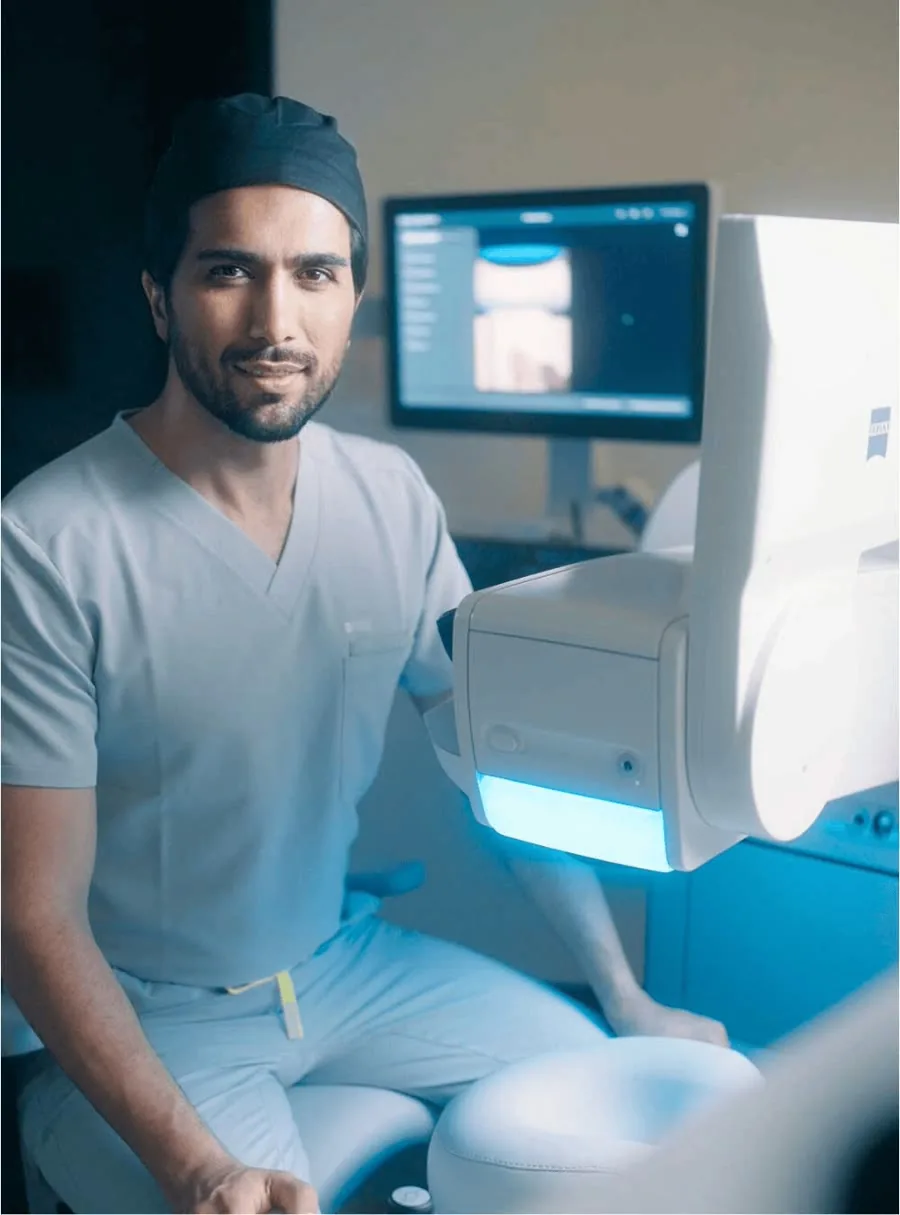
Every procedure: Prof. Dr. Mehdi Shajari. Personally.
Specialist physician and professor of ophthalmology (German title: außerplanmäßiger Professor), more than 80 publications on lens and corneal surgery, 12× FOCUS Top Doctor. The price includes that he personally examines and operates on you, not a changing team.
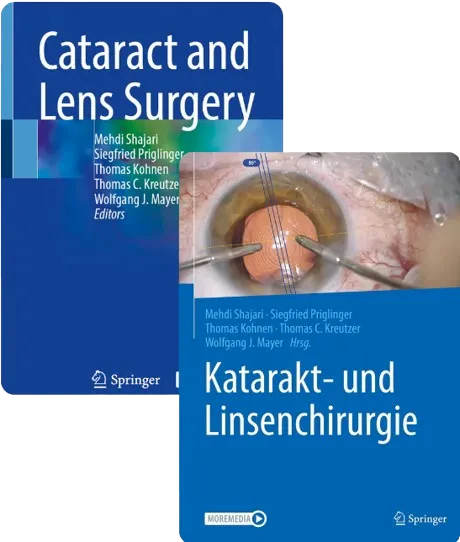
Prof. Dr. Mehdi Shajari has published numerous papers on freedom from glasses, teaches, and has trained several colleagues in this field.
Still have questions as a patient with statutory health insurance?
“These are the questions from patients with statutory health insurance that I hear most often on the phone. Here are the answers.” Jana, Patient Care
No. The Federal Joint Committee (Gemeinsamer Bundesausschuss) has listed “procedures of refractive eye surgery” in Annex II No. 13 of the Methods Guideline for Statutory-Insured Outpatient Care as methods that may not be provided at the expense of the health insurers. This applies to SMILE, LASIK and PRK. The insurer does not pay for the ICL either; the Federal Social Court denied an entitlement (B 1 KR 15/08 R).
No, not even for very high values. In 2009, the Federal Social Court did not see an entitlement even for a toric ICL (B 1 KR 15/08 R). However, with more than 6 D of nearsightedness or farsightedness or more than 4 D of astigmatism, adults are entitled to a subsidy for eyeglass lenses.
No. The entitlement to visual aids under § 33 SGB V covers eyeglass lenses or, in exceptional cases, contact lenses, not surgery. It cannot be credited toward laser eye surgery.
No. Even with cost reimbursement, whether chosen outright or as an optional plan, the insurer only reimburses services from its benefit catalog. Laser eye surgery is not part of it, so the reimbursement remains €0.
When it treats a disease of the cornea and does not correct a refractive error: phototherapeutic keratectomy (PTK) is covered by statutory insurance under narrow conditions for recurrent corneal erosion, superficial scars, dystrophies, degenerations and irregularities.
The same guide price as for everyone: €3,498 (PRK/Trans-PRK), €4,298 (Femto-LASIK) or €5,198 (SMILE Pro, SmartSight) for both eyes, including pre-operative examination, procedure and aftercare. With 0% over 12 months, you pay from €433 per month for SMILE Pro.
Illness-related costs that you bear yourself can be deductible under § 33 EStG as extraordinary expenses, insofar as they exceed your reasonable burden; depending on income and family status, this is between 1 and 7% of income. We do not give tax advice; calculation examples are on the Tax page.
Especially if you plan the procedure only in a few years. Supplementary plans usually pay a fixed subsidy, often with a waiting period and limited benefits in the first years; treatment that has already been recommended or planned is generally excluded.
Yes. dr.vision is a private practice without a statutory insurance license; patients with statutory health insurance are self-paying patients and are treated exactly like those with private health insurance. In advance, you receive a written cost estimate according to the GOÄ.
Generally not. Cataract surgery with a standard lens is covered by statutory insurance in statutory-insurance practices and hospitals. At dr.vision, as a private practice, you pay yourself: €6,998 for both eyes with a monofocal lens. In the initial consultation, we will tell you honestly if statutory-insurance care is enough for you.
After SMILE Pro and Femto-LASIK, most people are able to work again after 1 to 2 days; after Trans-PRK, it takes a few days longer. Whether a certificate of incapacity for work is issued is decided by the doctor in each individual case; many people plan vacation days.
The initial consultation about freedom from glasses is free of charge. The detailed pre-operative examination is included in the guide price of the procedure; without a procedure, it is billed separately. You then receive the cost estimate in writing.
Medically reviewed by Prof. Dr. Mehdi Shajari · As of November 2026 · General information, not tax or legal advice
Everything to read at home, without insurance jargon.
Arrives by e-mail in about 60 seconds. No newsletter, just the document and, if you wish, a follow-up from Patient Care. Privacy policy
How would you like to continue?
Book the free initial consultation on freedom from glasses online or call. After the pre-operative examination with Prof. Dr. Mehdi Shajari, you receive a written recommendation and a cost estimate under the German fee schedule for physicians (GOÄ); only then do you decide.
In Frankfurt, Junghofstraße 16 · Free initial consultation, written cost estimate
Our locations.
 Opening hours
Junghofstraße 16, 60311 Frankfurt am Main
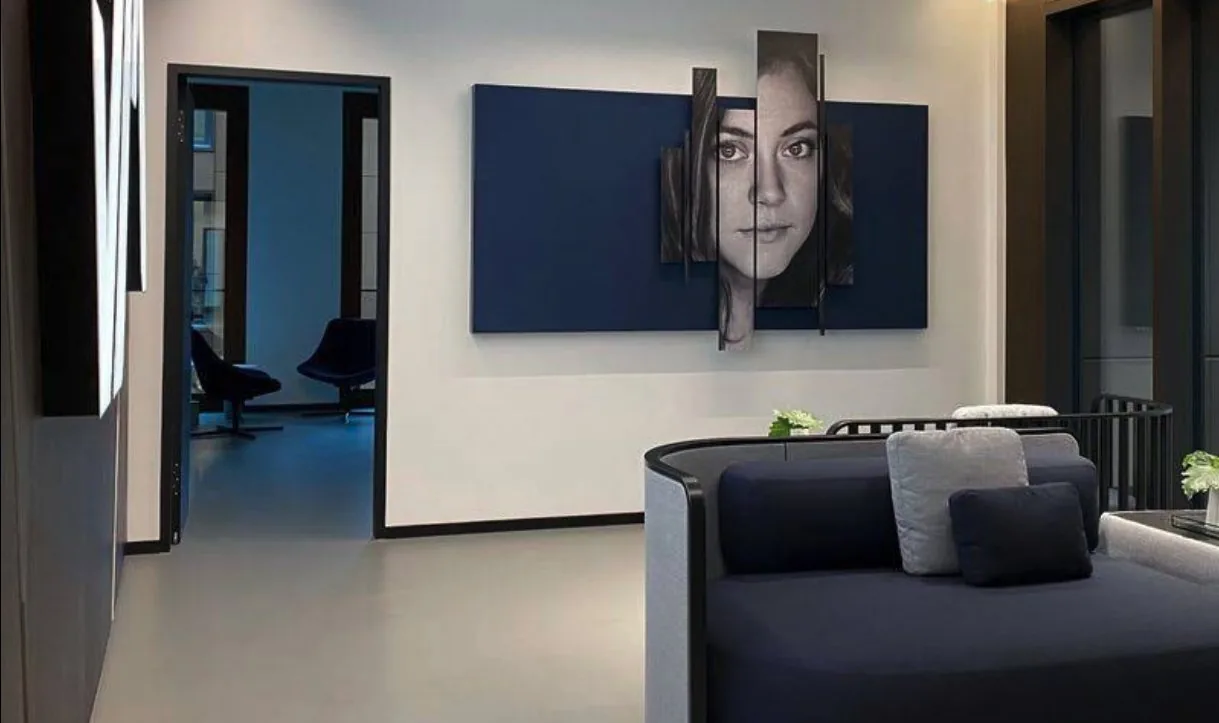 Opening 2027
Breite Straße 69, 40213 Düsseldorf (in the Neuer Stahlhof, corner of Graf-Adolf-Platz)
Until opening: preliminary talk in Frankfurt, Patient Care plans your travel.
Plan route Opening 2027
Lautenschlagerstraße 23, 70173 Stuttgart (2nd floor, step-free access)
Until opening: preliminary talk in Frankfurt, Patient Care plans your travel.
Plan route