 dr.vision
0
Dilating drops for the ultra-widefield retina image. Usually you may drive yourself afterward.
Start here
What suits you?
Find out in 2 minutes which procedure suits your eyes.
Start the Suitability CheckOr by age:
< 45yearsGet rid of glasses & contact lenses 45–64yearsGet rid of reading glasses 65+yearsCataract & glasses-free★★★★★ 5.0 · 376 Google reviews · 20,000+ procedures
Decide well
What you should know beforehand.
Who operates?Prof. Dr. Mehdi ShajariFOCUS Top Doctor · operates on every patient personally What does it cost?Laser from €3,498 · Lenses from €6,886Prices for both eyes Is it safe?Safety & risks When will I be fit again?Work, sports, driving Would you rather read in peace first?Decision Guide Freedom from GlassesProcedures
Laser or lens?
Laser eye surgery
SMILE ProSmartSightFemto-LASIKTrans-PRKPRKPresbyond (laser away your reading glasses)All laser procedures at a glanceLaser procedures compared ›Lens surgery
ICLLens exchange (reading glasses)Cataract surgery with premium lensLens types: trifocal, EDOF, toricLens types compared ›Start here
Something wrong with your eyes?
A thorough eye check-up with us clarifies what is behind it.
Book an eye check-up★★★★★ 5.0 · 376 Google reviews
Eye check-up · Eye preventive care in Frankfurt
See well. And know that it stays that way.
Many eye diseases do not hurt for a long time. The check-up finds them before you notice anything: 8 measurements in around 60 minutes, from visual acuity to the OCT of the retina, usually without dilating drops. Appointment usually within 24 to 48 hours, also evenings and Saturdays.
 12× FOCUSTop Doctor
The eye check-up finds eye diseases before you notice anything.
0
Dilating drops for the ultra-widefield retina image. Usually you may drive yourself afterward.
from 40
the professional societies recommend a look at the optic nerve, earlier if you are at risk.
8
Measurements in one appointment, from visual acuity to the OCT of the retina.
~60 min
from reception to the findings talk, without pain, without injections.
GOÄ
Private health insurance: billing under the GOÄ through your insurer. Statutory health insurance or self-paying: from €120. Costs always in advance.
376 reviews. Average 5.0.
I was at Prof. Dr. Shajari's today for the first time and was warmly welcomed right away. The convincing first impression lasted throughout the entire appointment. Prof. Shajari took a lot of time, examined my eyes thoroughly with state-of-the-art devices and communicated the result to me empathetically and in an easily understandable way. I am very happy to have found such a trustworthy eye doctor.
I am simply incredibly enthusiastic about this practice! From booking the appointment to the examination, everything simply fits here. The whole team is super professional and takes time, Professor Shajari is a very empathetic and likable doctor who takes his time, and you can tell he is truly an expert. He listened to my problem and then images of my eye were taken with many modern devices. He then showed me the images on a huge screen and explained the problem. Then he described the different approaches to a solution and what he would recommend to me (and in a language that non-physicians understand too :)). I felt super well cared for and can recommend this practice and Professor Shajari without reservation! Thank you so much for everything!
Very competent doctor who takes a lot of time and carries out all examinations carefully! The practice is furnished in a top-modern way and online appointments can be arranged easily and quickly. Another plus is the long opening hours, also in the evening and on weekends. Great!
I found Prof. Shajari very competent and obliging. The practice staff are all very friendly and helpful. All the medical devices seemed to me to be state of the art. Many examinations and measurements were done on me, including a follow-up discussion - everything went super fast and efficiently. I had almost no waiting time. :-))
The check-up in five answers.
For everyone who has two minutes. Each answer leads to the detailed chapter.
A thorough preventive eye examination for people without acute symptoms. It looks for diseases that stay unnoticed for a long time and records measurements as a comparison for later.
To the chapterVisual acuity, eye pressure, front part of the eye, tear film, cornea, lens, retina in the ultra-widefield image and the macula in the OCT, if needed optic nerve OCT and visual field. About one hour.
All examinationsAbove all glaucoma, macular degeneration, retinal changes from diabetes and high blood pressure, retinal tears, early cataract, corneal diseases and dry eye.
What the check-up findsFor everyone aged 40 and over, and earlier with diabetes, high nearsightedness, glaucoma or macular degeneration in the family, high blood pressure, cortisone or long-term medication.
Check your situationPrivate health insurance: billing under the GOÄ through your insurer. Statutory health insurance or self-paying: from €120. Costs always in advance. Private health insurance and Beihilfe (allowance for German civil servants) reimburse depending on the plan; patients with statutory health insurance pay themselves.
Costs and reimbursementAn inspection for your eyes. Before anything breaks.
Most eye diseases that cost you your vision begin quietly. No pain, no redness, the letters stay sharp. The eye check-up looks exactly where you feel nothing and gives you an answer that a vision test cannot give.
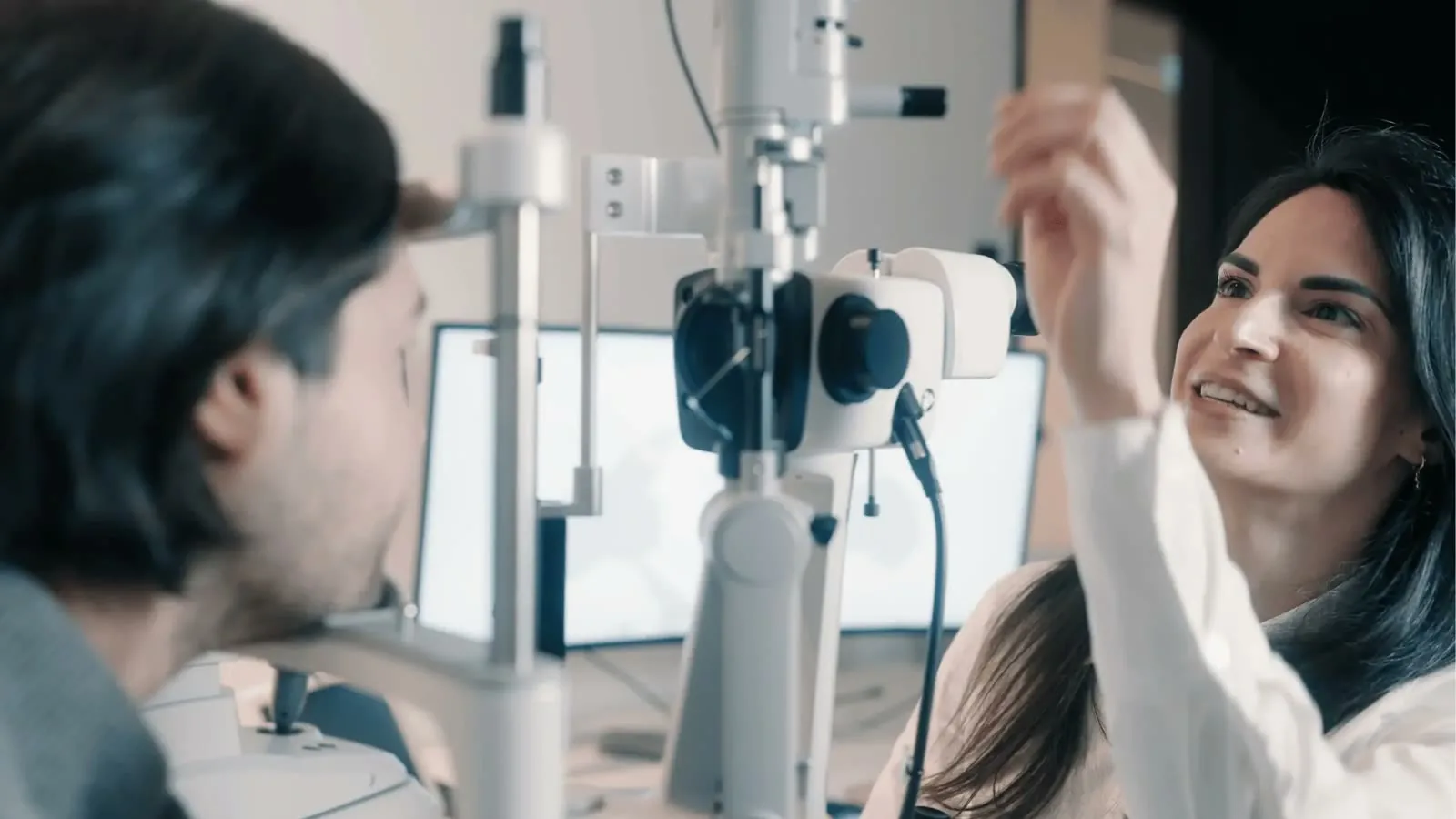
1 in 2
The optic nerve loses fibers without it hurting. It is found only when someone specifically looks at the optic nerve and eye pressure; a 3D scan (OCT) can add to this.
OCT
Every image is saved. At the next check-up, the comparison shows even small changes that would be within the normal range in a single measurement.
1
You go home with a report and know when the next check makes sense. Usually the answer is: everything is fine.
We see with two eyes, and the brain is very good at filling in gaps. If an area at the edge of the visual field of one eye drops out, the other eye takes over. Distortions in the center are often only noticed once the better eye is covered. With glaucoma, therefore, it is not uncommon for a large part of the optic nerve fibers to be lost before anyone notices anything.
Visual acuity, that is, how small you can read letters, only measures the point of sharpest vision. In many diseases it stays normal for a long time. That is why a check-up does not consist of a vision test but of images of the optic nerve, macula and retina.
IGeL stands for “Individuelle Gesundheitsleistung” (individual health service): services that a practice contracted with the statutory insurers may offer patients with statutory health insurance only against self-payment, because the health insurer does not cover them. These include, for example, glaucoma early detection without suspicion and the OCT without a reason for treatment. A pressure measurement alone, however, says little.
dr.vision is a private practice. With us, the check-up is not an add-on to a statutory-insurance appointment but an appointment of its own, in which optic nerve, retina and eye pressure are assessed together. This is exactly the combination that the ophthalmological professional societies recommend.
Eight measurements. From the eyelid to the optic nerve.
The check-up examines the whole eye from front to back: visual acuity, eye pressure, cornea, tear film, lens, retina and macula. Almost everything is contact-free, no measurement hurts, and altogether it takes about an hour. If the eye pressure or the optic nerve is abnormal, OCT of the optic nerve and a visual field test follow, often on the same day.
| Examination | What it finds | Duration | Noticeable? |
|---|---|---|---|
| Conversation and history | Risk factors: diabetes, high blood pressure, medications, eye diseases in the family, symptoms you yourself do not attribute to the eye | 5–10 min | No |
| Visual acuity and glasses prescription | Whether you still see optimally with your glasses, nearsightedness, farsightedness and presbyopia, astigmatism, differences between the two eyes | 5 min | No |
| Eye pressure (tonometry) | Raised eye pressure, the most important treatable risk factor for glaucoma | 1 min | Short puff of air or light touch after numbing drops |
| Corneal tomography (Scheimpflug) | Shape and thickness of the cornea: keratoconus, corneal thickness for the correct assessment of eye pressure, early clouding of the lens | 1 min | No, contact-free |
| Corneal endothelium | The cell layer on the back of the cornea in a live image: e.g. Fuchs endothelial dystrophy, before the cornea clouds | 1 min | No, contact-free |
| Tear film (Keratograph) | Dry eye measured instead of estimated: tear film break-up time, tear meniscus, meibomian glands of the eyelids | 5 min | No, contact-free |
| Slit lamp | Eyelids, conjunctiva, cornea, lens, anterior chamber and chamber angle under the microscope: inflammation, cataract, narrow chamber angle | 5–10 min | Bright light, nothing else |
| Ultra-widefield retina image | A large part of the retina in one image, usually without dilating drops: retinal tears, vascular changes from diabetes and high blood pressure, choroidal nevi | 1–2 min | Short flash of light |
| Retinal OCT (macula) | The layers of the macula to the micrometer: early macular degeneration, fluid in diabetes, membranes, macular hole | 2 min | No, you look at a point of light |
| If abnormal: optic nerve OCT and visual field | Whether an abnormal eye pressure or optic nerve is already costing nerve fibers: an important building block of the glaucoma diagnosis | 15–20 min | No; the visual field test requires some concentration |
| Findings talk | Your images on the screen, the interpretation, the next sensible appointment and a written report | 10 min | No |
Duration per measurement as a guide. Which components your check-up includes depends on age and risk.
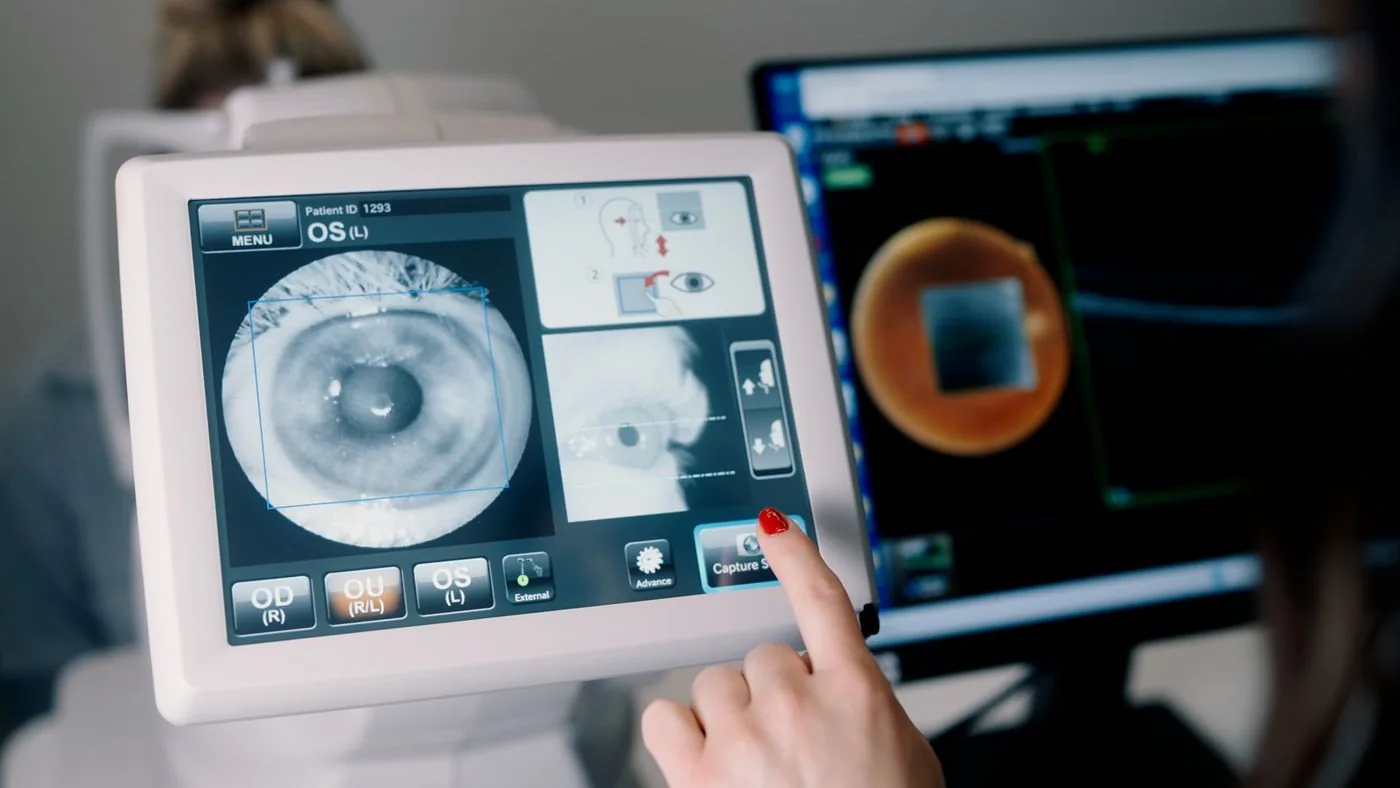
Much of what used to be only estimated by the doctor's eye is now measured and stored: the thickness of the retinal layers in the OCT, the shape of the cornea in the tomography, the stability of the tear film in the keratograph. For you, this means: findings that can be compared precisely next time.
To see the retina all the way to the edge, the pupils almost always had to be dilated with drops in the past. Afterward your vision is blurred and sensitive to glare for several hours, and you may not drive yourself. At dr.vision, an ultra-widefield device makes a large part of the retina visible without dilating drops, so in most cases you can come by car.
We still sometimes need dilating drops: when the image shows a finding at the outermost edge, with flashes of light or new shadows, with very high nearsightedness or with diabetes with retinal changes. In that case we tell you beforehand, and you can decide whether you would rather bring someone along or come by bus and train.
Many people with glaucoma have a normal eye pressure at a single measurement, and many with raised pressure never develop damage. A screening that only measures pressure therefore misses some people and needlessly worries others. For glaucoma early detection, the professional societies explicitly require a look at the optic nerve. That is why we assess pressure, corneal thickness and optic nerve together, and, if anything is abnormal, with OCT and a visual field test. More on this on the glaucoma page.
Please bring your contact lenses and the case. We remove soft lenses before the corneal measurements; for an accurate corneal tomography, rigid lenses should be left out for a few days beforehand. Patient Care will tell you when you schedule the appointment whether this is necessary for your check-up.
Eye makeup interferes with the tear film measurement, so it is better to skip it on that day. Take your medications as usual; bring a current list.
Ten findings that do not hurt.
The check-up targets diseases that run a long course without symptoms and can be treated better when found early. First on the list are glaucoma, macular degeneration and diabetic retinal changes, which are among the most common causes of severe visual impairment in adulthood in Germany. Most check-ups end with the sentence: everything is fine.
| Disease | Why you do not notice it | What it shows in the check-up | More |
|---|---|---|---|
| Glaucoma | Painless; vision loss begins at the edge of the visual field and is compensated by the other eye | Eye pressure, corneal thickness, optic nerve at the slit lamp, and if suspected OCT and visual field | Glaucoma |
| Macular degeneration (AMD) | Early stages cause no symptoms, the second eye covers up distortions | Deposits (drusen) and fluid in the macular OCT | Macular degeneration |
| Diabetic retinal changes | Small hemorrhages and vessel bulges affect vision only late, often only when the macula swells | Ultra-widefield retina image and macular OCT | Diabetes and the retina |
| Retinal tears, retinal degeneration | Located at the edge of the retina, especially in nearsighted people; only a detachment causes shadows | Ultra-widefield image, if abnormal with a dilated pupil | Floaters and flashes |
| Effects of high blood pressure, risk of vascular occlusion | The vessels of the retina change without symptoms | Narrowed and crossed vessels, hemorrhages in the retina image | Report to your family doctor |
| Early cataract | The lens clouds slowly over years, and the brain gets used to duller colors | Slit lamp, tomography, glare sensitivity discussed in conversation | Cataract |
| Keratoconus | Begins in youth as frequently changing glasses prescriptions and astigmatism | Corneal tomography (shape and thickness) | Keratoconus |
| Fuchs endothelial dystrophy | The inner layer of the cornea loses cells over decades; slightly blurred in the morning | Endothelial cell image, corneal thickness | Follow-up check over time |
| Dry eye | Often mistaken for fatigue, allergy or screen stress | Tear film break-up time, meibomian glands in the Keratograph | Dry eye |
| Choroidal nevus | Lies beneath the retina and is invisible from the outside | Ultra-widefield image as a baseline finding for comparison | Photo documentation |
The check-up describes the condition today. A disease can develop between two appointments. That is why there are intervals that match your risk.
Examining does not prevent a disease. It makes sure it is found and treated early, while there is still a lot of vision to protect.
A somewhat higher pressure or a large optic disc often just means: observe. We tell you what a finding means and what it does not.
Sudden flashes of light, a shadow or curtain, suddenly worse vision, a red painful eye: call immediately and do not wait for a check-up appointment. To the urgent appointment
Your images from today are the comparison for tomorrow. With the optic nerve and macula especially, the change counts more than the single value.
On the side, you learn whether your glasses still fit, and how things stand with presbyopia or an early clouding of the lens.
Choose your situation.
In principle for everyone aged 40 and over, because from then on glaucoma and macular degeneration become more common. Earlier and more often with diabetes, high nearsightedness, glaucoma in the family, high blood pressure and long-term medication. Tap what applies to you: you will see why, how often and what we look for.
From 40, the risk of glaucoma rises markedly, and presbyopia begins. The first check-up establishes your baseline values for optic nerve, macula and eye pressure.
every 5 years
up to age 59 according to the guideline for glaucoma early detection (DOG/BVA), from 60 every 2–3 years. Whether a shorter interval makes sense, we discuss after the first findings.
Optic nerve and eye pressure, macula in the OCT, lens, glasses prescription and reading distance.
Macular degeneration, cataract and glaucoma become more common with every decade. Many early signs are visible only in the OCT or at the slit lamp.
every 2–3 years
without further risk factors according to the guideline for glaucoma early detection, often yearly if there are findings.
Macular OCT, lens clouding and glare, optic nerve, eye pressure, dry eyes. And: is your vision good enough for driving?
Diabetes can damage the small vessels of the retina. Early changes cause no symptoms but can be treated well if you know about them.
every 1–2 years
According to the German National Disease Management Guideline, every two years without retinal changes and without increased risk, otherwise yearly or more often. For type 2 from diagnosis, for type 1 at the latest 5 years after diagnosis.
Ultra-widefield retina image and macular OCT. You receive a report for your diabetes specialist. Diabetes and the retina
People with parents or siblings with glaucoma develop it markedly more often. Macular degeneration and keratoconus also have a hereditary component.
shorter than 5 years
The guideline recommends shorter intervals and an earlier start for relatives with glaucoma; we often advise yearly.
Optic nerve OCT already at the first appointment, eye pressure with corneal thickness, macular OCT.
A long eye has a thinner, stretched retina. Retinal tears, retinal detachment, glaucoma and changes of the macula are more common, even in middle age.
yearly
From about −6 D we recommend a follow-up check at least once a year; for nearsightedness above −4 D, the glaucoma guideline shortens the intervals.
Retinal edge in the ultra-widefield image, optic nerve, macula. Plus the warning signs for which you should come immediately: flashes, soot shower, shadows.
The retina is the only place in the body where you can see blood vessels directly. High blood pressure changes them, and the risk of vascular occlusions in the eye rises.
depending on findings
As a rule every 1–2 years, more often if there are changes; we set the interval after the first image.
Vessels in the retina image, optic nerve, macular OCT; on request, a report to your family doctor or cardiologist.
Cortisone can raise eye pressure and accelerate cataract. Hydroxychloroquine (e.g. for rheumatism or lupus) can damage the macula after years. Other drugs, such as some cancer medications, also need follow-up checks.
according to plan
For hydroxychloroquine, the guideline (AWMF 045-016, 2025) recommends a baseline examination in the first months of therapy and yearly follow-up checks from the fifth year of therapy, earlier with special risks. For cortisone, depending on dose and pressure.
Macular OCT, with hydroxychloroquine additionally a visual field test; eye pressure and lens with cortisone.
People who look at screens for many hours blink less often. The tear film breaks up faster, and the eyes burn and tire. Contact lenses make this worse.
if you have symptoms
A check-up with tear film analysis clarifies whether dry eye is present and what its cause is.
Keratograph: tear film, meibomian glands; corneal surface at the slit lamp; do your glasses fit your screen distance? Dry eye
If your glasses keep not fitting, there is often a change of the cornea behind it: keratoconus, dry eye or an early clouding of the lens.
once now
A tomography of the cornea usually clarifies the cause in one appointment.
Corneal tomography, tear film, lens. Keratoconus
With children, the questions are different: does each eye see equally well, does the child have a squint, is the child becoming nearsighted? An undetected amblyopia can be treated well only in childhood.
depending on age
Without risk, one examination between the 30th and 42nd month of life (BVA), with risk already in the first year of life.
We clarify this in our children's consultation hours. To the pediatric eye doctor
Intervals follow the guideline for glaucoma early detection (DOG/BVA), the German National Disease Management Guideline on diabetes and recommendations of the professional societies, see sources. We set your personal interval after the findings. You can find the whole schedule by age in the guide How often should you see the eye doctor?
Seeing sharply is not the same as seeing healthily.
The optician checks which glasses you need. The eye doctor clarifies symptoms. The check-up looks specifically for diseases that do not yet cause symptoms, and uses imaging of the optic nerve and retina that statutory health insurers do not usually pay for without suspicion. All three have their place.
| Vision test at the optician | Eye doctor appointment for symptoms (statutory insurer) | Eye check-up at dr.vision | |
|---|---|---|---|
| Goal | The right glasses or contact lens | Clarify a specific symptom | Find diseases without symptoms early, establish baseline values |
| Visual acuity and glasses prescription | Yes, core task | Yes | Yes |
| Eye pressure | Partly as an air-puff measurement, without medical assessment | If suspected or diseased | Yes, assessed together with corneal thickness |
| Optic nerve | No | If suspected | Yes, if abnormal with OCT and visual field |
| Retina and macula | No | For symptoms, often with dilating drops | Ultra-widefield image and macular OCT, usually without dilating drops |
| Cornea and tear film | Limited with contact lenses | For symptoms | Tomography, endothelium, tear film analysis |
| Diagnosis and treatment | No, opticians do not make diagnoses | Yes | Yes, with a written report and plan |
| Who pays? | Usually free when buying glasses | Health insurer, if medically justified; preventive measurements without suspicion as a self-pay service | Private medical billing under the German fee schedule for physicians (GOÄ); private health insurance and Beihilfe (allowance for German civil servants) depending on the plan |
Simplified comparison. Practices contracted with statutory insurers often offer preventive measurements without suspicion as an individual health service (IGeL).

Not sure whether you need a check-up?
Ask us. The answer costs nothing.
Jana from our Patient Care team answers your questions about scope and costs and arranges your eye check-up, also in the evening and on Saturdays. Available around the clock.
One appointment. Four steps.
From reception to the results talk takes about an hour. First the measurements on the devices, then the medical examination, finally the conversation about your images. You park free of charge below the practice and can usually drive home yourself.
Step 1 of 4

Your questions first.
Please bring: glasses and contact lenses, previous findings, medication list, and your diabetes health passport if you have diabetes.
Choose appointmentStep 2 of 4
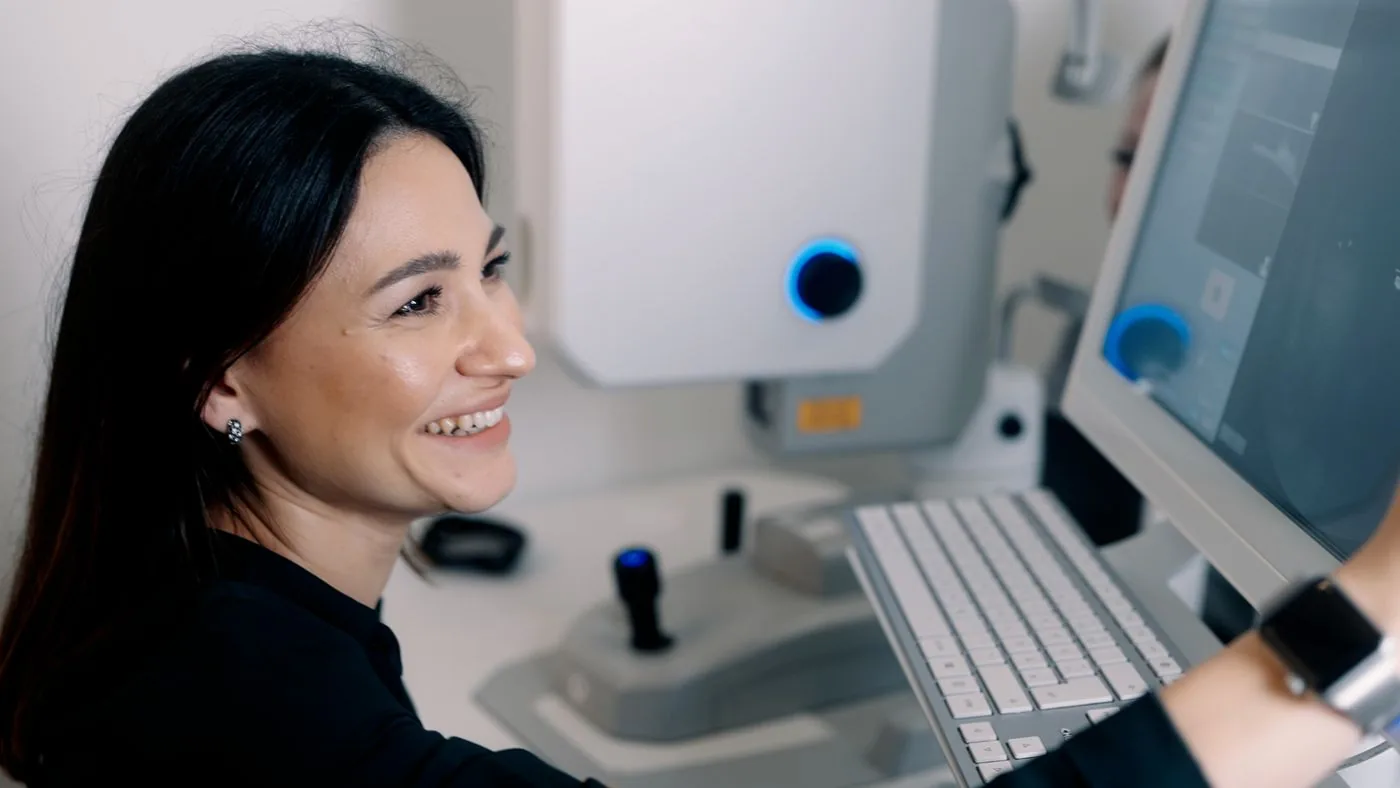
Images of the whole eye.
Almost everything is contact-free, and each measurement takes seconds to a few minutes.
All examinationsStep 3 of 4
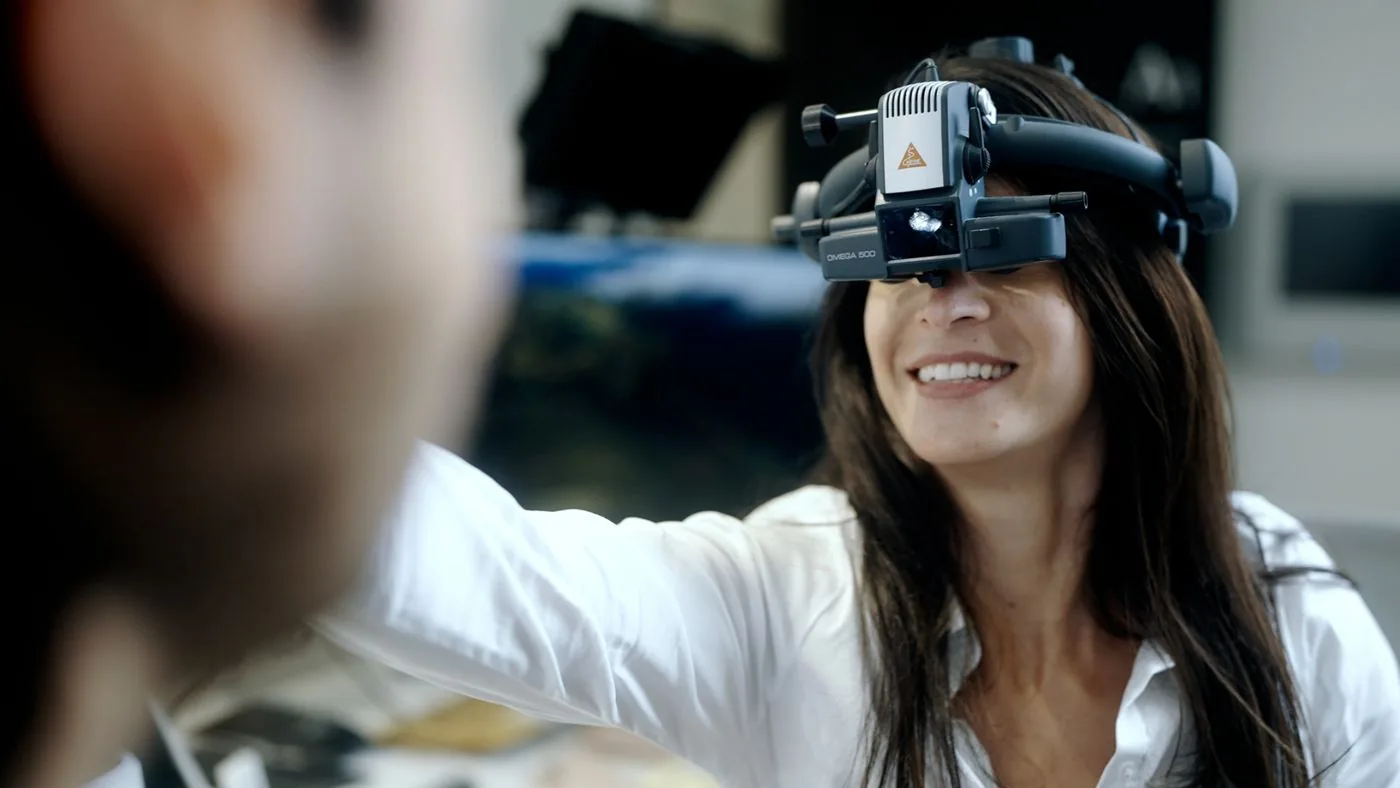
The specialist's view.
Dilating drops only if a finding requires it. We tell you beforehand.
What can be foundStep 4 of 4

Your images. Your answer.
Patient Care reminds you in good time of your next appointment.
What happens afterwardThree possible results. A plan for each.
Most often everything is fine, and you receive your next appointment according to your risk, in about 1–5 years. If something stands out, further measurements follow, often on the same day. If treatment is needed, we discuss the options and costs before anything happens.
Your values are saved, you know when your next check-up makes sense, and you receive a reminder.
For example borderline eye pressure, a large optic nerve head or early drusen. We compare again after a few months.
We explain the diagnosis and the options, with costs up front. Many treatments begin with drops or follow-up checks.
After the check-up you receive written findings. At your request, we send a report to your family doctor, diabetologist, internist or rheumatologist, for example in cases of diabetes, high blood pressure or hydroxychloroquine. Your images stay saved with us so that the next check-up can compare them.
Laser eye surgery, ICL or lens exchange require their own pre-operative examination with corneal thickness, pupil measurement and biometry. If this interests you, say so when you arrange your appointment, and we will plan accordingly. More on this: SMILE Pro, ICL, Lens and cataract.
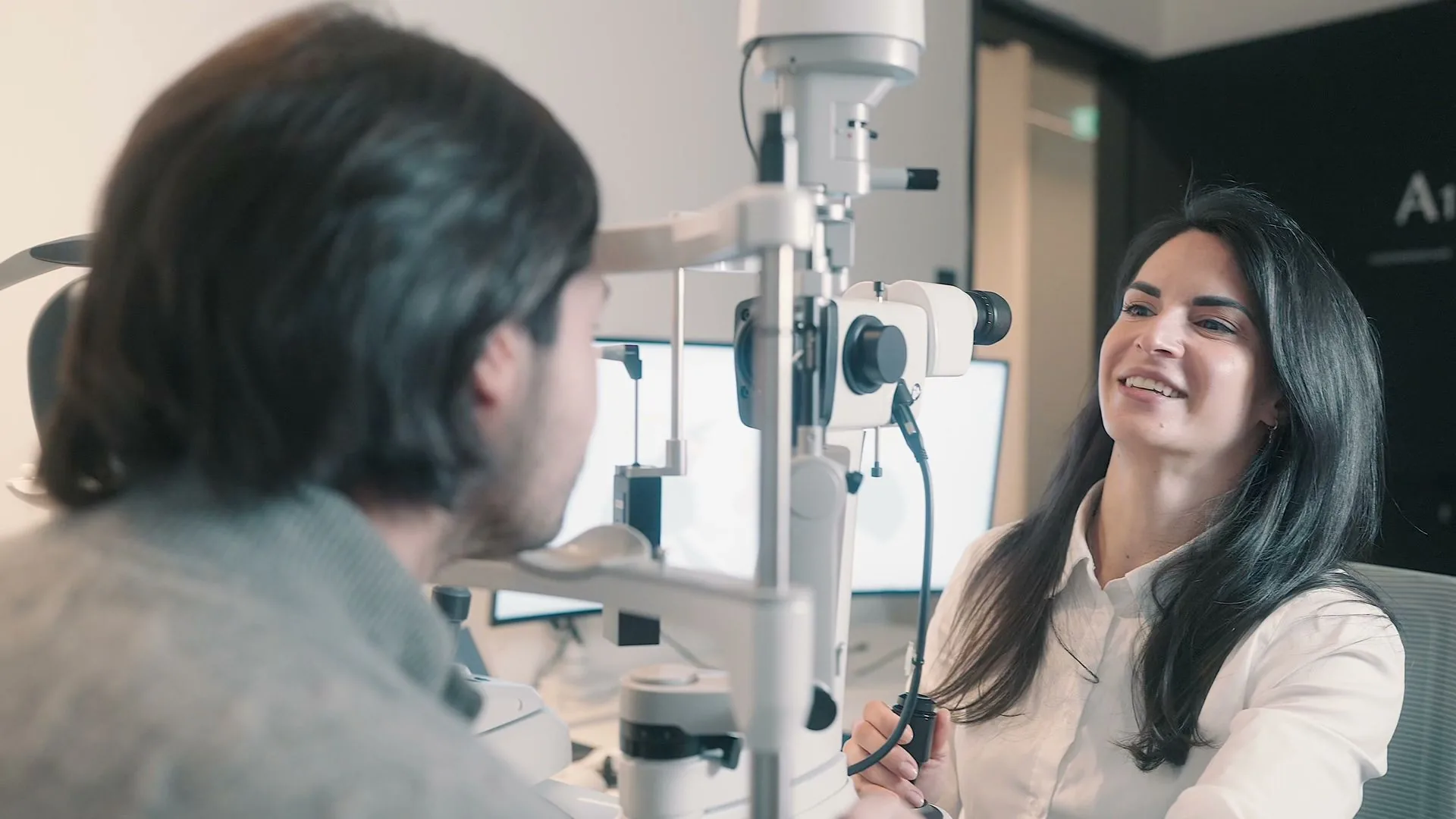
Because time and images make the difference.
Prof. Dr. Mehdi Shajari and the team of specialist physicians from university medicine, imaging from the optic nerve to the tear film in one appointment, and a conversation in which you see your images. 5.0 stars from 376 reviews.

A team of specialist physicians. With time for your questions.
Your check-up is performed by Prof. Dr. Mehdi Shajari and the team of specialist physicians at dr.vision. Prof. Dr. Mehdi Shajari is a specialist in ophthalmology with a professorship and habilitation at the University of Frankfurt and medical director of dr.vision.
“Many eye diseases do not hurt for a long time and are noticed only when vision has already been lost. In the check-up, I see them on the images before you notice anything.”
Prof. Dr. Mehdi Shajari
What you get with us.
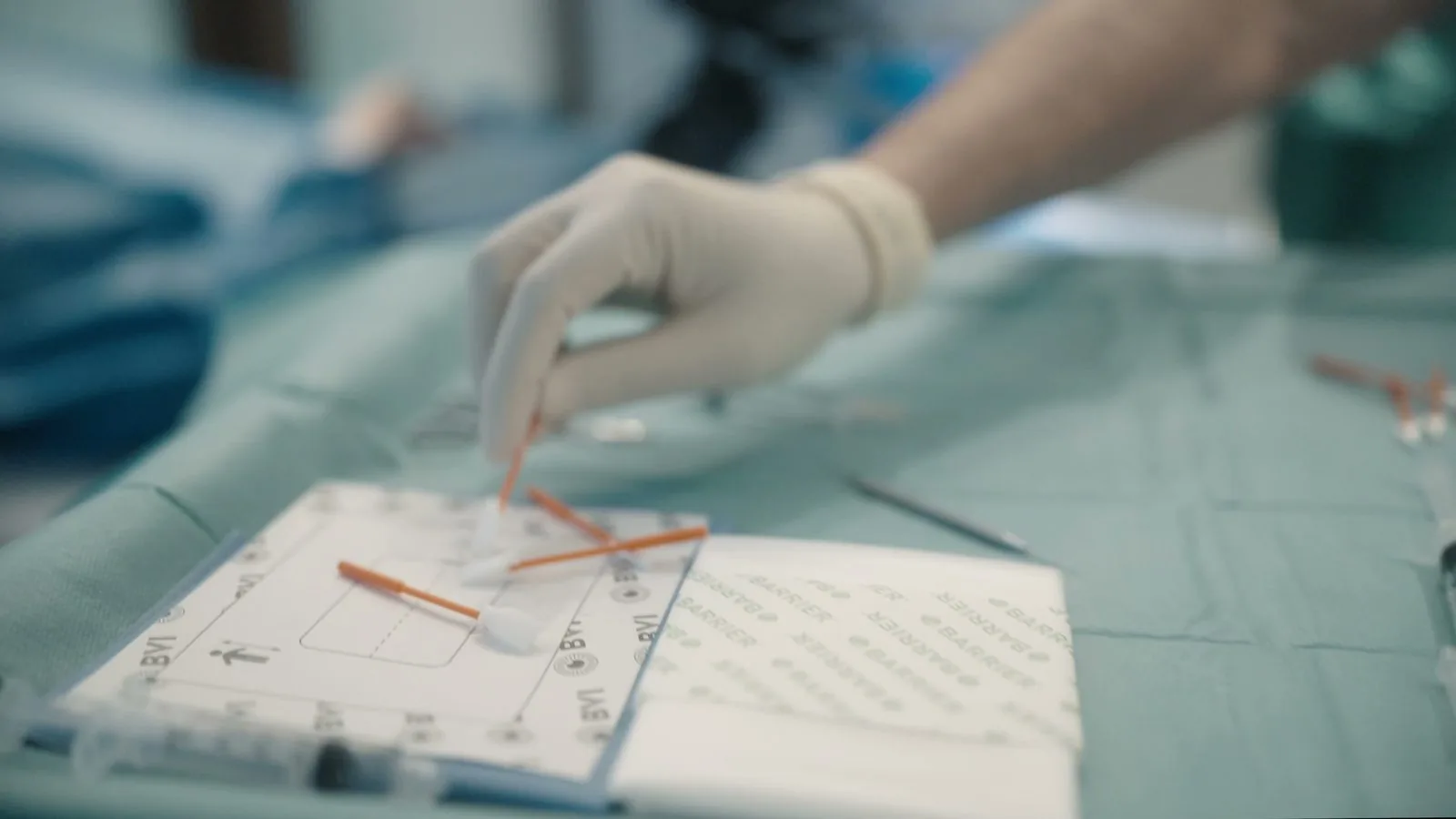
Team of specialist physicians
Prof. Dr. Mehdi Shajari and team.
Reviews
5.0
376 Google reviews
Comfort
Drive yourself home afterward.
OCT, ultra-widefield retinal image, tomography, endothelium and tear film. You go home with written findings.
5.0
★★★★★
from 376 Google reviews
The ultra-widefield image usually works without dilating the pupil.
OCT
Every scan is saved and compared the next time.
Check-up Mon–Fri until 19:00 and Sat 9:00–15:00.
You see your images and understand the findings.
Cataract, glaucoma, dry eye, eyelids: all under one roof.
Private health insurance: billing under the GOÄ through your insurer. Statutory health insurance or self-paying: from €120. Costs always in advance.
Jana answers questions about scope, appointments and costs via WhatsApp, usually within 10–15 minutes, Mon–Fri 8:00–19:00, Sat 9:00–15:00. We are available by phone around the clock.
Patient Care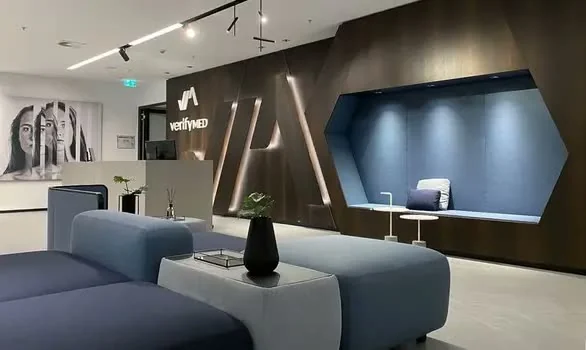
Junghofstraße 16, free parking in the Junghofstraße parking garage.
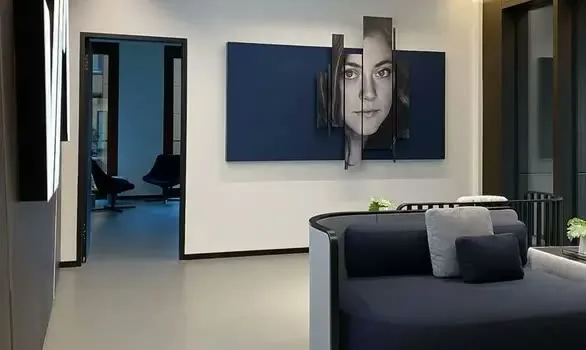
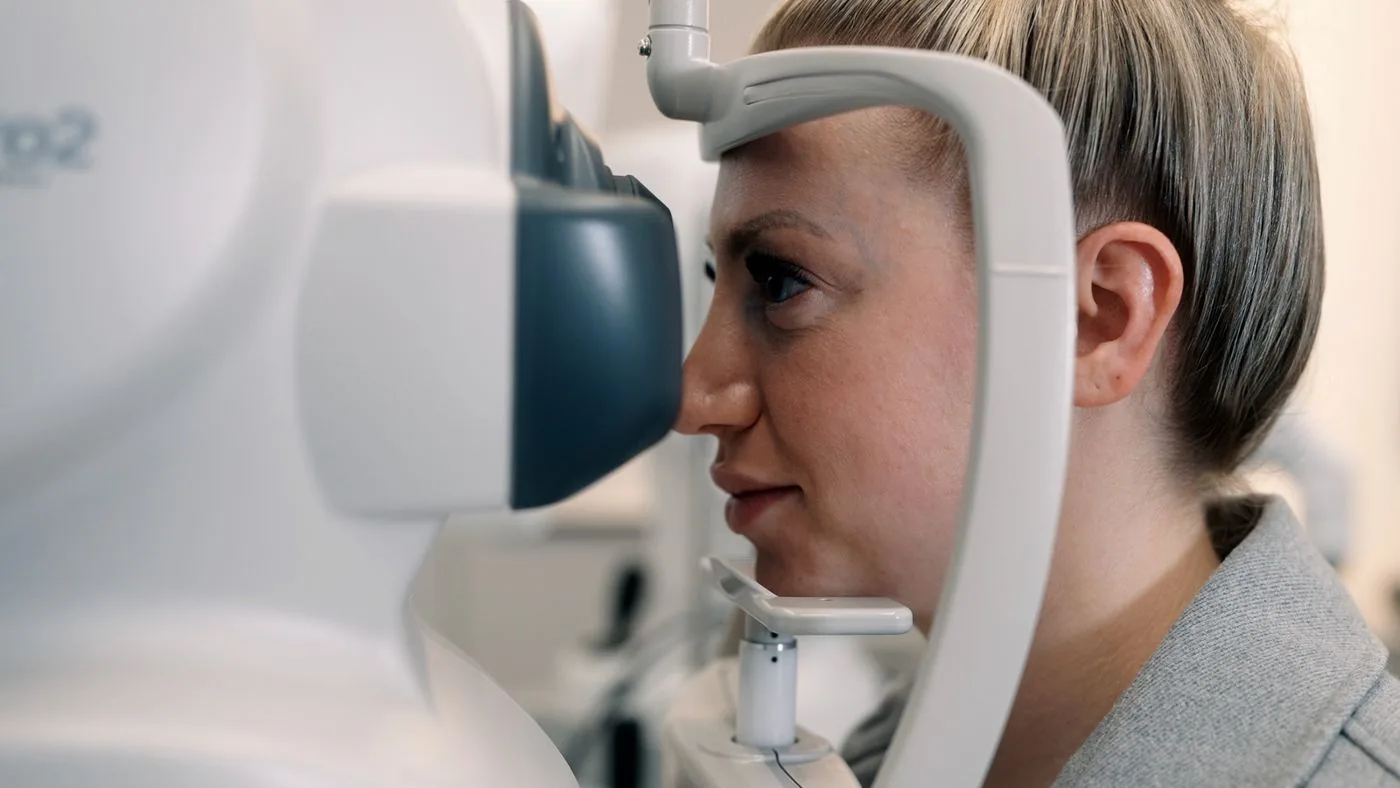
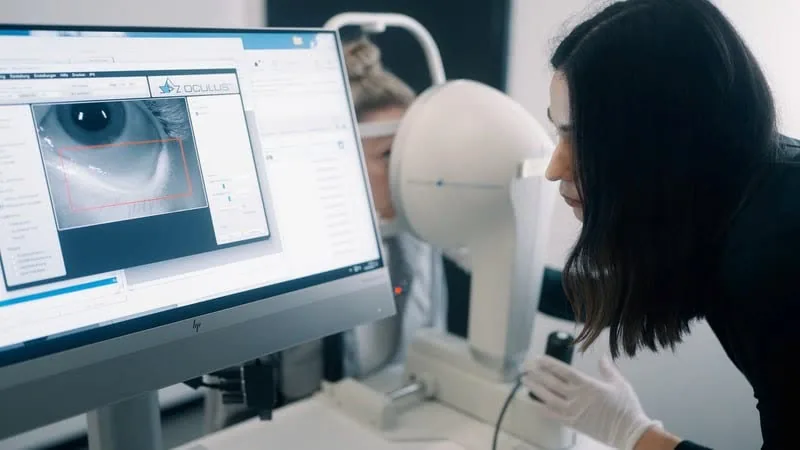
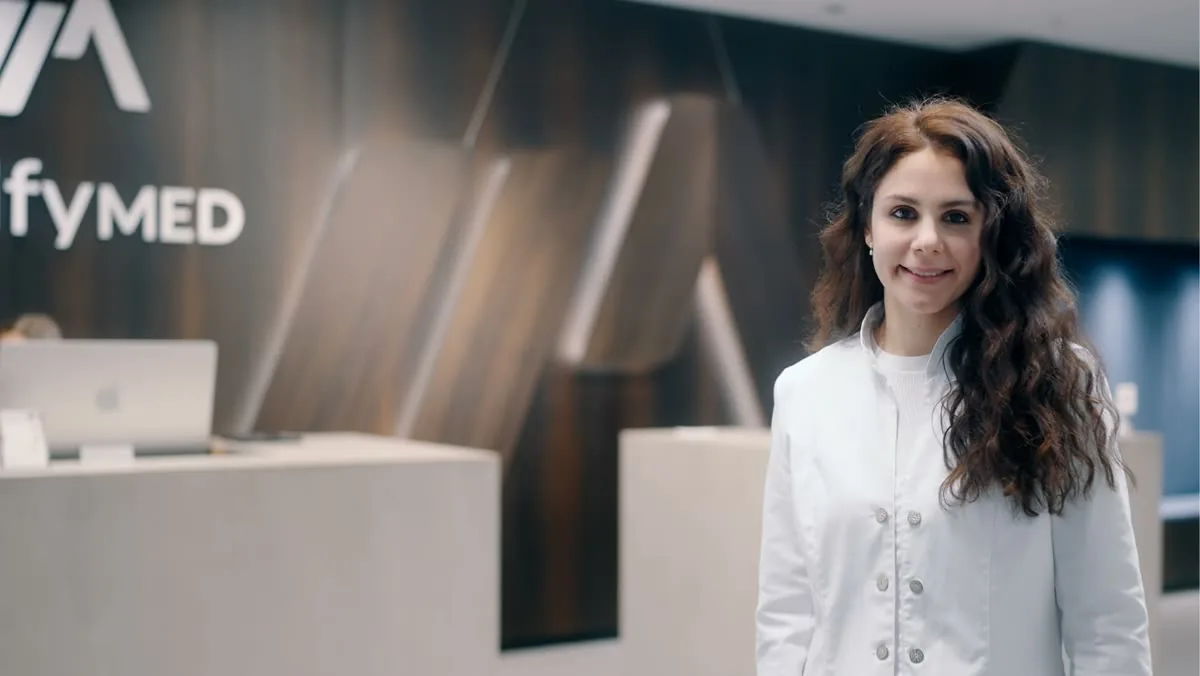
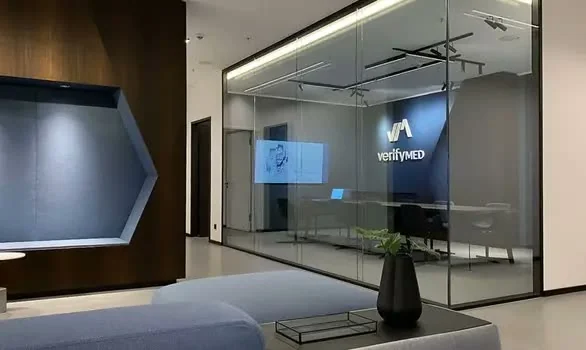
A look inside the practice and the team.
Billed under the GOÄ. Stated up front.
Privately insured patients are billed under the German fee schedule for physicians (GOÄ) through their insurer. Patients with statutory health insurance and self-paying patients pay from €120. We always inform you about the costs beforehand. Private health insurance and Beihilfe (allowance for German civil servants) reimburse depending on the plan; patients with statutory health insurance pay for it themselves with us.
You receive an invoice under the GOÄ. Many private health insurance plans reimburse medical examinations even without acute symptoms; some exclude pure preventive care or individual imaging procedures. A look at your plan terms or a short inquiry to your insurer clarifies this beforehand.
Medically necessary services under the GOÄ are eligible for Beihilfe; for pure preventive examinations without a specific reason, separate rules apply depending on the federal state. The remaining share is reimbursed by the private supplementary insurance depending on the plan; a personal contribution is possible. We prepare the documents so that you can submit them directly.
dr.vision is a private practice without a statutory insurance license; you pay yourself, with an invoice under the GOÄ. Even in statutory-insurance practices, glaucoma screening and OCT without suspicion are usually self-pay services. Some supplementary insurances contribute to preventive care, so please ask them.
A 42-year-old without risk factors needs a different scope than a 65-year-old woman with diabetes and glaucoma in the family. We do not want to sell you everything across the board, nor leave out anything you need. That is why Patient Care tells you the amount for the appropriate scope before the appointment, by phone, via WhatsApp or in writing.
Medical costs that you bear yourself may be tax-deductible as extraordinary expenses (§ 33 EStG, German Income Tax Act) to the extent that they exceed the reasonable burden. For pure preventive examinations without a medical reason, this is not always recognized. You receive the GOÄ invoice from us; talk to your tax advisor, we are not tax advisors. More under Taxes.
You are not alone
Questions about scope and costs? Patient Care can help: 069 509 586 770 (available 24 hours)
| What | Preventive eye care without acute symptoms: finding diseases early, establishing baseline values |
|---|---|
| Examinations | Visual acuity, eye pressure, corneal tomography, endothelium, tear film, slit lamp, ultra-widefield retinal image, macular OCT; if needed, optic nerve OCT and visual field |
| Duration | about 60 minutes, painless |
| Dilating drops | usually not necessary; driving afterward is generally possible |
| For whom | from age 40; earlier with diabetes, high nearsightedness, glaucoma or AMD in the family, high blood pressure, long-term medication |
| Interval | without risk factors every 5 years from age 40, every 2–3 years from age 60 (glaucoma screening guideline); shorter with risk |
| Costs | privately insured under the GOÄ through your insurer; statutory health insurance or self-paying from €120; costs always stated up front |
| Insurance | private health insurance and Beihilfe depending on the plan, patients with statutory health insurance pay themselves |
| Doctors | Prof. Dr. Mehdi Shajari and the team of specialist physicians at dr.vision |
| Location and hours | Junghofstraße 16, 60311 Frankfurt am Main · Mon–Fri 8:00–19:00, Sat 9:00–15:00 · free parking · Düsseldorf and Stuttgart 2027 (preliminary talk already possible in Frankfurt) |
Go deeper.
This page describes the check-up. The diseases it looks for have their own detailed pages:
The preventive care roadmap by age and risk group, with the recommendations of the professional societies.
To the roadmap Optic nerveWhy pressure alone proves nothing and how OCT and visual field protect the optic nerve.
To the glaucoma page MaculaDry and wet forms, early signs on OCT and what you can do yourself.
Learn more DiabetesHow often to check, what the retinal image shows and when treatment is given.
Learn more Ocular surfaceMeasuring causes instead of guessing, and what helps beyond artificial tears.
Learn more ChildrenWhen children should see an eye doctor, strabismus, amblyopia and slowing nearsightedness.
To the children's consultation hoursStill have questions?
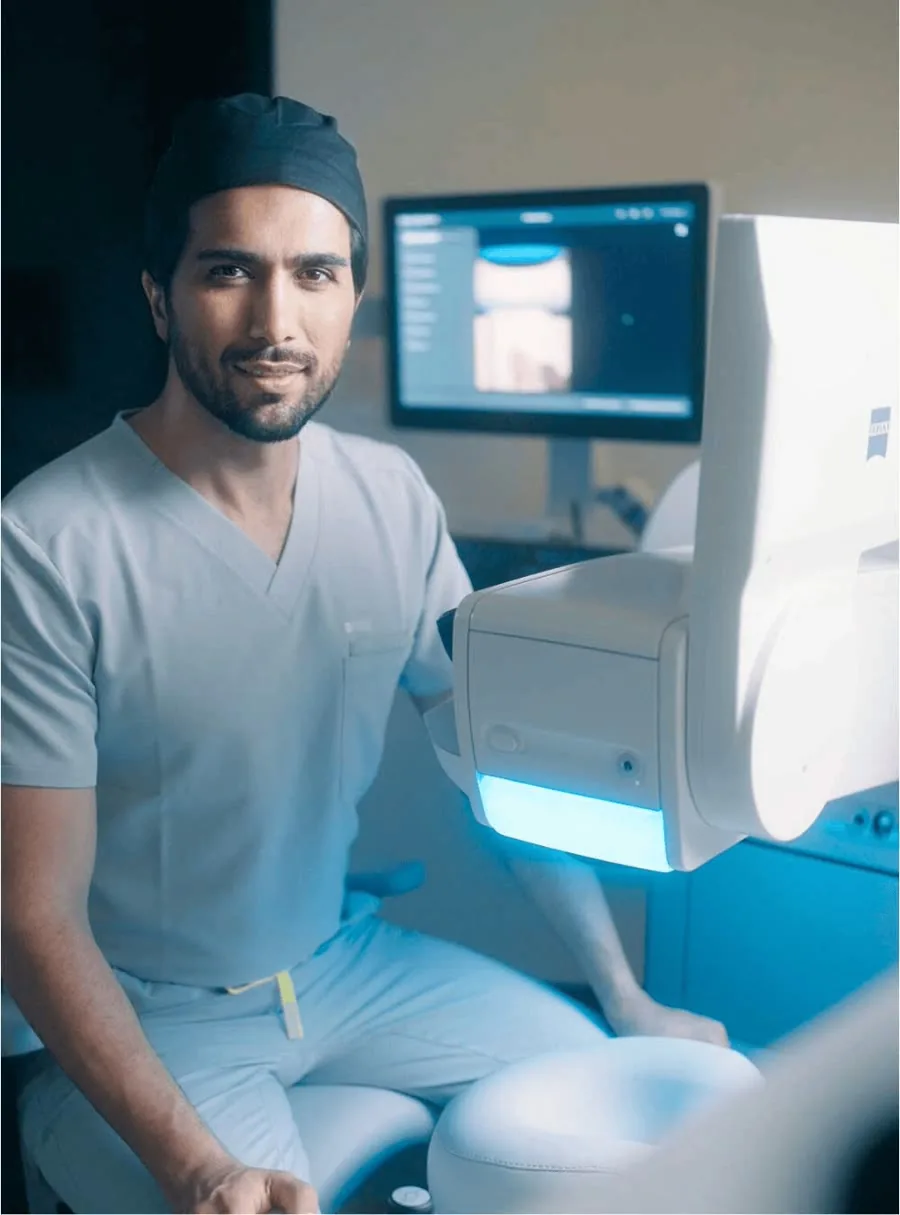 These are the questions we hear most often in consultation hours. Prof. Dr. Mehdi Shajari has medically reviewed the answers.
Plan for about an hour. The individual measurements usually take only seconds to a few minutes, plus the medical examination at the slit lamp and the results talk. If something stands out, further measurements such as optic nerve OCT or visual field can often follow at the same appointment; then it takes longer.
No. Almost all measurements are contact-free: you look at a light or a picture, and a device takes an image. During the eye pressure measurement, depending on the method, you feel a brief puff of air or, after a numbing drop, a light touch. None of this is painful.
For the overview of the retina, we use an ultra-widefield image that works without dilating drops. In most cases you can therefore drive yourself here and back. Only if a finding requires a closer look at the outer retina do we dilate the pupil; then your vision is blurred for a few hours and you must not drive yourself. We tell you beforehand.
Without symptoms and without risk factors, the professional ophthalmology societies recommend the first preventive examination, looking at the optic nerve, from age 40. It makes sense earlier with diabetes, high nearsightedness, glaucoma or macular degeneration in the family, high blood pressure or medications that can strain the eye. We see children in the children's consultation hours.
That depends on age and risk. The glaucoma screening guideline recommends, without risk factors, every five years from age 40 and every two to three years from age 60. With diabetes, high nearsightedness, glaucoma in the family or elevated eye pressure, shorter intervals make sense, often yearly. After the check-up you receive your personal next appointment.
That is exactly when it makes sense. Glaucoma, early macular degeneration, diabetic retinal changes or retinal tears cause no symptoms for a long time, and visual acuity often stays normal until late. The check-up looks for exactly these changes while they are still easy to treat.
For new glasses prescriptions, yes. The optician measures how sharply you see and which lenses you need. But the optician does not medically examine the optic nerve, the retina or the eye pressure and does not make diagnoses. A disease can also exist with full visual acuity.
A normal appointment usually clarifies a specific complaint. The check-up looks specifically for diseases that do not yet cause symptoms, using imaging procedures such as retinal OCT and ultra-widefield retinal images. The measurements are saved so that we can compare them the next time.
Privately insured patients are billed under the German fee schedule for physicians (GOÄ) through their insurer. Patients with statutory health insurance and self-paying patients pay from €120. We always inform you about the costs beforehand, by phone or via WhatsApp.
Private health insurance and Beihilfe (allowance for German civil servants) reimburse medical examinations under the GOÄ depending on the plan; pure preventive care without symptoms is not included in every plan. Statutory health insurance usually does not pay for preventive examinations such as glaucoma screening or an OCT without suspicion, not even in statutory-insurance practices. dr.vision is a private practice, so patients with statutory health insurance pay for it themselves.
You learn the findings directly in the conversation, with the images on the screen. Many further measurements are possible on the same day. Afterward we discuss whether monitoring is enough or whether treatment makes sense, and you receive written findings, on request also for your family doctor or diabetologist.
No. The pre-operative examination before laser eye surgery or lens surgery additionally measures corneal thickness and shape, pupil and refractive power to check suitability for a procedure. If you are thinking about freedom from glasses, tell us when you book, and we will plan both to fit together.
Medically reviewed by Prof. Dr. Mehdi Shajari · As of October 2026
Your preventive care roadmap to read at home.
Arrives by e-mail in about 60 seconds. No newsletter, just the guide and, if you wish, a follow-up from Patient Care. Privacy policy
How would you like to continue?
The check-up takes about an hour: measurements, medical examination and a findings talk with your images. You go home with a written report and your next preventive care appointment, and usually you drive yourself.
In Frankfurt, Junghofstraße 16 · also evenings and Saturdays
Our locations.
 Opening hours
Junghofstraße 16, 60311 Frankfurt am Main
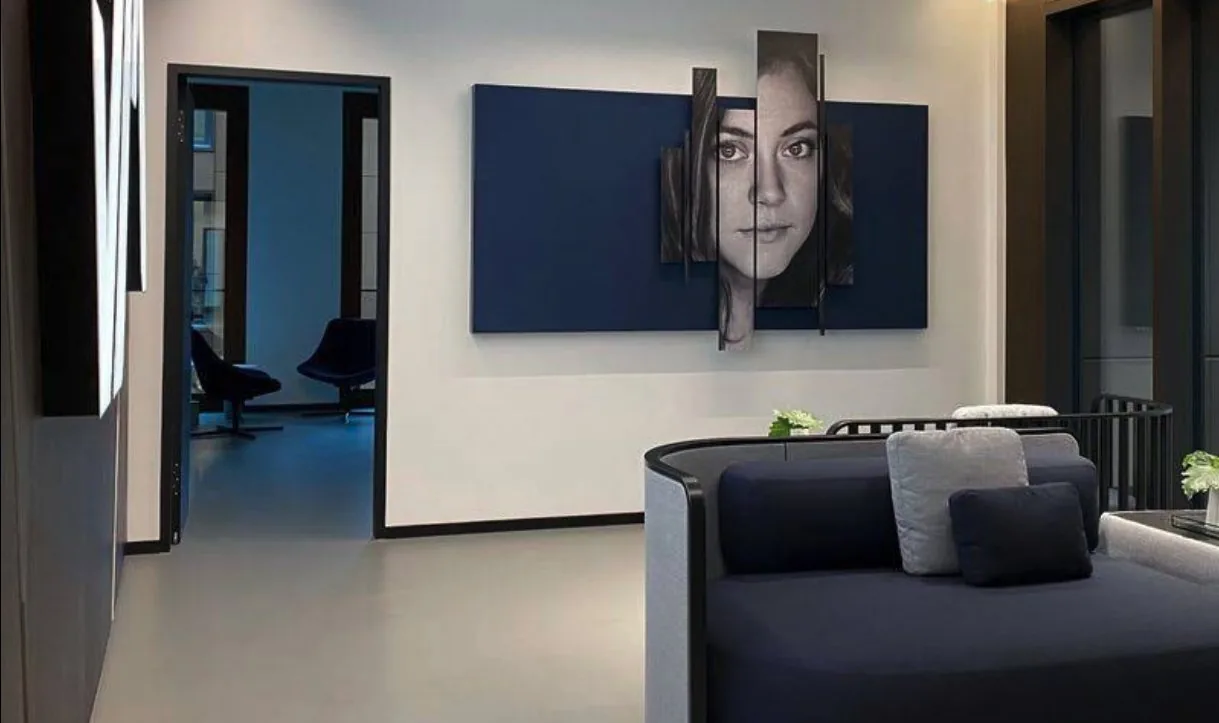 Opening 2027
Breite Straße 69, 40213 Düsseldorf (in the Neuer Stahlhof, corner of Graf-Adolf-Platz)
Until opening: preliminary talk in Frankfurt, Patient Care plans your travel.
Plan route Opening 2027
Lautenschlagerstraße 23, 70173 Stuttgart (2nd floor, step-free access)
Until opening: preliminary talk in Frankfurt, Patient Care plans your travel.
Plan route