 dr.vision
Every 5 years from 40
Every 2–3 years from 60. Preventive care means eye pressure and optic nerve, not just an eye test.
Schedule by ageStart here
What suits you?
Find out in 2 minutes which procedure suits your eyes.
Start the Suitability CheckOr by age:
< 45yearsGet rid of glasses & contact lenses 45–64yearsGet rid of reading glasses 65+yearsCataract & glasses-free★★★★★ 5.0 · 376 Google reviews · 20,000+ procedures
Decide well
What you should know beforehand.
Who operates?Prof. Dr. Mehdi ShajariFOCUS Top Doctor · operates on every patient personally What does it cost?Laser from €3,498 · Lenses from €6,886Prices for both eyes Is it safe?Safety & risks When will I be fit again?Work, sports, driving Would you rather read in peace first?Decision Guide Freedom from GlassesProcedures
Laser or lens?
Laser eye surgery
SMILE ProSmartSightFemto-LASIKTrans-PRKPRKPresbyond (laser away your reading glasses)All laser procedures at a glanceLaser procedures compared ›Lens surgery
ICLLens exchange (reading glasses)Cataract surgery with premium lensLens types: trifocal, EDOF, toricLens types compared ›Start here
Something wrong with your eyes?
A thorough eye check-up with us clarifies what is behind it.
Book an eye check-up★★★★★ 5.0 · 376 Google reviews
Guide · Eye preventive care at every age
The preventive-care schedule for every age.
Without symptoms, every five years from age 40, every two to three years from age 60, more often with diabetes or glaucoma in the family. Here you will find your interval by age and risk. You usually get your preventive care appointment within 24 to 48 hours.
 12× FOCUSTop Doctor
Regularly from 40. More often with risk.
Without symptoms and without risk factors, a preventive exam focused on the optic nerve every 5 years from 40 and every 2–3 years from 60. With diabetes every 1–2 years; with high nearsightedness or glaucoma in the family, usually every year. Children once between the 30th and 42nd month of life, children at risk as early as 6–12 months.
Based on the glaucoma screening guideline (DOG/BVA), the National Disease Management Guideline on Diabetes and the recommendation of the Professional Association of Ophthalmologists on children. Minimum intervals: your eye doctor sets your personal interval after the first findings.
Every 2–3 years from 60. Preventive care means eye pressure and optic nerve, not just an eye test.
Schedule by ageDiabetes, glaucoma in the family, nearsightedness above −4 to −6 D, raised eye pressure, certain medications.
Risk groupsFlashes, a shower of black dots, shadows, suddenly worse vision, distorted lines, a red painful eye.
Warning signs376 reviews. Average 5.0.
376 Google reviews give dr.vision an average of 5.0 out of 5 stars. dr.vision does not check whether Google reviews come from treated patients.
“Professional and fast treatment. Very good review of the examination results and support with further examinations.”
“State-of-the-art practice, zero waiting time, thorough examination and good communication!”
“Dr. Shajari examined me very thoroughly and offered me excellent, individual care. He took the time to explain every step of the examination and to answer all my questions.”
“I recently had an examination with Dr Shajari at his practice and was more than satisfied with my visit.”
The schedule. From the first week to 80.
Children need few appointments, but well-chosen ones: once between the 30th and 42nd month of life, and with risk already in the first year. Adults without risk begin at 40, then every five years, and from 60 every two to three years. Each row names its source.
| Life stage | When to see an eye doctor? | What it is about | Source |
|---|---|---|---|
| Newborns with a family history | in the first week of life | Congenital cataract, childhood glaucoma, eye tumors in the family | BVA [4] |
| Infants 6–12 months with risk | once by an eye doctor | Strabismus, farsightedness above 3 D or unequal glasses values in the family, premature babies | BVA [4] |
| Toddlers 30th–42nd month | once by an eye doctor, even without anything unusual | Undetected refractive error and slight strabismus, before amblyopia develops | BVA [4] |
| Kindergarten and school | for any abnormality, recommended before starting school | Nearsightedness, reading difficulties, headaches; with increasing nearsightedness, follow-up checks every 6–12 months | U examinations (routine pediatric checkups); DOG/BVA myopia statement [5] |
| 18–39 years without symptoms | no fixed preventive care required | Glasses values, contact lens tolerance; with risk as below | no guideline recommendation |
| 40–59 years without risk | every 5 years | Glaucoma screening: eye pressure and optic nerve; presbyopia | Glaucoma screening guideline DOG/BVA [1] |
| from 60 without risk | every 2–3 years | Additionally macula, cataract, dry eye, vision for driving | Glaucoma screening guideline DOG/BVA [1] |
Minimum intervals for people without risk factors. With risk, see risk groups. Children in detail: pediatric eye doctor.
At this age, the major creeping eye diseases are rare. The professional societies therefore make no fixed preventive-care recommendation. You should go if your vision changes, you wear contact lenses, are highly nearsighted, have diabetes, have glaucoma in the family, or take medications such as cortisone or hydroxychloroquine.
If you are thinking about laser eye surgery, this age is often the right one; the pre-operative examination for it is a separate appointment. More under SMILE Pro.
The glaucoma screening guideline stays at two to three years from 60. With age, however, macular degeneration and cataract increase sharply, and many people then already have a finding that suggests yearly check-ups. If you drive, an honest look at visual acuity, glare and visual field makes sense, even without a legal obligation.
A lifetime of seeing. In five stations.
Every age has its own question for the eyes: Is vision developing? Are we slowing down nearsightedness? Is the optic nerve stable? How are macula and lens doing? Five stations, and what counts in each.
Station 1 of 5

Does each eye see equally well?
Amblyopia can be treated well only in childhood. That is why the appointment is worthwhile, even if everything seems normal.
To the pediatric eye doctorStation 2 of 5

Is the child becoming nearsighted?
If nearsightedness increases by 0.5 D or more per year, there are effective ways to slow it down.
Slow nearsightednessStation 3 of 5

Healthy, but a lot of screen time.
Without risk, no fixed preventive care. A baseline finding can still make sense, for example before a pregnancy with high nearsightedness.
Check risk factorsStation 4 of 5
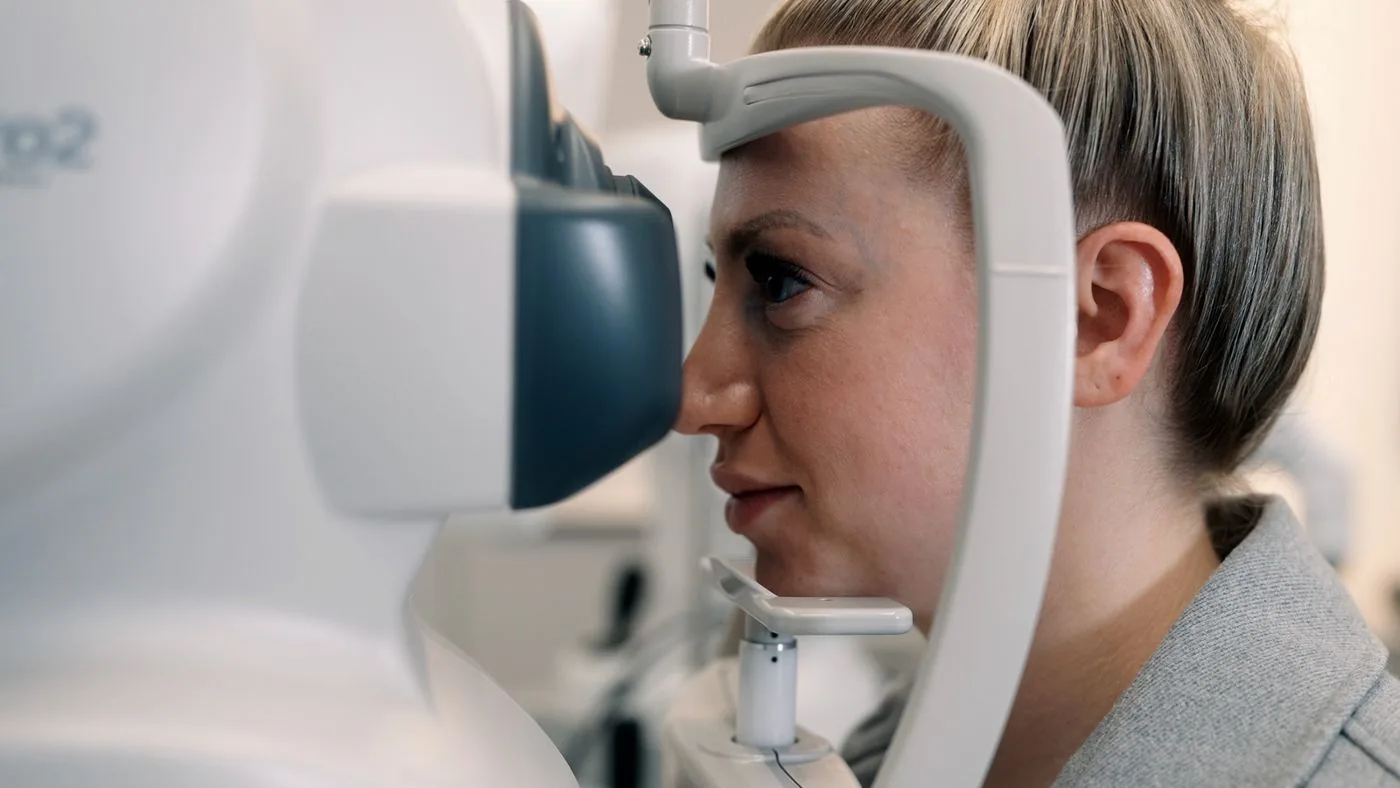
The first look at the optic nerve.
At 40, the first check-up establishes your baseline values, which later follow-up checks compare against.
To the eye check-upStation 5 of 5

Macula, lens, optic nerve.
At this age, a finding is common. Many then need no treatment, just a good follow-up plan.
CataractBecause from 40 the quiet diseases begin.
From 40, the risk of glaucoma rises with each decade, and about half of those affected do not know about it. The optic nerve loses fibers without pain and without a drop in visual acuity. That is why the DOG and BVA recommend the first glaucoma screening at 40.
from 40
Lost optic nerve fibers do not grow back. Detected early, one drop in the evening is often enough.
from ~45
Not a sign of disease, but a good reason for the first check-up.
1 in 2
Only a look at the optic nerve finds it, not the eye test.
The glaucoma screening guideline of the DOG and BVA gives, for people without risk factors, every five years between 40 and 59 and every two to three years from 60. These are minimum intervals for a single disease, glaucoma.
Many eye doctors and guides recommend shorter intervals from 40, for example every one to two years, because preventive care also covers macula, retina, lens and glasses values, and many people have at least one risk factor. dr.vision also often recommends shorter intervals after the first findings.
Our advice: go for the first time at 40, have your personal risk assessed, and take the interval your eye doctor gives you after the findings.
Statutory health insurers usually do not pay for glaucoma screening without suspicion, mainly because measuring only eye pressure misses many people with the disease and worries some healthy people. The professional societies counter that the examination is meaningful when the optic nerve is assessed; this is how it is described in the guideline. An OCT can complement this.
Eleven reasons for shorter intervals.
If you have diabetes, you are usually due every one to two years; if you have glaucoma in the family or are highly nearsighted, often yearly. Some medications also require fixed check-ups. If a row applies to you, it takes precedence over the general schedule.
| Risk group | How often? | Why | Source |
|---|---|---|---|
| Type 2 diabetes | from diagnosis; every 2 years without retinal findings and without risk, otherwise yearly or more often | Diabetic retinal changes cause no symptoms for a long time | NVL Diabetes [2] |
| Type 1 diabetes | from age 11 or at the latest 5 years after diagnosis, then as above | as above | NVL Diabetes [2] |
| Glaucoma in parents or siblings | shorter intervals than without risk, in practice usually yearly, start earlier | Clearly higher risk of disease | Glaucoma screening guideline [1] |
| Elevated eye pressure | shortened intervals, usually every 6–12 months | Most important treatable risk factor for glaucoma | Glaucoma screening guideline [1] |
| Nearsightedness above −4 D | shortened intervals for glaucoma screening | Higher glaucoma risk | Glaucoma screening guideline [1] |
| Nearsightedness from about −6 D | at least yearly, with a look at the retinal periphery | Retinal tears, detachment, myopic macular damage more common | dr.vision practice recommendation; DOG/BVA myopia statement [5] |
| Pseudoexfoliation (deposits on the lens) | shortened intervals | Common cause of secondary glaucoma | Glaucoma screening guideline [1] |
| Hydroxychloroquine or chloroquine | Baseline examination in the first months of therapy, yearly from the 5th year of therapy, earlier with special risk | Damage to the retina possible after long-term use | AWMF guideline 045-016 (2025) [3] |
| Cortisone (drops, spray, tablets) over a longer period | according to the doctor's plan, especially at the start | Eye pressure may rise, cataract earlier | Prescribing information; interval set by the doctor |
| Macular degeneration in the family, smoking | regularly from 50, interval according to findings | Hereditary component; smoking is a strong risk factor | no fixed guideline figure |
| High blood pressure, cardiovascular disease | according to findings, usually every 1–2 years | Vascular changes and occlusions in the retina | no fixed guideline figure |
Without a fixed guideline figure, your eye doctor sets the interval according to the findings. Several risk factors together usually mean: yearly.
Pressure alone is not preventive care.
Meaningful preventive care assesses at least eye pressure and optic nerve; the guideline explicitly requires a look at the optic nerve head. An OCT of the optic nerve and macula and a retinal image provide more certainty. An eye test at the optician does not replace this.
Many people with glaucoma have normal eye pressure. Many with high pressure never become ill. Only a look at the optic nerve turns a number into a finding.
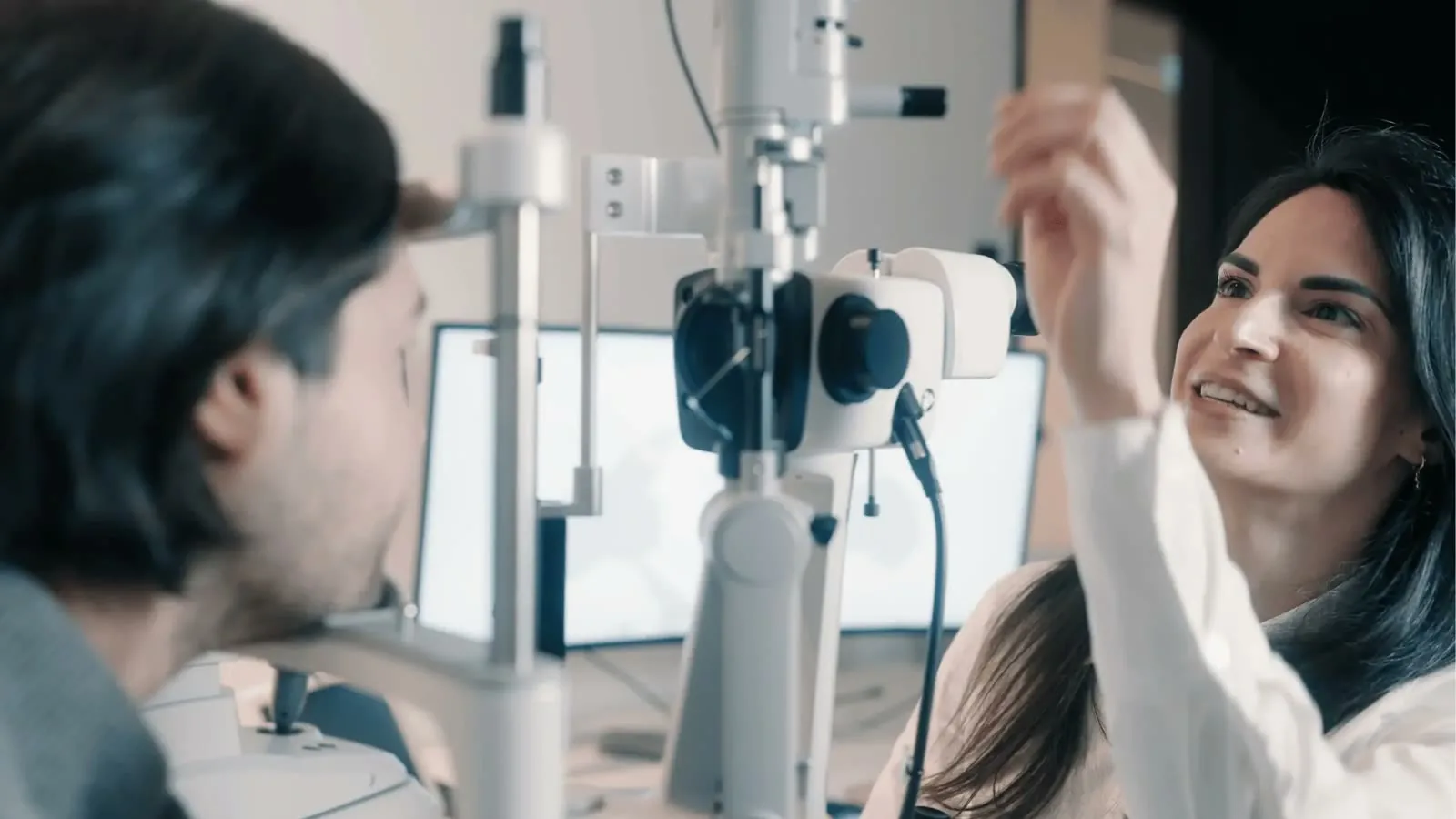
Corneal thickness distorts the measured pressure. That is why it is part of the examination.
At the slit lamp and, if possible, on OCT. This is the core of glaucoma preventive care.
Macula OCT and a retinal image find macular degeneration, diabetes-related damage and retinal tears.

When are you due?
We tell you. In two minutes.
Tell Jana from our Patient Care team your age, pre-existing conditions and your last eye doctor appointment. She gives you the right scope of check-up and the next available appointment, also in the evening and on Saturdays. Reachable around the clock.
Some signs do not wait.
The schedule applies to eyes without symptoms. With sudden changes, every hour counts: flashes of light, a swarm of new black dots, a shadow or curtain, a red, painful eye need to see an eye doctor on the same day; with sudden loss of vision, go straight to the eye hospital or call 112.
Possible signs of a retinal tear or retinal detachment. Have it examined on the same day.
In one eye, painless or not: vascular occlusion, bleeding or inflammation possible.
Can be an acute glaucoma attack. Emergency, also at night.
Straight edges look wavy: a sign of a macular disease. Have it clarified within a few days.
If it appeared suddenly: also consider neurological causes and have it clarified by a doctor quickly.
With chemicals, rinse immediately for at least 15 minutes with plenty of water, call 112 and keep rinsing until help arrives.
Little, but the little helps.
Do not smoke, protect your eyes from UV light, keep blood sugar and blood pressure well controlled and, for children, make sure they get two hours of daylight a day. And: once a week, test each eye separately by covering the other.
Read with each eye separately once a week. Many changes are noticed only this way, because otherwise the better eye compensates.
Smoking is one of the strongest modifiable risk factors for macular degeneration.
Protects lens and retina, especially near water, in snow and in the mountains.
Well-controlled values are the best protection for the retinal vessels.
At least two hours a day outdoors can delay the development of nearsightedness, says the statement of the DOG and BVA.
Look into the distance regularly and blink deliberately: against dry, tired eyes.
Transparent and in advance.
dr.vision is a private practice. Patients with statutory health insurance pay themselves with us; the eye check-up costs from €120. Patients with private health insurance are billed through their insurer under the German fee schedule for physicians (GOÄ); the Beihilfe (allowance for German civil servants) reimburses medically necessary examinations in proportion to your reimbursement rate, but usually not pure preventive care without a reason. We always inform you about costs in advance.
Your plan. Your reminder. Your images.
At the first eye check-up, dr.vision establishes your baseline values and tells you the suitable next appointment, by age and risk. You can arrange the next appointment right away, and we remind you the day before. Because every image is saved, we also see small changes next time.
No blanket advice: your next appointment depends on your findings and your risk factors.
The ultra-widefield retinal image usually works without pupil dilation. Usually you drive home yourself.
Reminder the day before your booked appointment, report to your family doctor or diabetes specialist on request.
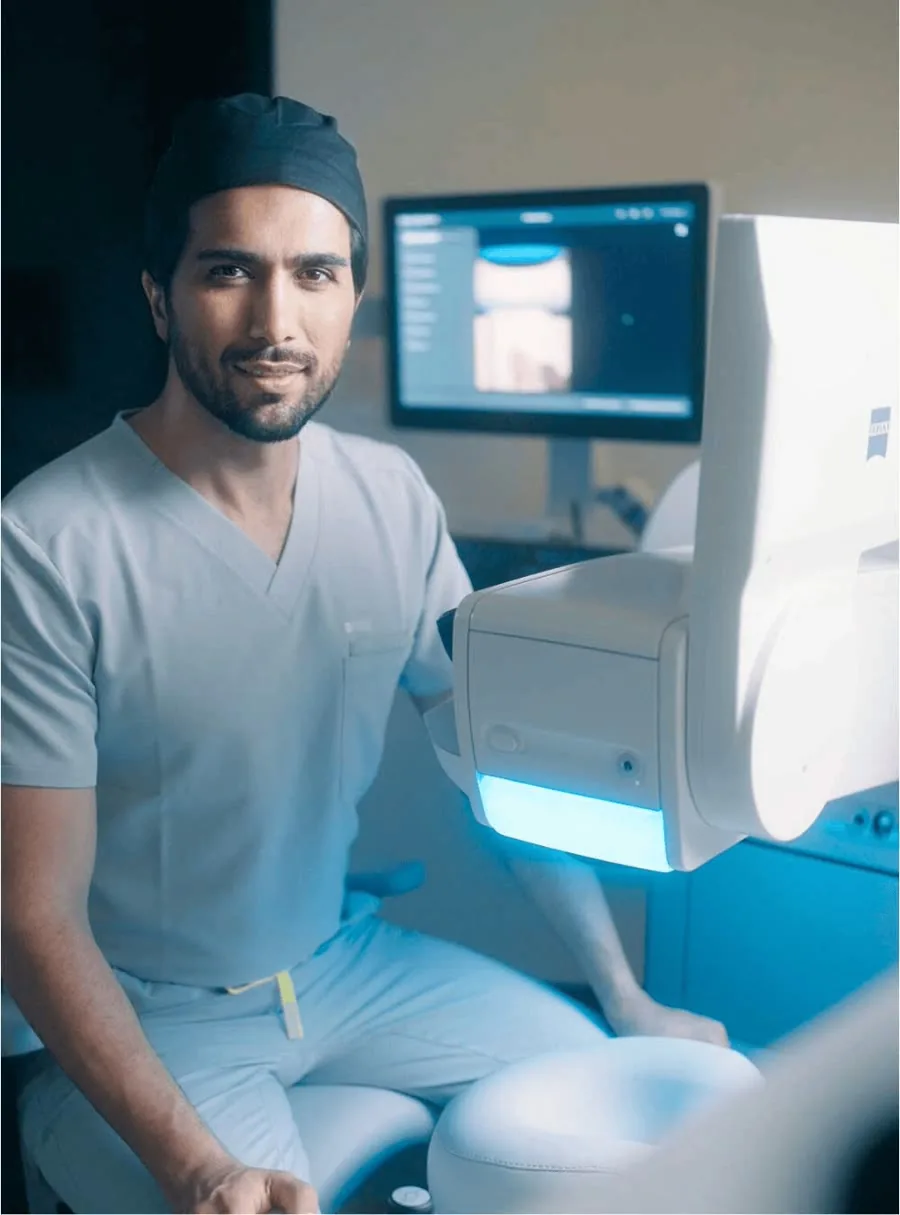
A team of specialist physicians. With time for your questions.
Prof. Dr. Mehdi Shajari and the physician team of dr.vision take care of your preventive care. Prof. Dr. Mehdi Shajari is a specialist in ophthalmology with a professorship and habilitation at the University of Frankfurt and Medical Director of dr.vision.
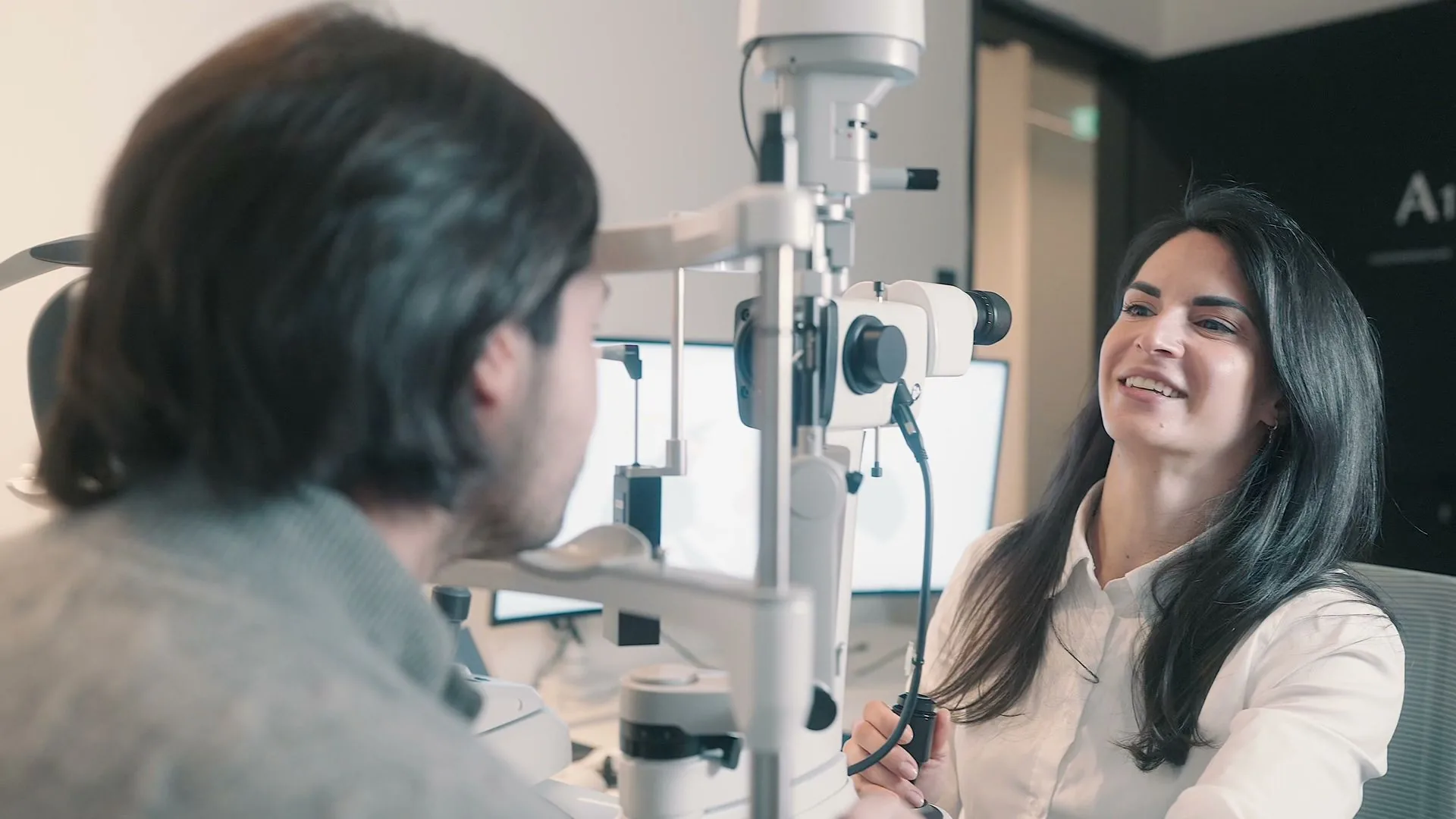
Because every finding needs an answer.
Modern diagnostics and the full spectrum of ophthalmology under one roof: much of what preventive care finds, we treat directly with us, from the follow-up check to surgery. Specialist physicians from university medicine, appointments also in the evening and on Saturdays, in the middle of Frankfurt. 5.0 stars from 376 reviews.
Go deeper.
All examinations with duration, what they find and how the appointment goes.
To the eye check-up ChildrenAge-based schedule, warning signs, strabismus and slowing nearsightedness.
To the pediatric eye doctor Optic nerveWhy screening needs the optic nerve and how it is treated.
To the glaucoma page DiabetesCheck-ups, findings and treatment of diabetic retinal damage.
Learn more MaculaEarly signs, self-test and what smoking has to do with it.
Learn more GuidesAnswers to the most common questions about the eye.
To the overviewStill have questions?
These are the questions we hear most often in consultation hours. Prof. Dr. Mehdi Shajari has medically reviewed the answers.
From 40, the glaucoma screening guideline of the DOG and BVA recommends preventive care with eye pressure and optic nerve every five years, and from 60 every two to three years. Between 18 and 40, without symptoms and without risk factors, no regular preventive care is required. Many eye doctors, including us, often recommend shorter intervals after the first findings.
From 40, because from then on glaucoma and later macular degeneration become more common and presbyopia begins. Regardless of this, children should be examined by an eye doctor once between the 30th and 42nd month of life, children at risk already in the first year of life.
Because different things are mixed up. The glaucoma screening guideline gives minimum intervals for people without risk. Practices and guides often recommend shorter intervals because, besides glaucoma, they also look at the macula, retina and glasses values. For risk groups such as diabetes, separate guidelines apply. What matters is your personal risk.
According to the National Disease Management Guideline, every two years without retinal changes and without additional risk factors, otherwise yearly or more often. With type 2 diabetes, check-ups begin at diagnosis; with type 1 diabetes, at the latest five years after diagnosis. Bring your diabetes passport.
More often than average and earlier. The glaucoma screening guideline explicitly shortens the intervals when close relatives have glaucoma. In practice this usually means yearly from 40, and for parents who became ill early, even earlier, always with a look at the optic nerve, supplemented by OCT if needed.
Yes. From about minus six diopters, the risk of retinal tears, retinal detachment, glaucoma and changes in the macula rises. We recommend a check-up at least once a year with a look at the retinal periphery. From minus four diopters, the glaucoma guideline also shortens the intervals.
In Germany there is so far no obligation for regular eye tests in old age for a car driver's license. However, you are yourself responsible for driving only with sufficient vision. From 60, check-ups every two to three years make sense anyway; at those, we also tell you whether your vision is sufficient for driving.
There is no fixed guideline. A check of the cornea by an eye doctor about once a year is usual, in addition to the fitting at the optician. With red, painful eyes or worse vision with lenses: take the lenses out immediately and see an eye doctor the same day.
Statutory insurance pays for the examinations of children as part of the U examinations at the pediatrician, the eye doctor check-ups for diabetes and examinations for symptoms or suspicion. Glaucoma screening without suspicion is a self-pay service. Private insurers reimburse depending on the plan. dr.vision is a private practice.
Preventive care is the umbrella term: having your eyes checked regularly before symptoms appear. The eye check-up at dr.vision is an appointment that makes this preventive care comprehensive, with eye pressure, optic nerve, ultra-widefield retinal image and macula OCT, usually without dilating drops.
Medically reviewed by Prof. Dr. Mehdi Shajari · As of October 2026
Your preventive care roadmap to read at home.
Arrives by e-mail in about 60 seconds. No newsletter, just the guide and, if you wish, a follow-up from Patient Care. Privacy policy
How would you like to continue?
The check-up includes measurements, the medical examination and a findings talk with your images. You go home with a written report and your next preventive appointment, and usually you can drive yourself.
In Frankfurt, Junghofstraße 16 · also evenings and Saturdays
Our locations.
 Opening hours
Junghofstraße 16, 60311 Frankfurt am Main
 Opening 2027
Breite Straße 69, 40213 Düsseldorf (in the Neuer Stahlhof, corner of Graf-Adolf-Platz)
Until opening: preliminary talk in Frankfurt, Patient Care plans your travel.
Plan route Opening 2027
Lautenschlagerstraße 23, 70173 Stuttgart (2nd floor, step-free access)
Until opening: preliminary talk in Frankfurt, Patient Care plans your travel.
Plan route