 dr.vision
How safe?
99.9% safety rate. Infection and ectasia: each under 1 in 1,000.
All numbersStart here
What suits you?
Find out in 2 minutes which procedure suits your eyes.
Start the Suitability CheckOr by age:
< 45yearsGet rid of glasses & contact lenses 45–64yearsGet rid of reading glasses 65+yearsCataract & glasses-free★★★★★ 5.0 · 376 Google reviews · 20,000+ procedures
Decide well
What you should know beforehand.
Who operates?Prof. Dr. Mehdi ShajariFOCUS Top Doctor · operates on every patient personally What does it cost?Laser from €3,498 · Lenses from €6,886Prices for both eyes Is it safe?Safety & risks When will I be fit again?Work, sports, driving Would you rather read in peace first?Decision Guide Freedom from GlassesProcedures
Laser or lens?
Laser eye surgery
SMILE ProSmartSightFemto-LASIKTrans-PRKPRKPresbyond (laser away your reading glasses)All laser procedures at a glanceLaser procedures compared ›Lens surgery
ICLLens exchange (reading glasses)Cataract surgery with premium lensLens types: trifocal, EDOF, toricLens types compared ›Start here
Something wrong with your eyes?
A thorough eye check-up with us clarifies what is behind it.
Book an eye check-up★★★★★ 5.0 · 376 Google reviews
Safety & aftercare · Why dr.vision?
99.9% safety rate. And a plan for the rare exceptions.
Would you like to know how safe laser eye surgery really is? Here the risks are stated openly with their frequencies. Prof. Dr. Mehdi Shajari performs the laser treatment on every patient personally, with experience from over 20,000 procedures, and after the procedure you can reach us through a 24/7 emergency number.
 12× FOCUSTop Doctor
In more than 20,000 procedures by Prof. Dr. Mehdi Shajari, the safety rate is 99.9%. Severe complications are very rare: an infection affects fewer than 1 in 1,000 eyes after SMILE Pro, and a bulging of the cornea (ectasia) clearly fewer than 1 in 1,000. Common, but usually temporary, are dry eyes in about 3 in 10 in the first weeks. Safety comes from four links: pre-operative examination that rules out unsuitable eyes, a sterile procedure, an emergency plan, and aftercare with a 24/7 emergency number.
Reviewed by Prof. Dr. Mehdi Shajari, October 25, 2026.
376 reviews. Average 5.0.
376 Google reviews give dr.vision an average of 5.0 out of 5 stars. dr.vision does not check whether Google reviews come from treated patients.
“I was here for the first time yesterday; the Focus list had convinced me. Prof. Dr. Shajari makes a very competent impression and is also super likable.”
“I have been a patient of Dr. Shajari for a long time and now also in his new practice. With him, you are in very good and safe hands!”
“I had great confidence in his surgical skill, since cataract surgeon friends recommended him to me as the ‘best’.”
“To the whole team: stay as you are! P.S. I myself have statutory and not private health insurance and paid this whole process out of my own pocket!”
In five answers.
For anyone with three minutes. Each answer leads to the detailed chapter.
99.9% safety rate. Infection and ectasia: each under 1 in 1,000.
All numbersAnyone with a cornea that is too thin or unstable, who is pregnant, or whose values fluctuate. The measurement decides.
ExclusionThere is a plan for every situation, from loss of suction to an infection on the weekend.
Emergency planBurning and light sensitivity on the first day: yes. Increasing pain and worse vision: call immediately.
Warning-sign checkWith complaints during practice hours, Patient Care; otherwise the emergency number from your treatment documents.
AccessibilityCounted honestly.
Of 1,000 eyes treated at dr.vision, 999 go without complications. The table shows what can happen in the rest, how often, and whether it lasts. Most side effects are temporary; severe, lasting damage is very rare.
| Key figure | Frequency | Temporary or lasting? | Source |
|---|---|---|---|
| Safety rate | 99.9% | – | dr.vision, |
| Full visual acuity after 3 months (SMILE Pro) | 96% | – | dr.vision, n = 412, 01/2024–01/2026 |
| Enhancement needed (SMILE Pro) | 0.6 % | correctable, see enhancement | dr.vision, n = 412 |
| Dry eyes | 3 in 10 in the first weeks | usually temporary | Informed-consent talk at dr.vision |
| Halos at night | common in the first weeks, about 5 in 100 after 3 months | usually receding | Informed-consent talk at dr.vision |
| Infection | under 1 in 1,000 | usually without lasting effects with immediate treatment | Informed-consent talk at dr.vision |
| Corneal bulging (ectasia) | well under 1 in 1,000 | lasting, treatable (cross-linking) | Informed-consent talk at dr.vision |
| Complication in cataract surgery | under 0.2% | – | dr.vision, n = 1,100, 2022–2026 |
Frequencies after SMILE Pro, as stated in our informed-consent talk. All risks of all procedures with explanations and everyday comparisons: Laser eye surgery risks & side effects.
A percentage is only as good as its definition. For the 99.9%, we count across 20,000+ procedures. Temporary side effects such as dry eyes in the first weeks, and enhancements, do not count as a complication; we list these separately above.
Ask every provider about these three things: What was counted, how many eyes, which time period? Without these details, safety rates cannot be compared.
Four links. None may be missing.
Most complications are not prevented in the operating room but before and after. Our safety chain has four links: selection through the pre-operative examination, a sterile procedure, an emergency plan for every situation, and aftercare that can be reached around the clock.
Cornea in 3D, thickness, tear film, retina. Anyone who cannot be treated safely with the laser is not treated.
prevents ectasia and planning errorsProcedure room with hygiene plan, single-use materials, disinfection, a surgeon with 20,000+ procedures.
prevents infectionsLaser stops when suction is lost, clear routines for every deviation, a physician on site.
limits consequencesFollow-up check on day 1, after one week, after one and three months. 24/7 emergency number.
detects problems earlyA no is also a result.
The most important safety step is selection. The pre-operative examination checks whether your cornea is thick and stable enough and whether your values have been stable for at least 12 months. According to the KRC, at least 250 µm of cornea must remain below the treated zone after laser treatment. Anyone who does not meet these limits receives a different recommendation.
| Findings | Why no laser | What instead |
|---|---|---|
| Cornea too thin for the planned removal of tissue | Too little remaining tissue increases the ectasia risk | Trans-PRK for low values or ICL (an additional lens in front of your own lens) |
| Irregular cornea, suspected keratoconus | Laser treatment can trigger a bulging | Follow-up check, if needed cross-linking; consider ICL |
| Values not stable (change in the last 12 months) | The result would not last | Wait and measure again |
| Nearsightedness beyond −8 D | A lot of tissue removed, poorer predictability | ICL |
| From about 45, presbyopia | Distance correction alone does not solve reading | Presbyond or Lens exchange |
| Pregnancy, breastfeeding | Hormones change the cornea and values | Measure again after breastfeeding |
| Untreated, severely dry eye; active inflammation | Poorer healing, distorted measurement | Treat first, then measure again |
All contraindications in detail at Laser eye surgery risks.

Safety begins with the measurement
We will also tell you if laser treatment does not suit you.
Jana from our Patient Care team arranges your pre-operative examination with Prof. Dr. Mehdi Shajari. You go home with your measurements and an honest recommendation. Phone reachable 24 hours a day, WhatsApp Mon–Fri 8:00–19:00, Sat 9:00–15:00.
Sterile. Calm. Experienced.
The procedure takes place in its own procedure room, with single-use materials and according to our fixed hygiene plan. Prof. Dr. Mehdi Shajari operates on every patient himself. A well-practiced team is in the room. The laser time for SMILE Pro is about 8 seconds per eye; the procedure for both eyes takes about 20 minutes.
Identity, eye and treatment plan are checked together. The eyelid margin and skin are disinfected, the eyelashes covered. A checklist before every procedure.
Single-use contact glass and single-use instruments. If the suction comes loose, the laser stops. You hear every step announced.
Antibiotic and anti-inflammatory drops, a short rest, a look at the slit lamp before you go home. Accompanied home.
Come without eye makeup and perfume, use drops as planned, do not rub. You can find the whole course of the day under Process.
ZEISS VisuMax 800 and excimer laser from ZEISS, with eye tracking. All devices at Technology & diagnostics.
A plan for every situation.
Deviations during the procedure are rare, but prepared for. The most common case is a loss of suction in SMILE Pro, when the eye moves: the laser stops immediately, and depending on the moment, the procedure is continued, switched to another procedure, or repeated on another day.
| Situation | What happens | Who acts |
|---|---|---|
| Loss of suction during SMILE Pro | Laser stops automatically. Continue, switch to Femto-LASIK or PRK, or a new appointment after findings | Prof. Dr. Mehdi Shajari, in the room |
| Strong restlessness, fear | Pause, reassurance, if you wish a mild sedative; no procedure under pressure | Team and surgeon |
| Technical fault in the laser | No continuing with limited equipment; new appointment, unchecked | Surgeon, medical technology |
| Circulation problems | Lying down, monitoring, medical care on site | Team, physician |
| Suspected infection in the days afterward | Examination on the same day, treatment immediately | Emergency number, physician |
| Displaced flap (corneal cap) after Femto-LASIK | Repositioned on the same day | Prof. Dr. Mehdi Shajari |
Four appointments. Included in the price.
After laser eye surgery, we see you on day 1, after one week, after one month and for the final follow-up check after about three months. The follow-up checks are included in the price. With ICL and lens exchange, a check of the retina and eye pressure is added.
Visual acuity, cornea at the slit lamp, with Femto-LASIK the position of the flap. Afterward, usually clearance to drive if visual acuity is sufficient.
Surface closed? Dryness? The drop plan is adjusted. After PRK, this is the appointment at which the bandage lens comes out.
First measurement of the values and the tear film. We now treat dry eyes in a targeted way.
Final visual acuity, comparison with the baseline values. If a bothersome residual remains, we discuss an enhancement.
Visual acuity, eye pressure, position of the lens, signs of inflammation. Drop plan for about 4 weeks.
With lens exchange, the second eye is usually operated on a week later; follow-up check of the first eye beforehand.
OCT (cross-sectional scan) of the center of the retina (to rule out macular edema), eye pressure, glasses values.
Final result; afterward follow-up checks like at a normal eye doctor visit. Secondary cataract can appear years later and is resolved in minutes with a laser.
Patients from far away: your eye doctor at home can take over the later follow-up checks, using our aftercare plan. More at Traveling from farther away.
Normal, call tomorrow, or immediately?
Burning, tearing and light sensitivity in the first hours to days are normal. An emergency is increasing pain, increasing redness, and vision that gets worse instead of better, especially from day 2. After ICL or lens surgery, flashes of light, a shower of black specks and a shadow in the visual field are added. Then call the emergency number immediately.
Two questions. A first assessment.
Which procedure?
What do you notice?
Classification
A first orientation, not a substitute for an examination. If in doubt, call: during practice hours 069 509 586 770 (reachable 24 hours a day), otherwise the emergency number from your treatment documents. In case of sudden vision loss when the practice cannot be reached: the nearest eye hospital.
| What you notice | Classification | What you do |
|---|---|---|
| Burning, foreign-body sensation, tearing in the first hours | Normal | Close your eyes, sleep, drops as planned |
| Dryness, fluctuating sharpness, better after blinking | Common, usually temporary | Artificial tears; mention it at your next follow-up appointment |
| Halos and glare at night in the first weeks | Common, usually improves by month 3 | Wait; if you have complaints, call on the next working day |
| Pain that gets stronger instead of weaker from day 2 | Warning signs | Immediately emergency number |
| Vision gets worse instead of better, redness increases, pus | Warning sign (infection possible) | Immediately emergency number |
| After ICL/lens: flashes of light, a shower of black specks, a shadow or curtain | Warning sign (retina) | Immediately emergency number |
| Blow or knock to the operated eye | Have it checked | Call on the same day |
In detail, with all side effects and their frequencies: Laser eye surgery risks & side effects.
Around the clock. With names.
At night and on weekends after the procedure, in emergencies call the 24/7 emergency number from your treatment documents. During practice hours, Mon–Fri 8:00–19:00 and Sat 9:00–15:00, you can reach Patient Care and the practice with any complaints at 069 509 586 770 (reachable 24 hours a day).
| When | How | Who responds | Used for |
|---|---|---|---|
| Mon–Fri 8:00–19:00 | 069 509 586 770 (reachable 24 hours a day), WhatsApp, callback | Patient Care (Jana), physicians on site | Questions, drop plan, appointments, complaints |
| Sat 9:00–15:00 | 069 509 586 770 (reachable 24 hours a day), WhatsApp | Practice Frankfurt | Questions and follow-up checks |
| Nights, Sundays and public holidays | 24/7 emergency number from the treatment documents | dr.vision | Warning signs only: pain, worsening vision, redness, flashes |
| At home, far away | Your eye doctor with our aftercare plan | Consultation with Prof. Dr. Mehdi Shajari if you have questions | Later follow-up checks |
Then we correct it.
In about 2 in 100 laser-treated eyes, a bothersome residual error in diopters remains; at dr.vision it was 0.6% (SMILE Pro, n = 412). If an enhancement is medically advisable, under our concept it is usually possible within 6 months without a co-payment.
An enhancement is done after about 3 months at the earliest, when two measurements agree. Dryness or presbyopia is not a residual error.
Re-measurement, procedure and follow-up checks within 6 months. After that, against a written cost estimate.
Frequency, timing, technique per procedure and costs at Enhancement after laser eye surgery.
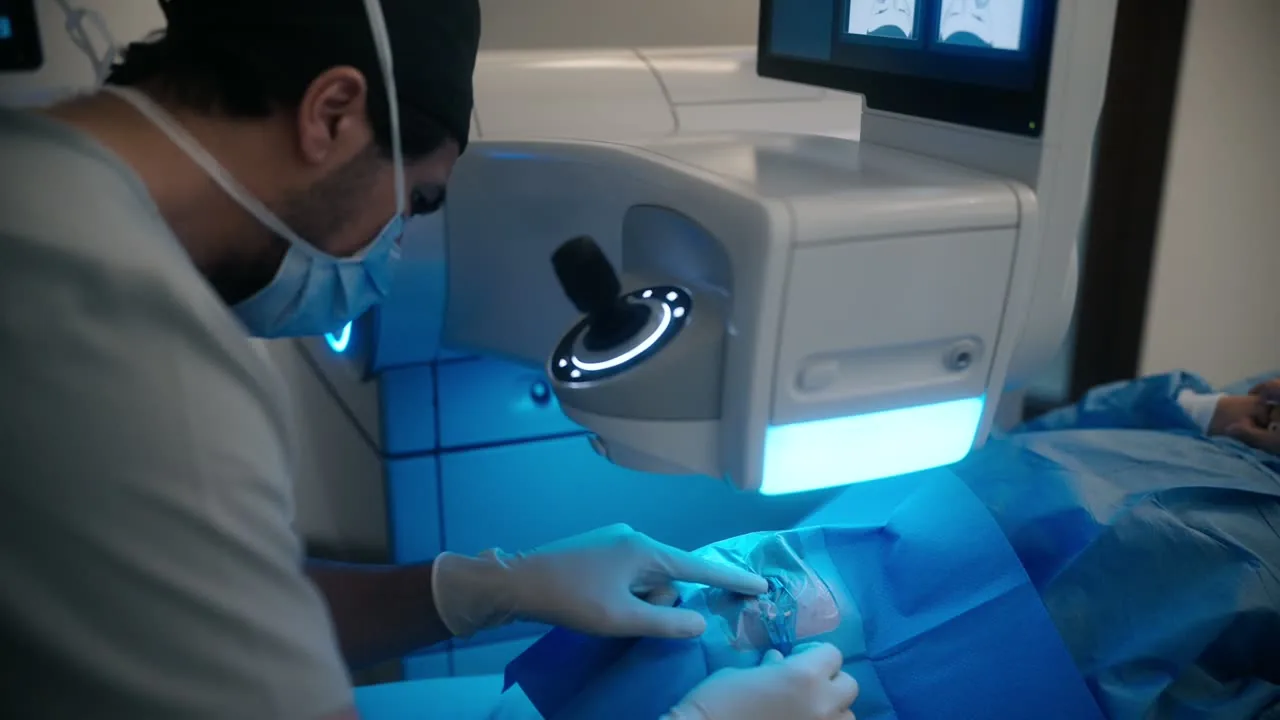
Because you entrust us with your eyes.
Prof. Dr. Mehdi Shajari examines, performs the laser treatment and follows up himself. 20,000+ procedures, 99.9% safety rate, and for the rare exceptions a plan that also works at night.
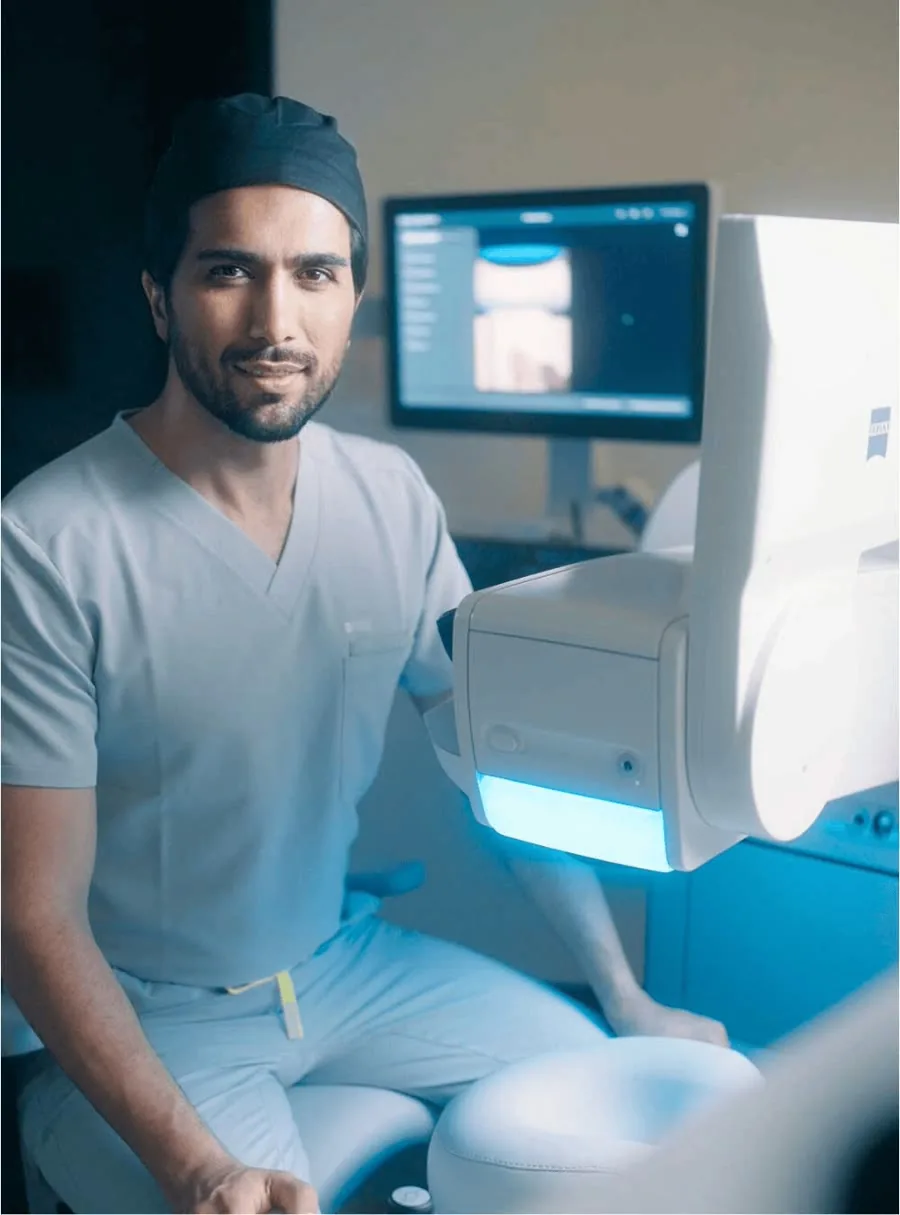
Prof. Dr. Mehdi Shajari. Personally.
Prof. Dr. Mehdi Shajari operates on every patient himself. He is responsible for safety at dr.vision. He decides whether laser treatment is done and is responsible for your aftercare. He is a specialist in ophthalmology with professorship and habilitation at the University of Frankfurt and a 12× FOCUS Top Doctor. He has also medically reviewed this page.
At dr.vision
Whoever examines you beforehand also operates on you: Prof. Dr. Mehdi Shajari in person.
The person who assessed your measurement also does the laser treatment. Details do not get lost between doctors.
96% full visual acuity after three months, 0.6% enhancement, with number of cases and time period.
If laser treatment does not suit you, we recommend ICL, lens exchange or glasses.
Go deeper.
This page shows what dr.vision does for your safety. For more depth:
Every risk of every procedure with frequency and everyday comparison.
View risksEnhancementHow often, when, how for each procedure, and what it costs.
To the guidesTrustWhich devices we use to measure and perform laser treatment.
To technologyTrustEvery appointment from the pre-operative examination to aftercare.
To the processGuidesWork, sports, driving after each procedure.
To the guidesSide effectThe most common side effect and what helps.
To the guidesStill have questions?
The questions patients ask most often about this during consultation hours. Prof. Dr. Mehdi Shajari
In more than 20,000 procedures by Prof. Dr. Mehdi Shajari, the safety rate is 99.9%. An infection affects fewer than 1 in 1,000 eyes after SMILE Pro, and a bulging of the cornea clearly fewer than 1 in 1,000. Common, but usually temporary, are dry eyes in about 3 in 10 in the first weeks.
Blindness from laser eye surgery is extremely rare. The most severe complications, infection and bulging of the cornea, each affect fewer than 1 in 1,000 eyes and are usually well treatable when treated early. That is why selection in the pre-operative examination and aftercare are so important.
Both procedures are established and safe. SMILE Pro has no corneal flap that can shift after a blow and cuts fewer corneal nerves, which is why dry eyes are less common. Femto-LASIK, in turn, also treats farsightedness. You can find the comparison on the page SMILE Pro vs. Femto-LASIK.
The technology compensates for small movements. If the suction comes loose during SMILE Pro, the laser stops immediately; then the procedure is continued, switched to another procedure, or the laser treatment is repeated on another day. A wrong cut caused by a movement is therefore not possible.
We check on day 1, after one week, after one month and after about three months. The follow-up checks are included in the price.
Pain that gets stronger instead of weaker from day 2, increasing redness or pus, and vision that gets worse instead of better. After ICL or lens surgery, also flashes of light, a shower of black specks or a shadow in the visual field. Then call the emergency number immediately.
With your treatment documents you receive a 24/7 emergency number. During practice hours, Mon–Fri 8:00–19:00 and Sat 9:00–15:00, you can reach Patient Care and the practice with any complaints at 069 509 586 770 (reachable 24 hours a day).
We do the day 1 follow-up check in the practice. Your eye doctor at home can take over later follow-up checks with our aftercare plan; if there are questions, they coordinate with us. The emergency number also applies at home.
This affects about 2 in 100 eyes, 0.6% at our practice (SMILE Pro, n = 412). If an enhancement is medically advisable, under our concept it is usually possible within 6 months without a co-payment; laser re-treatment is done after about three months at the earliest.
Prof. Dr. Mehdi Shajari, based on the pre-operative examination and together with you. If the cornea is too thin or irregular, the values are not stable, or there is a pregnancy, we advise against it and name alternatives such as ICL or lens exchange.
Medically reviewed by Prof. Dr. Mehdi Shajari · As of October 2026
Not ready yet? Everything important to read again and to pass on.
Arrives by e-mail in about 60 seconds. No newsletter, just the guide and, if you wish, a follow-up from Patient Care. Privacy policy
How would you like to continue?
Only the pre-operative examination shows whether laser eye surgery is safe for your eyes. You arrange the appointment by phone or online. We measure your cornea, tear film and retina and tell you which procedure fits safely, or that none does. You receive a written recommendation and, if you wish, a cost estimate.
In Frankfurt, Junghofstraße 16 · detailed pre-operative examination with Prof. Dr. Mehdi Shajari
Our locations.
 Opening hours
Junghofstraße 16, 60311 Frankfurt am Main
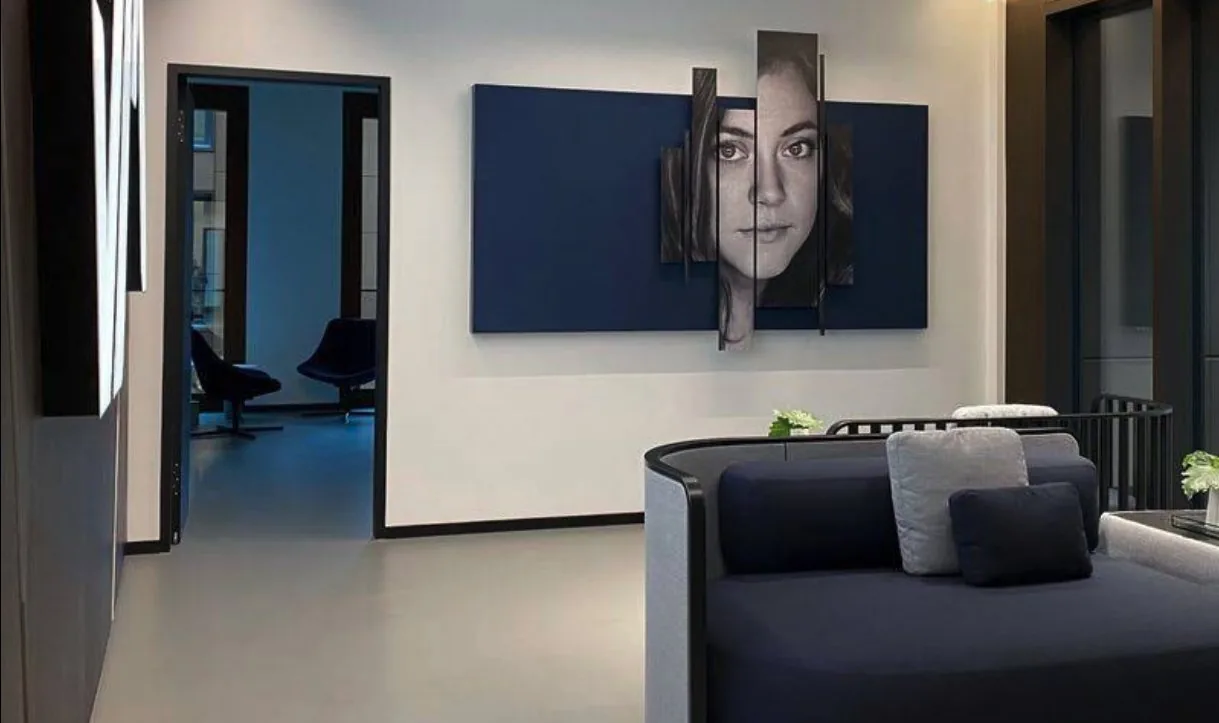 Opening 2027
Breite Straße 69, 40213 Düsseldorf (in the Neuer Stahlhof, corner of Graf-Adolf-Platz)
Until opening: preliminary talk in Frankfurt, Patient Care plans your travel.
Plan route Opening 2027
Lautenschlagerstraße 23, 70173 Stuttgart (2nd floor, step-free access)
Until opening: preliminary talk in Frankfurt, Patient Care plans your travel.
Plan route