 dr.vision
How many appointments?
Three up to the first result: pre-operative examination, procedure, follow-up check. Then two more follow-up checks: after one week and after 1 to 3 months.
TimelineStart here
What suits you?
Find out in 2 minutes which procedure suits your eyes.
Start the Suitability CheckOr by age:
< 45yearsGet rid of glasses & contact lenses 45–64yearsGet rid of reading glasses 65+yearsCataract & glasses-free★★★★★ 5.0 · 376 Google reviews · 20,000+ procedures
Decide well
What you should know beforehand.
Who operates?Prof. Dr. Mehdi ShajariFOCUS Top Doctor · operates on every patient personally What does it cost?Laser from €3,498 · Lenses from €6,886Prices for both eyes Is it safe?Safety & risks When will I be fit again?Work, sports, driving Would you rather read in peace first?Decision Guide Freedom from GlassesProcedures
Laser or lens?
Laser eye surgery
SMILE ProSmartSightFemto-LASIKTrans-PRKPRKPresbyond (laser away your reading glasses)All laser procedures at a glanceLaser procedures compared ›Lens surgery
ICLLens exchange (reading glasses)Cataract surgery with premium lensLens types: trifocal, EDOF, toricLens types compared ›Start here
Something wrong with your eyes?
A thorough eye check-up with us clarifies what is behind it.
Book an eye check-up★★★★★ 5.0 · 376 Google reviews
Process · Why dr.vision?
Pre-operative examination, procedure, follow-up check. Three days.
The pre-operative examination, the procedure and the first follow-up check usually take place within 72 hours, with at least 24 hours to think it over before the procedure. Here you can see each appointment with its duration and what to bring. Prof. Dr. Mehdi Shajari treats you personally.
 12× FOCUSTop Doctor
At dr.vision, there are usually under 72 hours between the pre-operative examination and the first follow-up check: Day 1 pre-operative examination and information session with Prof. Dr. Mehdi Shajari (about 1.5 to 2 hours), Day 2 the procedure, at the earliest 24 hours after the information session (SMILE Pro for both eyes about 20 minutes), Day 3 the follow-up check. Further follow-up checks come after one week and, for the final assessment, after 1 to 3 months. Beforehand, leave out contact lenses: soft ones 10–14 days, rigid ones 3–4 weeks. With lens procedures, the second eye is usually operated on a week later.
376 reviews. Average 5.0.
376 Google reviews give dr.vision an average of 5.0 out of 5 stars. dr.vision does not check whether Google reviews come from treated patients.
“Just one day after the procedure I could see 100%, completely without pain or discomfort. The treatment with SMILE technology was super fast and I felt well taken care of from the start.”
“Before Femto-LASIK I had weak vision of about −4. The very next day I could see perfectly. Prof. Shajari was empathetic during the surgery and regularly asked about my well-being.”
“Within a week I had everything done – from the first consultation to the laser treatment to correct my vision (SMILE laser).”
“The best decision ever! I was treated at dr.vision in Frankfurt with the LASIK method and the result is perfect. From consultation to aftercare, everything went smoothly.”
Four patients. In their own words.
Constantly switching between glasses & contact lenses – not anymore.
It really was not that bad.
I wanted my life back – without glasses, without headaches.
I can see clearly again.
In five answers.
For anyone with three minutes. Each answer leads to the detailed chapter.
Three up to the first result: pre-operative examination, procedure, follow-up check. Then two more follow-up checks: after one week and after 1 to 3 months.
TimelinePre-operative examination about 1.5 to 2 hours, day of surgery for laser about 2 hours at the practice, follow-up check about half an hour.
All appointmentsLeave out soft ones 10–14 days, rigid ones 3–4 weeks before the pre-operative examination. The calculator shows your date.
To the calculatorGlasses, findings, list of medications. On the day of surgery: no makeup, sunglasses, way home arranged (companion or taxi).
Checklist4 in 10 of our patients come from more than 150 km away. The plan fits into less than 72 hours.
For patients from afarThree days. Five appointments.
The path has three sections: preparation (call, contact lens break), 72 hours with pre-operative examination, procedure and first follow-up check, and three months of aftercare. With lens procedures, a second surgery appointment for the second eye is added, usually a week later. Choose your path.
Jana from our Patient Care team asks about your prescription, your age and contact lenses and plans the appointments. On the phone, Patient Care also answers your questions before your visit. From now on the contact lens break runs.
Measurement of refraction, cornea in 3D, thickness, tear film and retina. Then Prof. Dr. Mehdi Shajari discusses the result, recommends a procedure and informs you. You receive a written cost estimate. This includes a look at the retina with a dilated pupil; afterward please do not drive yourself.
At the earliest 24 hours after the information session, so that you can decide calmly. Numbing drops, SMILE Pro for both eyes in about 20 minutes, Femto-LASIK also in about 20 minutes. Then a short rest, then home with a companion or by taxi, eyes closed, sleep.
Visual acuity and cornea at the slit lamp. Most people already see clearly. Driving yourself is usually possible again after about a week, in individual cases earlier, the doctor decides; office work is usually possible after SMILE Pro and Femto-LASIK after 1–2 days.
Surface, dryness, drop schedule. After PRK the bandage lens comes out now. Patients from afar can have this follow-up check done by their eye doctor at home.
Measurement of values and tear film, comparison with the baseline values. After three months the result is usually stable. All aftercare appointments are included in the price.
Patient Care schedules the pre-operative examination and both surgery appointments. With cataract or lens exchange: please tell us about medications such as blood thinners and tamsulosin (prostate). With ICL, the contact lens break starts now; with cataract and lens exchange a shorter break before the measurement is usually enough; we will tell you how long.
In addition to the cornea, optical biometry measures the length of the eye for the lens calculation, and the OCT measures the center of the retina. Prof. Dr. Mehdi Shajari discusses the suitable lens with you (monofocal, EDOF, trifocal, ICL). The pupils are often dilated with drops: in that case, do not drive yourself.
Numbing drops, a mild sedative on request. The procedure itself takes about 20 minutes; with preparation and rest you are at the practice for about 2 hours. With ICL, the eyes are usually operated on at separate appointments, one day to one week apart.
Eye pressure, position of the lens, visual acuity. Office work is usually possible after 1–2 days following ICL, and after 2–3 days following lens exchange.
With lens exchange and premium lenses we usually operate on the second eye a week later, so that the calculation can be adjusted; with monofocal lenses, after separate information, also on the same day. Again with a follow-up check the next day.
Retinal OCT, eye pressure, final values; then a glasses prescription, if needed for small print. Drops for about 4 weeks.
Healing day by day after cataract surgery: Cataract surgery: process and healing.
Every appointment at a glance.
Plan on about 1.5 to 2 hours for the pre-operative examination, about 2 hours for the day of surgery (lens: about 2 hours) and about half an hour for each follow-up check. You may usually drive yourself after laser surgery after about a week, after lens surgery usually a week after the second eye; in individual cases earlier, the doctor decides.
| Appointment | What happens | Duration | Driving yourself? |
|---|---|---|---|
| First contact | Questions, scheduling, contact lens break | 10–15 min | – |
| Pre-operative examination + information session | Measurements, conversation with Prof. Dr. Mehdi Shajari, cost estimate | 1.5–2 hrs (lens 2–3 hrs) | no, not for a few hours after dilating drops |
| Procedure | Numbing drops, laser or lens, rest phase | Laser both eyes about 20 min; about 2 hrs at the practice | No, way home with a companion or taxi |
| Follow-up check Day 1 | Visual acuity, cornea, if applicable clearance to drive | about 30 min | No, usually only after about a week |
| Follow-up check Week 1 | Healing, drop schedule | about 30 min | usually yes |
| Final check after 1 to 3 months | Values, tear film, conclusion | 30–45 min | yes |
Switch to glasses in good time.
Contact lenses slightly deform the cornea. So that the measurement shows its natural shape, leave out soft lenses 10–14 days and rigid (hard) lenses 3–4 weeks before the pre-operative examination, night lenses (ortho-K) 4–6 weeks. Until the procedure you stay with glasses. The calculator shows your last contact lens day.
Choose lens type and appointment.
Which contact lenses do you wear?
Your plan
| Contact lens type | Break before the pre-operative examination | Why |
|---|---|---|
| Soft contact lenses (daily, monthly lenses) | 10–14 days | Slight swelling and deformation of the cornea recede quickly |
| Rigid (hard) contact lenses | 3–4 weeks | They press the cornea into shape more strongly; the longer worn, the longer the break |
| Night lenses (orthokeratology) | 4–6 weeks | They deliberately reshape the cornea |
| Between pre-operative examination and procedure | Wear glasses | The measured shape must stay the same until the laser |

Plan appointments
Patient Care schedules all appointments in one conversation.
Jana from our Patient Care team schedules your pre-operative examination, procedure and follow-up check so they fit your calendar, Saturdays included. Mon–Fri 8:00–19:00, Sat 9:00–15:00.
Two short lists.
For the pre-operative examination, bring your glasses, earlier findings and a list of medications. On the day of surgery, come without eye makeup, face cream and perfume, with a companion who takes you home, and sunglasses.
Your current glasses and, if you have them, old glasses prescriptions or contact lens values. Findings from earlier eye examinations. A list of your medications and known allergies. Contact lenses left out in good time.
Your trip home arranged, with a companion or a taxi. Sunglasses. Comfortable clothing, no turtleneck. No eye makeup, face cream or perfume. Eat lightly beforehand and do not come on an empty stomach. No alcohol the day before.
The drops as per your schedule (you receive them from us), artificial tears, and the emergency number from your documents. Audiobooks instead of screens on the first evening.
Hotel within walking distance for two nights, return trip from Day 3. Everything about it at Traveling from further away.
About two hours. Eight seconds of laser.
On the day of surgery you are at the practice for about 2 hours. Of that, the procedure for both eyes with SMILE Pro takes about 20 minutes, the actual laser time about 8 seconds per eye. The rest of the time is preparation and rest. Numbing drops are used, you feel touch, but usually no pain.
Patient Care welcomes you, and Prof. Dr. Mehdi Shajari goes through the plan with you once more. On request, a mild sedative; in that case you should not go home alone.
Numbing drops, cleaning of the eyelid margin and skin, sterile draping. You lie comfortably under the laser.
You look at a light. Every step is announced. With SMILE Pro, the laser works for about 8 seconds per eye, after which the lenticule, a wafer-thin disc of tissue, is removed through the small access point.
Your vision is foggy and your eyes burn a little. We take one more look, and you receive your drops, plan and emergency number.
You go home with a companion or by taxi. By the evening, many people already see much better. Follow-up check the next morning.
Yes. 4 out of 10 patients come this way.
4 in 10 of our patients live more than 150 km away, from 14 countries. For them we schedule the pre-operative examination, procedure and first follow-up check in under 72 hours, for example Thursday to Saturday. Your eye doctor at home can take over the later follow-up checks.
| Day | What | You plan |
|---|---|---|
| Before | Info call by phone with Patient Care, contact lens break | Clarify values and questions, no travel needed |
| Thursday | Arrival, pre-operative examination and informed consent talk | Hotel for two nights |
| Friday | Procedure, then rest at the hotel | Companion |
| Saturday | Follow-up check in the morning, trip home | Train or ride share, do not drive yourself |
| At home | Follow-up checks after week 1 and after 1 to 3 months | Your eye doctor with our aftercare plan |
Travel, hotels, trip home: Traveling from further away. Laser on Friday, work on Monday: Glasses-free in one weekend.
Usually after one to three days, after PRK after 5–7 days.
Office work is usually possible after 1–2 days following SMILE Pro, Femto-LASIK and ICL, after 2–3 days following lens exchange, and after 5–7 days following PRK. Sports, swimming, makeup and flying have their own waiting periods, depending on the procedure.
| Procedures | Office / screen | Everything about sports, driving, sauna |
|---|---|---|
| SMILE Pro | 1–2 days | When will I be fit again? |
| Femto-LASIK | 1–2 days | When will I be fit again? |
| Trans-PRK | 5–7 days | When will I be fit again? |
| ICL | 1–2 days | When will I be fit again? |
| Lens exchange, cataract | 2–3 days | When will I be fit again? |
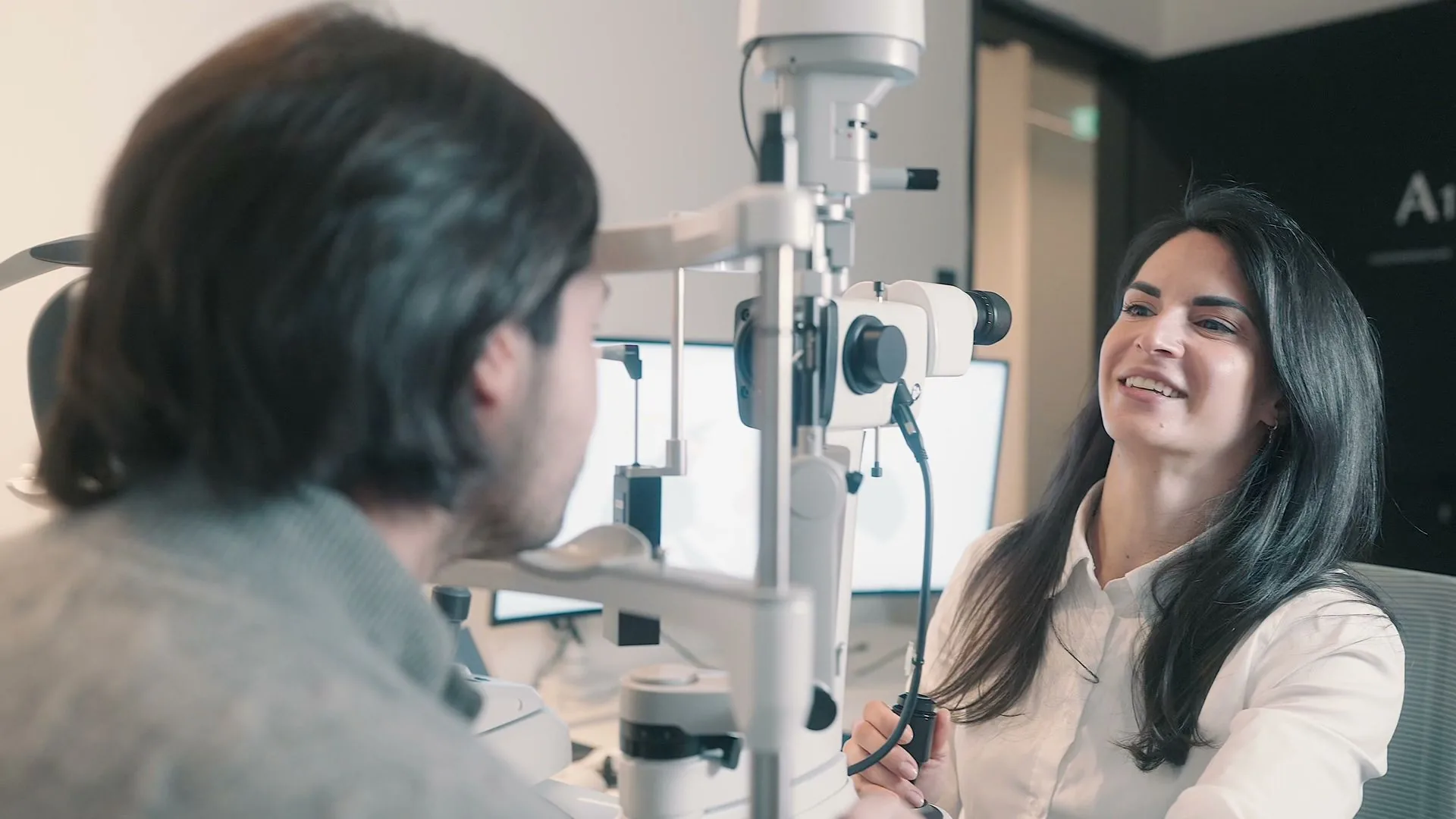
Because everything is under one roof.
Measurement, consultation, procedure and follow-up check all take place in one practice, at Junghofstraße 16 in Frankfurt, with one doctor. No referrals, no waiting for findings. Fast never means: without time to think it over.
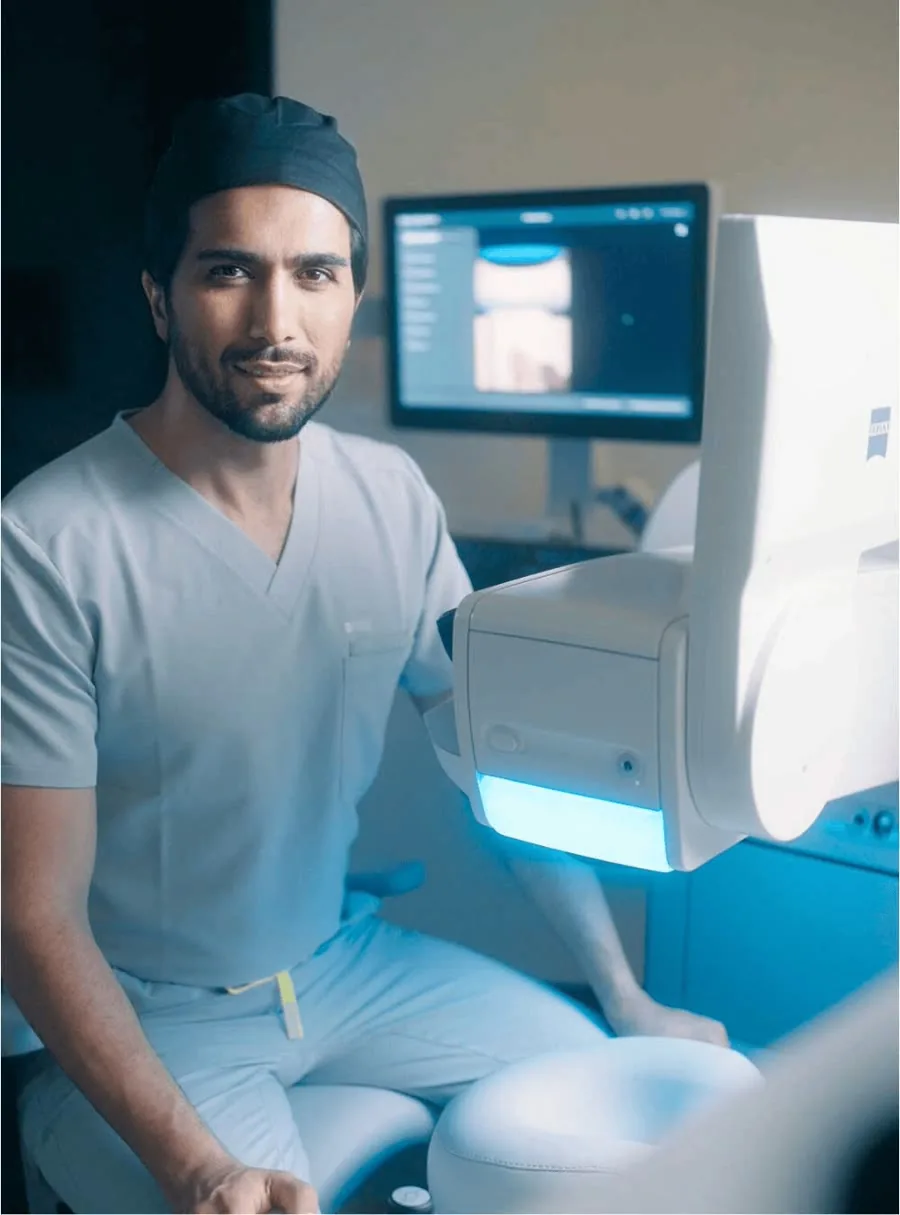
Prof. Dr. Mehdi Shajari and Jana.
Prof. Dr. Mehdi Shajari examines, informs and operates himself. Jana from our Patient Care team plans your appointments and is your contact for all questions in between. Prof. Dr. Mehdi Shajari has performed 20,000+ procedures in his career.
At dr.vision
The doctor who examines you also operates on you: Prof. Dr. Mehdi Shajari in person.
Prof. Dr. Mehdi Shajari personally performs the pre-operative examination, the informed consent talk and the procedure.
Jana knows your plan and can be reached by phone and WhatsApp.
There are at least 24 hours between the informed consent talk and the procedure.
Go deeper.
This page shows the process. For more depth:
Work, sports, driving, sauna after each procedure, with a date calculator.
To the guidesTrustEmergency plan, warning signs, availability after the procedure.
Learn moreTrustWhat is measured at the pre-operative examination, device by device.
To technologySituationHotels, travel, trip home, follow-up checks at home.
To travelSituationLaser on Friday, back at work on Monday.
To the weekend planServicePatient Care answers your questions before you travel. Phone 069 509 586 770, available 24 hours.
CallStill have questions?
The questions patients ask most often about this during consultation hours. Prof. Dr. Mehdi Shajari
Three until the first result: pre-operative examination with informed consent talk, procedure, and follow-up check the next day. After that, two more follow-up checks, after one week and for the final assessment after 1 to 3 months. For lens procedures, one more surgery appointment is added for the second eye.
No. At dr.vision there are at least 24 hours between the informed consent talk and the procedure so that you can decide in peace. That is why the shortest process is: day 1 pre-operative examination, day 2 procedure, day 3 follow-up check.
Plan for about 1.5 to 2 hours, and 2 to 3 hours for lens procedures. About half of that is taken up by the measurements and the other half by the conversation with Prof. Dr. Mehdi Shajari.
For laser eye surgery, about 2 hours; with SMILE Pro, the procedure for both eyes takes approx. 20 minutes. For lens surgery, it is about 2 hours for one eye.
Soft contact lenses 10–14 days, rigid lenses 3–4 weeks and overnight lenses 4–6 weeks before the pre-operative examination. Until the procedure you then wear your glasses.
No. Bring a companion or take a taxi. You can usually drive yourself after about a week, in individual cases earlier; the doctor decides this at the follow-up check.
Come without eye makeup, face cream or perfume, wear comfortable clothing, eat lightly beforehand and do not drink alcohol the day before. You arrange your trip home beforehand, with a companion or a taxi; you must not drive yourself.
With laser eye surgery, both eyes are treated at the same appointment. With lens exchange and premium lenses, we usually operate on the second eye a week later; with monofocal lenses, after a separate informed consent talk, also on the same day; with the ICL, usually at separate appointments, one day to one week apart.
The follow-up check the day after the procedure takes place in Frankfurt. If you come from farther away, your eye doctor at home can take over the later follow-up checks using our aftercare plan.
The free initial consultation about freedom from glasses is free of charge. The pre-operative examination is included in the surgery price; without a procedure, it is billed separately. You receive the cost estimate for the procedure in writing after the pre-operative examination.
Medically reviewed by Prof. Dr. Mehdi Shajari · As of October 2026
Not ready yet? Everything important to read again and to pass on.
Arrives by e-mail in about 60 seconds. No newsletter, just the guide and, if you wish, a follow-up from Patient Care. Privacy policy
How would you like to continue?
Patient Care schedules the pre-operative examination, procedure and follow-up check in one conversation, within 72 hours on request. After the pre-operative examination you have a written recommendation and a cost estimate, and at least 24 hours to think it over.
In Frankfurt, Junghofstraße 16 · detailed pre-operative examination with Prof. Dr. Mehdi Shajari
Our locations.
 Opening hours
Junghofstraße 16, 60311 Frankfurt am Main
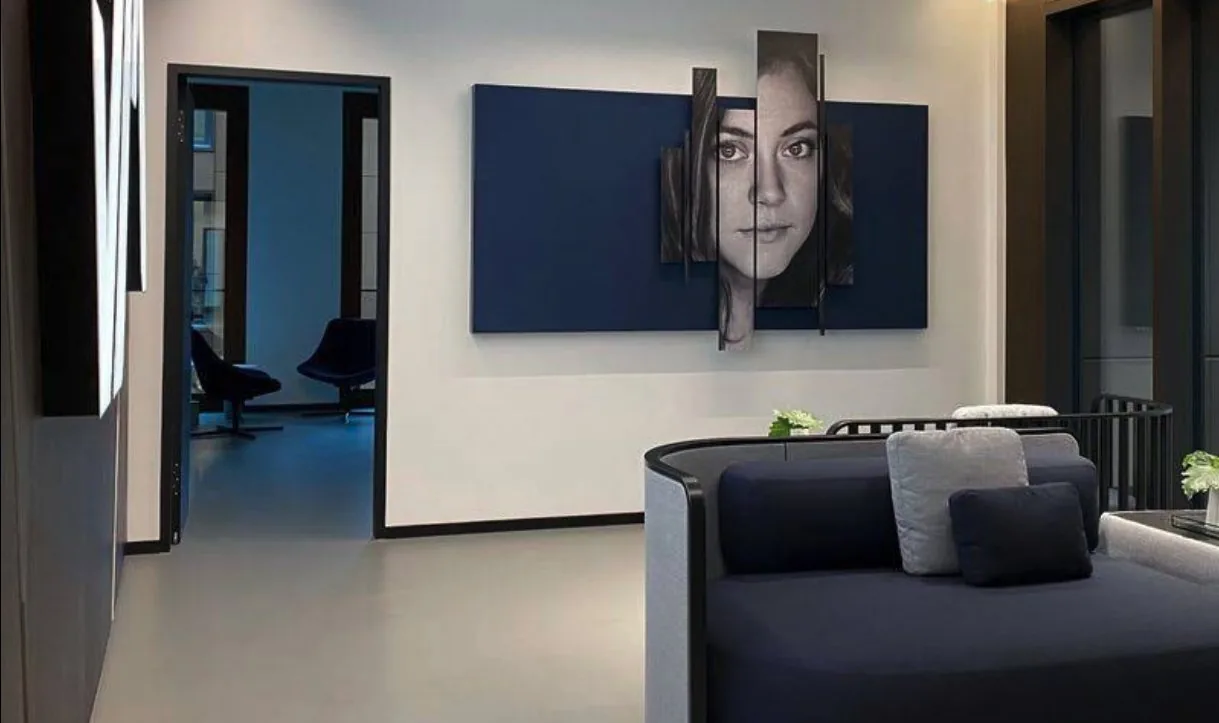 Opening 2027
Breite Straße 69, 40213 Düsseldorf (in the Neuer Stahlhof, corner of Graf-Adolf-Platz)
Until opening: preliminary talk in Frankfurt, Patient Care plans your travel.
Plan route Opening 2027
Lautenschlagerstraße 23, 70173 Stuttgart (2nd floor, step-free access)
Until opening: preliminary talk in Frankfurt, Patient Care plans your travel.
Plan routeSo, my name is Zhao Xingshu, I come from China and have been working in Germany for 20 years. I have been nearsighted since childhood in China, and it has always bothered me a lot. In Germany I started doing sports and also tech. I work a lot with computers and my phone. And I always had to switch between glasses and contact lenses. And as I grew older, it became very, very unpleasant and also very time-consuming for me.
I have always wanted to find someone who is not only professional but can also offer good service. Then I read about it online and found the professor. Then I called him, and the appointment came very, very quickly. And the next day I was already here and met my professor. He made a very professional impression on me. And also really very nice and kind. And what I liked best is the speed of the services. And I think that is actually what is most lacking in Germany.
The first impression was not the typical eye doctor's practice but a very professional consulting company. Well, because I myself work in a technical role for consulting companies, the first moment felt a bit very different to me, but at the same time I liked it a lot, because I really like this customer-focused, patient-focused approach, the fast speed with the appointment, and the professional consultation. That was my first impression.
Of course, absolutely. I have already sent my husband here, and my child. Yes, and I think I would recommend it to all my Chinese friends in Frankfurt as well.
Hi, I'm Sebastian, 37, I live near Frankfurt, and I have somehow always been annoyed that I have to change glasses so often. I have kids now, who knock them off my head or smear them. And for me that was mainly a hassle problem. Apart from the fact that I naturally have weak eyesight, but I actually always got along quite well with glasses. And then I tried contact lenses and noticed that my eyes are dry and it all didn't fit together so well. And then I saw that this offer exists here and first informed myself. So, what does one actually do? There are so many treatments you could have. I went a bit too deep down the rabbit hole and watched videos and saw what these surgeries look like, and at first I kept my distance. It took half a year until I had gathered my courage and thought, well, it can't be that bad. So many thousands of people do it. And then I simply looked more closely at which treatment suits me. Before the doctor had even advised me, I don't know if I am the perfect patient if I already come with an idea, but I came here with the goal of having a PRK treatment. So basically the treatment that many patients are a bit afraid of. Rightly so, you always read in experience reports that it probably hurts quite a bit and that it is the most unpleasant of all the variants, with long healing times and long aftercare times.
So I have a refractive error, diagnosed since fifth grade or so, but not particularly bad. Somewhere between one and two diopters, it got a little worse over time, then I was at one and a half or 1.75, and from about eighth grade, ninth grade or so, it stayed stable. So it simply didn't change at all anymore. And it really only bothered me in that the glasses themselves are of course an obstacle. But that is bearable, it's not really that bad. It became more unpleasant when I started, for example, sports where glasses get in the way.
Climbing, bouldering and things like that, you don't necessarily want to start with glasses on, and that was annoying. Then I started with contact lenses, always had dry eyes, always had to rub my eye, push them around, and I didn't like that at all. Then of course I looked at what solutions there are, how I can get away from this somehow. I can say that my fear beforehand turned out not to be entirely justified, because the whole thing was basically not that bad for me. You have your eyes lasered, and of course that is an uneasy feeling.
And you also go home with swollen-shut eyes, maybe. Everything is not so great, it burns a little. But compared with the stories I had heard, what really happened to me, I have to say, it was really not that bad. You can take painkillers, and I should say, the first day it burns a little, but by far not as badly as is often said, in my case. And on the second day I hardly noticed it anymore, and on the third it was okay.
In terms of pain, that is. Of course you can't see anything right away. You may have to wait a little until your eyes can open again, the swelling has gone down and so on. But from then on it is actually a simple, straightforward healing process. It gets better every day, the vision gets better.
And I think after one week, that was it, I could already make out everything again reasonably well. And now, after a month, I am glad that I did it. I have no complaints at all. When I walk through Frankfurt, I can see the tops of the skyscrapers and see everything sharply again, without glasses, without contact lenses, without discomfort. It is wonderful.
The thing is, I have two children, and my two boys are not necessarily careful when it comes to touching my eyes. Now and then a hand lands in my eye, and perhaps not all that gently. And when I think about it after gathering my information, that something in the eye might actually not be firmly healed yet. Because with LASIK or other treatments, a disc or a piece of a disc is cut, so to speak, folded back and then put back.
This flap, exactly. It only heals at the outer edge. And when I imagine someone hitting it with force, I don't feel comfortable. Of course, I also know, you hear from doctors too, that it is not necessarily the force you need to lift this flap again.
But nevertheless I simply don't feel comfortable with it and couldn't warm to it at all. And PRK is actually a method that, according to my research, really many people have had done, and which is routinely used in the armed forces or other organizations, where force on the eye is perhaps more likely to occur. But if they do it, how bad can it really be for me? And this putting things into perspective is what in the end made me say, okay, this is my variant, this is how I want to do it.
And it worked well. I think that is true for everyone who starts out with this bad gut feeling. You try to optimize, you know, what can I do so that the whole thing goes well. And when you look around, of course you look for someone who treats the eyes and has a certain reputation.
A doctor, professor, doctor, someone who works at the university hospital, is of course exactly right. For me it was also close to work, so there were simply geographical reasons to come here as well. But it all fit together well. The information material was good, I could look closely at what the prices are, what the conditions are, and I could make an appointment where I could also speak directly with the doctor.
That is also very important to me, not to speak with just anyone but with the doctor, and also to know that the person I speak with at the start is the one who will treat me. Basically I would say it was a good decision, I would do it again, and it is certainly not as bad as is often said. Very many people have the surgery, few people have problems with it, and we all know the internet, often only those who have problems speak up. Don't trust it too much, get in contact, find out how I can do this, which doctor can support me.
In this case it was very easy, the first conversation was directly with the treating doctor, and then you see whether you feel up to it or not. Definitely, I had very positive experiences, I am satisfied with the result. No complaints to this day, of course.
My name is Simone Richter. Before the treatment I had the problem, above all or increasingly, that I could not see well at all anymore at near and intermediate distance, which bothered and limited me extremely. For one thing at work, but of course also in private life, when you go hiking and want to read a map and can't see anything anymore and your glasses fog up or you lose them or break them, which I'm a great artist at. That bothered me a lot, limited me a lot. On top of that, wearing glasses felt to me like it triggered migraines, so the headaches bothered me a lot too, and that is why I decided on the surgery.
I got a lens exchange, so a new trifocal lens, which also comes with certain compromises, I have learned you always have to make a compromise, and and since the topic of freedom from glasses was very important to me, I decided on the trifocal lens.
So I actually came across Professor Shajari on the internet and had the first appointment with the intention of slowly getting used to the idea of progressive glasses. That would have been the next step. I had not dealt with the topic of surgery at all beforehand, because basically I am rather against having anything operated on without great need. And then in the conversation I felt, how should I put it, well taken care of. I did not feel pushed in any direction at all, just got information I did not have before. And with that I started to look into the topic. In between I also dropped it again, but then, through everyday activities, everything I just mentioned, hiking, swimming, cycling, where glasses really torment me, I thought, okay, I'll try this, and I also simply built up trust over time. That was all something that gave me a lot of reassurance, because Professor Shajari always took a lot of time. You know how it is with doctors, and I understand it too. There is a lot of pressure with queues of patients, and in the end you probably always have to answer the same questions. But I always had the feeling that there was enough calm to answer my questions.
The actual course of the surgery, from the pre-operative examinations to the appointment, goes very fast, it is very easy, much easier. I panicked a lot the evening before the first eye and thought, oh my God, how will this go? My head will be screwed down Hannibal Lecter style so that I don't flinch. And I worked myself into my horror scenarios. And it was all actually very relaxed. A very, very nice, good-humored team in the surgery center as well, which I think also helps a lot as a patient. And yes, it goes in no time, you don't feel anything, I think I can say that, and you go home again and everything is fine.
What was very astonishing for me was that I actually did not feel it at all, so during the surgery 0.0 pain. There was one point where Professor Shajari said, now comes a little pressure, and a little pressure came. To call that pain would be saying too much, but you really don't feel more than that. I must say, though, that between the two surgeries, from the first to the second eye, I felt even more unsure, even though that was always well handled and explained.
I think before the surgery it was also very important that, in my perception, it was explained realistically. It was explained well that it is a compromise, that in some ranges of vision it would get worse, but that in sum a visual ability that allows freedom from glasses will result. Now of course that is very subjective. So what does it mean, I will see worse in some ranges? That was a really big panic point for me and it stayed very strong in the time from the first eye to the second eye, because after the first eye I of course had the issue that I had one eye not operated on that doesn't see well and one operated eye that sees so-so after the surgery. Already much better. I also got a smile from people often, because on the second day I could already read with the operated eye, which would have been unthinkable before the surgery and which was also a really big pain point for me. But this panic still led me to this fear, what have you done, you had something operated on for the worse, because of course with glasses an operated and a non-operated eye create a really awkward situation. And now, today, day one after the surgery on the second eye, I am actually very happy at the moment.
I did good research beforehand. I also called my health insurer to ask how they view such operations. I deliberately chose Professor Shajari because he also has a good reputation. You hopefully only do this once in your life, and you don't have, you don't know, so I asked around my circle of acquaintances. What experiences have people had with these operations, which interestingly didn't give such positive feedback in my case. However, they were not patients of Professor Shajari, and some of it was also a while ago, I have to say. Medicine has surely progressed since then. That unsettled me and it was also one of the reasons why I first backed away from the operation again in my carousel of thoughts. But I believe in tapping all the information channels you have, asking all your questions, and really choosing a doctor who gives you a good gut feeling. Because I believe, with all these topics, you can check a lot of facts, and you should. But you also have to have a good feeling.
And I am not now, it was partly also an indication with the cataract in my case. And I am not that old, I could have gotten around this surgery with glasses for a while longer. I am 55, I could certainly have worked around such a surgery with glasses for a while. You have to really think it over carefully, I believe, then that also gives you a good feeling yourself. And if you then feel in good hands, which was the case here, then it can work well.
I am 74 years old, my name is Fayez Chbib.
My vision was getting worse and I went to several eye doctors, but it was always the same examinations, pressure measurement and so on, but nobody recommended what could be done so that I could see better again.
I think someone from my family was in treatment here, and my sister told me, go to them, that is the right address. And then I called and an appointment was made.
I did not know for sure what I had, but I suspected that I had a cataract because I could no longer see dark things so well. Without mentioning the other eye doctors from before, I said, ask your sister, my sister knows good doctors, I suppose, which has now also proven right, I had never made an appointment before. It was pleasant, it went relatively quickly, and I was also impressed by the equipment, everything seemed to me to be state of the art. My wife was there too, she said, I think we are in the right practice here.
Of course, I could tell right the next day that it was better than before. And today I also found that I can see relatively well with my left eye.
What struck me very positively was, first of all, the equipment and how I was examined. I saw that for the first time here in Germany. And what was also impressive was all the data, how it was transferred immediately from A to B and how the professor then has everything on his three monitors. That was impressive. Everything was actually very trust-inspiring for me, yes. Because you shouldn't mess around with your eyes.
What I can tell people is, if you don't want to make too many wrong attempts, you should come here right away.