 dr.vision
clear
Seeing clearly better.
Follow-up check at the practice. Driving usually only about a week after both eyes are operated on; the doctor decides.
Start here
What suits you?
Find out in 2 minutes which procedure suits your eyes.
Start the Suitability CheckOr by age:
< 45yearsGet rid of glasses & contact lenses 45–64yearsGet rid of reading glasses 65+yearsCataract & glasses-free★★★★★ 5.0 · 376 Google reviews · 20,000+ procedures
Decide well
What you should know beforehand.
Who operates?Prof. Dr. Mehdi ShajariFOCUS Top Doctor · operates on every patient personally What does it cost?Laser from €3,498 · Lenses from €6,886Prices for both eyes Is it safe?Safety & risks When will I be fit again?Work, sports, driving Would you rather read in peace first?Decision Guide Freedom from GlassesProcedures
Laser or lens?
Laser eye surgery
SMILE ProSmartSightFemto-LASIKTrans-PRKPRKPresbyond (laser away your reading glasses)All laser procedures at a glanceLaser procedures compared ›Lens surgery
ICLLens exchange (reading glasses)Cataract surgery with premium lensLens types: trifocal, EDOF, toricLens types compared ›Start here
Something wrong with your eyes?
A thorough eye check-up with us clarifies what is behind it.
Book an eye check-up★★★★★ 5.0 · 376 Google reviews
Guides · Cataract · After surgery
How long off sick? Usually 2–3 days per eye.
The surgery takes about 20 minutes, and most people see significantly better the next day. What is allowed again and when, from driving to showering, sports and work, is shown in this guide day by day and as a printable timeline.
 12× FOCUSTop Doctor
In short: days until everyday life, weeks until full healing.
The surgery takes about 20 minutes per eye, and after around two hours you go home. The day after, most people see clearly better. Office work is usually possible again after 2–3 days, physical or dusty work after about one week, swimming and sauna after 2–4 weeks. The eye is fully healed after 4–6 weeks; then your new glasses are fitted too.
clear
Follow-up check at the practice. Driving usually only about a week after both eyes are operated on; the doctor decides.
Office
Reading, screens and TV are possible right away; the eye tires more quickly at first.
Sports
Light sports after one week, swimming and sauna after two to four weeks, drops about four weeks.
Short in the operating room. Quickly back to everyday life.
approx. 20 min
per eye. You spend around two hours in total at the practice.
2–3 Days
per eye in an office job. Physical work: about one week.
1 week
later, if operated on separately. With monofocal lenses, also possible on the same day after separate informed consent.
~4 wks.
anti-inflammatory and antibiotic, on a fixed schedule.
99.9%
safety rate for procedures by Prof. Dr. Mehdi Shajari.
Around two hours. Of that, about 20 minutes of surgery.
You come without any preparation for anesthesia; the eye is only numbed with drops. You are awake and see light and colors, but as a rule you feel no pain. After a short rest and a look at the operated eye, you go home, accompanied or by taxi; you may not drive yourself on that day.
| When | What happens | For you |
|---|---|---|
| Arrival | Check-in, clarify questions, mark the eye side | comfortable clothing, no eye makeup |
| approx. 30–45 min before | Drops dilate the pupil, then numbing drops | a light sedative on request |
| Surgery | 2.2 mm incision, clouded lens removed by ultrasound, artificial lens inserted | about 20 minutes; you hear the voice of Prof. Dr. Mehdi Shajari |
| Afterward | Rest, a short look at the eye, drop schedule | Vision blurry and sensitive to glare at first |
| Trip home | accompanied or by taxi; protective shield for the night | do not drive yourself |
Drop anesthesia is the standard. You look into a bright light, and an eyelid holder prevents blinking. Just announce a cough or sneeze. Anyone who is very tense receives a light sedative; we do not generally offer general anesthesia. What exactly happens in the eye is shown by the surgery animation on the cataract page.
Reading right away, driving usually one week after the second eye, sports after one week.
Reading and watching TV are possible right away, driving after the follow-up check about one week after the second eye, if your visual acuity is sufficient, showering from day 2, light sports after one week, swimming and sauna after 2–4 weeks. The table shows all everyday activities at a glance; below it, the healing calendar calculates the dates for your surgery appointment.
Swipe the table sideways: from the day of surgery to week four.
| Activity | Day of surgery | Days 1–3 | Week 1–2 | from week 2–4 |
|---|---|---|---|---|
| Reading, TV, phone | yes, with breaks | yes | yes | yes |
| Driving | no | usually only 1 week after the second eye, the doctor decides | yes; at night only without glare | yes |
| Office, screen | no | from day 2–3 | yes | yes |
| Showering, washing hair | no | from day 2, head tilted back, no water in the eye | yes, keep water out of the eye | yes |
| Eye makeup | no | no | no | from week 2, new products |
| Hairdresser, hair coloring | no | no | no | from week 2 |
| Walking, light housework | yes, calmly | yes | yes | yes |
| Light sports, cycling, golf | no | no | from week 1 | yes |
| Strength training, ball sports, bending with a load | no | no | no | from week 2–4 after consultation |
| Swimming, sauna | no | no | no | after 2–4 weeks |
| Garden, dust, construction site | no | no | from week 1 with protective glasses | yes |
| Flying | no | from day 1 after the follow-up check, the doctor decides | yes | yes |
| Eye patch at night | yes | yes | until about the end of week 1 | no |
| Rubbing, pressing the eye | no | no | no | carefully |
Guide values for one eye with an uncomplicated course, aligned with our cataract page. With complications or other conditions, the instructions from your follow-up check apply.
Enter the surgery date. The calendar calculates your appointments.
Your healing calendar
Guide values with an uncomplicated course. What you may really do, we tell you at every follow-up check.
Six stages to stable vision.
The biggest part happens in the first 24 hours: the day after surgery, the majority already see more clearly than before. After that the image becomes more stable over days, and after about four to six weeks the eye has healed. With premium lenses, getting used to them takes up to three months.
How it feels: Blurry, bright, sensitive to glare. The eye feels scratchy like a grain of sand, sometimes it waters.
What you can do: Rest; the eye patch stays on until the next day. The drops begin on the day after surgery according to the schedule.
How it feels: Clearly clearer, colors often strikingly cool and strong. Follow-up check at the practice.
What you can do: Read, watch TV, short walks; driving usually only about a week after both eyes are operated on.
How it feels: The image becomes more stable, the foreign-body feeling fades.
What you can do: Office work, showering with the eye closed, short walks.
How it feels: Good vision in everyday life, still a little sensitive to glare in the evening. One-week check.
What you can do: Light sports; the second eye can follow.
How it feels: The incision has closed, the irritation has subsided. Drops are tapered off.
What you can do: Makeup, hairdresser, swimming and sauna after clearance.
How it feels: Visual acuity stable. With premium lenses, the brain keeps adapting and halos become weaker.
What you can do: Final check, fit new glasses if needed.
The glasses prescription still changes slightly in the first weeks. A new pair of glasses is therefore usually worthwhile only after four to six weeks, with two operated eyes after the second. In the meantime an inexpensive ready-made pair of reading glasses often helps. With a premium lens, you often need no glasses at all.
The clouded lens acted like a yellowish filter for years. Without it, white suddenly looks bluish-white and colors stronger. The brain gets used to this within a few weeks. Many notice the difference most clearly while only one eye has been operated on.
In an office job usually 2–3 days per eye.
How long you are on sick leave after cataract surgery depends less on your eye than on your work: For desk work it is usually 2–3 days per eye, for dust or heat about one week, for heavy physical work 1–2 weeks. If both eyes are operated on within one week, plan on 7–10 days in total.
| Activity | Usually able to work after | Note |
|---|---|---|
| Office, home office, screen | 2–3 days | Plan breaks, set the screen darker at first |
| Sales, consulting, medical practice, school | 3–5 days | depending on light and customer contact |
| Trades, construction site, dust, dirt | about 1 week | afterward with protective glasses |
| Kitchen, heat, steam | about 1 week | Steam and grease irritate the fresh eye |
| Heavy physical work, lifting | 1–2 weeks | after clearance at the one-week check |
| Professional drivers | until the visual acuity for your driver's license class is reliably reached | ask us for written clearance |
| Both eyes within one week | 7–10 days in total | in an office job |
We issue you a certificate of incapacity to work for the time that is medically necessary after the surgery. Your employer receives it as usual.
If you are not working, still plan the first two to three days calmly: no grandchildren on your arm, no heavy carrying, no dusting at height. If you care for relatives, arrange help with lifting and with trips for the first week.

Planning your appointment, planning your work?
Call us. We will schedule the surgery to fit.
Our Patient Care team schedules the day of surgery, follow-up checks and, if you wish, the second eye so that it fits your calendar. Available by phone 24 hours.
Usually about one week after both eyes are operated on. The doctor decides.
On the day of surgery you may not drive yourself. After that, the doctor decides at the follow-up check, usually about one week after both eyes are operated on, in some cases already after the first eye. For a car driver's license, the German driver's license regulation requires at least 0.7 in the vision test, after an eye doctor's examination at least 0.5 in the better eye or with both eyes. We will tell you at the follow-up check whether you may drive again; you drive at night only once glare and halos have subsided.
Do not drive: pupil dilated, vision blurry, sedative possible. Escort or taxi.
Usually about one week after both eyes are operated on, in some cases already after the first eye. The doctor decides at the follow-up check, so ask about it explicitly.
One eye new, one old: your glasses then often no longer fit. Drive only if the doctor has cleared it at the follow-up check and you see safely and without double vision. If code 01 is entered on your driver's license, the requirement to wear glasses continues to apply until the authority deletes it.
Only when glare and halos no longer bother you. With premium lenses this can take a few weeks.
After the first eye, the two eyes are often very different in strength, especially with high nearsightedness or farsightedness beforehand. Then your old glasses help, with the optician removing the lens in front of the operated eye. For trips this week: only drive if the doctor has allowed it at the follow-up check, otherwise use the train, a taxi or an escort. That is why there are usually only seven days between the eyes at our practice.
For driver's license classes C, D and passenger transport, the driver's license regulation requires clearly higher visual acuity, also for the weaker eye: at least 0.8 in the better eye or with both eyes and 0.5 in the weaker eye. Do not drive professionally again until we have confirmed the values in writing. With trifocal lenses, we usually advise professional drivers to choose other lenses, see Which lens for cataract?
Usually one week later. Sometimes on the same day.
At dr.vision there are usually seven days between the two eyes: enough time to check the first eye and, with premium lenses, to adjust the calculation for the second, short enough that the phase with unequal eyes does not bother you for long. With monofocal lenses, surgery on both eyes on one day is also possible after separate informed consent.
| Option | Advantages | Disadvantages | For whom |
|---|---|---|---|
| One week apart | Fine-tuning possible for the second eye; each eye checked individually | one week with unequal eyes; two surgery days | Premium lenses (EDOF, trifocal), special eyes |
| Both eyes on one day | one surgery day, no phase with unequal eyes, quicker return to everyday life | no fine-tuning; both eyes freshly operated on at the same time | Monofocal lenses, uncomplicated eyes, long travel distance |
| Longer interval (weeks to months) | Time to decide | long phase with unequal eyes, glasses do not fit | only if the second eye is still barely clouded |
Both eyes on one day are handled like two separate procedures: separate instruments, separate batches. Which option suits you, we discuss at the pre-operative examination.
Scratchiness yes, increasing pain no.
In the first days, scratchiness, tears and glare are normal. Increasing pain, clearly worse vision after initial improvement, or strong redness are not: then call immediately; the emergency number from your surgery documents is reachable around the clock. You take the drops for about four weeks according to the schedule.
Grain-of-sand feeling, tears, light sensitivity, slight redness, brief flickering at the edge, a dark half-moon at the side that disappears within weeks.
Dry eyes in the first weeks, colors look cooler, reading tires faster. Artificial tears without preservatives help.
Increasing pain, clearly worse vision, strong redness with light sensitivity, a shower of black specks, flashes or a shadow in the image.
| Drops | Used for | How long |
|---|---|---|
| Antibiotic drops | Protection against infection | usually about 1 week |
| Anti-inflammatory drops | Prevent irritation and macular edema | about 4 weeks, tapered off |
| Artificial tears | Relieve dryness | as needed, also longer |
You receive your exact drop schedule in writing. Wait about five minutes between two different drops.
We do the follow-up check on the day after surgery ourselves, because it decides the further course. The one-week check and the final check after one to three months can, if you travel from farther away, also take place with your eye doctor at home, with our surgery report and aftercare plan. Everything about travel: Travel from farther away.
The artificial lens itself usually stays clear. In about 1 in 10 patients, the capsule behind the lens becomes cloudy within five years, known as secondary cataract. A YAG laser opens it in a few minutes, as an outpatient procedure and usually without pain. More: secondary cataract.
Macular edema occurs in about 1 in 100 and usually heals with drops, retinal detachment in a large study in about 1 in 100 in the first four years, an infection inside the eye in fewer than 1 in 1,000. All risks with explanations are on the cataract page.
A guide price according to the GOÄ, in writing in advance.
At dr.vision, surgery on both eyes costs €6,998 with a monofocal lens, €7,242 with an EDOF lens, €7,876 with a trifocal lens. Included are the pre-operative examination, biometry, surgery by Prof. Dr. Mehdi Shajari, lenses and all follow-up checks after surgery. Billing is according to the German fee schedule for physicians (GOÄ); patients with statutory health insurance pay themselves.
What private health insurance, Beihilfe (allowance for German civil servants) and health insurers cover is on What does cataract surgery cost?; which lens is worthwhile for your daily life, on Which lens for cataract?. Financing: in monthly installments, with a down payment, from €3.90 per day*.
* Representative example: €6,497.47 net loan amount after a €500.53 down payment · 72 months · fixed nominal interest rate 9.49% p.a. · 9.90% effective annual interest rate · monthly installment €118.72 · total amount €8,547.84 (with down payment €9,048.37) · via medipay. Alternatively 0% over 12 months directly at dr.vision.

One surgeon. One plan. One number for all questions.
Prof. Dr. Mehdi Shajari operates on each eye himself, Patient Care plans the day of surgery, follow-up checks and, if needed, your travel. Since 2022 we have evaluated every surgery: 97% then reach a visual acuity of 80% or better, and the safety rate is 99.9%.
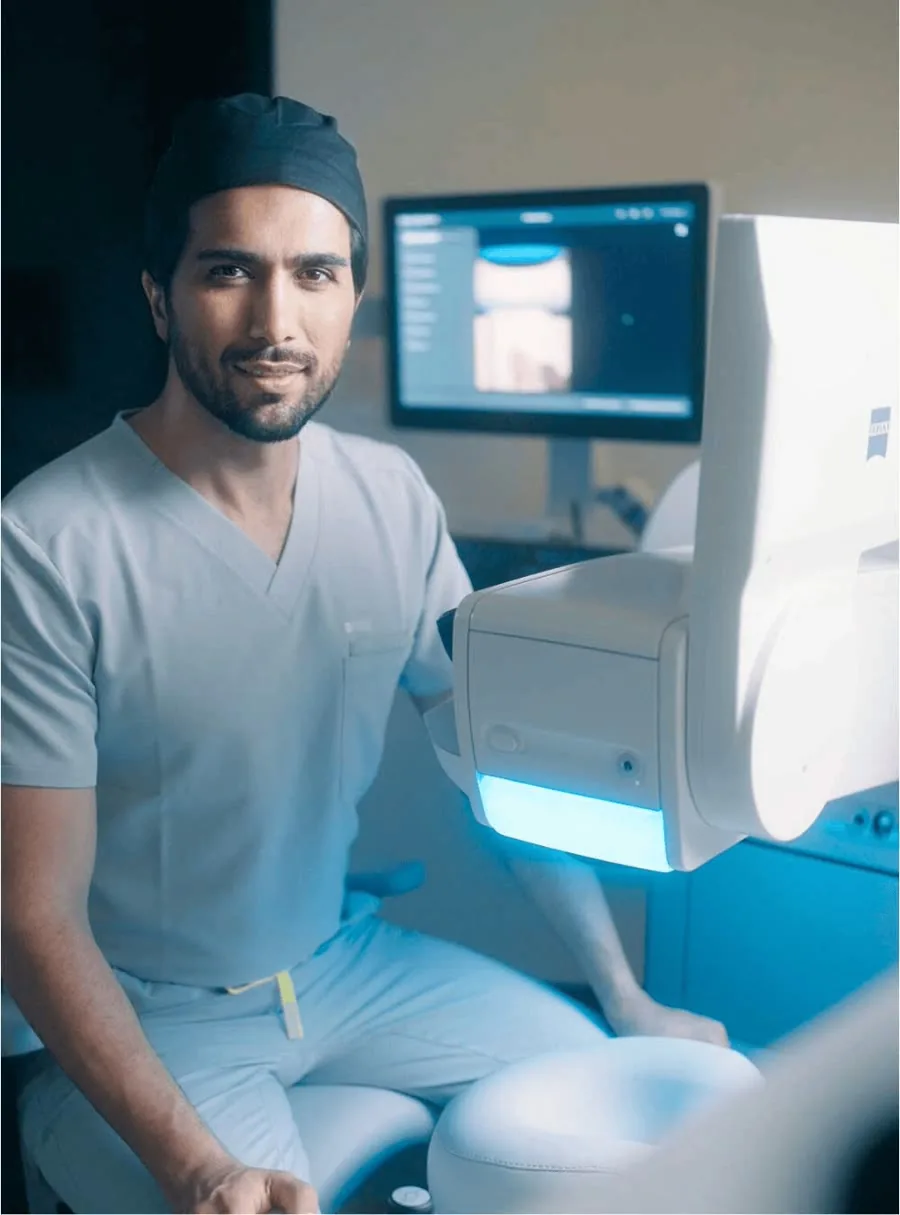
Prof. Dr. Mehdi Shajari. Each eye himself.
Specialist physician and professor of ophthalmology (German title: außerplanmäßiger Professor), with numerous publications on freedom from glasses, teaching and training of several colleagues in this field, 12× FOCUS Top Doctor. At dr.vision he operates himself rather than with a changing team, and sees you the day after for a follow-up check.

Prof. Dr. Mehdi Shajari has published numerous papers on freedom from glasses, teaches, and has trained several colleagues in this field.
Go deeper.
This guide explains the time after surgery. Everything before it is here:
Symptoms, when to operate, risks in detail.
To cataract LensLens finder based on your daily life, with three viewing distances.
To the lens finder CostsWhat private health insurance, Beihilfe and health insurers pay, what you bear yourself.
To the costs Freedom from glassesHow to get rid of your glasses with the surgery too.
Learn more LaterWhen vision becomes cloudy again years after surgery.
To secondary cataract TravelSurgery and follow-up checks in under 72 hours, aftercare at home.
To travel376 reviews. Average 5.0.
376 Google reviews give dr.vision an average of 5.0 out of 5 stars. dr.vision does not check whether Google reviews come from treated patients.
“Sensational. I started the first surgery as a ‘scaredy-cat’ and now, one day after the surgery, I have gone from 20% vision after the surgery to 100% vision.”
“Starting with the scheduling of the appointment, through the pre-operative examination, the informed-consent talk, the cataract surgery and the follow-up check, everything went excellently. The surgical result is very good!”
“I had the first surgery on the left eye on 23.9.25 and a week later the surgery on the right eye. The result of the lens exchange is phenomenal!”
“The surgery was over quickly, without pain, and the next day I could already see fully with the operated eye.”
Four patients. In their own words.
The procedure itself is a breeze.
There was no numbing with injections, as I had imagined.
It got better from hour to hour.
I was so calm, I never would have thought.
Still have questions?
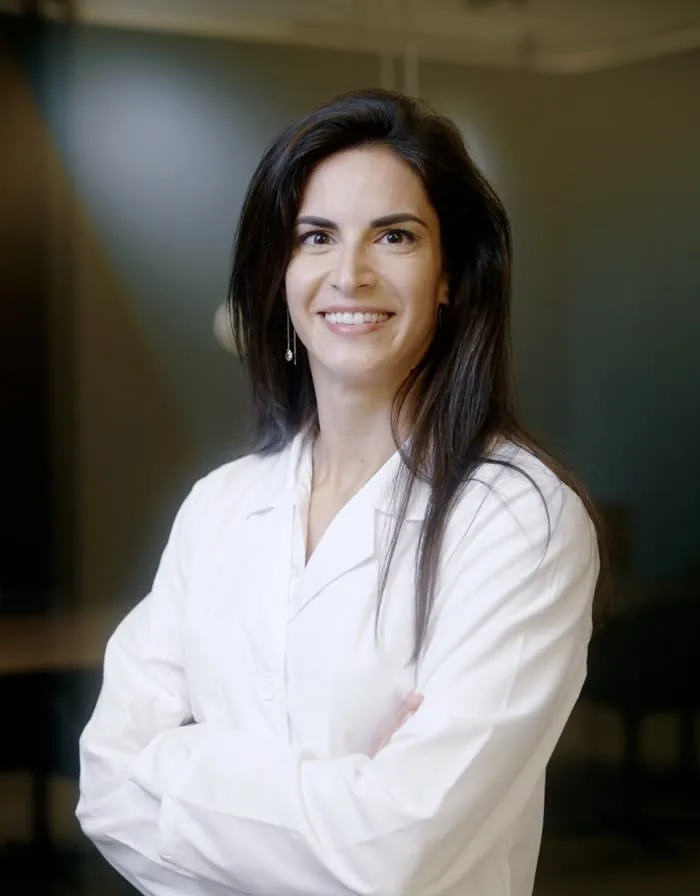 “These are the questions I hear most often in consultation hours. Here are my answers.” Prof. Dr. Mehdi Shajari
For office work usually 2 to 3 days per eye, for dust or heat about one week, for heavy physical work 1–2 weeks. If both eyes are operated on within one week, plan on 7 to 10 days in total.
Not on the day of surgery. Usually about one week after both eyes are operated on, in some cases already after the first eye; the doctor decides this at the follow-up check. For a car, at least 0.7 is required in the vision test, after an eye doctor's examination at least 0.5 in the better eye or with both eyes. At night only once glare and halos have subsided.
From the second day, with your head tilted back and your eyes closed. In the first two weeks, neither water nor shampoo should get into the eye.
Walking right away, light sports such as cycling or golf after about one week. Swimming and sauna after two to four weeks, strength training and ball sports after consultation at the follow-up check.
Yes, reading and watching TV right away, screen work usually from day 2 to 3. The eye tires more quickly at first; take breaks and use artificial tears if your eyes feel dry.
About four weeks according to the written plan: antibiotic drops usually in the first week, anti-inflammatory drops about four weeks, tapered off. Artificial tears as needed, also longer.
Yes in the first nights, usually until about the end of the first week. The patch prevents you from unconsciously rubbing the eye in your sleep.
In everyday life, most people see well after one to three days. The eye is fully healed after about four to six weeks; with premium lenses, getting used to them takes up to three months.
When the values are stable, usually after four to six weeks, with two operated eyes after the second. Until then a simple pair of reading glasses often helps.
At dr.vision usually one week after the first, so that we can fine-tune with premium lenses. With monofocal lenses, surgery on both eyes on one day is also possible after separate informed consent.
From the day after surgery, if the doctor agrees at the follow-up check; the pressure in the cabin does not harm the operated eye. What matters is only that the follow-up appointments are secured, if needed with an eye doctor at your vacation destination.
After about two weeks. Until then neither water nor hair dye should get into the eye; at the hairdresser, tilt your head back and have your eyes covered.
Medically reviewed by Prof. Dr. Mehdi Shajari · As of October 2026
How would you like to continue?
The first appointment is the free consultation, followed by the extensive pre-operative examination with Prof. Dr. Mehdi Shajari: lens, retina, macular OCT, biometry and a conversation about when the surgery fits into your calendar. You go home with a written recommendation, a cost estimate and a schedule.
In Frankfurt, Junghofstraße 16 · all measurements included
Our locations.
 Opening hours
Junghofstraße 16, 60311 Frankfurt am Main
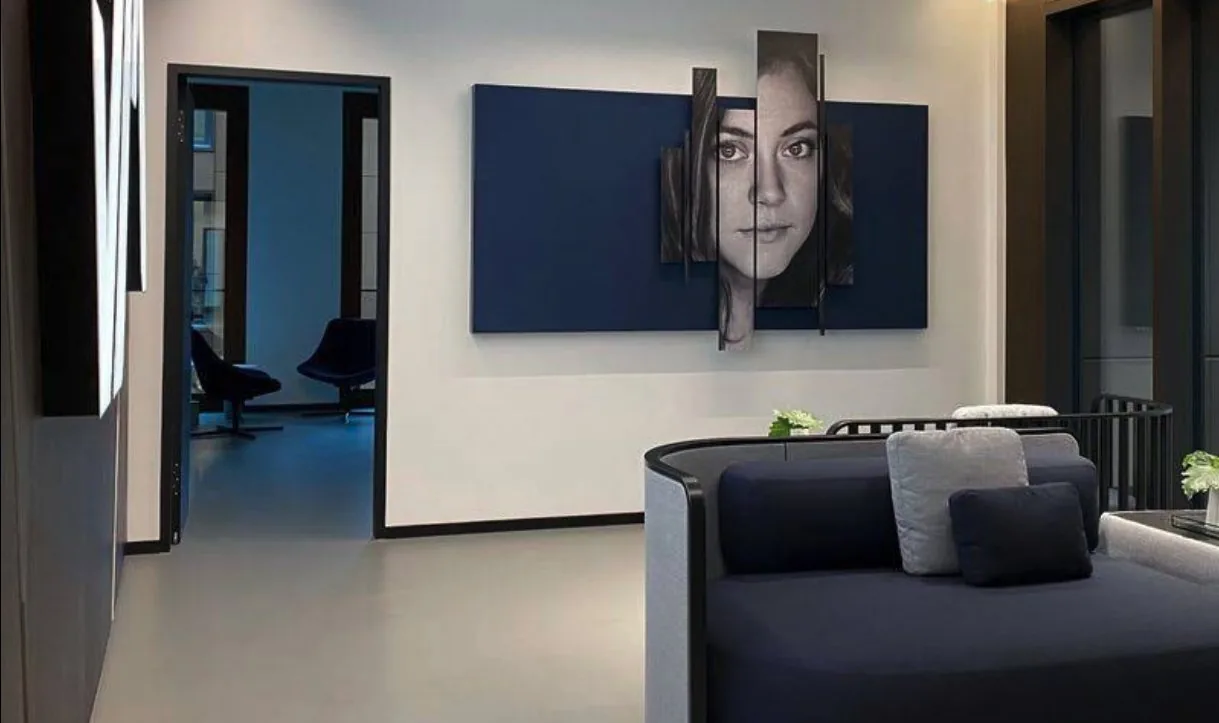 Opening 2027
Breite Straße 69, 40213 Düsseldorf (in the Neuer Stahlhof, corner of Graf-Adolf-Platz)
Until opening: preliminary talk in Frankfurt, Patient Care plans your travel.
Plan route Opening 2027
Lautenschlagerstraße 23, 70173 Stuttgart (2nd floor, step-free access)
Until opening: preliminary talk in Frankfurt, Patient Care plans your travel.
Plan routeYes, my name is Alexa Brum, I am 76 years old and had cataracts in both eyes, and I had one eye operated on at one of the many university hospitals here in the Rhine-Main area, and afterward I was a bit down, because it took a very long time until I could see somewhat properly again, and I was not prepared for that. My daughter, who is a doctor, searched around on the internet and came across this practice, with Professor Shajari, and it sounded very good right away. So I came here.
I find the equipment of the practice exceptionally good. I have never been examined so thoroughly. Really everything was checked, and in the eye that had already been operated on, they also found a small effusion in the retina. I have never experienced that something like that was examined. And I was informed very, very well about everything that could happen and how it works, so I had no concerns at all.
I had surgery on my right eye and can tell you that I notice absolutely nothing. The eye feels wonderful. My vision is great considering it was only yesterday. I am allowed to drive again, which I was not before. I really see well, and the surgery went so comfortably. Professor Shajari explained everything he was doing as he went. I had a transparent plexiglass shield on with holes so that it was ventilated. I could see right away. That was a completely new experience for me. Everything was terribly bright, but of course my pupil was still very dilated too. But from the first moment I simply felt comfortable and normal. And today I was allowed to take it off. I was told I may drive. I believe the values are excellent. And I do not have the feeling that anything was done to my eye, except that I can see better. The procedure itself is a breeze, actually more of an interesting experience.
What I noticed here, quite apart from the really very well-kept and spacious ambiance, but that is less important to me from a medical standpoint than what came next. The technical equipment of the practice, I found that quite extraordinary. That an OCT of the eye was also done, and with what speed, or speed is maybe the wrong word, the work was done so efficiently. Yes, there are so many devices that check and analyze the eye. I can't remember everything that was done in detail. That is really impressive and it builds trust.
And then I have to say, Professor Shajari is an extraordinarily pleasant doctor who seems very warm-hearted, who really meets you where you are. I can imagine that even if you are anxious, which I am not at all, but if you are an anxious type, he really meets you wonderfully there. And he explains everything. During the conversation, the results of this technical examination are shown on a large screen, and every little detail is explained. I have honestly never experienced this kind of explanation down to the last detail. And I think that is great and good to know.
In the left eye there was still a small pocket of fluid in the retina. Today I asked again, and he had it checked once more and showed me the difference between the two scans; it has almost resolved already, it is almost gone. So simply being informed like that, right? And he also said we simply have to give it time now, it will probably go away, and if not, then we can do this and that, so that you are informed all around and completely free of fear, because you know that this can be done, that can be done, and this doctor really does it well. So I believe he is very competent. At least that is how I feel about him. I will stay here too. As a patient you feel noticed as you are, whether you are more anxious or not, whether you are unsure at certain points. Earlier I went to a good eye doctor whom I knew well, but such a comprehensive and broad view of these visual problems, I did not experience that with eye doctors either. I have the feeling that he has a tremendous overview of the whole spectrum of what can happen with eyes.
I already have.
You already have?
Yes, I already did.
I would say that the everyday problems you have, that your vision changes with age. Of course it is clear that you need glasses. But if you are worried or a bit afraid, then this is the right place, because your fear is also caught and taken care of.
In front of you sits Stefan Paul. I am 60 years old and live in Wershofen. That is in the Eifel. Nobody knows it, but my office is at the Nürburgring, and everybody knows that.
I have worn glasses since I was six years old. Over the many years that have now passed, my vision got worse and worse, naturally. But I could always compensate well with glasses. Until what felt like last year. Despite new glasses, I noticed myself that my vision was somehow deteriorating rapidly. Alarmingly, even very, very fast. And I had no explanation for it at all. So of course I went to the eye doctor, and they diagnosed, well, probably cataract. That was a shock at first, but thanks to eye medicine, which has really advanced unbelievably far in terms of technology.
A colleague I had just worked with on a project in Hamburg, who by the way used to be an optician in his earlier life, said there is a doctor and an authority on these topics in Frankfurt who calls himself dr. vision. Type that into the internet and you will find him. And that's how it was. Then I read through Prof. Shajari's website and decided fairly spontaneously that I absolutely had to go there. It all looked sensational. Then, he is also recommended through, of course I do say, the FOCUS list of top doctors, and about three or four weeks ago I had a conversation with him here. He then did the examination, by the way an examination with devices that I had never seen before in my life. I have really been to many different eye doctors, but none of those doctors had the devices that Prof. Shajari uses, and I decided spontaneously and right away to have the surgery done here.
And yes, what is the procedure? In my case, there was this sedative tablet first. Then you sit down on a treatment chair and are practically prepared. You get a surgical gown put on and are prepared for the surgery. And at some point Professor Shajari joins, and then it gets down to business. Then the eye is covered accordingly, and a surgical drape comes over it so that the blinking is stopped, because otherwise he could not operate at all. And then the numbing is done with drops. And they need a certain time to take effect, about 10 to 15 minutes it felt like. But there is no numbing with injections or such martial things, as I had imagined, by the way. None of that is the case; instead it is numbed with drops, and honestly you notice relatively little of the surgery. You do notice light effects and partly also a little pressure, probably from instruments you use. But it is all bearable, and you really do not need to be afraid of it.
And of course you should have it done by people who have huge experience. That is the case with Professor Shajari. He has done this surgery 10,000 times in his life and has the routine to match. And it is like in any profession: what you can do routinely, what you have done often, you then also do very, very well. And that is exactly it. So if you pick the right surgeon, and if the chemistry and the human side fit too, then I would say the fear can be set aside.
Incidentally, I can only advise everyone who has this surgery ahead of them to communicate openly if there are fears. There are people who have no fear of something like this at all, and I can only congratulate them. But in my case the fear was really huge. I cannot describe it any other way. It was really enormous, because for me it was the worst-case scenario. Surgery on the eye and having to, let's say, experience it consciously, I will say more about that in a moment, was certainly no picnic for me. And at the preliminary examination I had asked whether he could not knock me out completely during the surgery. And then he said, Mr. Paul, I can do that in theory, but the result will not be good. Why? He said, well, because you have to cooperate. At the very least when I insert the new lens, you have to look into the light. And if I have knocked you out completely, I cannot talk to you, and you do not look into the light. The consequence is that I have to adjust and insert the new lens practically without your help, and under certain circumstances it may then not fit as precisely as when you are there and help.
So do not put it off, check individually how severe things are. For example, I have also heard of people who already have limitations in their color perception. So they could no longer distinguish colors at all. Keyword road traffic. If you no longer know whether the traffic light is red or green right now, I find that really serious. So you should not let it get that far. And my tip is: do not research for long, come here to Frankfurt.
Krzysztof Trukan, as I already said, I am 75 years old.
My vision has been declining for decades, especially in the left eye, because I only had 40% light getting through because of the cataract. And for years I put it off, but now, on medical advice, I decided to change that. I had already been to a colleague of a professor a year ago, who did not give me the trust I needed for a surgery like this. And then I turned to the professor here and am absolutely thrilled with the result.
Yes, I informed myself a bit, the surgery is very low-risk, with few sources of error, but something can still happen to the eye, that's clear. Of course I had concerns and I already had some problems in my eye, something on the lens had possibly grown attached at one spot, and the other doctor wanted to take me to the hospital for the procedure and made me more afraid than confident, and here I had the feeling that there were no problems at all. There is always a risk with any surgery, but the professor told me, after 10,000 surgeries I have never had a problem. What he could not guarantee was the success in percent of visual strength. You can only see that afterwards anyway.
I have to say, a week ago on Wednesday I looked with the operated eye and could not believe it. Without glasses I see everything in the distance. And yesterday after the surgery I also peeked through the shield, and it got better from hour to hour. And now I look at her and see her perfectly.
It went very fast, about ten days, two weeks. So the first meeting, then everything explained and measured, and then ten days later was the first procedure.
Yes, so the trust was there very early thanks to his personality. The professor is very trustworthy. And I am emotional now, because I have the feeling it is fantastic.
As soon as vision declines, as soon as it gets gray, the cataract, it is a road of no return. It does not go back, it never gets better, it only gets worse. The sooner you do it, the easier it may be for the eye to get used to the new vision.
My name is Christa Poschmann, I am 81 years old and had a cataract. I was extremely sensitive to bright light, even in the supermarket I had to wear sunglasses everywhere, and over the last half year it got worse, so that I could not judge stairs, how high they were, or whether there were any depressions, so that was really no longer pleasant.
I researched on the internet, and the more I read, the more I informed myself, the more I knew this has to be someone who really understands his field. And above all total transparency, that was the most important thing for me. Because otherwise you basically never find out how qualified someone is. I watched YouTube, all these little videos. And then I knew one hundred percent that this was the right doctor for me. After that I had no fears or concerns at all anymore.
Very good. I mean, it was so pleasant, the whole atmosphere and the spaciousness. And you felt more like you were in a hotel lobby. So the fears are not there. Otherwise, normally, a waiting room is not so nice. And it also went quickly without problems, without waiting time.
All I can really say is that I had zero problems with fear, zero. Because from the moment I knew about these drops, yes, no problems then with my circulation, which I otherwise would have feared. I could get up afterward, I could drive home, all wonderful. I was so calm, I never would have thought, because I simply trusted that, as I said, everything would go well.
And I also felt practically nothing. I concentrated on the light, and because I knew something was being done to the lens, I felt a small pressure and thought, ah, now it is almost over. So, that was it. Nothing, nothing, really. I had read that it could happen. And then I thought, you have no pain, no problems, zero problems.
The interesting thing is that you can determine exactly how the eye has changed after the surgery. Because the other one, the right one was the bad one, was operated on first. I could cover the other eye and then saw that the operated eye, where half was removed, which is a plus, that with it, and I have a good view from the living room, I could see everything, could see far, wonderful colors and everything sharp, yes, all the outlines sharp, and the other eye, which had not yet been operated on, there I first noticed that colors were no longer nice, as it already is white, gray, brown, yes, and just much worse than the operated eye.
If he asked me where he should go, where otherwise I am careful, then I would say from the bottom of my heart, Professor Shajari. Because, as I said, I am so satisfied, and of course I would pass that on. And I would want the person who asks me, whom I know, to go to the best.