 dr.vision
Measured anew
where it matters for your question. Not just based on the file.
Start here
What suits you?
Find out in 2 minutes which procedure suits your eyes.
Start the Suitability CheckOr by age:
< 45yearsGet rid of glasses & contact lenses 45–64yearsGet rid of reading glasses 65+yearsCataract & glasses-free★★★★★ 5.0 · 376 Google reviews · 20,000+ procedures
Decide well
What you should know beforehand.
Who operates?Prof. Dr. Mehdi ShajariFOCUS Top Doctor · operates on every patient personally What does it cost?Laser from €3,498 · Lenses from €6,886Prices for both eyes Is it safe?Safety & risks When will I be fit again?Work, sports, driving Would you rather read in peace first?Decision Guide Freedom from GlassesProcedures
Laser or lens?
Laser eye surgery
SMILE ProSmartSightFemto-LASIKTrans-PRKPRKPresbyond (laser away your reading glasses)All laser procedures at a glanceLaser procedures compared ›Lens surgery
ICLLens exchange (reading glasses)Cataract surgery with premium lensLens types: trifocal, EDOF, toricLens types compared ›Start here
Something wrong with your eyes?
A thorough eye check-up with us clarifies what is behind it.
Book an eye check-up★★★★★ 5.0 · 376 Google reviews
Second opinion · Laser eye surgery and ophthalmology
Before you decide.
Before a procedure that cannot be undone, a second look is worthwhile. We take our own measurements and tell you honestly whether we share the first recommendation, in writing and without obligation. Appointment usually within 24 to 48 hours.
 12× FOCUSTop Doctor
One more appointment. One decision made more secure.
A second opinion is usually worthwhile before any planned procedure that cannot be undone, for example before laser eye surgery, lens exchange, cataract surgery with a premium lens or glaucoma surgery.
Measured anew
where it matters for your question. Not just based on the file.
In writing
You go home with a summary, if you wish also for your eye doctor.
0
No conditions. You decide where to have your surgery.
20,000+
Procedures by Prof. Dr. Mehdi Shajari.
under the GOÄ
From €120, depending on the scope of the examination, stated in advance.
376 reviews. Average 5.0.
“Another eye doctor had recommended laser treatment for vision correction to me. Since I was unsure, I got a second opinion.”
“I visited Prof. Shajari and his team this month because of problems with my left eye.”
“I can recommend Dr. Shajari and his whole team without reservation!”
“Fantastic doctor. Takes his time, super friendly, clear diagnosis.”
Four patients. In their own words.
Could not distinguish shampoo.
The procedure itself is a breeze.
It was a very good decision to come here.
It is an absolute liberation.
Second opinion in five answers.
For anyone with three minutes. Each answer leads to the detailed chapter.
Before any planned procedure that cannot be undone: laser eye surgery, lens exchange, cataract surgery with a premium lens, glaucoma surgery. Also before injections over years and when laser treatment was rejected for you.
To the chapterDoctor's letter with the recommendation, all measurement printouts (cornea, OCT, visual field), glasses and medication list. You are entitled to your findings; the first copy is free of charge.
ChecklistArrange an appointment, bring your documents, our own measurement, talk with the doctor, written summary. We say clearly whether we share the first recommendation.
ProcessYou can always obtain a second opinion. The insurance entitlement under § 27b SGB V exists only for certain procedures, currently no eye surgery, and only with doctors authorized for it.
Legal situationBilled as a private medical service under the German fee schedule for physicians (GOÄ), from €120, depending on the scope of the examination. We state the amount beforehand. Private health insurance (PKV) and Beihilfe (allowance for German civil servants) usually reimburse; patients with statutory health insurance pay themselves.
CostsSeven situations. Seven different questions.
Someone who has heard “laser eye surgery rejected” needs a different examination than someone who was recommended injections into the eye. Choose your situation: you will see what we check and what often comes out of it.
Tap your situation.
You were told your eyes are not suitable for laser eye surgery: cornea too thin, values too high, suspected keratoconus, too dry.
Corneal thickness and shape with our own tomography, stability of your values, tear film, pupil, age. And above all: exactly which reason is behind the “no”.
Often the no is right, and we tell you just as clearly. Sometimes another procedure fits: Trans-PRK instead of an incision, ICL instead of laser, lens exchange from about 45.
You have an offer, but every practice recommends something different: Femto-LASIK here, SMILE Pro there, PRK or a lens elsewhere.
Whether the recommended procedure fits your measurements, your job and sports; remaining corneal tissue after planning; whether the price includes everything.
Often several procedures are medically possible. Then it is a matter of weighing up: incision or no incision, healing time, dryness. We tell you what we would choose in your place and why.
Your eye doctor advises cataract surgery. You wonder whether it is needed yet, which lens fits and why a premium lens costs extra.
How far the clouding of the lens actually explains your vision; retina, macula and optic nerve (because they determine the result); astigmatism; whether the lens offered fits your daily life.
Sometimes the surgery is not yet needed, sometimes overdue. With the lens, it is rarely about right or wrong, but about your priorities: night driving, reading, screens.
Cataract · Which lens? · Costs
For glaucoma, you were recommended an operation or a laser, or you do not tolerate your drops and ask about alternatives.
Eye pressure over the course of the day, corneal thickness, course of visual field and optic nerve OCT over time, tolerance of the drops, anterior chamber angle.
What matters is whether the damage progresses despite treatment. Depending on the findings, adjusting the drops, laser (SLT) or surgery may be considered, from minimally invasive procedures to trabeculectomy.
Because of wet macular degeneration, diabetic macular edema or vein occlusion, you are to receive injections into the eye regularly, and you wonder whether, how often and how long.
Retinal OCT compared with previous findings, activity of the disease, interval of the injections so far, medication used.
Usually the therapy is right and important, because without it permanent loss of vision in the center of the retina threatens. Often, however, the interval between injections can be adjusted individually.
You are about 45 or older and were recommended lens exchange or Presbyond instead of laser eye surgery, and you want to know whether that suits you.
Presbyopia and lens (early clouding?), cornea, pupil, your everyday life at distance, screen and near.
From about 45, lens exchange and Presbyond are honest options; laser eye surgery for distance alone does not solve reading glasses. Which fits depends on the lens, your job and your expectations.
You were recommended an eyelid lift, cross-linking for keratoconus or a procedure for vitreous opacities (floaters).
Whether the indication is medical or cosmetic, how quickly a keratoconus changes (progression measurement), how much floaters really limit you.
With keratoconus, the course counts: cross-linking makes sense if it progresses. With floaters, we often advise patience before operating.
A guide, not a diagnosis. What applies to you is shown only by the examination.
The less reversible, the more likely.
A second opinion is worthwhile above all before procedures that cannot be undone: laser ablation of the cornea, lens exchange, glaucoma surgery. Stiftung Warentest advises people interested in laser eye treatment to weigh the procedure carefully and to get a second opinion. At the same time, it stresses the central importance of an individual pre-operative eye examination. It is different in acute emergencies: there, every hour of waiting costs vision.
Laser eye surgery, lens exchange, Presbyond: the procedure is voluntary, you have time. Use it.
A no has a reason. Often it is right; sometimes another procedure fits. Both are good news, because then you have clarity.
Practice A advises Femto-LASIK, practice B SMILE Pro, practice C a lens. We lay the measurements side by side and explain the differences.
Long treatments and operations with risks of their own deserve a second look at the course of your findings.
For routine check-ups, new glasses or a clearly adjusted drop therapy without progression. Then rather ask your eye doctor directly.
Sudden shadow or curtain, flashes with a shower of black dots (retinal detachment), a hard red eye with headache and nausea (acute glaucoma attack), increasing pain after surgery: go straight to the nearest eye hospital or emergency room.
Two recommendations can both be justifiable. Common reasons for differences: different measuring devices and measurement times (a cornea is shaped differently after wearing contact lenses), a procedure that one practice does not offer, or a different weighting of risks. A good second opinion names these reasons instead of just saying “yes” or “no”.
We also tell you where we are unsure. And if we share the first recommendation, that is not a lost appointment: you then decide with peace of mind.
Behind every no there is a reason. We look at it.
The most common reasons are a cornea that is too thin or irregular, values that are too high, dry eyes or presbyopia from about 45. Some reasons are final, some apply only to a particular procedure, some only for now. The table shows what we check in each case and which alternative there may be.
| Reason for the no | What we examine | Possible alternative | More |
|---|---|---|---|
| Cornea too thin | Corneal thickness at several points, planned ablation and remaining tissue. How thin is “too thin” for which procedure? | Trans-PRK (no flap, no incision) or ICL (the cornea stays untouched). With a very thin cornea, honestly: no laser. | Trans-PRK, ICL |
| Values too high | Nearsightedness above −10 D (SMILE Pro above −8 D), astigmatism above 5 D or farsightedness above about +4 D lie outside the limits we set for laser treatment. | ICL for high nearsightedness; from about 45, a lens exchange. | ICL, Lens exchange |
| Suspected keratoconus or irregular cornea | Our own tomography of the front and back surface, comparison with your previous findings. Keratoconus is an exclusion reason for laser treatment. | If the suspicion is confirmed: follow-up checks, cross-linking if it progresses; freedom from glasses possibly later with ICL. | Keratoconus |
| Dry eyes | Tear film, eyelid margin, meibomian glands. Dryness can often be treated before laser treatment. | Treat first, then reassess. SMILE Pro/SmartSight spares the corneal nerves more than a flap incision, and ICL does not touch the cornea. | Dry eye, after laser treatment |
| Values not stable, too young | Glasses values of the last 12 months. Laser treatment from age 18 and only with stable values. | Wait and measure again. A no for now is not a final no. | Laser eye surgery: from what age? |
| From about 45, reading glasses | Presbyopia, early clouding of the lens. Laser treatment for distance alone does not make reading glasses unnecessary. | Presbyond or lens exchange. | Presbyond, Lens exchange |
| Pregnancy, breastfeeding, certain illnesses | Hormonally fluctuating values; autoimmune or wound-healing disorders, medications. | Usually only postponed. Reassess after weaning and with stable values. | Pregnancy |
Limits according to our guidelines: SMILE Pro up to −8 D, Femto-LASIK up to −10 D, astigmatism up to 5 D, farsightedness up to about +4 D with Femto-LASIK, from about 45 lens exchange or Presbyond. In individual cases, the measurement decides.
What matters is not the thickness of the cornea alone, but what is left after the ablation and how regularly the cornea is shaped. An eye with a thin but even cornea and mild nearsightedness may be considered for a surface procedure; an eye with normal thickness but an abnormal back surface may not. That is why we measure both, thickness and shape, and calculate the remaining tissue for the procedure in question. More on the page Laser eye surgery with a thin cornea.
A confirmed no to the laser is rarely a no to freedom from glasses. With high nearsightedness or a thin cornea, the ICL is a lens that is placed in the eye in addition and leaves the cornea untouched. From about 45, lens exchange comes in as well. And sometimes the most honest answer is: glasses or contact lenses are the safest solution for your eyes. We say that, too.
Not only: whether. But: when, how and with what.
With cataract, glaucoma or macular diseases, it is rarely a clear yes or no. Usually it is about timing, procedure and lens. With glaucoma, the course over the years counts: visual fields and optic nerve images from several years matter more for the second opinion than any single measurement.
| Recommendation | The question behind it | What we examine for it | More |
|---|---|---|---|
| Cataract surgery | Is the clouding the reason for your complaints, or is something else behind it (macula, optic nerve, dry eye)? Does the lens fit your daily life? Has astigmatism been taken into account? | OCT of the macula, biometry, corneal curvature, pupil, detailed talk about night driving, reading, screens. | Cataract surgery |
| Glaucoma laser or surgery | Is the damage progressing despite drops? Have all drop options and the laser (SLT) been exhausted? Which surgical procedure fits the stage? | Pressure measurement, corneal thickness, visual field and optic nerve OCT over time (old printouts are worth their weight in gold here), anterior chamber angle. | Glaucoma |
| IVOM injections | Is the disease active? Can the interval between injections be extended? Is the medication suitable? | Retinal OCT compared with the previous scans, visual acuity, treatment protocol. | IVOM |
| Cross-linking for keratoconus | Is the keratoconus demonstrably progressing? Without progression, cross-linking is usually not needed. | Tomography compared with earlier measurements, corneal thickness. | Keratoconus |
| Eyelid lift | Medical limitation of the visual field or a cosmetic wish? Reimbursement depends on it. | Eyelid findings, if needed visual field with and without the lid lifted. | Eyelid lift |
| Floater treatment | How much do the opacities bother you in daily life? Do the benefits of a vitrectomy or a YAG laser outweigh their risks? | Examination of the vitreous and retina, duration and course of the complaints. | Floaters |

Surgery date already set?
Tell us. We will plan the second opinion before it.
Jana from our Patient Care team will ask for your documents and look for an appointment before your surgery date. Available by phone 24 hours a day, WhatsApp Mon–Fri 8:00–19:00, Sat 9:00–15:00.
The more complete the findings, the more reliable the answer.
Five things are usually enough: the doctor's letter with the recommendation, the printouts of your measurements, your glasses values, the medication list and your questions. Exactly which measurements count depends on the topic. Choose it.
You have a right to view your patient file and to receive copies (§ 630g BGB). Under data protection law, the first copy is free of charge (Art. 15 GDPR). Ask your practice for the doctor's letter and the printouts of the measurements; many hand them out as PDF. One short sentence is enough: “I would like to get a second opinion before surgery and need my findings for that.”
If something is missing, that is no obstacle. What we need for your question, we measure ourselves.
Bring your documents
Printouts or PDF on your phone. Patient Care will tell you which documents you need when you arrange the appointment. Please do not send findings by WhatsApp or e-mail.
To a second opinion in four steps.
From the request to the written summary. The appointment itself takes 60–120 minutes, depending on your concern, because we measure and take time for your questions.
Step 1 of 4
You tell us what it is about and by when.
Step 2 of 4
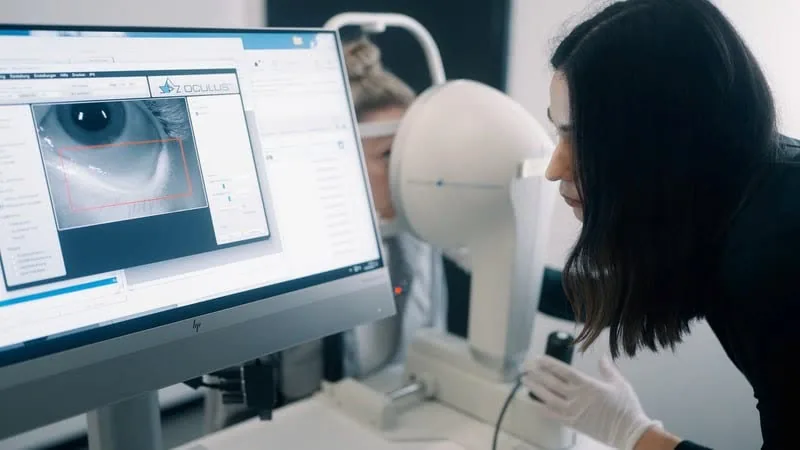
Patient Care plans the appointment with you.
Step 3 of 4

Measure, examine, explain.
For some measurements, the pupil is dilated. Then you do not drive yourself for a few hours.
Step 4 of 4
You decide. With everything you need for it.
Your request is confidential and subject to medical confidentiality. We send a report to your eye doctor only with your consent. Many patients expressly want it, because further treatment then runs smoothly.
Yes to the second opinion. But not automatically at the insurer's expense.
Under § 27b SGB V, patients with statutory health insurance are entitled to a second opinion for planned procedures that the Federal Joint Committee (G-BA) determines. This list currently includes 13 procedures, among them tonsil, knee and spine surgeries, but no eye surgery. You may always obtain a second opinion anyway; the insurer just does not automatically pay for it.
| Your situation | What applies | At dr.vision |
|---|---|---|
| Statutory health insurance, procedure on the G-BA list | Entitlement under § 27b SGB V, the insurer pays. The second opinion may only be given by doctors authorized for it, not by the doctor who operates. Your doctor must usually inform you of this at least ten working days before surgery. | Not possible: dr.vision is a private practice without statutory insurance accreditation. The patient service 116117 names doctors for second opinions. |
| Statutory health insurance, eye surgery | No entitlement under § 27b, because eye surgeries are not on the list. Some insurers offer voluntary second-opinion programs. | Second opinion as a self-paying patient under the German fee schedule for physicians (GOÄ), amount stated in advance. |
| Private health insurance | No separate second-opinion law; medical examinations under the German fee schedule for physicians (GOÄ) are reimbursed by the PKV within your plan. Some plans expressly support second opinions. | Invoice under the German fee schedule for physicians (GOÄ), usually reimbursable. |
| Beihilfe | Eligible for Beihilfe (allowance for German civil servants) under the rules of your employer, the rest through the private supplementary insurance. | Invoice under the German fee schedule for physicians (GOÄ). |
| Self-paying patient, elective procedure (laser eye surgery) | Laser eye surgery is usually not covered by statutory insurance; you usually pay for a second opinion yourself. | Second opinion under the German fee schedule for physicians (GOÄ), from €120. |
Since July 30, 2026, according to the Verbraucherzentrale (consumer advice center), the GKV-Beitragssatzstabilisierungsgesetz (a German law to stabilize contribution rates in statutory health insurance) has applied. It provides that the G-BA determines at least one procedure for which a second opinion becomes mandatory by March 31, 2027, and at least two more every year after that. Without proof, the insurer would then generally not pay for the surgery. Whether and when eye surgeries will fall under it is open. We will update this page as soon as the G-BA decides.
Because a second opinion must be independent.
Doctors from university hospitals, our own measuring devices from leading manufacturers at the state of the art, 20,000+ procedures on the cornea and lens, 5.0 stars from 376 reviews. And the freedom to also tell you: leave it as it is.
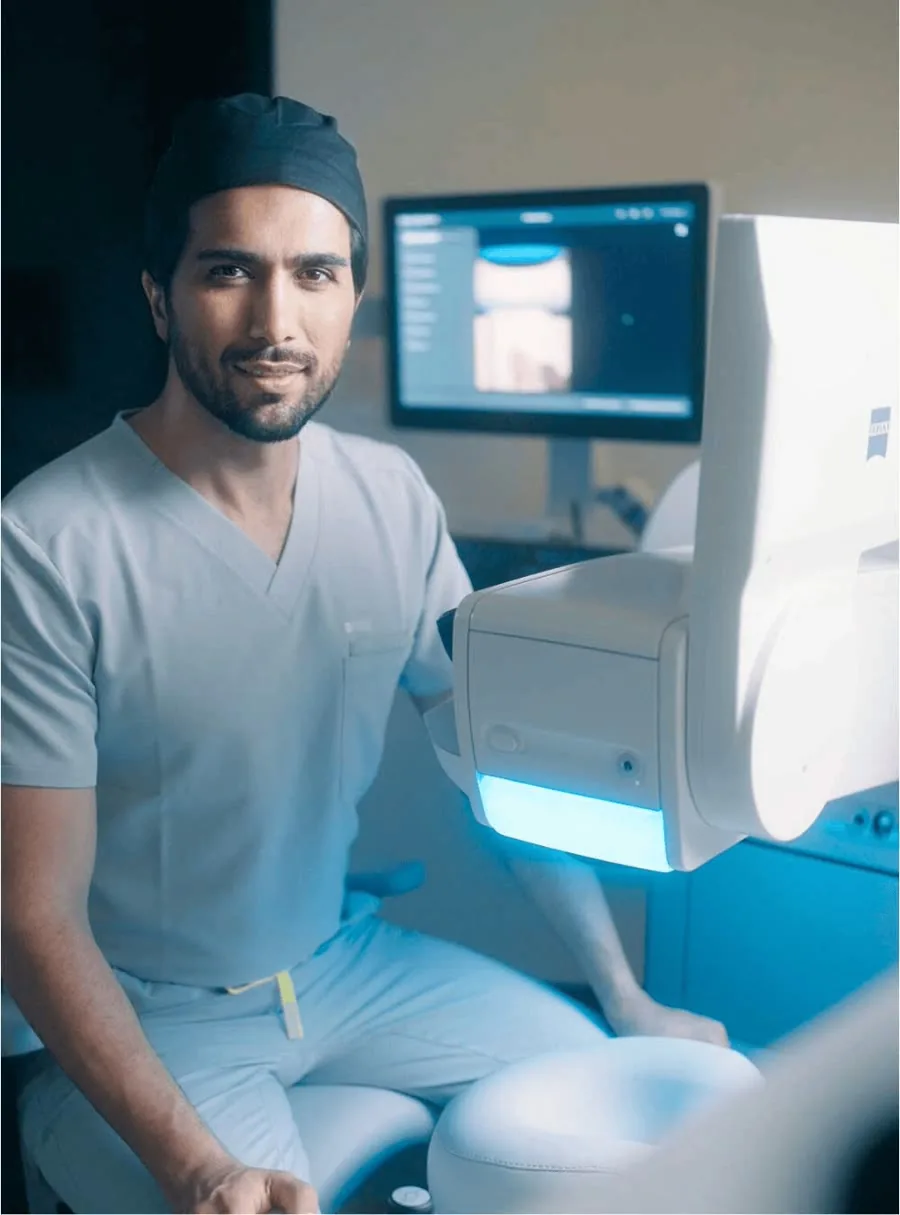
The specialist for your concern. Not just anyone.
Prof. Dr. Mehdi Shajari for laser eye surgery, lens, cataract, cornea and glaucoma surgery. He was a senior physician at the university hospitals in Munich and Frankfurt, teaches, and has trained several colleagues in this field. Senior physician (Oberärztin) Ivana Pavlovic and Dr. Claudia Grunwald for glaucoma, retina, dry eye and eyelids.
Laser eye surgery, lens surgery, cataract, corneal diseases, glaucoma surgery. Professorship and habilitation at the University of Frankfurt.
ProfileSpecialist physician, formerly senior physician (Oberärztin) at the University Hospital Frankfurt, FEBO. Has cared for glaucoma patients for over a decade.
ProfileSpecialist physician, formerly senior physician (Funktionsoberärztin) at the University Hospital Frankfurt, FEBO. Focus on early detection, diagnostics and treatment of glaucoma.
ProfileBilled under the German fee schedule for physicians (GOÄ). Amount stated in advance.
The second opinion is billed as a private medical service under the German fee schedule for physicians (GOÄ): the talk, review of findings and the examinations needed for your question. Guide price: from €120. PKV and Beihilfe (allowance for German civil servants) usually reimburse; patients with statutory health insurance are self-paying patients with us.
from €120Amount depends on the measurements needed, stated in advance · billed under the German fee schedule for physicians (GOÄ)
Patient Care tells you the expected amount before you confirm the appointment. If additional examinations come into question, we ask beforehand.
Medical examinations under the German fee schedule for physicians (GOÄ) are usually reimbursed by the PKV within your plan. Some plans expressly support second opinions before surgery; it is worth a look at your terms.
Eligible for Beihilfe (allowance for German civil servants) under the German fee schedule for physicians (GOÄ) and the rules of your employer; the rest is usually covered by your supplementary insurance.
dr.vision is a private practice without statutory insurance accreditation. You pay for the second opinion yourself, at an amount stated in advance. For the insurance entitlement under § 27b SGB V, the patient service 116117 can refer you to authorized doctors.
More on reimbursement: Private health insurance · Statutory health insurance · What does my insurance pay?
Go deeper.
The pages on the procedures for which we most often give a second opinion:
SMILE Pro/SmartSight, Femto-LASIK, Trans-PRK: incision, pain, healing, price.
View comparison High valuesWhen the lens is the better choice: thin cornea, dry eyes, high nearsightedness.
To the comparison CataractSymptoms, timing, lens choice and costs.
Learn more GlaucomaEvery treatment with its effect, side effects and limits.
To the page RetinaWhen injections are needed, how they work and how often.
To the page From further awayHow to get to us.
Learn moreStill have questions?
Usually yes, if the procedure is planned and cannot be undone: laser eye surgery, lens exchange, cataract surgery with a premium lens, glaucoma surgery. The same applies before injection therapy over years. A second opinion costs one appointment and gives you certainty, in one direction or the other. This does not apply in emergencies such as a retinal detachment: then every hour counts.
No. A second opinion is common and your good right. Good doctors themselves recommend one for big decisions. We treat your request confidentially and send our findings to your eye doctor only if you wish.
No. The second opinion is a service of its own. You receive an assessment and a written summary; you decide where to have surgery. If we confirm the first recommendation, we tell you just as clearly.
Then we explain where we differ and why: different measurements, a different weighting of risks or a procedure that the first practice does not offer. It often helps to lay both findings side by side. If you wish, we speak with your eye doctor. A third opinion is rarely needed, but legitimate.
The doctor's letter or findings report with the recommendation, all measurement printouts (for laser eye surgery topography or tomography and corneal thickness, for glaucoma visual fields and OCT of the optic nerve, for the macula OCT images), your glasses, contact lens values and a medication list. You will find the checklist for each topic at the top of this page.
We review your documents and measure again ourselves where it matters for the question. For laser eye surgery in particular, the decision depends on tenths of a millimeter of cornea; values from different devices are not always directly comparable. A second opinion based on the file alone is possible, but less reliable. We then say so.
No. A reliable second opinion is based on measurements in the practice, so we clarify medical questions only after the examination. You bring your documents to the appointment. Our Patient Care team clarifies the procedure, costs and appointment beforehand free of charge by phone or WhatsApp.
Tell Patient Care your surgery date when you inquire. We try to schedule the second opinion before it. If time does not allow, postponing a planned procedure is usually possible and mostly better than a decision under pressure.
The second opinion is billed as a private medical service under the German fee schedule for physicians (GOÄ). The amount depends on which examinations your question requires. Guide price: from €120. Patient Care tells you the expected amount before the appointment.
Private health insurers and Beihilfe (allowance for German civil servants) usually reimburse medical examinations under the German fee schedule for physicians (GOÄ) within your plan. Patients with statutory health insurance are self-paying patients with us, because dr.vision is a private practice without statutory insurance accreditation. Some statutory insurers offer voluntary second-opinion programs. Ask there which doctors are authorized for it.
Under § 27b SGB V, patients with statutory health insurance are entitled to a second opinion for certain planned procedures that the Federal Joint Committee determines. Eye surgeries are currently not on this list. The insurance second opinion may only be given by doctors authorized for it. As a private practice, dr.vision is not one of them. You can still obtain a second opinion at any time, with us at your own expense or through your PKV.
Yes. You have a right to view your patient file and to receive copies (§ 630g BGB); under data protection law, the first copy is free of charge. Ask the practice for the doctor's letter and the measurement printouts; many practices hand them out as PDF.
Medically reviewed by Prof. Dr. Mehdi Shajari · As of October 2026 · Not legal advice
For the appointment with the first doctor and with us.
Arrives by email in about 60 seconds. No newsletter. Privacy policy
How would you like to continue?
When booking, state your concern and, if already planned, your surgery date. We plan the measurements your question needs and the right doctor. You go home with a written assessment.
In Frankfurt, Junghofstraße 16 · with measurements for your question
Our locations.
 Opening hours
Junghofstraße 16, 60311 Frankfurt am Main
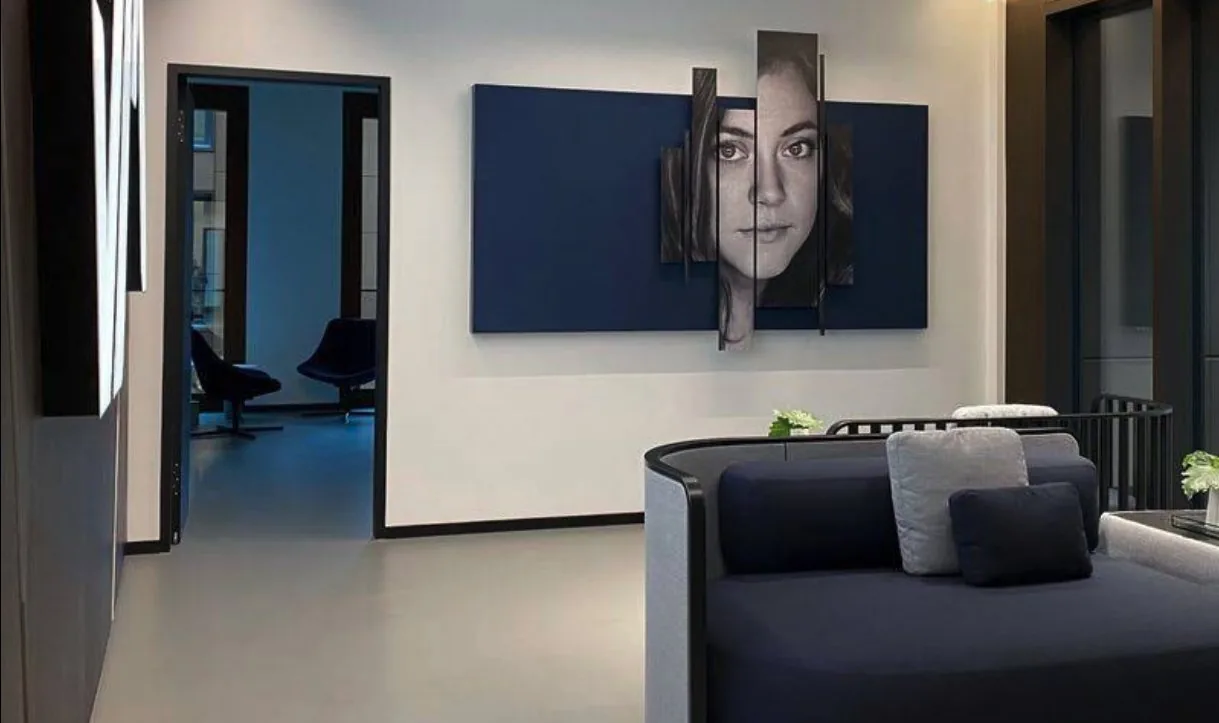 Opening 2027
Breite Straße 69, 40213 Düsseldorf (in the Neuer Stahlhof, corner of Graf-Adolf-Platz)
Until opening: preliminary talk in Frankfurt, Patient Care plans your travel.
Plan route Opening 2027
Lautenschlagerstraße 23, 70173 Stuttgart (2nd floor, step-free access)
Until opening: preliminary talk in Frankfurt, Patient Care plans your travel.
Plan routeYes, my name is Martina Franke. I was born in 1966 and I did not want to admit it, but I actually saw very badly before the surgery. So that when I had my care products in the bathroom, I no longer knew whether I had the shampoo in my hand or the conditioner. That is, how often did it happen to me that I put shampoo in my hair twice although I needed the conditioner. And I could no longer cope in the supermarket either. I no longer saw colors so nicely either. And the problem was, when I saw someone from further away, I did not recognize them at all anymore. And that was also very bad for my professional environment.
So the surgery on the second eye was yesterday and the surgery on the first eye was 14 days ago. That was great, because I had appointments, I could not do them in the usual period of one week, and instead consideration was taken.
I see colors and I can read. I had no glasses for driving, although there I did, I mean there it would actually have been necessary, and I had a pair of glasses for reading, and because I just did not want to admit it, I always bought them at DM, and at some point I had arrived at three, had to squint already, and now I can read everything. So it is really fantastic, and I could actually do that after the first surgery already, and he does it fantastically, because he sets it so that you can see both up close and further away, for example watching television. That means you can shop in the supermarket again, you can see the daily newspaper, you can see your care products in the bathroom. Unfortunately you also see every flaw in the skin, but there is always something.
And actually the professor was my second opinion. I had been to another professor, and he already said, um, cataract, we have to do something, and you also do not see so well anymore, which I did not want to admit either. And I thought, well, what he says. And then I thought, I need a second opinion. And then I came to Prof. Dr. Shajari and it was great from the start. I was so enthusiastic that it was completely clear to me, after the initial conversation, after the examinations here, which were top-notch professional, which were on schedule, the practice is incredibly well organized, everyone here is incredibly friendly. So it was wonderful, and therefore it was completely clear. No, this is not my second opinion, this is my first doctor. And since I am no longer allowed to go to my actual eye doctor, the professor will now have to be my eye doctor.
With Professor Shajari, no. That was completely clear to me, he showed competence from the start, he simply radiates it, and you feel in good hands. No, I had no concerns at all.
And my husband accompanied me here. He is a very critical person, and he came along because he said that for a second opinion, he'd better come with me. He was also completely enthusiastic, and my husband also said that if he had known beforehand what possibilities there are, he would have come to the professor here as well.
Yes, absolutely. Yes, five points are actually enough.
Yes, my name is Alexa Brum, I am 76 years old and had cataracts in both eyes, and I had one eye operated on at one of the many university hospitals here in the Rhine-Main area, and afterward I was a bit down, because it took a very long time until I could see somewhat properly again, and I was not prepared for that. My daughter, who is a doctor, searched around on the internet and came across this practice, with Professor Shajari, and it sounded very good right away. So I came here.
I find the equipment of the practice exceptionally good. I have never been examined so thoroughly. Really everything was checked, and in the eye that had already been operated on, they also found a small effusion in the retina. I have never experienced that something like that was examined. And I was informed very, very well about everything that could happen and how it works, so I had no concerns at all.
I had surgery on my right eye and can tell you that I notice absolutely nothing. The eye feels wonderful. My vision is great considering it was only yesterday. I am allowed to drive again, which I was not before. I really see well, and the surgery went so comfortably. Professor Shajari explained everything he was doing as he went. I had a transparent plexiglass shield on with holes so that it was ventilated. I could see right away. That was a completely new experience for me. Everything was terribly bright, but of course my pupil was still very dilated too. But from the first moment I simply felt comfortable and normal. And today I was allowed to take it off. I was told I may drive. I believe the values are excellent. And I do not have the feeling that anything was done to my eye, except that I can see better. The procedure itself is a breeze, actually more of an interesting experience.
What I noticed here, quite apart from the really very well-kept and spacious ambiance, but that is less important to me from a medical standpoint than what came next. The technical equipment of the practice, I found that quite extraordinary. That an OCT of the eye was also done, and with what speed, or speed is maybe the wrong word, the work was done so efficiently. Yes, there are so many devices that check and analyze the eye. I can't remember everything that was done in detail. That is really impressive and it builds trust.
And then I have to say, Professor Shajari is an extraordinarily pleasant doctor who seems very warm-hearted, who really meets you where you are. I can imagine that even if you are anxious, which I am not at all, but if you are an anxious type, he really meets you wonderfully there. And he explains everything. During the conversation, the results of this technical examination are shown on a large screen, and every little detail is explained. I have honestly never experienced this kind of explanation down to the last detail. And I think that is great and good to know.
In the left eye there was still a small pocket of fluid in the retina. Today I asked again, and he had it checked once more and showed me the difference between the two scans; it has almost resolved already, it is almost gone. So simply being informed like that, right? And he also said we simply have to give it time now, it will probably go away, and if not, then we can do this and that, so that you are informed all around and completely free of fear, because you know that this can be done, that can be done, and this doctor really does it well. So I believe he is very competent. At least that is how I feel about him. I will stay here too. As a patient you feel noticed as you are, whether you are more anxious or not, whether you are unsure at certain points. Earlier I went to a good eye doctor whom I knew well, but such a comprehensive and broad view of these visual problems, I did not experience that with eye doctors either. I have the feeling that he has a tremendous overview of the whole spectrum of what can happen with eyes.
I already have.
You already have?
Yes, I already did.
I would say that the everyday problems you have, that your vision changes with age. Of course it is clear that you need glasses. But if you are worried or a bit afraid, then this is the right place, because your fear is also caught and taken care of.
I’m Teresa Schwenger, I’m 31 years old, I’m a project manager. I was nearsighted, so I didn’t see well at a distance, and at some point it was just super annoying with contact lenses, putting them in every morning, taking them out again in the evening. I think I wore contact lenses for about ten years, and then I also had the problem that my eye was no longer supplied with oxygen so well, which is why the little vessels grew further into the eye, and so I looked around for an alternative. Glasses were not an alternative for me, because I simply don’t like myself in glasses. It was always an issue with the swimming pool or the lake or the sea. Do you put your contact lenses in, can you dive, do you maybe lose a contact lens, and that was always really annoying. Or also when you stayed somewhere overnight, you always had your little contact lens case, your solutions and care products, which you had to take along, always a whole pack just for the contact lenses. I always found that very annoying, and also on long days, when I had put my contact lenses in very early, in the evening while watching TV I noticed, oh, this really annoys me now, I would like to take them out, and then watching TV with glasses on a couch, really very uncomfortable, and so that was a situation where I am now grateful that I will hopefully or probably never have them again.
And then I looked at which doctors in this area offer laser eye surgery, and I read through lots of reviews and looked at who is very good here. And the doctor here is really rated very, very highly, and I had a totally likeable first conversation with him and felt comfortable right away. I also saw all his awards, the FOCUS awards and so on, which reinforced my impression, and also lots of positive reviews, which I can confirm. So you feel very comfortable, and the work here is very professional. So it was a very good decision to come here, definitely.
Not quite so good. I was very nervous, had many worries and fears too. I would have liked to leave again right away on the day when I was sitting here. But I was received super kindly and warmly. Everything was explained to me well. Everyone was very warm, and they took the nervousness away. So I felt I was in good hands, and when it then started, the nervousness was already a bit less, because I knew that I was simply in good hands.
So I simply arranged the appointment, the first appointment, online, and then I got a call asking me to please stop wearing contact lenses from that point on, so that the eyes are already free of contact lenses, because things can still change there. Then the parking garage is right next door, you walk in here, and it is a very beautiful building and a very beautiful practice, definitely. I was welcomed warmly right away by the receptionists. Everything was explained to me well right away. I was given water and everything. Then I had the first tests. I was totally amazed at how many tests were done and with which devices. It's really incredible what names are on the devices and how expensive these devices are. But really everything was measured that I think can be measured in an eye. Then I had the conversation with the doctor. That was also really great, warm. He answered all the questions I had and took the time for me. I then said I would rather sleep on it for another night, because I am simply the type of person who plays it safe. But at home I actually already knew that I would like to have it done. The next day I called again and made a second appointment. The eyes were checked once more, again with a colleague of the doctor and with him. And then I had another informed-consent talk about what risks there are. I was able to ask my questions again and then got my treatment appointment very quickly. And on the day of the treatment, as I said, I was already here super nervous, but I was also welcomed very warmly. Many of my worries and fears were taken away.
Yes, exactly. So I got up this morning and I could see right away. That was my biggest worry, that I would no longer be able to see as I did before, but I could see perfectly right away. I also saw at a distance again. That was the exciting part in my case. I looked out of the window and also noticed the trees farther away. The outlines, which I otherwise always saw only like this, were clear and distinct. So it really is a change right away. I notice it totally, and it’s super nice.
Definitely, yes, absolutely. I felt super comfortable from the first second to the last. So definitely, if I ever have laser treatment again, then definitely here. I can only recommend it to everyone.
Yes, I definitely should have done it earlier, that's true, because I believe it really gives you a lot of quality of life back, and it is also good for the eyes. Of course, there is the treatment itself, but in the long run, as it was with me, because of the contact lenses, I had these tiny blood vessels, or I have them in my eye, because the eyes were not supplied well. Had I done this earlier with the lasers, it might not be as pronounced. So my appeal would be to do it earlier rather than too late.
My name is Raquel Schulze Wischeler. I have basically worn glasses since I was 13. I was really nearsighted, you could say. Really, really. I could only see outlines without glasses. I had minus 6 in one eye, a diopter of minus 6, and almost minus five in the right one. I think everyone who wears contact lenses or glasses knows how stressful all of that is. The eye dries out completely. In the evening, when you are lying on the couch, you notice, okay, my eye is super tired, I really do not feel like doing anything anymore. Whether it is contact lenses or glasses. With that diopter, you have rather thick lenses, and you notice that over the day too. And just getting the feeling, or knowing, hey, I do not have to wear anything anymore, neither glasses that I always have to clean, nor contact lenses where I have to watch hygiene, that is an absolute liberation. And that felt more like a dream to me, and then I said, okay, now you dare to do it, and so I will do it.
Interestingly, I had already thought about having my eyes lasered about five years ago, but I was very afraid and then dropped the idea again. And lately I had big problems with my eyes because of chalazia, because my glands in the eyelids do not quite work, and so I had surgery twice. And then I said, okay, since I have already had surgery on my eye, you might as well dare it once more. And then I first just googled, came across dr. vision, saw, oh, there are really great reviews, and by coincidence my eye doctor had worked with him at the university hospital in Munich, and I had an eye doctor appointment beforehand and told her about it, I am getting my eyes lasered, and then she said, well, where? Then I told her the doctor's name. And then she said, yes, I know him, I worked with him. You can go there, he specializes in this, he is really great. And that took away the last bit of doubt for me.
And yes, then I came, had an appointment the next day. And right away I had the feeling that I was in the right hands. He sat down with me, explained all the risks to me, explained how it works, showed me the treatment room. And then the fear was somehow gone, and then I said, okay, I am doing it here. I was thrilled by the professionalism, first of the practice itself, which is superbly organized, and by the speed. You do not have long waiting times, you are examined, you have the feeling, okay, here they really examine thoroughly and extensively, and then of course it is explained to you on the screen, you can see it. So that was just totally professional for me. And so I felt safe right away.
Yes, my biggest fear was the eye itself. It is on the eye. And you have a reflex, a physical one. And the question of course was, okay, do I react, and does something go wrong because of that. But the fear was taken from me relatively quickly. I also talked about the fear. And then during the treatment I saw that the eye was held still. I did not feel that either. And then I calmed down relatively quickly. And I knew the eye was numbed. And so everything worked quite well.
I have no pain. I feel that something has happened to the eye, like a slight pressure, but it is one day after. I was already at work today, I have no pain.
Absolutely, so I can answer that question with yes, and go for it. It's not bad at all, it doesn't hurt at all, it's quick, and the healing process is pretty much there a day later. And it's an absolute quality of life. That's totally great.