 dr.vision
about 20 min
for both eyes with SMILE Pro; the laser itself works about 8 seconds per eye.
Start here
What suits you?
Find out in 2 minutes which procedure suits your eyes.
Start the Suitability CheckOr by age:
< 45yearsGet rid of glasses & contact lenses 45–64yearsGet rid of reading glasses 65+yearsCataract & glasses-free★★★★★ 5.0 · 376 Google reviews · 20,000+ procedures
Decide well
What you should know beforehand.
Who operates?Prof. Dr. Mehdi ShajariFOCUS Top Doctor · operates on every patient personally What does it cost?Laser from €3,498 · Lenses from €6,886Prices for both eyes Is it safe?Safety & risks When will I be fit again?Work, sports, driving Would you rather read in peace first?Decision Guide Freedom from GlassesProcedures
Laser or lens?
Laser eye surgery
SMILE ProSmartSightFemto-LASIKTrans-PRKPRKPresbyond (laser away your reading glasses)All laser procedures at a glanceLaser procedures compared ›Lens surgery
ICLLens exchange (reading glasses)Cataract surgery with premium lensLens types: trifocal, EDOF, toricLens types compared ›Start here
Something wrong with your eyes?
A thorough eye check-up with us clarifies what is behind it.
Book an eye check-up★★★★★ 5.0 · 376 Google reviews
Freedom from glasses · on the weekend
Lasered on Friday. Follow-up check on Saturday. Usually back at the office on Monday.
Laser eye surgery without a vacation week: procedure on Friday, follow-up check the same day or Saturday, and on Monday you are usually back at the office. After SMILE Pro or Femto-LASIK you are usually fit for everyday life after 1–2 days. Prof. Dr. Mehdi Shajari performs the laser treatment personally.
 12× FOCUSTop Doctor
Yes, with the right procedure. Friday to Monday.
about 20 min
for both eyes with SMILE Pro; the laser itself works about 8 seconds per eye.
Sat 9:00–15:00
The practice is open on Saturdays from 9:00 to 15:00. The first follow-up check is on the day after the procedure.
1–2 Days
after SMILE Pro, SmartSight and Femto-LASIK. After Trans-PRK usually 5–7 days, so it does not fit into a weekend.
0–1
With the procedure on Friday, most people need no day off or only this one.
from €4,298
Femto-LASIK, guide price for both eyes. SMILE Pro €5,198. The same on the weekend.
Laser eye surgery on the weekend in five answers.
For anyone with three minutes. Each answer leads to the detailed chapter.
Yes. The pre-operative examination usually takes place the day before the procedure, the procedure on Friday, the first follow-up check on Saturday. On Sunday you rest, and on Monday most people are back at the office.
View the planSMILE Pro, SmartSight and Femto-LASIK, because with them you are usually fit again after 1–2 days. Trans-PRK usually needs 5–7 days, and the ICL is usually operated on in two appointments.
Procedures for the weekendBecause after the informed-consent talk you should have enough time to make your decision calmly and carefully, and your eyes must be free of contact lenses for the measurement. The pre-operative examination is therefore before the laser day.
What happens beforehandAt a screen usually yes, if the follow-up check on Saturday went well. Driving only once we clear it. For dusty or physical work, we plan for longer.
The Monday afterThe same as during the week: Femto-LASIK €4,298, SMILE Pro €5,198, SmartSight €5,198, guide prices for both eyes under the German fee schedule for physicians (GOÄ). You receive the cost estimate in writing after the pre-operative examination.
CostsFor everyone whose calendar has no gap.
You have a full job, little vacation left or children who have to be at daycare on Monday. Your glasses have bothered you for years, but a week off never fits. We built the weekend plan for you.

0–1 Day
The most common case. You take Friday off or work until noon, and the procedure is in the afternoon or morning. On Monday most people are back at their desk, with breaks for the eyes.
2 appointments
Up to and including the procedure, you need only two visits to the practice. We schedule the pre-operative examination on a day that suits you, also late in the afternoon. The weekend does the rest.
1 companion
After the procedure you must not drive yourself, and on Friday evening your eyes are sensitive to light. Plan for a companion who takes you home and looks after the children in the evening.
On the day after the procedure we look at each eye: is everything smooth, is the surface closed, is visual acuity sufficient for driving? This follow-up check is the most important appointment of the aftercare. Our practice in Frankfurt is open on Saturdays from 9:00 to 15:00, not on Sundays. A procedure on Friday therefore means: follow-up check on Saturday and a free Sunday. With a procedure on Saturday, the first follow-up check would be only on Monday; that is possible, but not our first recommendation.
Yes. It is the same procedure on the same device (ZEISS VisuMax 800) by Prof. Dr. Mehdi Shajari, with the same pre-operative examination and the same follow-up check on the next day. The only difference is the Sunday without consultation hours. For that you receive an emergency number on which you can reach us around the clock. We shorten nothing to fit into a weekend: if your values call for a procedure with longer healing, we will tell you.
Lasered on Friday, back at the desk on Monday.
The procedure takes about 20 minutes for both eyes. So that it fits into a weekend, we schedule the appointments around it: pre-operative examination usually the day before the procedure, laser treatment on Friday, the first follow-up check on Saturday.
The pre-operative examination usually takes place the day before the procedure. If you are coming from farther away, you arrive the day before, stay overnight within walking distance of the practice and travel home after the follow-up check on Saturday; your eye doctor at home can take over the further follow-up checks. More on Traveling from farther away.
For example if your cornea is too thin for SMILE Pro or LASIK and only Trans-PRK comes into question, which usually needs 5–7 days of recovery. Or if your values point to an ICL, which is usually implanted in separate appointments for each eye. Then we plan a process with you that takes one or two more vacation days, instead of adapting the procedure to the calendar.
SMILE Pro, SmartSight and Femto-LASIK: yes. Trans-PRK: rather not.
What matters is how quickly the cornea heals. After SMILE Pro, SmartSight and Femto-LASIK, most people are fit again after 1–2 days. Trans-PRK usually needs 5–7 days, and the ICL is usually implanted in two appointments. Which procedure your eyes need is decided by your values, not by the calendar.
Swipe the table sideways to see all options.
| Criterion | SMILE Pro / SmartSightsmall incision | Femto-LASIKwith flap | Trans-PRKon the surface | ICLlens in front of your own | Presbyondfrom approx. 45 |
|---|---|---|---|---|---|
| Fits into the weekend | yes | yes | rather not | spread over two weekends | usually yes |
| For which values | Nearsightedness up to −8 D, astigmatism up to 5 D | also farsightedness up to about +4 D | low to moderate values, thinner cornea | from −6 D or cornea too thin for laser treatment | presbyopia plus distance refractive error |
| Procedure | both eyes about 20 min | approx. 20 min | approx. 20 min | about 20 min per eye | approx. 20 min |
| Fit again | usually after 1–2 days | usually after 1–2 days | usually after 5–7 days | usually after 1–2 days | usually after 1–2 days |
| Both eyes on one day | yes | yes | yes | usually separate appointments | yes |
| Monday at a screen | usually yes | usually yes | usually no | plan after the second eye | yes, near vision needs weeks of getting used to |
| guide price, both eyes | €5,198 | €4,298 | €3,498 | from €6,886 | €6,398 |
Values from the dr.vision procedure pages. All procedures in detail: SMILE Pro, SmartSight, Femto-LASIK, Trans-PRK, ICL, Presbyond.
Does the weekend plan suit me? Three questions.
What do your glasses say?
Have you been told you have a thin cornea?
What will you do on Monday?
Nearsightedness up to −6 D: SMILE Pro or SmartSight, usually fit again after 1–2 days. Laser treatment on Friday, follow-up check on Saturday, back at your desk on Monday.
Orientation, not a diagnosis. Whether your cornea is sufficient for SMILE Pro, SmartSight or LASIK is shown only by the measurement. In more detail: Suitability Check. From about 45, artificial lenses instead of a laser also come into question, usually implanted in two appointments: Lens types compared.
Sleep a lot. Little screen. No sports.
Friday evening is the most unpleasant part: your eyes scratch and water for a few hours, and many simply sleep through it. From Saturday most people already see well; full sharpness comes in the first weeks. What is possible on the weekend and what is not yet:
| What | Friday evening | Saturday and Sunday | Note |
|---|---|---|---|
| Sleeping | as much as possible | normal | Protective shields in the first 24 hours prevent you from rubbing in your sleep |
| Watching TV | from a distance, briefly | yes | Close your eyes in between |
| Phone, laptop | rather not | in short stretches | A screen makes you blink less often; artificial tears help |
| Showering, washing hair | not | yes, keep your eyes closed | No shampoo or water in the eye |
| Going for a walk | – | yes, with sunglasses | Avoid wind and dust |
| Driving | no | only after clearance at the follow-up check | As a passenger at any time |
| Alcohol | no | in moderation | Dries out the eyes; do not forget the drop schedule |
| Sports, sauna, swimming | no | no | Light exercise usually after 1 week, contact sports, swimming and sauna after 2 weeks |
| Small children | Companion takes over | yes, beware of fingers in the face | Do not let them rub, no romping |
A foreign-body sensation, tears and light sensitivity for a few hours are normal. If you lie down after the procedure, you sleep through most of it. Painkillers from your household are usually not needed; ask us beforehand.
At the follow-up check most people already see much better; the doctor decides when you may drive again, usually after the follow-up check the next day. Slightly milky vision or halos in the evening are normal in the first few days.
Drops as scheduled, screen in moderation, a walk does you good. Lasered as a pair? Then plan a third person for rides: Being treated together.

Weekend in your calendar?
We check your Friday and plan backward.
Jana from our Patient Care team finds the right laser day with you, schedules the pre-operative examination beforehand and tells you from when to stop wearing contact lenses. Usually within 10–15 minutes via WhatsApp, Mon–Fri 8:00–19:00, Sat 9:00–15:00.
At a screen usually yes. Behind the wheel only after clearance.
After SMILE Pro and Femto-LASIK, most people work again after 1–2 days, so on Monday. What exactly is possible depends on what you do for work. As a guide:
| Activity | On Monday | What to look for |
|---|---|---|
| Office, screen | usually yes | Breaks, screen a little brighter, artificial tears within reach |
| Customer contact, sales | usually yes | Do not rub your eyes, sunglasses for the way |
| Trades, construction site, dust | usually only after about 1 week | Dust and shavings are the risk, safety glasses afterward |
| Driving as a job (taxi, bus, truck, field service) | only after clearance | Visual acuity must meet the requirements for your driver's license class, see Work & Sports |
| Night shift | after consultation | Halos and glare are strongest at night in the first weeks |
| Daycare, school, nursing | usually yes | Hygiene: wash your hands, do not touch your face |
| Sports as a job, police, fire department | individual | Emergency-response and contact sports only after consultation |
Laser eye surgery is an elective procedure. Whether you receive a certificate of incapacity for work for the days afterward is decided by the doctor based on your findings and your job; many patients take a vacation day instead. That is exactly what the Friday plan is meant for: with the procedure on Friday and the follow-up check on Saturday, most people need only Friday off, some not even that.
If you are still not fit on Monday, for example because your eyes are drier than expected, contact us. Then we take a look and discuss how to proceed.
Right after the procedure your vision is blurry and you are sensitive to light, so someone else drives on Friday. At the follow-up check on Saturday we measure your visual acuity. The doctor decides when you may drive again, usually after the follow-up check the next day. At night there may be halos around headlights in the first weeks. Do not drive at night until they no longer bother you.
As a rule: light exercise after about 1 week, contact sports, swimming and sauna after two weeks, eye makeup after one week, with new products. Martial arts and ball sports later, after consultation. Flying is usually possible from the following day, as long as your follow-up appointments are secured. All details: When will I be fit again?
Four steps to Friday.
The weekend itself is over quickly. To make it work, you need some lead time: stop wearing contact lenses in good time, the pre-operative examination usually the day before, enough time to think it over. Those who plan early get the Friday they want.
Step 1 of 4
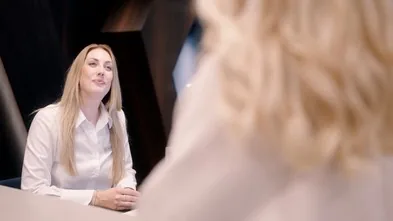
You name the weekend, we plan backward.
Friday appointments are popular. Plan a lead time of a few weeks. Prefer to talk first? Info call by phone with Patient Care.
Request an appointmentStep 2 of 4
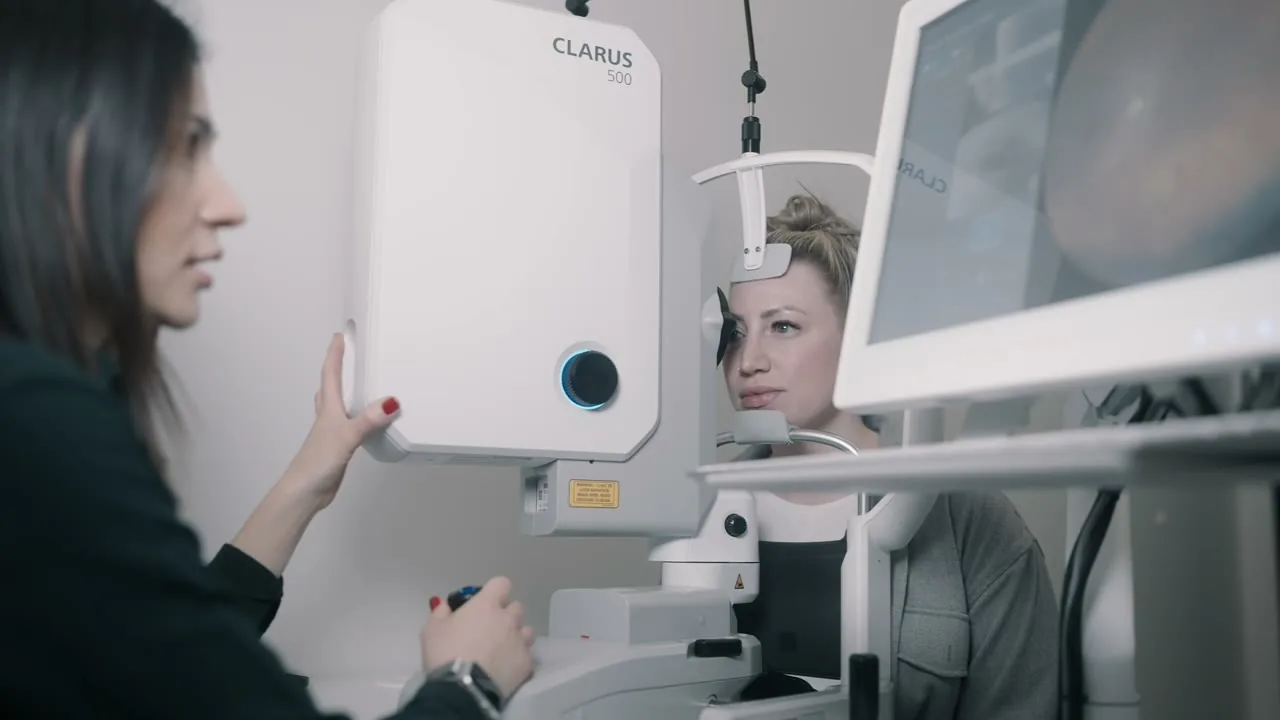
The cornea needs time to show its true shape.
Contact lenses slightly deform the cornea. If you stop wearing them too late, you will be measured incorrectly. Patient Care tells you the exact time.
Step 3 of 4
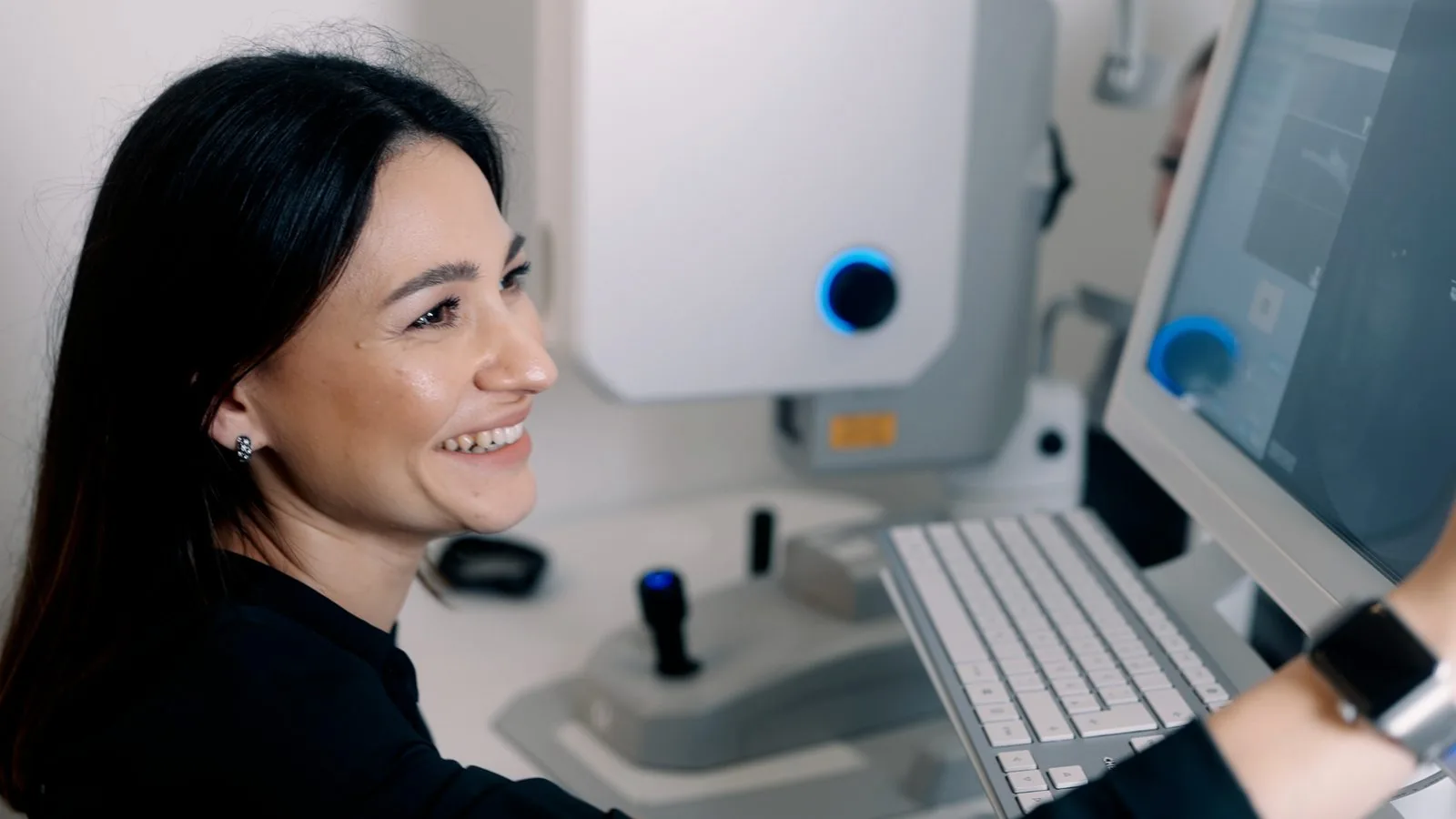
Measure everything. Decide on the procedure.
After that, enough time to think it over before the procedure. Driving yourself is usually possible afterward.
Step 4 of 4
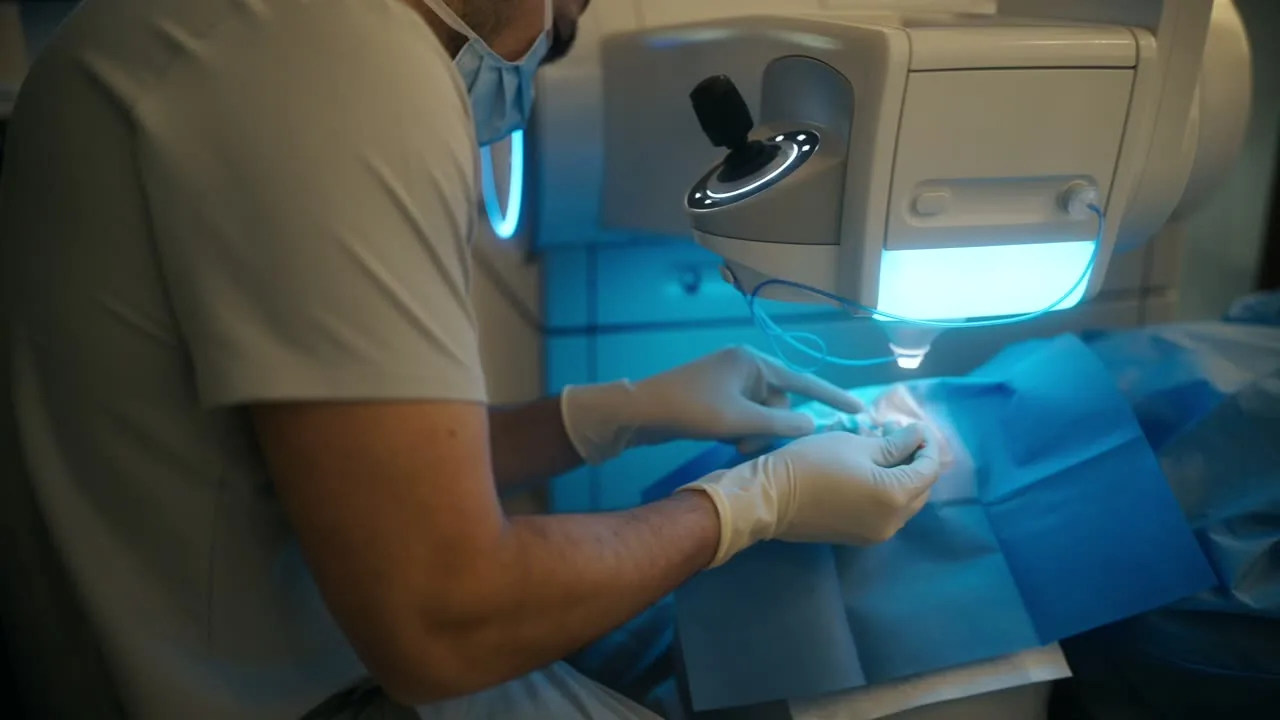
Awake, numbed with drops, both eyes in one appointment.
The first follow-up check follows on Saturday, the next ones after about a week and after 1–3 months.
To the weekend planThe practice is closed on Sundays. Through the emergency number, dr.vision can still be reached around the clock.
Serious complications such as infections are very rare, fewer than 1 in 1,000. So that you do not have to guess on Sunday: here is what is normal, when to call and how often which side effect occurs. You receive the emergency number on the laser day.
Scratchiness, tears, light sensitivity, slightly fluctuating or milky vision, halos in the evening, small red spots in the white of the eye. This fades within days.
Increasing pain instead of decreasing, clearly worse vision after initial improvement, strong redness with light sensitivity, pus. Then please call the emergency number, also at night.
Dry eyes, a forgotten drop, a lost protective shield. Write to us via WhatsApp; Patient Care will get in touch on Monday.
During laser treatment, corneal nerves that control tear flow are cut. The eyes feel dry, gritty or tired, especially at a screen, so also on Monday, when most people are back at the office.
3 in 10 in the first weeks
Usually subsided after 3–6 months. Less frequent with SMILE Pro than with LASIK.
Measure and treat the tear film beforehand, artificial tears for the first weeks. More: Dry eyes after laser eye surgery.
Rings or rays around headlights and street lamps, strongest in the first days and weeks. Important for everyone who wants to drive home on Sunday evening.
about 5 in 100 after 3 months
common in the first weeks, clearly less common afterward.
Measure the pupil in the dark, a sufficiently large treatment zone, avoid night driving in the first weeks.
A small residual refractive error remains. This does not show on the weekend but at the follow-up checks after weeks to months.
2 in 100
need an enhancement; at our clinic after SMILE Pro 0.6%.
Precise measurement, only with stable values. More: Enhancement.
Germs get into the fresh wound. Signs: increasing pain, redness, worse vision in the first days, so possibly on the weekend.
under 1 in 1,000
Sterile procedure, antibiotic drops, follow-up check on Saturday, emergency number around the clock.
Through the removal of tissue, the cornea becomes unstable and bulges forward over months to years. Not a weekend topic, but the most serious long-term risk.
well under 1 in 1,000
more common with undetected keratoconus and a cornea that is too thin.
Corneal tomography for everyone; no laser for borderline findings. More: Laser eye surgery: risks.
Frequencies for SMILE Pro from the literature and our own analysis (n = 412, 01/2024–01/2026).

Because on Saturday the same people are there as on Friday.
One surgeon, over 20,000 procedures, follow-up check on Saturday in the same practice, emergency number on Sunday. And a pre-operative examination that also tells you when your procedure does not fit into a weekend.
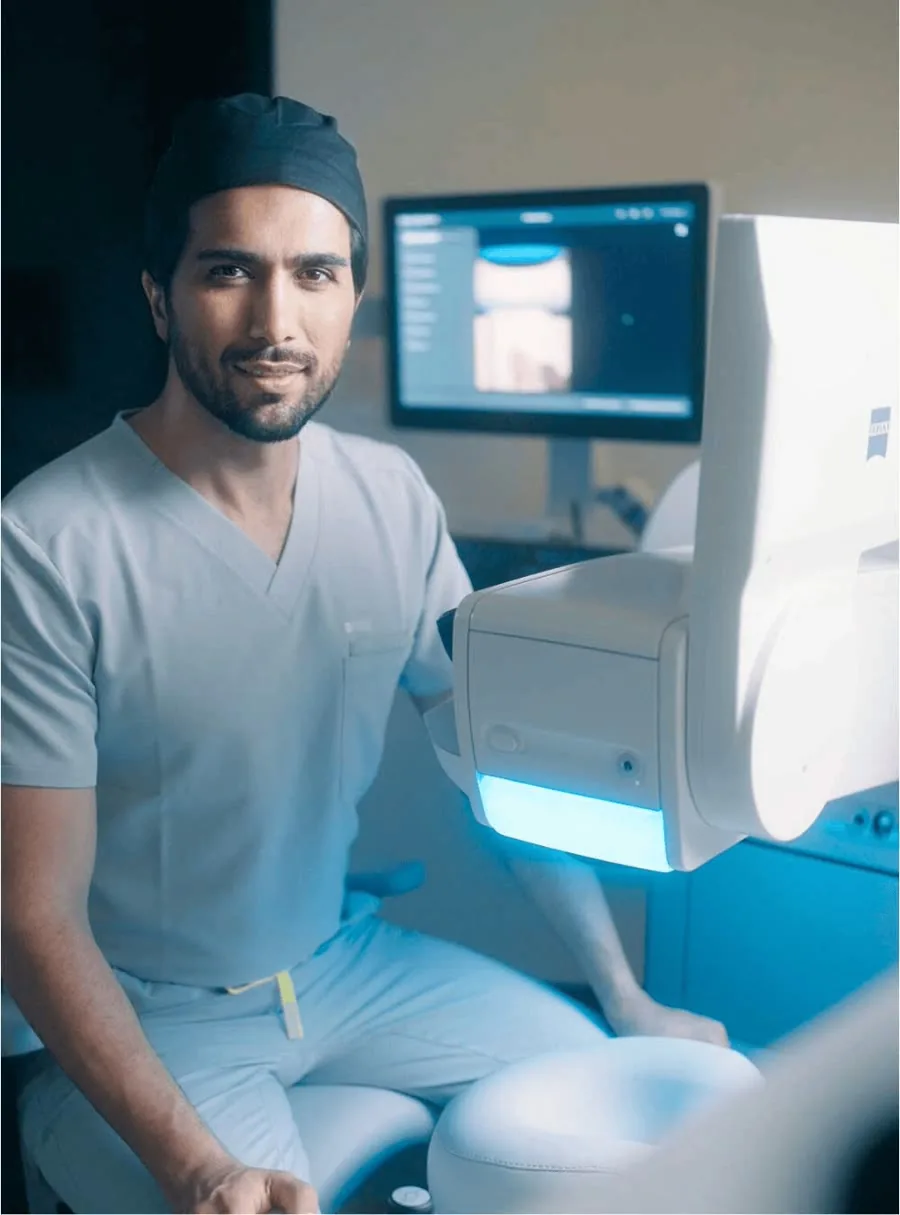
Every procedure: Prof. Dr. Mehdi Shajari. Personally.
Specialist in ophthalmology and professor (German title: außerplanmäßiger Professor) of ophthalmology, numerous publications on freedom from glasses, teaching and training of several colleagues in this field. He personally performs the pre-operative examination, the procedure and the decision on the method. At dr.vision he treats you himself, not a changing team, on Fridays too.
Prof. Dr. Mehdi Shajari
376 reviews. Average 5.0.
“I had my eyes lasered with the SMILE procedure by Prof. Shajari and am completely satisfied. The team of doctors is extremely competent, professional and manages to build trust immediately. Absolute recommendation!”
“I am incredibly grateful to Prof. Shajari for giving me back my 100% vision. It is still unreal to me to wake up in the morning and simply be able to see everything clearly, without depending on my annoying contact lenses.”
“Very good care and advice. I always felt in the best hands and can only recommend the SMILE laser treatment with Prof. Shajari. Top results!”
“We are very grateful for the quick scheduling of the appointment, the thorough examination and the friendly care.”
Four patients. In their own words.
Then everything went fast.
There are always situations where glasses are limiting.
It really was not that bad.
It is an absolute liberation.
The same as during the week.
Guide prices for both eyes: Femto-LASIK €4,298, SMILE Pro €5,198, SmartSight €5,198. Billing is private under the German fee schedule for physicians (GOÄ); you receive your written cost estimate after the pre-operative examination.
| Procedures | guide price, both eyes | Suitable for the weekend | More |
|---|---|---|---|
| SMILE Pro | €5,198 | yes, usually fit again after 1–2 days | SMILE Pro |
| Femto-LASIK | €4,298 | yes, usually fit again after 1–2 days | Femto-LASIK |
| Presbyond (from approx. 45) | €6,398 | usually yes, near vision needs getting used to | Presbyond |
| Trans-PRK | €3,498 | rather not, usually 5–7 days | Trans-PRK |
| ICL | from €6,886 | split over two appointments | ICL |
Included in the guide price: pre-operative examination, procedure by Prof. Dr. Mehdi Shajari, the follow-up check on Saturday and further aftercare. SMILE Pro financed from €3.90 a day (€95 a month over 72 months)*. Your installment for every procedure: Financing & monthly installment. Patients with statutory health insurance pay themselves (Costs for patients with statutory health insurance), private insurers reimburse depending on the plan (Reimbursement by private insurers), you can claim the costs as extraordinary expenses on your tax return, recognized depending on the reasonable burden (Deducting costs from taxes). * Representative example: €5,198 net loan amount · 72 months · fixed borrowing rate 9.49% p.a. · 9.90% effective annual interest rate · monthly installment €94.97 · total amount €6,837.84 · via medipay. Example 0% over 12 months directly with dr.vision: €5,198 cash price · no down payment · fixed borrowing rate 0% p.a. · 0% effective annual interest rate · monthly installment €433.17, last installment €433.13 · total amount €5,198.
Go deeper.
This page plans your weekend. The procedures and the aftercare are explained in detail on these pages:
The procedure that most often fits into a weekend: process, results, risks.
To SMILE Pro ProceduresFor farsighted patients and everyone whose cornea is suited to LASIK.
To Femto-LASIK PlanningThe 72-hour plan with hotel, train and follow-up checks at home.
To travel PlanningAs a pair on the same weekend: who drives, who helps?
Plan as a pair GuidesWork, sports, driving, makeup: all timings at a glance.
Read the guide ProcessFrom the pre-operative examination to the last follow-up check, step by step.
To the processStill have questions?
“These are the questions I hear most often in consultation hours. Here are my answers.” Prof. Dr. Mehdi Shajari
Yes. At dr.vision the procedure is usually on Friday, the first follow-up check on Saturday. With SMILE Pro or Femto-LASIK, most people are fit again after 1–2 days and work on Monday.
Yes, the practice in Frankfurt is open on Saturdays from 9:00 to 15:00, and during the week from 8:00 to 19:00.
No. After the informed-consent talk you should have enough time to decide calmly, and after dilated pupils a measurement on the same day is difficult. If you travel here, you have the pre-operative examination the day before.
Ideally a few weeks beforehand, because Fridays are popular and you have to stop wearing contact lenses before the pre-operative examination: soft lenses 10–14 days beforehand, rigid lenses 3–4 weeks, and once more 3 days before the procedure.
SMILE Pro, SmartSight and Femto-LASIK, because recovery usually takes 1–2 days. Trans-PRK usually needs 5–7 days and does not fit until Monday. The ICL is usually implanted in two separate appointments.
With Trans-PRK, the top cell layer of the cornea has to grow back. This takes a few days, during which the eyes hurt and water. Working is usually possible only after 5–7 days.
At a screen usually yes, with breaks and artificial tears, if the follow-up check on Saturday went well. For dusty or physical work we usually recommend about a week off; professional drivers only after clearance.
Not on the day of the procedure. At the follow-up check we measure your visual acuity; the doctor decides when you may drive again, usually after the follow-up check the next day. At night only once halos no longer bother you.
The doctor decides that based on your findings and your job. Because laser eye surgery is an elective procedure, many patients take a vacation day. With the Friday plan, most people need only Friday off.
You receive an emergency number on the laser day that can be reached around the clock. You should call if pain increases, vision is clearly worse or there is strong redness. Dryness or scratchiness are normal.
As a rule not during the procedure; the eyes are numbed with drops. On Friday evening they scratch and water for a few hours, and many sleep through it. From Saturday most people have few complaints.
The guide prices for both eyes are the same as during the week: Femto-LASIK €4,298, SMILE Pro €5,198, SmartSight €5,198, billed under the German fee schedule for physicians (GOÄ). You receive the written cost estimate after the pre-operative examination.
Medically reviewed by Prof. Dr. Mehdi Shajari · As of October 2026
Print the plan, put it on the fridge, give it to your companion.
Arrives by e-mail in about 60 seconds. No newsletter, just the guide and, if you wish, a follow-up from Patient Care. Privacy policy
How would you like to continue?
You tell us your desired weekend, Patient Care plans backward: contact lens break, pre-operative examination usually the day before, procedure on Friday, follow-up check on Saturday. The first appointment is a free consultation. After the pre-operative examination with Prof. Dr. Mehdi Shajari, you receive the recommendation and cost estimate in writing.
In Frankfurt, Junghofstraße 16 · procedure on Fridays, follow-up check on Saturdays 9:00–15:00
Our locations.
 Opening hours
Junghofstraße 16, 60311 Frankfurt am Main
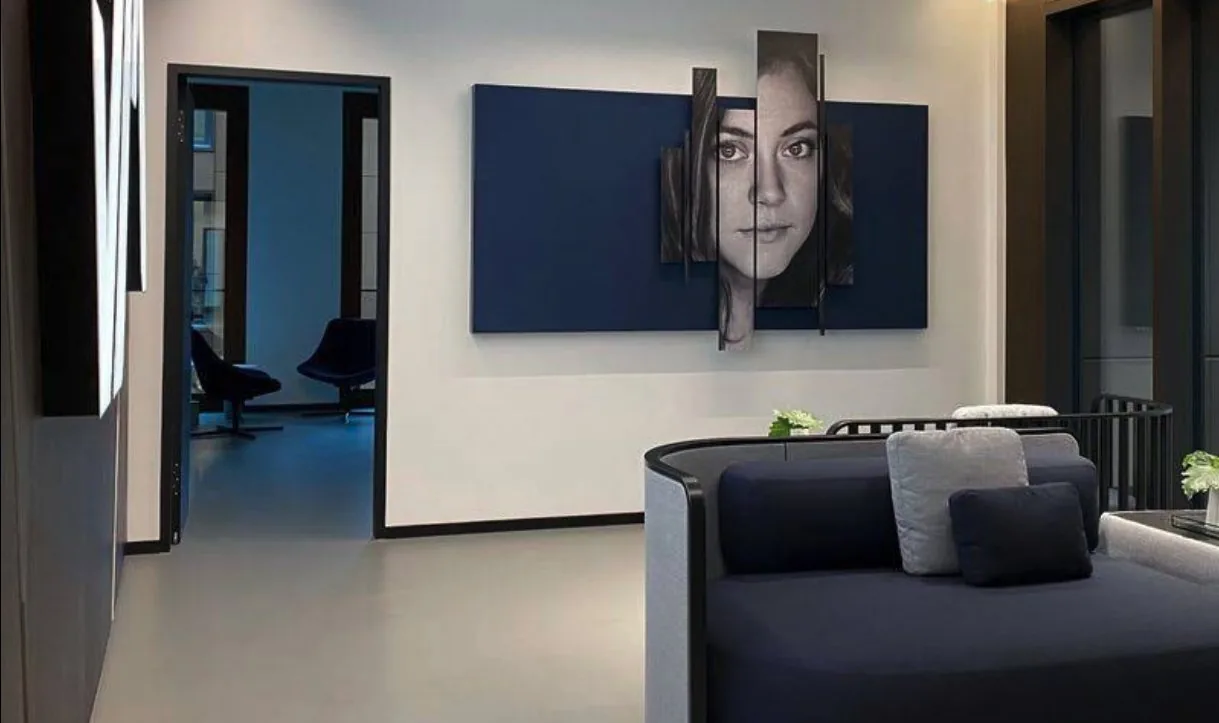 Opening 2027
Breite Straße 69, 40213 Düsseldorf (in the Neuer Stahlhof, corner of Graf-Adolf-Platz)
Until opening: preliminary talk in Frankfurt, Patient Care plans your travel.
Plan route Opening 2027
Lautenschlagerstraße 23, 70173 Stuttgart (2nd floor, step-free access)
Until opening: preliminary talk in Frankfurt, Patient Care plans your travel.
Plan routeYes, so I'm Sevim, I'm 35 years old, and for many years now I've had the issue that I always wore a lot of contact lenses, but because of that I have very dry eyes. I couldn't really get used to glasses. Over the last few months I did wear them, to go easy on my eyes a bit, but in the long run I wanted a lasting solution, especially for sports and for activities where you don't want to always depend on glasses.
It actually started when I got my driver's license at 18; that was the first time I needed glasses for driving. Back then I still had a very slight vision problem. I think it started at minus 0.5 and minus 0.25 and then it actually got worse over the years. Also during my studies, because I read a lot, it kept getting worse. And then, I'm a lawyer, I took the state exam twice, and with each state exam it went down by about minus two. Exactly. And now I had minus four on the right side, until yesterday, and minus 3.75 on the left. So already a clear impairment in everyday life when you don't have a vision aid.
What bothered me most in general, when I was walking around, was simply that I couldn't see certain things sharply in the distance. I could tell from afar, while driving for example, that there was a sign there, but what was written on it, no chance. And then I started to blink and squint, because that always helps a bit with astigmatism. It really bothered me, and during sports it also annoyed me a lot that the glasses always slide down because of sweat and so on, and that is really annoying.
So I started to inform myself a few years ago about what comes into question. And then I went to a university hospital in Mainz and informed myself about the different procedures. I had a good feeling there too, but I always had real respect. Simply because it is a procedure on the eye and there are always horror scenarios in your head. What if you're one of the 0.0-something percent who then maybe can't see anything at all later. And then I dropped the idea again for the time being.
Then last year I took it up again, because I was having more and more problems with the contact lenses. Small infections again and again, and because of that I had to wear glasses a lot again and was really annoyed by it. And then last year I came to the practice here for the first time; I actually just googled for good reviews, and right at the first visit I had a very good feeling. That is, the feeling that I'm really in good hands here, that the doctor really takes time, explains everything calmly and also isn't annoyed when you have a follow-up question or so. I always find that very disturbing with doctors, because the patient simply has many questions, and when everything is answered, and very calmly, you simply get a good feeling. And in the end it is of course also the trust in the doctor that encourages you to choose one or the other.
The first impression, when you walk into the practice, everything is somehow super chic, super clean and everyone is just very nice. You don't always get that at the doctor's, I think. Mostly you already have such annoyed medical assistants who give you the feeling right at the start that it's somehow stressful and so on, and here everything is actually always very calm, and for a procedure like this, that gave me a lot of trust.
That was a few weeks ago, and then I got the appointment for today, for yesterday, for the surgery, and for today the aftercare. That means between the decision, I'm doing it, and the procedure it was a few weeks. So not throughout all those weeks. I was really looking forward to it. I actually counted the days until it was finally time, and on the day itself I thought, oh no. You simply have respect for it, and I also have respect for the job and for the procedure as such, but there too I have to say I was completely well looked after, because the doctor talked with me the whole time. He kept reassuring me that everything is fine, that I'm doing everything right, and that was very calming. And he had also explained all the individual steps beforehand. So I knew exactly what was coming, and also during the procedure, I was slightly nervous, I was excited for sure, but I tried to cooperate well so that I don't wobble or anything, and then everything went very, very fast.
After getting up it was already like, okay, wow, I see better, and I also notice that it keeps getting better bit by bit. When I look into the distance, I think about what I saw before and what I see now. And you simply notice steadily that it keeps getting better. And I just found out that I'm already at 100 percent with my vision. So it really goes, really goes fast.
I think I informed myself very well. For me personally, it's always important to know what is going to happen. Because for me it gave a lot of calm that I already knew the individual steps. I also read up a bit more on the procedure, the differences between the procedures, and thought about what the consequences are and what the side effects could be. For me personally, it simply helps to know what is happening to me. And I think that's a tip I can give, too: of course, choose the doctor very carefully. I definitely recommend this doctor. I think I did everything right here. So I can really only encourage everyone to take this step as well.
My name is Markus Mielert. Before the surgery I was nearsighted and had presbyopia in its early stage, and that was corrected with LASIK.
In everyday life, glasses are definitely a limitation again and again, especially in bad weather, rain for example, but then also in summer with sunglasses, with non-prescription ones at the beach and so on. So there are always situations where glasses are limiting. And that always bothered me, besides the look, also that glasses are maybe not always 100% pretty. And what also came on top, a point I hadn’t thought of at all beforehand, was this presbyopia. I only found that out when I was here with Professor Shajari. He told me about it, and only then did I notice that I was affected at all. What I noticed in everyday life, for example: I looked at a phone list at work and wanted to look up a number and could hardly make it out. And I hadn’t been aware of that at all before, but this process apparently went very fast and then kept getting worse.
Yes, of course, in Frankfurt there are naturally many options for getting laser treatment. Of course, the first impression online is decisive. Both the look of the professor, that he made a very competent impression, and the reviews. The online reviews are the opener for the first contact. I actually only went to him, because the first conversation with him was also immediately great, he gave me a perfect impression, in the sense that he is 110 percent on top of his field. I am in very good hands, and so I didn't look any further at all.
First I sent an e-mail, because I don’t have private health insurance. I first wanted to know how it works with the pre-operative examination, what costs would come my way. Then I made this appointment, the first contact. Then I had a talk with him and first an eye test. At the second appointment the detailed tests were done, to determine that I am suitable for it, which procedure I am suitable for. That actually went very quickly. That was this second appointment, with all the tests. One thing he recommended to me, which was also very good: he recommended that I wear contact lenses with different strengths that simulate this post-surgery vision, because with this presbyopia combined with nearsightedness it has a different effect, since you have to treat the eyes differently with the laser. And that was also great, because through these contact lenses you could already see that the vision is perhaps a bit different from what you would have expected. That is very good, but it takes getting used to, and it was good to know what is coming.
Yes, it was very busy. It was always very calm in his office. There were many helping hands. Yes, no, but great, everyone was super focused and concentrated, calm, it was a good atmosphere, no stress, no hectic, nothing that gave you the feeling that something was not okay. I felt very welcome from the start, also with the preparation and so on, it was wonderful. During the surgery too, of course, it is a delicate thing on the eye. But he kept telling me, very reassuringly, which step of the process we were at, that everything was going well, and gave the impression that there were no problems. That was actually wonderful, and as I said, it actually went quite fast, faster than you would think.
I can of course recommend him without reservation, really flawless from A to Z. Laser eye surgery itself was always a topic that I could rule out for myself, because I didn't want to take the risk that something might go wrong. But probably the technology has now simply advanced so far that it has been perfected compared to how it was before. And I know now – I was lasered yesterday, and today the vision is wonderful. Let's see how it is in the long term, but as of now I would say it was the perfect decision. And I believe it makes life much better and of higher quality, without glasses, without restrictions. And I am looking forward to that.
Hi, I'm Sebastian, 37, I live near Frankfurt, and I have somehow always been annoyed that I have to change glasses so often. I have kids now, who knock them off my head or smear them. And for me that was mainly a hassle problem. Apart from the fact that I naturally have weak eyesight, but I actually always got along quite well with glasses. And then I tried contact lenses and noticed that my eyes are dry and it all didn't fit together so well. And then I saw that this offer exists here and first informed myself. So, what does one actually do? There are so many treatments you could have. I went a bit too deep down the rabbit hole and watched videos and saw what these surgeries look like, and at first I kept my distance. It took half a year until I had gathered my courage and thought, well, it can't be that bad. So many thousands of people do it. And then I simply looked more closely at which treatment suits me. Before the doctor had even advised me, I don't know if I am the perfect patient if I already come with an idea, but I came here with the goal of having a PRK treatment. So basically the treatment that many patients are a bit afraid of. Rightly so, you always read in experience reports that it probably hurts quite a bit and that it is the most unpleasant of all the variants, with long healing times and long aftercare times.
So I have a refractive error, diagnosed since fifth grade or so, but not particularly bad. Somewhere between one and two diopters, it got a little worse over time, then I was at one and a half or 1.75, and from about eighth grade, ninth grade or so, it stayed stable. So it simply didn't change at all anymore. And it really only bothered me in that the glasses themselves are of course an obstacle. But that is bearable, it's not really that bad. It became more unpleasant when I started, for example, sports where glasses get in the way.
Climbing, bouldering and things like that, you don't necessarily want to start with glasses on, and that was annoying. Then I started with contact lenses, always had dry eyes, always had to rub my eye, push them around, and I didn't like that at all. Then of course I looked at what solutions there are, how I can get away from this somehow. I can say that my fear beforehand turned out not to be entirely justified, because the whole thing was basically not that bad for me. You have your eyes lasered, and of course that is an uneasy feeling.
And you also go home with swollen-shut eyes, maybe. Everything is not so great, it burns a little. But compared with the stories I had heard, what really happened to me, I have to say, it was really not that bad. You can take painkillers, and I should say, the first day it burns a little, but by far not as badly as is often said, in my case. And on the second day I hardly noticed it anymore, and on the third it was okay.
In terms of pain, that is. Of course you can't see anything right away. You may have to wait a little until your eyes can open again, the swelling has gone down and so on. But from then on it is actually a simple, straightforward healing process. It gets better every day, the vision gets better.
And I think after one week, that was it, I could already make out everything again reasonably well. And now, after a month, I am glad that I did it. I have no complaints at all. When I walk through Frankfurt, I can see the tops of the skyscrapers and see everything sharply again, without glasses, without contact lenses, without discomfort. It is wonderful.
The thing is, I have two children, and my two boys are not necessarily careful when it comes to touching my eyes. Now and then a hand lands in my eye, and perhaps not all that gently. And when I think about it after gathering my information, that something in the eye might actually not be firmly healed yet. Because with LASIK or other treatments, a disc or a piece of a disc is cut, so to speak, folded back and then put back.
This flap, exactly. It only heals at the outer edge. And when I imagine someone hitting it with force, I don't feel comfortable. Of course, I also know, you hear from doctors too, that it is not necessarily the force you need to lift this flap again.
But nevertheless I simply don't feel comfortable with it and couldn't warm to it at all. And PRK is actually a method that, according to my research, really many people have had done, and which is routinely used in the armed forces or other organizations, where force on the eye is perhaps more likely to occur. But if they do it, how bad can it really be for me? And this putting things into perspective is what in the end made me say, okay, this is my variant, this is how I want to do it.
And it worked well. I think that is true for everyone who starts out with this bad gut feeling. You try to optimize, you know, what can I do so that the whole thing goes well. And when you look around, of course you look for someone who treats the eyes and has a certain reputation.
A doctor, professor, doctor, someone who works at the university hospital, is of course exactly right. For me it was also close to work, so there were simply geographical reasons to come here as well. But it all fit together well. The information material was good, I could look closely at what the prices are, what the conditions are, and I could make an appointment where I could also speak directly with the doctor.
That is also very important to me, not to speak with just anyone but with the doctor, and also to know that the person I speak with at the start is the one who will treat me. Basically I would say it was a good decision, I would do it again, and it is certainly not as bad as is often said. Very many people have the surgery, few people have problems with it, and we all know the internet, often only those who have problems speak up. Don't trust it too much, get in contact, find out how I can do this, which doctor can support me.
In this case it was very easy, the first conversation was directly with the treating doctor, and then you see whether you feel up to it or not. Definitely, I had very positive experiences, I am satisfied with the result. No complaints to this day, of course.
My name is Raquel Schulze Wischeler. I have basically worn glasses since I was 13. I was really nearsighted, you could say. Really, really. I could only see outlines without glasses. I had minus 6 in one eye, a diopter of minus 6, and almost minus five in the right one. I think everyone who wears contact lenses or glasses knows how stressful all of that is. The eye dries out completely. In the evening, when you are lying on the couch, you notice, okay, my eye is super tired, I really do not feel like doing anything anymore. Whether it is contact lenses or glasses. With that diopter, you have rather thick lenses, and you notice that over the day too. And just getting the feeling, or knowing, hey, I do not have to wear anything anymore, neither glasses that I always have to clean, nor contact lenses where I have to watch hygiene, that is an absolute liberation. And that felt more like a dream to me, and then I said, okay, now you dare to do it, and so I will do it.
Interestingly, I had already thought about having my eyes lasered about five years ago, but I was very afraid and then dropped the idea again. And lately I had big problems with my eyes because of chalazia, because my glands in the eyelids do not quite work, and so I had surgery twice. And then I said, okay, since I have already had surgery on my eye, you might as well dare it once more. And then I first just googled, came across dr. vision, saw, oh, there are really great reviews, and by coincidence my eye doctor had worked with him at the university hospital in Munich, and I had an eye doctor appointment beforehand and told her about it, I am getting my eyes lasered, and then she said, well, where? Then I told her the doctor's name. And then she said, yes, I know him, I worked with him. You can go there, he specializes in this, he is really great. And that took away the last bit of doubt for me.
And yes, then I came, had an appointment the next day. And right away I had the feeling that I was in the right hands. He sat down with me, explained all the risks to me, explained how it works, showed me the treatment room. And then the fear was somehow gone, and then I said, okay, I am doing it here. I was thrilled by the professionalism, first of the practice itself, which is superbly organized, and by the speed. You do not have long waiting times, you are examined, you have the feeling, okay, here they really examine thoroughly and extensively, and then of course it is explained to you on the screen, you can see it. So that was just totally professional for me. And so I felt safe right away.
Yes, my biggest fear was the eye itself. It is on the eye. And you have a reflex, a physical one. And the question of course was, okay, do I react, and does something go wrong because of that. But the fear was taken from me relatively quickly. I also talked about the fear. And then during the treatment I saw that the eye was held still. I did not feel that either. And then I calmed down relatively quickly. And I knew the eye was numbed. And so everything worked quite well.
I have no pain. I feel that something has happened to the eye, like a slight pressure, but it is one day after. I was already at work today, I have no pain.
Absolutely, so I can answer that question with yes, and go for it. It's not bad at all, it doesn't hurt at all, it's quick, and the healing process is pretty much there a day later. And it's an absolute quality of life. That's totally great.