 dr.vision
Is laser eye surgery deductible?
As a rule yes, as illness-related costs under § 33 EStG. The tax office does not require a certificate from a public health officer; the invoice and proof of payment are usually enough.
The basisStart here
What suits you?
Find out in 2 minutes which procedure suits your eyes.
Start the Suitability CheckOr by age:
< 45yearsGet rid of glasses & contact lenses 45–64yearsGet rid of reading glasses 65+yearsCataract & glasses-free★★★★★ 5.0 · 376 Google reviews · 20,000+ procedures
Decide well
What you should know beforehand.
Who operates?Prof. Dr. Mehdi ShajariFOCUS Top Doctor · operates on every patient personally What does it cost?Laser from €3,498 · Lenses from €6,886Prices for both eyes Is it safe?Safety & risks When will I be fit again?Work, sports, driving Would you rather read in peace first?Decision Guide Freedom from GlassesProcedures
Laser or lens?
Laser eye surgery
SMILE ProSmartSightFemto-LASIKTrans-PRKPRKPresbyond (laser away your reading glasses)All laser procedures at a glanceLaser procedures compared ›Lens surgery
ICLLens exchange (reading glasses)Cataract surgery with premium lensLens types: trifocal, EDOF, toricLens types compared ›Start here
Something wrong with your eyes?
A thorough eye check-up with us clarifies what is behind it.
Book an eye check-up★★★★★ 5.0 · 376 Google reviews
Deducting laser eye surgery for tax purposes
Can I deduct laser eye surgery from my taxes?
You can usually deduct laser eye surgery, ICL and cataract surgery from your taxes as extraordinary expenses, and you do not need a certificate from a public health officer for this. How much you get back depends on your income. Calculate your amount right away.
 12× FOCUSTop Doctor
As a rule, yes. The costs of laser eye surgery and other eye operations that you bear yourself count as illness-related costs and can be deducted as extraordinary expenses under § 33 EStG; a certificate from a public health officer is not needed for this (§ 64 EStDV, expressly for laser eye surgery R 33.4 EStR). For tax purposes, only the amount that exceeds your reasonable burden (1 to 7% of the total amount of income) has an effect, and it does so at your personal tax rate. What matters is the year in which you pay, also when financing through a loan.
Sources: § 33 EStG (gesetze-im-internet.de, accessed November 15, 2026); BFH VI R 75/14 (stepwise calculation); OFD Koblenz 06/22/2006, S 2284 A – St 32 3. General information, not tax or legal advice. As of November 2026. Laws, forms and the practice of the authorities can change. Clarify your case with your tax advisor or a wage tax assistance association (Lohnsteuerhilfeverein).
376 reviews. Average 5.0.
376 Google reviews give dr.vision an average of 5.0 out of 5 stars. dr.vision does not check whether Google reviews come from treated patients.
“Everyone was very friendly and the measurements were very precise, with modern measuring methods and a high level of professionalism.”
“From reception to farewell, you feel welcome and in the best hands. Everyone is very friendly, the treatment extremely pleasant, personal and professional!”
“A highly likeable doctor who leaves an extremely competent and friendly impression. Short waiting times and a stress-free environment - I am thrilled!”
“A very competent doctor who takes a lot of time for patients, a pleasant personality and empathetic.”
In five answers.
For everyone who has two minutes. Each answer leads to the detailed chapter.
As a rule yes, as illness-related costs under § 33 EStG. The tax office does not require a certificate from a public health officer; the invoice and proof of payment are usually enough.
The basisBecause only the part above the reasonable burden counts: 1 to 7% of your income, depending on family.
Reasonable burdenDeductible amount times personal tax rate. With €50,000 income, single, and SMILE Pro, around €700 to €820, depending on the tax rate.
Calculate it yourselfThe year of payment counts. A loan counts in the year in which the practice is paid; installments to the practice in the year of each installment.
Choosing the tax year wiselyInvoice under the German fee schedule for physicians (GOÄ) with diagnosis, proof of payment, receipts for travel.
Receipts and ELSTERAs a rule yes. As illness-related costs.
The tax office recognizes illness-related costs that you bear yourself as extraordinary expenses because they arise “inevitably” (§ 33 para. 1 EStG). For laser eye surgery, the tax administration clarified in 2006: a refractive error is an illness, and the costs are recognized without a certificate from a public health officer (OFD Koblenz, today R 33.4 para. 1 EStR). For ICL and lens operations as well, § 64 EStDV requires no expert opinion from a public health officer. The tax office generally recognizes the costs of laser eye surgery, ICL and cataract surgery as illness-related costs, insofar as they exceed your reasonable burden. For refractive lens exchange, it decides in each individual case.
| Procedure | guide price, both eyes | Deductible as illness-related costs | Note |
|---|---|---|---|
| SMILE Pro · Femto-LASIK · Trans-PRK | €3,498 – €5,198 | yes, as a rule | A refractive error counts as an illness; no certificate from a public health officer needed |
| ICL | from €6,886 | yes, as a rule | Like laser eye surgery |
| Presbyond · Lens exchange | €6,398 · from €6,998 | yes, as a rule | Presbyond like laser eye surgery. For refractive lens exchange, the tax office decides in each individual case |
| Cataract surgery, also premium lens | €6,998 – €7,876 | yes, as a rule | A clear illness. For the surcharge for a premium lens, the tax office decides in each individual case |
| Drops and travel to treatment | depends on the case | yes, as a rule | Drops with a prescription, travel in a reasonable amount |
| Own share after private health insurance or Beihilfe | Remainder | yes, as a rule | Only what nobody reimburses you for |
The part you always bear yourself.
From your illness-related costs, the tax office first deducts the reasonable burden: between 1 and 7% of your total amount of income, depending on marital status, number of children and income (§ 33 para. 3 EStG). With €50,000 income, single without children, that is around €2,847; of SMILE Pro at €5,198, around €2,351 therefore has a tax effect.
| Your situation | up to €15,340 | €15,341 to €51,130 | over €51,130 |
|---|---|---|---|
| No children, individual assessment (basic rate) | 5% | 6% | 7% |
| No children, joint assessment (splitting) | 4% | 5% | 6% |
| With one or two children | 2% | 3% | 4% |
| With three or more children | 1% | 1% | 2% |
Since the Federal Fiscal Court ruling VI R 75/14 (2017), each percentage applies only to the part of the income in its bracket, not to the entire income. This lowers the reasonable burden.
Single, no children: 5% of €15,340 plus 6% of €34,660 gives a reasonable burden of €2,847. Everything above that has a tax effect.
Not the gross: for employees, roughly gross wages minus income-related expenses (at least the employee lump sum), plus other income. It is in your latest tax assessment notice.
Your numbers, your result.
The calculator deducts your reasonable burden stepwise and multiplies the remainder by your marginal tax rate. An example is pre-filled: single, €50,000 income, SMILE Pro for €5,198, 35% tax rate; that gives a saving of around €823. Replace the values with your own; the total amount of income is in your latest tax assessment notice.
–
–
Assumptions: reasonable burden stepwise under § 33 para. 3 EStG (BFH VI R 75/14); saving = effective amount × marginal tax rate, church tax as a surcharge on this saving; solidarity surcharge and progression effects for large amounts not taken into account. The saving is at most as high as the tax you pay in the year. Rough orientation, not tax advice.
Marginal tax rate: the tax rate on your last euro earned. Rough orientation: middle incomes are often at 30 to 35%, the top rate is 42%, for very high incomes 45%. For more precision: your tax advisor or a tax program.
Four households, four results.
How much you get back depends on two numbers: how much of your costs is above the reasonable burden and how high your marginal tax rate is. With €50,000 income, single, SMILE Pro for €5,198 brings around €705 to €823, depending on the tax rate; with €90,000 and no children, however, it brings nothing, as long as no further illness-related costs arise in the year.
| Household, total amount of income | Procedure | Reasonable burden | Effective for tax purposes | Saving at 30% | at 35% | at 42% |
|---|---|---|---|---|---|---|
| Single, no children, €50,000 | SMILE Pro €5,198 | €2,847 | €2,351 | €705 | €823 | – |
| Married, assessed jointly, 2 children, €80,000 | SMILE Pro €5,198 | €2,535 | €2,663 | €799 | – | – |
| Single, no children, €90,000 | SMILE Pro €5,198 | €5,635 | €0 | €0 | €0 | €0 |
| Retired couple, assessed jointly, €35,000 | Cataract trifocal €7,876 | €1,597 | €6,279 | – | – | – |
Calculated under § 33 para. 3 EStG, stepwise, without church tax and solidarity surcharge, without other illness-related costs in the year. Single people reach the top tax rate of 42% in 2026 only from €69,879 of taxable income, jointly assessed people from €139,758. A retired couple with €35,000 income reaches a marginal tax rate of at most around 23% in 2026 and, under the tax tariff, saves at most around €1,300, usually less. General information, not tax advice.
With €90,000 income, the reasonable burden is around €5,635. SMILE Pro alone then has no effect; only with other illness-related costs in the same year or a more expensive procedure.
Children lower the rate to 1 to 4%. With €80,000 and two children, around €2,663 of €5,198 has a tax effect.
Lower income, higher costs: for the retired couple with €35,000, around €6,279 of €7,876 has an effect; the saving depends on the tax rate.
Invoice yes. Certificate no.
For laser eye surgery, ICL or lens surgery, the practice's invoice with diagnosis and proof of payment are generally enough; the tax administration does not require a certificate from a public health officer before the surgery. The tax office requires a medical prescription mainly for medicines, remedies and aids, such as artificial tear drops. Keep the reimbursement notices from your insurer, because reimbursed amounts are not deductible.
| Document | Needed? | Where from |
|---|---|---|
| Invoice under the GOÄ with diagnosis | yes | dr.vision, after the procedure |
| Proof of payment (bank statement, transfer, loan agreement with payout to the practice) | yes, for the tax year | Your bank, medipay |
| Certificate from a public health officer before the surgery | no, not for laser eye surgery and lens surgery | § 64 EStDV, for laser eye surgery R 33.4 para. 1 EStR |
| Medical prescription | for the procedure itself generally no, the invoice is enough; the tax office requires a prescription mainly for medicines, remedies and aids such as drops | dr.vision, prescription |
| Reimbursement notices (private health insurance, Beihilfe, supplementary insurance) | yes, if reimbursed | Your insurer, Beihilfe office |
| Travel log for examinations and follow-up checks | recommended | keep it yourself, appointments from dr.vision |
Illness-related costs currently belong in the form “Außergewöhnliche Belastungen” (Extraordinary Expenses). As a rule, you enter the costs paid in the year and reimbursements from your insurer or Beihilfe separately; the tax office calculates the reasonable burden itself. Forms and fields can change from year to year. You usually submit receipts only on request, but keep them.
A prior expert opinion from a public health officer is required by § 64 EStDV only for certain measures whose medical necessity is not obvious, such as spa cures or scientifically unrecognized methods. Refractive eye surgery is scientifically recognized; for laser eye surgery, the income tax guidelines expressly waive it (R 33.4 para. 1 EStR).
The day of payment counts.
The outflow principle applies to illness-related costs (§ 11 para. 2 EStG): they count in the year of payment, not in the year of surgery. If you finance through a loan, for example at medipay, under settled case law the year in which the practice is paid counts. If, however, you pay 0% over 12 months directly to dr.vision, each installment counts in its own year; if the 12 installments start in January, everything stays in one tax year.
| Payment method | Tax year | What it means |
|---|---|---|
| One-time payment | Year of payment | The simplest case; surgery in December, payment in January counts for the new year |
| Financing through medipay (loan, 24 to 72 months) | Year in which the practice is paid | The full amount counts in one year, although you repay in installments |
| 0% over 12 months directly at dr.vision | Year of each individual installment | If installments fall in two calendar years, the amount is spread, and the reasonable burden may apply twice |
| Down payment in the previous year | Year of the down payment or of the final payment | Two years, two deductions of the reasonable burden; usually unfavorable |
Because the reasonable burden is deducted once per year, illness-related costs bundled in one year have a stronger effect than spread out.
If you pay interest-free over 12 months and start in January, you stay in the same tax year. If the installments start in summer, they are spread over two years.
Financing interest on a loan for the treatment can also count as illness-related costs (individual case). Terms through medipay: fixed nominal interest rate 9.49% p.a., effective annual interest rate 9.90%*. Financing
* Representative example: €5,198 net loan amount · 72 months · fixed borrowing rate 9.49% p.a. · 9.90% effective annual interest rate · monthly installment €94.97 · total amount €6,837.84 · via medipay. Example 0% over 12 months directly with dr.vision: €5,198 cash price · no down payment · fixed borrowing rate 0% p.a. · 0% effective annual interest rate · monthly installment €433.17, last installment €433.13 · total amount €5,198.
Bundle, document, deduct.
Three levers bring the most: add up all illness-related costs of a year, including glasses, dentist or travel; pay for the procedure on both eyes in one tax year; and deduct reimbursements from private health insurance (PKV), Beihilfe or supplementary insurance cleanly. If you have other costs of just €1,000 in the same year, you lower your tax by up to a further €350 at a 35% marginal tax rate.
At dr.vision, both eyes are generally treated on the same day or, for lenses, about a week apart, and billed together. This usually keeps everything in one tax year.
Glasses, dentures, co-payments, physiotherapy, medication: what you bear yourself in the same year generally counts together against the reasonable burden. For medication, physiotherapy and aids, the tax office usually requires a medical prescription; for glasses, a one-time determination by the eye doctor.
Travel to the pre-operative examination, surgery and follow-up checks generally counts as illness-related costs, in a reasonable amount. Patients from far away should collect train or flight tickets; whether overnight stays are recognized is decided case by case.
What private health insurance, Beihilfe or supplementary insurance pays reduces the amount, even if the reimbursement only comes next year. Only your own share is deductible. If you deliberately do not submit an invoice, for example because of a premium refund, the tax office can reject that part.
With joint assessment, the costs of both partners count. Costs for children for whom you receive child benefit count as well.
If other larger illness-related costs are coming, such as dentures, it can be worth scheduling the procedure in the same year. Medicine comes before tax.
One guide price. Less after tax.
At dr.vision, laser eye surgery costs €3,498 (PRK/Trans-PRK), €4,298 (Femto-LASIK), €5,198 (SMILE Pro, SmartSight) or €6,398 (Presbyond) for both eyes, including pre-operative examination, procedure by Prof. Dr. Mehdi Shajari and aftercare. In the example with €50,000 income and a 35% tax rate, the cost of SMILE Pro falls by around €823 to about €4,375.
| Procedures | guide price, both eyes | Saving, example €50,000, single, 35% |
|---|---|---|
| Trans-PRK | €3,498 | €228 |
| Femto-LASIK | €4,298 | €508 |
| SMILE Pro | €5,198 | €823 |
| Presbyond | €6,398 | €1,243 |
| ICL | from €6,886 | €1,414 |
| Cataract / lens exchange monofocal | €6,998 | €1,453 |
Calculated, reasonable burden €2,847 (single, no children, €50,000), without other illness-related costs. The cost estimate after the pre-operative examination is binding.
0% over 12 months directly at dr.vision or 24 to 72 months through medipay. Financing
Get reimbursed first, then deduct the rest. Private health insurance
Laser eye surgery is usually not eligible for Beihilfe. You can generally deduct your own share. Beihilfe
The insurer pays nothing; tax is your most important lever. Statutory health insurance

One surgeon. One clear invoice.
The invoice from dr.vision shows the billing under the German fee schedule for physicians (GOÄ) and your diagnosis. Together with proof of payment, it is generally enough for the tax office. You usually only have to submit it on request.
You can submit the same invoice to your private health insurer and Beihilfe as well. More than 20,000 procedures by Prof. Dr. Mehdi Shajari with a 99.9% safety rate, 5.0 stars from 376 Google reviews.
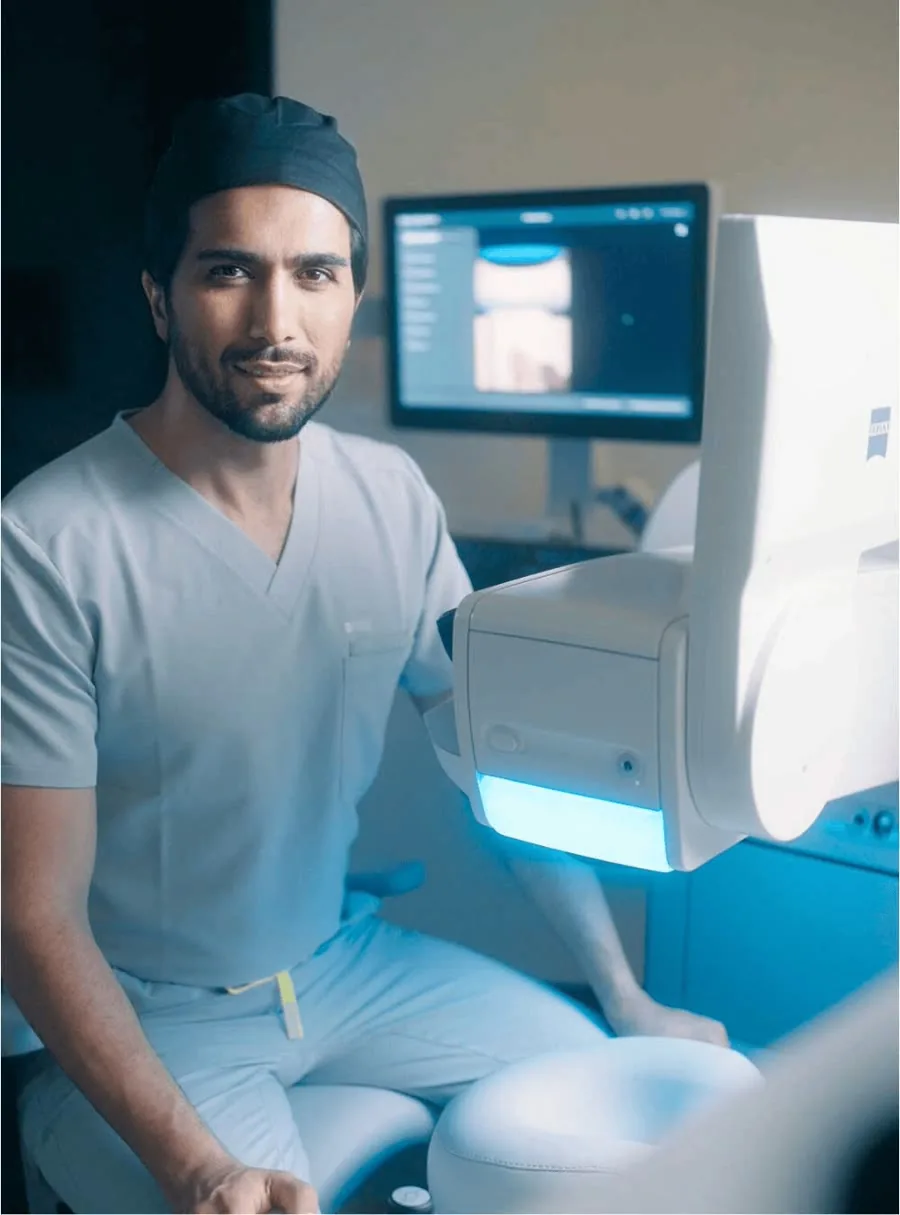
Every procedure: Prof. Dr. Mehdi Shajari. Personally.
Prof. Dr. Mehdi Shajari operates on every patient himself. He is a specialist in ophthalmology with a professorship and habilitation at the University of Frankfurt, has 80+ publications on lens and corneal surgery and is a 12× FOCUS Top Doctor.
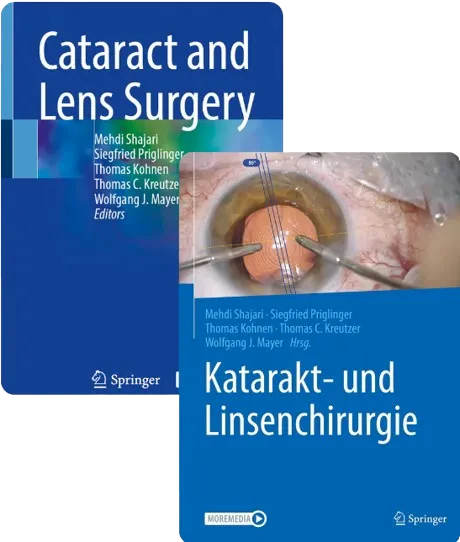
Prof. Dr. Mehdi Shajari has published numerous papers on freedom from glasses, teaches, and has trained several colleagues in this field.
Still have questions about tax?
 “These are the tax questions I hear most often on the phone. Here are the general answers; your tax advisor clarifies your case.” Jana, Patient Care
Yes, as a rule. The costs of laser eye surgery count as illness-related costs and are deductible as extraordinary expenses under § 33 EStG, insofar as the costs you bear yourself exceed your reasonable burden. A certificate from a public health officer is not needed.
For ICL and cataract surgery yes: the tax office generally recognizes them as illness-related costs, insofar as they exceed your reasonable burden. For refractive lens exchange, it decides in each individual case. Whether the surcharge for a premium lens is also recognized is decided by the tax office in each individual case.
Not for the procedure itself: the practice's invoice with diagnosis and proof of payment are generally enough. The tax office does not require a certificate from a public health officer for eye surgery; for laser eye surgery this is expressly stated in the income tax guidelines (R 33.4). The tax office requires a medical prescription mainly for medicines, remedies and aids.
The amount above the reasonable burden times your marginal tax rate. Example: single, €50,000 income, SMILE Pro for €5,198: the reasonable burden is around €2,847, around €2,351 is effective, which at a 35% tax rate is around €823.
An own share that the tax office deducts from illness-related costs: 1 to 7% of the total amount of income, depending on marital status, children and income. Since the Federal Fiscal Court ruling VI R 75/14, it is calculated stepwise.
Not always. With €90,000 income and no children, the reasonable burden is around €5,635; SMILE Pro alone then has no effect. With other illness-related costs in the same year or a more expensive procedure, it can still be worthwhile.
As a rule yes. Retirees often have lower income and therefore a lower reasonable burden. The saving depends on the tax rate; if you pay no taxes, you save none.
In the year of payment (outflow principle, § 11 para. 2 EStG), not in the year of surgery. If the procedure is in December and the payment in January, the new year counts.
Yes. With a loan, for example through medipay, the costs generally count in the year in which the practice is paid, even if you repay over years. With 0% over 12 months directly to dr.vision, each installment counts in its own calendar year.
For tax purposes, that is usually more favorable, because the reasonable burden is deducted only once per year. At dr.vision, both eyes are generally treated on the same day or, for lenses, about a week apart, and billed together.
Then only your own share is deductible. Enter the costs and the reimbursement in the tax return; the tax office offsets the difference against the reasonable burden.
No. The page explains the general legal situation as of November 2026. For your individual case, ask your tax advisor or a wage tax assistance association (Lohnsteuerhilfeverein).
Medically reviewed by Prof. Dr. Mehdi Shajari · As of November 2026 · General information, not tax or legal advice
How would you like to continue?
You receive the cost estimate according to the GOÄ from dr.vision after the initial consultation and the pre-operative examination, and the invoice with diagnosis for your tax return after the procedure. You arrange the initial consultation by phone or online.
In Frankfurt, Junghofstraße 16 · Invoice under the GOÄ with diagnosis for your tax return
Our locations.
 Opening hours
Junghofstraße 16, 60311 Frankfurt am Main
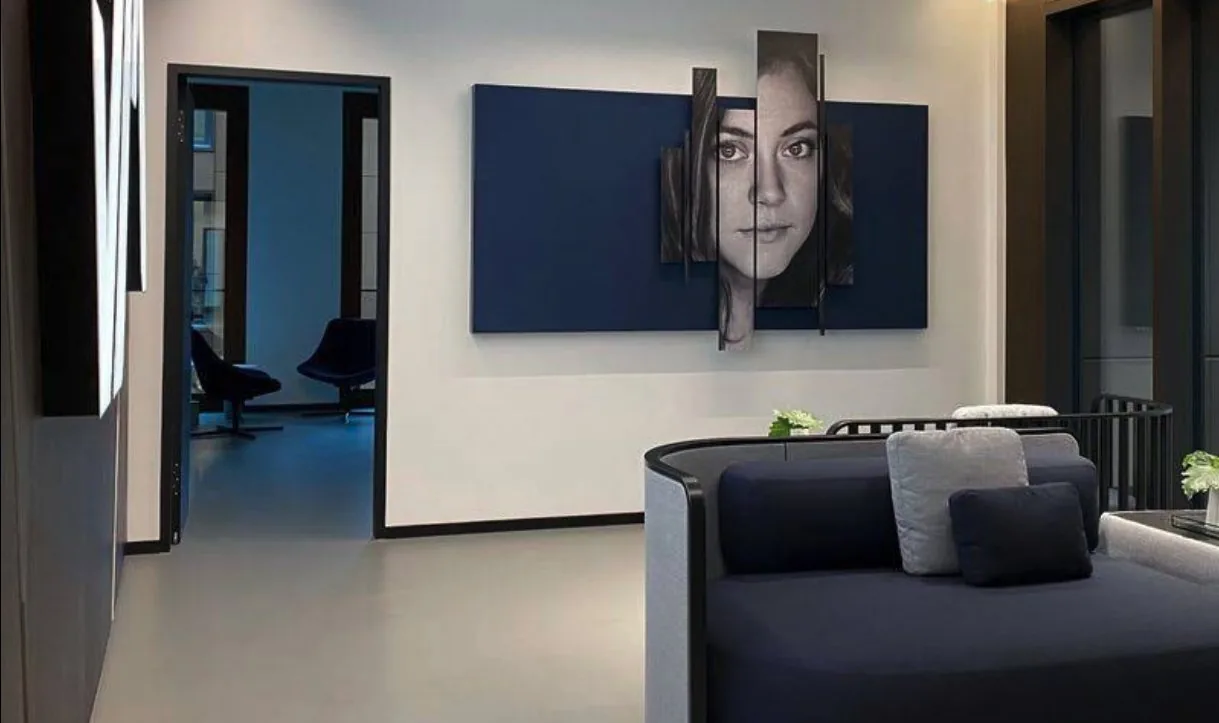 Opening 2027
Breite Straße 69, 40213 Düsseldorf (in the Neuer Stahlhof, corner of Graf-Adolf-Platz)
Until opening: preliminary talk in Frankfurt, Patient Care plans your travel.
Plan route Opening 2027
Lautenschlagerstraße 23, 70173 Stuttgart (2nd floor, step-free access)
Until opening: preliminary talk in Frankfurt, Patient Care plans your travel.
Plan route