 dr.vision
1 Day
Both pre-operative examinations can be placed on one day, both procedures on a shared laser day after the time to think it over.
Start here
What suits you?
Find out in 2 minutes which procedure suits your eyes.
Start the Suitability CheckOr by age:
< 45yearsGet rid of glasses & contact lenses 45–64yearsGet rid of reading glasses 65+yearsCataract & glasses-free★★★★★ 5.0 · 376 Google reviews · 20,000+ procedures
Decide well
What you should know beforehand.
Who operates?Prof. Dr. Mehdi ShajariFOCUS Top Doctor · operates on every patient personally What does it cost?Laser from €3,498 · Lenses from €6,886Prices for both eyes Is it safe?Safety & risks When will I be fit again?Work, sports, driving Would you rather read in peace first?Decision Guide Freedom from GlassesProcedures
Laser or lens?
Laser eye surgery
SMILE ProSmartSightFemto-LASIKTrans-PRKPRKPresbyond (laser away your reading glasses)All laser procedures at a glanceLaser procedures compared ›Lens surgery
ICLLens exchange (reading glasses)Cataract surgery with premium lensLens types: trifocal, EDOF, toricLens types compared ›Start here
Something wrong with your eyes?
A thorough eye check-up with us clarifies what is behind it.
Book an eye check-up★★★★★ 5.0 · 376 Google reviews
Freedom from glasses · with friends and family
Plan as a pair. Each with their own procedure.
You and your partner, your friend or your daughter are treated one after the other on the same day, each with their own examination and suitable procedure. Prof. Dr. Mehdi Shajari treats each of you personally.
 12× FOCUSTop Doctor
Yes. At dr.vision in Frankfurt, you are treated one after the other on the same day. A third person then drives you home.
1 Day
Both pre-operative examinations can be placed on one day, both procedures on a shared laser day after the time to think it over.
2×
Each of you is measured and informed individually. The procedure can be different.
+1 person
After the procedure, neither of you may drive yourself. Plan for a third person or a taxi.
about 20 min
per person for both eyes with SMILE Pro. So you do not wait long for each other.
per person
Guide price for both eyes, e.g. SMILE Pro €5,198.
Being treated together in five answers.
For anyone with three minutes. Each answer leads to the detailed chapter.
Yes. We schedule the appointments one after the other: first one person, then the other. With SMILE Pro, the procedure takes about 20 minutes per person for both eyes.
Shared appointmentsNeither of you. After the procedure you will see blurred for a few hours. A third person, a taxi or staggered appointments solve this.
Plan a companionOnly if your eyes allow it. Diopters, corneal thickness and age decide for each of you individually. Often it is the same, sometimes a different laser procedure for each.
Different proceduresOn the same day, but each on your own. Informed consent is personal. You may be present at the talk if the other person wishes.
Each on your ownThe guide prices apply per person for both eyes, for example SMILE Pro €5,198. Patient Care discusses with you personally what applies to both of you, from appointments to financing.
Costs for twoFor everyone who prefers to tackle it together.
One has already done the research, the other is still skeptical. Going to the consultation together often makes the decision easier. And those who are treated together recover together.

2 appointments
The most common case. You schedule both procedures on the same day, ideally a Friday, and arrange for one person to pick you both up. If you have small children, plan for support in the evening.
1 Travel
Many come as a pair from farther away, share the train ride and hotel, and go to the follow-up check together on the day after the procedure. How that works is described on Traveling from farther away.
25 and 55
The daughter, 25, has her nearsightedness treated with the laser; for the mother, 55, Presbyond comes into question with a clear lens. That works on the same day. We plan it so that nobody is overtaxed.
Two ways to become glasses-free together.
Being treated on the same day is possible in most cases: with SMILE Pro, the procedure takes about 20 minutes per person for both eyes. What matters is not the appointment but who drives afterward. Choose the plan that suits you:
The most popular plan: two pre-operative examinations on the same day, two procedures on the same laser day, one after the other. A third person takes you both home.
If you have nobody to drive: one of you is treated first, the other drives and takes care of things. One to two weeks later you swap roles. It takes longer but needs no third person.
Many couples schedule their joint laser day on a Friday: follow-up check on Saturday between 9:00 and 15:00, rest on Sunday, back to everyday life on Monday. What the plan looks like hour by hour is described at Glasses-free in one weekend. If you come from farther away as a couple, you share train and hotel; Patient Care schedules both pre-operative examinations, procedures and follow-up checks in one block of three days: travel from farther away.
Neither of you. Plan for a third person.
Right after the procedure you will see blurred for a few hours and be sensitive to light. Driving yourself is then not permitted, nor is cycling or riding an e-scooter. If both of you are being treated, you therefore need a solution from outside. These work:
| Your situation | Our recommendation | Keep in mind |
|---|---|---|
| You live in or near Frankfurt | A third person picks you both up, or a taxi | On the next day, do not drive yourself to the follow-up check either, until we clear your visual acuity |
| Nobody can drive | Staggered appointments: one accompanies the other | 1–2 weeks apart, then swap roles |
| You come by car from farther away | A third person drives, or stay overnight until clearance | More on Traveling from farther away |
| You come by train | Hotel within walking distance, on foot or by taxi | Journey home after the follow-up check on the next day, no problem as a passenger |
| Small children at home | Arrange care for the evening and night | Children reach for your face; you should not have to romp or carry on the first evening |
| Pets, caring for relatives | Plan a stand-in for the first evening | From the next day on, this is usually doable again |
Sleeping is the best thing you can both do. Put drops, protective shields and drinks within reach beforehand; screens stay off. An audiobook for two is ideal.
From the next day on, most people see well enough to put in their own drops. On the first evening it helps if one helps the other, or the third person stays another hour.
Even with the same procedure, each eye heals a little differently. One sees well on the next day, the other only after a few days. That is normal and no reason to worry.
Same appointment. Not necessarily the same eyes.
Which procedure suits you is decided by diopters, corneal thickness, tear film and age, for each person individually. Often it is the same for couples, frequently SMILE Pro/SmartSight up to −8 D. Typical examples:
Swipe the table sideways to see all options.
| Example | Age | Starting point | Usually recommended | Fit again | guide price, both eyes |
|---|---|---|---|---|---|
| Example 1 | 28 years old | nearsighted −3 D, normal cornea | SMILE Pro/SmartSight | usually after 1–2 days | €5,198 |
| Example 2 | 34 years old | farsighted +2 D | Femto-LASIK | usually after 1–2 days | €4,298 |
| Example 3 | 31 years old | nearsighted −4 D, thin cornea | Trans-PRK | usually after 5–7 days | €3,498 |
| Example 4 | 52 years old | reading glasses and distance glasses | Presbyond | usually after 1–2 days | €6,398 |
Examples for orientation, not a recommendation for you. Limits according to our procedure pages: SMILE Pro up to −8 D, farsightedness with Femto-LASIK, thin cornea Trans-PRK, from about 45 Presbyond. A first assessment for each of you: Suitability Check.
Informed consent is personal. Each of you signs for yourself, after your own talk with Prof. Dr. Mehdi Shajari, and then has enough time to decide calmly and carefully.
You may be present at the other person's talk if they wish. Your findings are subject to confidentiality; we discuss them only with you, unless you decide otherwise.
That happens: a cornea that is too thin, unstable values, an eye disease. Then we say so honestly and discuss the alternative, instead of forcing a shared appointment.

Planning as a pair?
One call for both appointments.
Our Patient Care team combines your pre-operative examinations and procedures and tells you how best to organize the ride home. Usually within 10–15 minutes via WhatsApp, Mon–Fri 8:00–19:00, Sat 9:00–15:00.
Four steps. For two.
The process is the same as for one person, just doubled and well timed. Patient Care is your shared contact from the first message to the last follow-up check.
Step 1 of 4
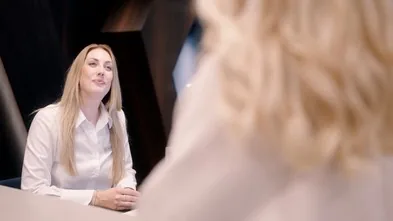
You write once, we plan two appointments.
You both leave out contact lenses before the pre-operative examination (soft 10–14 days, rigid 3–4 weeks) and once more 3 days before the procedure.
Request an appointmentStep 2 of 4
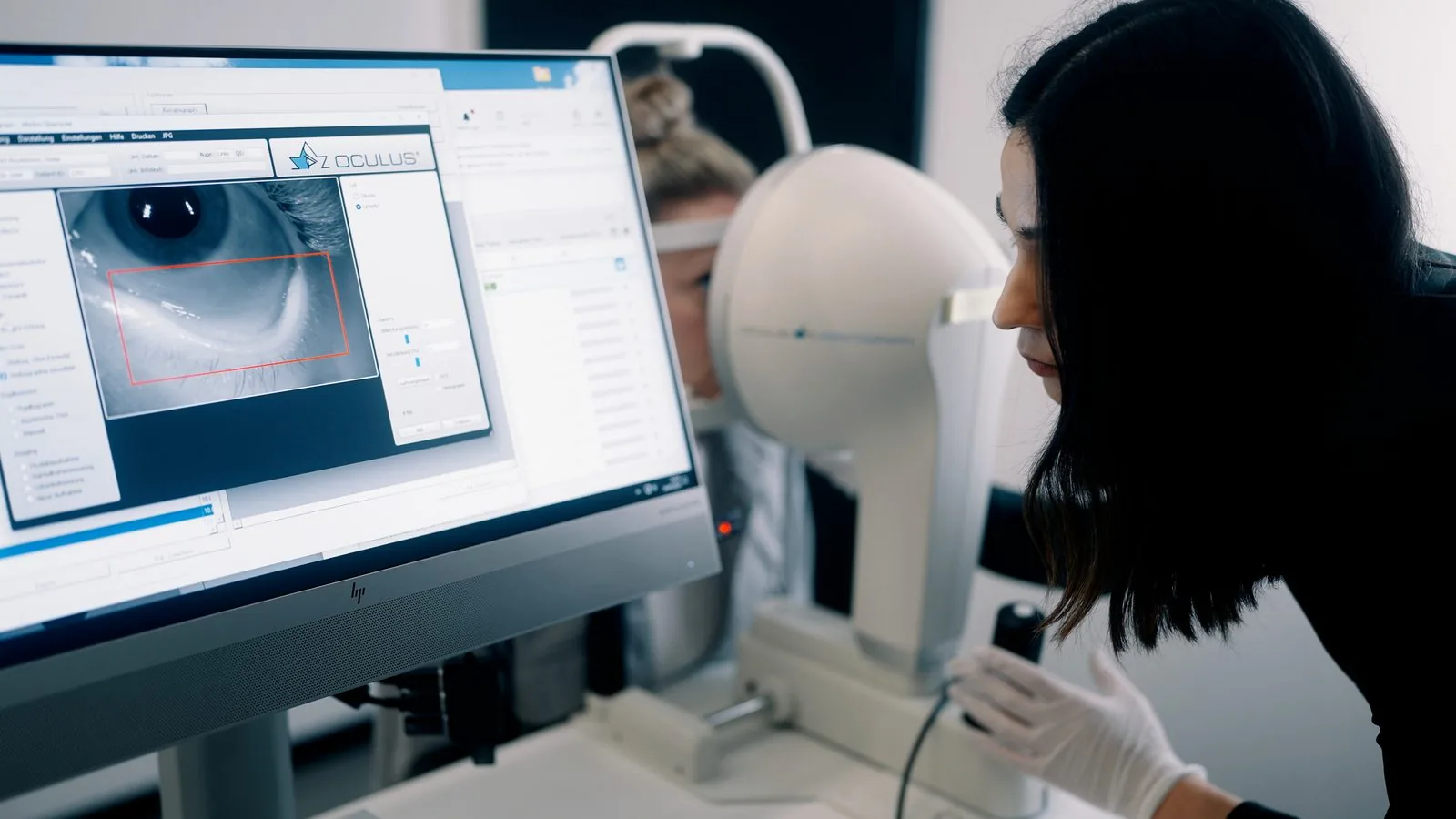
Each of you is measured. Each decides for yourself.
After the pre-operative examination you can usually drive yourself.
Step 3 of 4
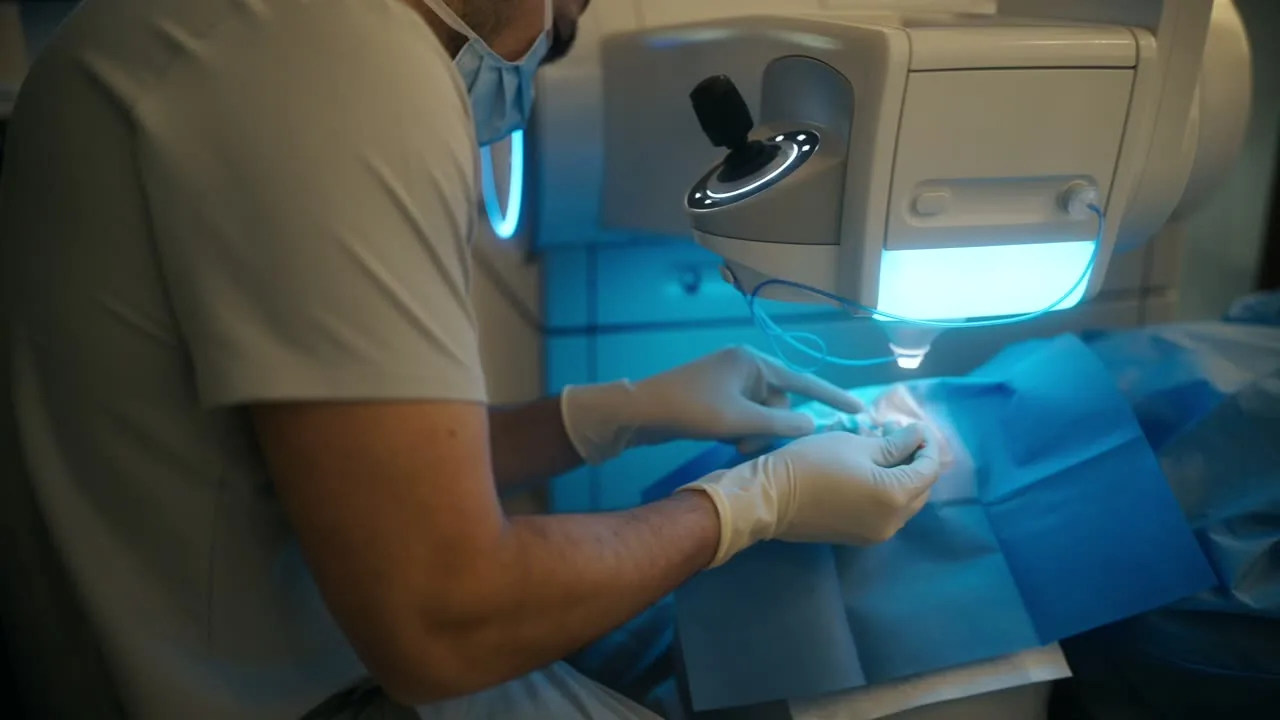
One after the other, with a short wait.
Whoever is already treated rests with eyes closed while the other person is taken.
Step 4 of 4
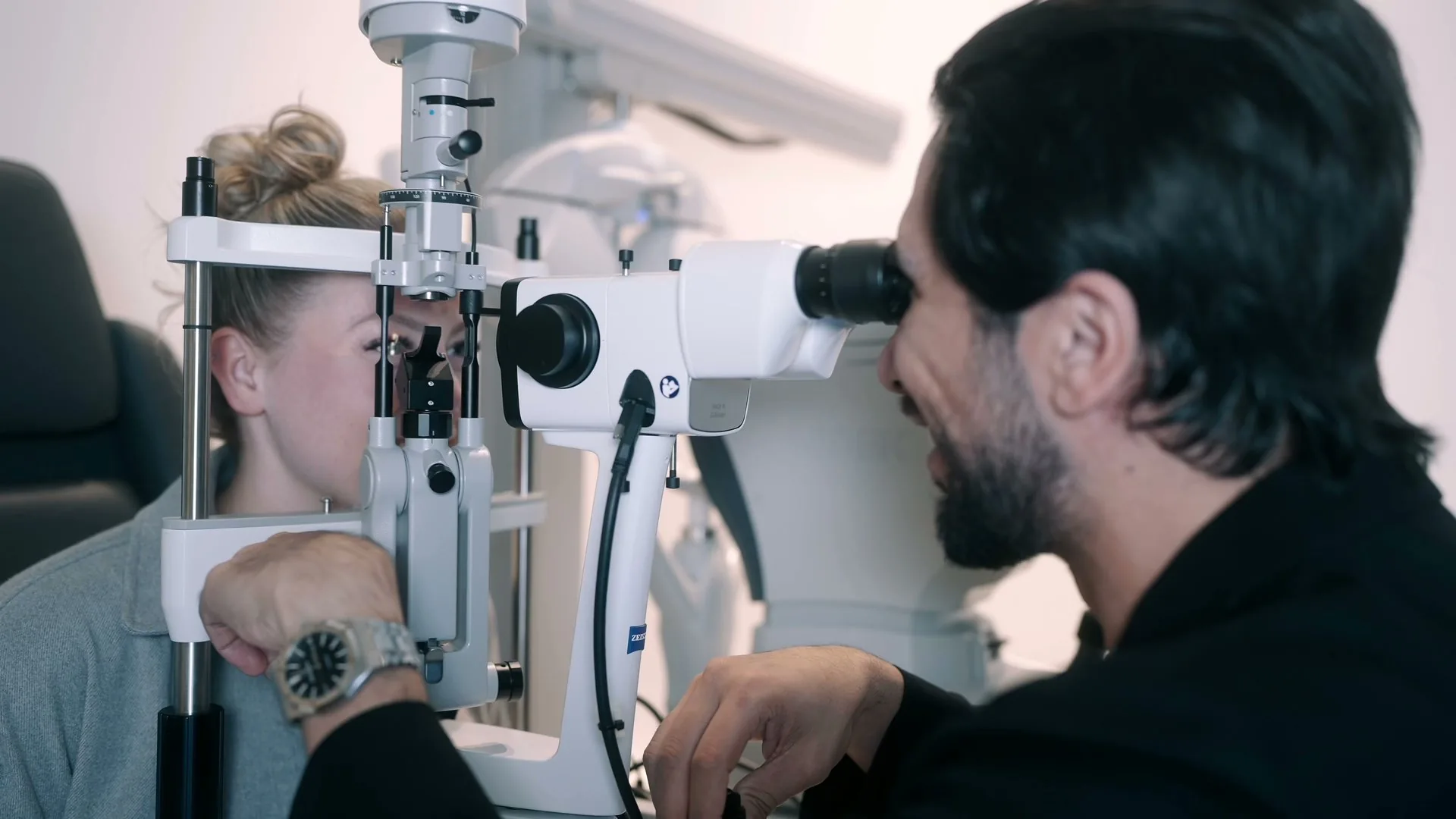
On the next day, one after the other.
Emergency number around the clock, for each of you.
No. Each eye counts on its own.
The risks depend on the procedure and on your eyes, not on whom you come with. The most common side effect is dry eyes in the first weeks, in 3 in 10; infections are very rare, fewer than 1 in 1,000. Here are the figures for SMILE Pro:
During laser treatment, corneal nerves that control tear flow are cut. The eyes feel dry, gritty or tired.
3 in 10 in the first weeks
Usually subsided after 3–6 months.
Measure and treat the tear film beforehand in everyone. More: Dry eyes after laser eye surgery.
Rings or rays around headlights, strongest in the first weeks. If you drive at night, you should know this.
about 5 in 100 after 3 months
frequent in the first weeks.
Measure the pupil in the dark, choose a treatment zone that is large enough.
A small residual refractive error remains. This can happen to one of you and not to the other.
2 in 100
at our clinic after SMILE Pro 0.6%.
Precise measurement, only with stable values. More: Enhancement.
Germs get into the fresh wound. If two of you are at home: your own towels, your own drops, do not share.
under 1 in 1,000
Sterile procedure, antibiotic drops, follow-up check on the day after the procedure, emergency number around the clock.
Frequencies for SMILE Pro from the literature and our own analysis (n = 412, 01/2024–01/2026). Overview of all procedures: Laser eye surgery: risks.

Two people. One surgeon. One plan.
One surgeon, over 20,000 procedures, 5.0 stars from 376 reviews. And a Patient Care team that brings together two calendars, one ride home and two aftercare plans.
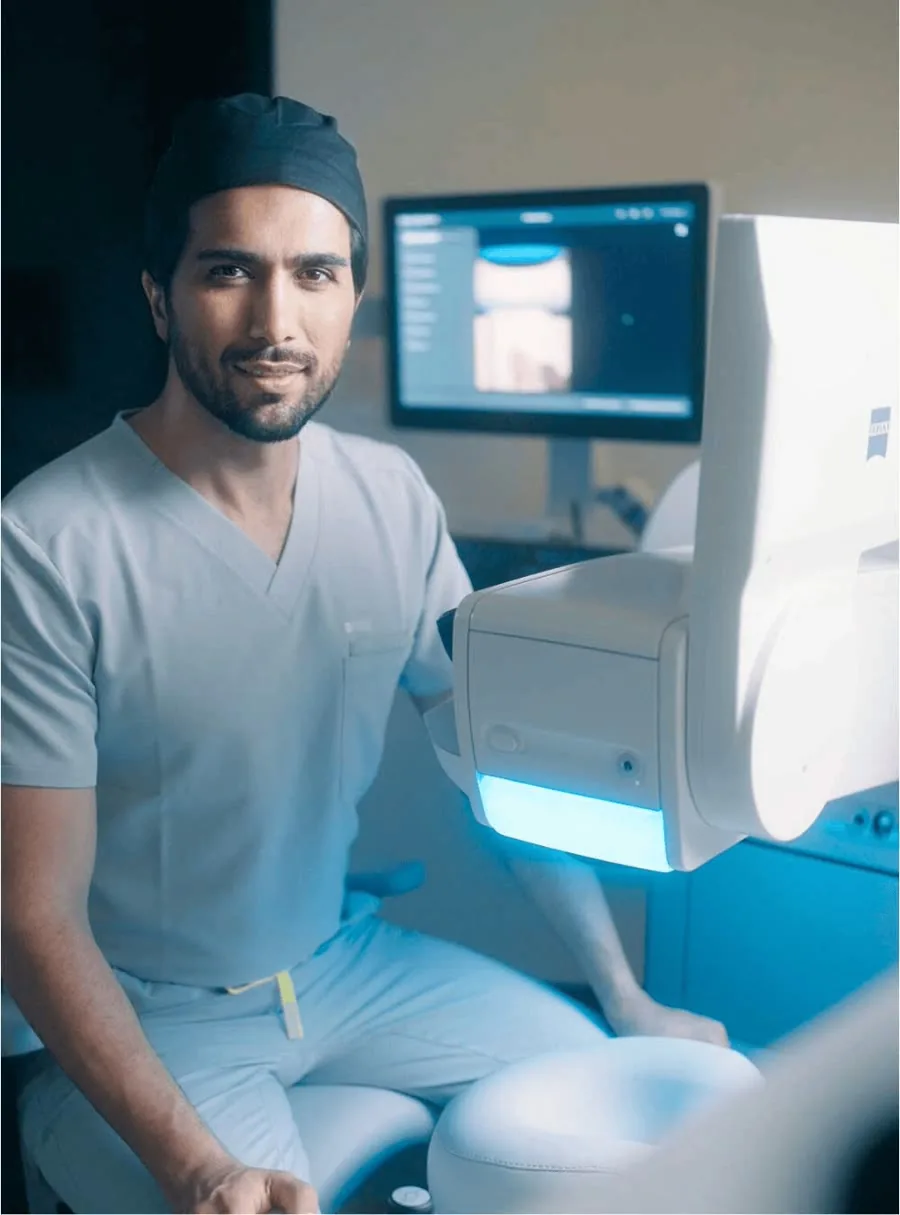
Every procedure: Prof. Dr. Mehdi Shajari. Personally.
Specialist in ophthalmology and professor (German title: außerplanmäßiger Professor) of ophthalmology, numerous publications on freedom from glasses, teaching and training of several colleagues in this field. He masters all laser procedures of the practice and can therefore recommend to each of you the procedure that suits your eyes, even if they are two different ones. At dr.vision he treats you himself, not a changing team.
Prof. Dr. Mehdi Shajari
376 reviews. Average 5.0.
“My twin brother and I decided to have our eyes lasered together, to enjoy life free of vision aids. … Half a year has passed since then, and I am happy to be able to enjoy my life without glasses.”
“I am simply happy that I came to you, and I regret not having taken this step earlier.”
“My unreserved recommendation for Prof. Dr. Shajari and the whole team. … You have made my life better.”
“The best decision ever! … A big thank you goes to Mr. Shajari. … I felt really great all around.”
Four patients. In their own words.
It is an absolute liberation.
There are always situations where glasses are limiting.
Now I can already read things again.
It got better from hour to hour.
Per person, the guide price for both eyes.
Each person pays the guide price of their procedure for both eyes: SMILE Pro €5,198, SmartSight €5,198, Femto-LASIK €4,298, Trans-PRK €3,498. Billing is private under the German fee schedule for physicians (GOÄ); each of you receives your own cost estimate after the pre-operative examination.
Included in the guide price: pre-operative examination, procedure by Prof. Dr. Mehdi Shajari and aftercare, each per person. * Representative example per person: €5,198 net loan amount · 72 months · fixed borrowing rate 9.49% p.a. · 9.90% effective annual interest rate · monthly installment €94.97 · total amount €6,837.84 · via medipay. Example 0% over 12 months directly with dr.vision: €5,198 cash price · no down payment · fixed borrowing rate 0% p.a. · 0% effective annual interest rate · monthly installment €433.17, last installment €433.13 · total amount €5,198.
Statutory health insurers do not usually pay for laser eye surgery; dr.vision is a private practice, and patients with statutory health insurance pay themselves (more). Private health insurers reimburse in full, in part or not at all, depending on the plan and diopters, for each of you according to your own contract (more). We write the cost estimate so that your insurer can respond in advance.
Go deeper.
This page plans your shared appointment. These pages help with the decision for each of you:
Is laser eye surgery right for you? A first assessment, each on your own.
Start the check ProceduresHow SMILE Pro works and who it suits.
To SMILE Pro PlanningLaser on Friday, follow-up check on Saturday, work on Monday, also as a pair.
To the weekend plan PlanningAs a pair in three days: train, hotel, aftercare at home.
To travel CostsAll guide prices for both eyes at a glance.
View prices GuidesWork, sports, driving: when what is possible again.
Read the guideStill have questions?
“These are the questions I hear most often in consultation hours. Here are my answers.” Prof. Dr. Mehdi Shajari
Yes. We schedule the procedures one after the other. With SMILE Pro, the procedure takes about 20 minutes per person for both eyes; together you spend about two to three hours at the practice.
On the same day, yes. But each of you has the measurements and the talk with Prof. Dr. Mehdi Shajari individually, because informed consent is personal. You may be present if the other person wishes.
Neither of you, because after the procedure you will see blurred for a few hours. A third person, a taxi or staggered appointments, where one accompanies the other, solve this.
Only once we have cleared your visual acuity. For the first follow-up check on the next day, it is therefore best to come with a companion, a taxi or public transport.
Only if your eyes allow it. Diopters, corneal thickness and age decide for each of you individually. Often it is SMILE Pro/SmartSight for both, sometimes a different laser procedure for each.
Then we say so honestly and discuss the alternative, for example Trans-PRK for a thin cornea. The other person can still be treated; the shared appointment is not a must.
Yes. Often the younger family member is lasered and the older one, from about 45, receives Presbyond. This can be scheduled on the same day.
The guide prices apply per person for both eyes, for example SMILE Pro €5,198. Patient Care discusses with you personally what applies to both of you, from appointments to financing.
No, each person receives their own cost estimate and their own invoice under the German fee schedule for physicians (GOÄ). This is also important for reimbursement by private health insurers and for taxes.
Medically reviewed by Prof. Dr. Mehdi Shajari · As of October 2026
One folder, two readers.
Arrives by e-mail in about 60 seconds. No newsletter, just the guide and, if you wish, a follow-up from Patient Care. Privacy policy
How would you like to continue?
Write or call once for both. Patient Care schedules two pre-operative examinations on the same day, one after the other. Each of you talks individually with Prof. Dr. Mehdi Shajari and receives your own recommendation and cost estimate. We plan the shared laser day afterward.
In Frankfurt, Junghofstraße 16 · two appointments one after the other
Our locations.
 Opening hours
Junghofstraße 16, 60311 Frankfurt am Main
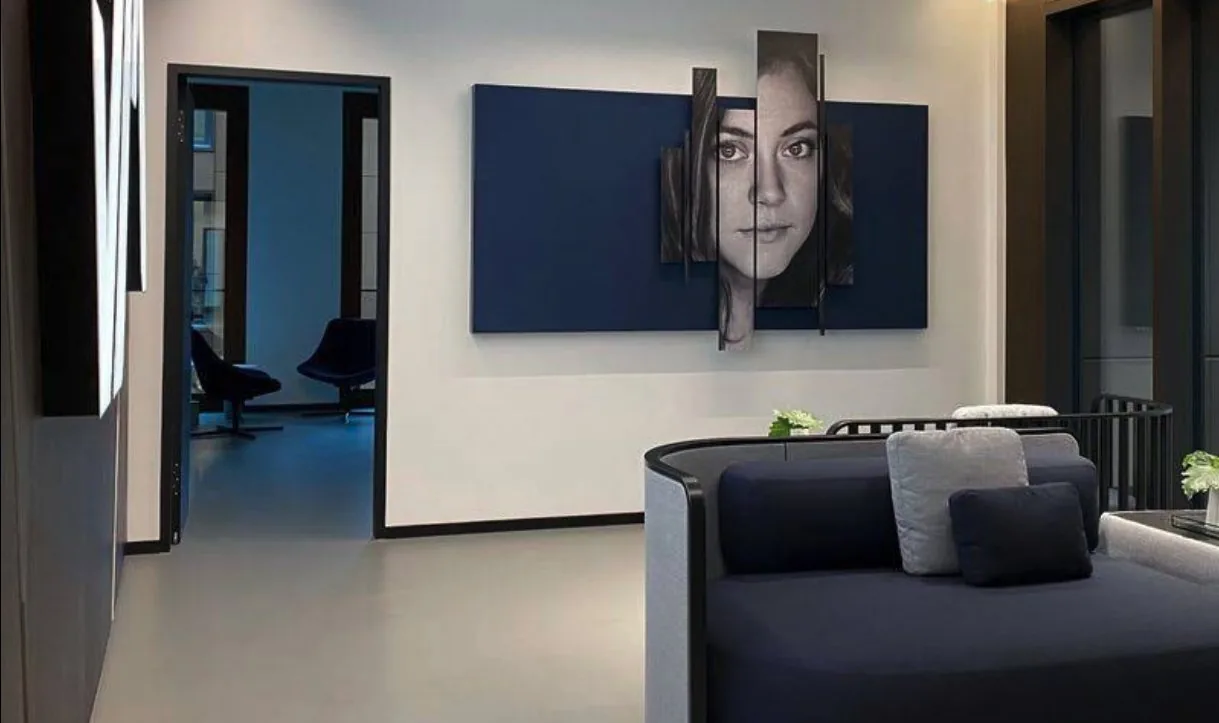 Opening 2027
Breite Straße 69, 40213 Düsseldorf (in the Neuer Stahlhof, corner of Graf-Adolf-Platz)
Until opening: preliminary talk in Frankfurt, Patient Care plans your travel.
Plan route Opening 2027
Lautenschlagerstraße 23, 70173 Stuttgart (2nd floor, step-free access)
Until opening: preliminary talk in Frankfurt, Patient Care plans your travel.
Plan routeMy name is Raquel Schulze Wischeler. I have basically worn glasses since I was 13. I was really nearsighted, you could say. Really, really. I could only see outlines without glasses. I had minus 6 in one eye, a diopter of minus 6, and almost minus five in the right one. I think everyone who wears contact lenses or glasses knows how stressful all of that is. The eye dries out completely. In the evening, when you are lying on the couch, you notice, okay, my eye is super tired, I really do not feel like doing anything anymore. Whether it is contact lenses or glasses. With that diopter, you have rather thick lenses, and you notice that over the day too. And just getting the feeling, or knowing, hey, I do not have to wear anything anymore, neither glasses that I always have to clean, nor contact lenses where I have to watch hygiene, that is an absolute liberation. And that felt more like a dream to me, and then I said, okay, now you dare to do it, and so I will do it.
Interestingly, I had already thought about having my eyes lasered about five years ago, but I was very afraid and then dropped the idea again. And lately I had big problems with my eyes because of chalazia, because my glands in the eyelids do not quite work, and so I had surgery twice. And then I said, okay, since I have already had surgery on my eye, you might as well dare it once more. And then I first just googled, came across dr. vision, saw, oh, there are really great reviews, and by coincidence my eye doctor had worked with him at the university hospital in Munich, and I had an eye doctor appointment beforehand and told her about it, I am getting my eyes lasered, and then she said, well, where? Then I told her the doctor's name. And then she said, yes, I know him, I worked with him. You can go there, he specializes in this, he is really great. And that took away the last bit of doubt for me.
And yes, then I came, had an appointment the next day. And right away I had the feeling that I was in the right hands. He sat down with me, explained all the risks to me, explained how it works, showed me the treatment room. And then the fear was somehow gone, and then I said, okay, I am doing it here. I was thrilled by the professionalism, first of the practice itself, which is superbly organized, and by the speed. You do not have long waiting times, you are examined, you have the feeling, okay, here they really examine thoroughly and extensively, and then of course it is explained to you on the screen, you can see it. So that was just totally professional for me. And so I felt safe right away.
Yes, my biggest fear was the eye itself. It is on the eye. And you have a reflex, a physical one. And the question of course was, okay, do I react, and does something go wrong because of that. But the fear was taken from me relatively quickly. I also talked about the fear. And then during the treatment I saw that the eye was held still. I did not feel that either. And then I calmed down relatively quickly. And I knew the eye was numbed. And so everything worked quite well.
I have no pain. I feel that something has happened to the eye, like a slight pressure, but it is one day after. I was already at work today, I have no pain.
Absolutely, so I can answer that question with yes, and go for it. It's not bad at all, it doesn't hurt at all, it's quick, and the healing process is pretty much there a day later. And it's an absolute quality of life. That's totally great.
My name is Markus Mielert. Before the surgery I was nearsighted and had presbyopia in its early stage, and that was corrected with LASIK.
In everyday life, glasses are definitely a limitation again and again, especially in bad weather, rain for example, but then also in summer with sunglasses, with non-prescription ones at the beach and so on. So there are always situations where glasses are limiting. And that always bothered me, besides the look, also that glasses are maybe not always 100% pretty. And what also came on top, a point I hadn’t thought of at all beforehand, was this presbyopia. I only found that out when I was here with Professor Shajari. He told me about it, and only then did I notice that I was affected at all. What I noticed in everyday life, for example: I looked at a phone list at work and wanted to look up a number and could hardly make it out. And I hadn’t been aware of that at all before, but this process apparently went very fast and then kept getting worse.
Yes, of course, in Frankfurt there are naturally many options for getting laser treatment. Of course, the first impression online is decisive. Both the look of the professor, that he made a very competent impression, and the reviews. The online reviews are the opener for the first contact. I actually only went to him, because the first conversation with him was also immediately great, he gave me a perfect impression, in the sense that he is 110 percent on top of his field. I am in very good hands, and so I didn't look any further at all.
First I sent an e-mail, because I don’t have private health insurance. I first wanted to know how it works with the pre-operative examination, what costs would come my way. Then I made this appointment, the first contact. Then I had a talk with him and first an eye test. At the second appointment the detailed tests were done, to determine that I am suitable for it, which procedure I am suitable for. That actually went very quickly. That was this second appointment, with all the tests. One thing he recommended to me, which was also very good: he recommended that I wear contact lenses with different strengths that simulate this post-surgery vision, because with this presbyopia combined with nearsightedness it has a different effect, since you have to treat the eyes differently with the laser. And that was also great, because through these contact lenses you could already see that the vision is perhaps a bit different from what you would have expected. That is very good, but it takes getting used to, and it was good to know what is coming.
Yes, it was very busy. It was always very calm in his office. There were many helping hands. Yes, no, but great, everyone was super focused and concentrated, calm, it was a good atmosphere, no stress, no hectic, nothing that gave you the feeling that something was not okay. I felt very welcome from the start, also with the preparation and so on, it was wonderful. During the surgery too, of course, it is a delicate thing on the eye. But he kept telling me, very reassuringly, which step of the process we were at, that everything was going well, and gave the impression that there were no problems. That was actually wonderful, and as I said, it actually went quite fast, faster than you would think.
I can of course recommend him without reservation, really flawless from A to Z. Laser eye surgery itself was always a topic that I could rule out for myself, because I didn't want to take the risk that something might go wrong. But probably the technology has now simply advanced so far that it has been perfected compared to how it was before. And I know now – I was lasered yesterday, and today the vision is wonderful. Let's see how it is in the long term, but as of now I would say it was the perfect decision. And I believe it makes life much better and of higher quality, without glasses, without restrictions. And I am looking forward to that.
My name is Björn Kannegießer. For many years I wore glasses, which was especially a problem when reading, when you used your phone, and so on, checked e-mails. It no longer worked without glasses and at some point it reached a degree where you say, if there were a change, what would you do? And to get rid of the glasses, because they are always an obstacle somewhere, every day up, down, up, down, where are the glasses, forgotten again, and so on. And so we said, what alternatives are there, and then we looked into it and we have now taken the step, so to speak.
Yes, my wife is very savvy on the internet; whenever we have to buy, need or compare things, also price comparisons, my wife is always very good at that, she always has a good knack for it, and she took on the matter and came across this, so to speak, and then we tackled it here. Yes, of course you have a lot to do with social media, so also with computers, and it was always annoying, and what I also noticed was that I couldn't wear sunglasses anymore, because either you have sunglasses on and then you can't see anything, I couldn't read either at that moment, so I had to take them off, put the normal glasses on, and it was always up and down like that, sometimes you had two pairs of glasses somehow, the sunglasses you took along and the normal ones. I do have progressive glasses that also tint, but it wasn't the same as sunglasses, and at some point it was all too much for me, and this fiddling with contact lenses, in, out, lost, where is that thing, it was all way too much effort for me somehow and not an alternative for me, and to get rid of these glasses, we actually thought, let's take the step if it's feasible. So even in the first two days I still reached for my glasses by reflex, because I usually always had them on my head, as that was the easiest, and after two, three days it gets less, and now I can already read things again, I have that as of today, the other eye was still bandaged and so on. Now I first have to focus a bit, but I can read things again that I used to, because that's how it is, you know, so it's definitely a good thing, so now of course I first have to acclimate the left one a little, so to speak, but you can already notice it, it's definitely an improvement.
So absolutely, I felt absolutely comfortable here with the professor, the empathy is there, I felt well taken care of, also in the conversations, and of course during the procedures and so on, so I never felt uncomfortable in any way, and from that side I can recommend it, I would do it again, but I am annoyed that I did not do it earlier, I have to say quite honestly.
Krzysztof Trukan, as I already said, I am 75 years old.
My vision has been declining for decades, especially in the left eye, because I only had 40% light getting through because of the cataract. And for years I put it off, but now, on medical advice, I decided to change that. I had already been to a colleague of a professor a year ago, who did not give me the trust I needed for a surgery like this. And then I turned to the professor here and am absolutely thrilled with the result.
Yes, I informed myself a bit, the surgery is very low-risk, with few sources of error, but something can still happen to the eye, that's clear. Of course I had concerns and I already had some problems in my eye, something on the lens had possibly grown attached at one spot, and the other doctor wanted to take me to the hospital for the procedure and made me more afraid than confident, and here I had the feeling that there were no problems at all. There is always a risk with any surgery, but the professor told me, after 10,000 surgeries I have never had a problem. What he could not guarantee was the success in percent of visual strength. You can only see that afterwards anyway.
I have to say, a week ago on Wednesday I looked with the operated eye and could not believe it. Without glasses I see everything in the distance. And yesterday after the surgery I also peeked through the shield, and it got better from hour to hour. And now I look at her and see her perfectly.
It went very fast, about ten days, two weeks. So the first meeting, then everything explained and measured, and then ten days later was the first procedure.
Yes, so the trust was there very early thanks to his personality. The professor is very trustworthy. And I am emotional now, because I have the feeling it is fantastic.
As soon as vision declines, as soon as it gets gray, the cataract, it is a road of no return. It does not go back, it never gets better, it only gets worse. The sooner you do it, the easier it may be for the eye to get used to the new vision.