 dr.vision
Does insurance pay for the surgery?
Privately insured patients and Beihilfe usually yes, the premium lens depending on the plan. Patients with statutory health insurance are self-paying patients with us.
Statutory health insuranceStart here
What suits you?
Find out in 2 minutes which procedure suits your eyes.
Start the Suitability CheckOr by age:
< 45yearsGet rid of glasses & contact lenses 45–64yearsGet rid of reading glasses 65+yearsCataract & glasses-free★★★★★ 5.0 · 376 Google reviews · 20,000+ procedures
Decide well
What you should know beforehand.
Who operates?Prof. Dr. Mehdi ShajariFOCUS Top Doctor · operates on every patient personally What does it cost?Laser from €3,498 · Lenses from €6,886Prices for both eyes Is it safe?Safety & risks When will I be fit again?Work, sports, driving Would you rather read in peace first?Decision Guide Freedom from GlassesProcedures
Laser or lens?
Laser eye surgery
SMILE ProSmartSightFemto-LASIKTrans-PRKPRKPresbyond (laser away your reading glasses)All laser procedures at a glanceLaser procedures compared ›Lens surgery
ICLLens exchange (reading glasses)Cataract surgery with premium lensLens types: trifocal, EDOF, toricLens types compared ›Start here
Something wrong with your eyes?
A thorough eye check-up with us clarifies what is behind it.
Book an eye check-up★★★★★ 5.0 · 376 Google reviews
Cataract surgery costs premium lens
What does insurance pay for cataract, and what not?
What does your insurance pay, and what do you pay yourself? Patients with private health insurance or Beihilfe entitlement usually have a large part of the surgery reimbursed, while patients with statutory health insurance pay themselves with us. Guide price for both eyes: €6,998 with a monofocal lens, €7,876 with a trifocal lens.
 12× FOCUSTop Doctor
Statutory health insurance: dr.vision is a private practice without statutory insurance accreditation; patients with statutory health insurance are self-paying patients with us. Private health insurance: surgery and lens according to the German fee schedule for physicians (GOÄ), often reimbursed to a large extent depending on the plan, a personal share usually remains. Premium lenses depend on the plan. Beihilfe (allowance for German civil servants): surgery eligible for Beihilfe, the premium lens usually only partly; the rest is covered by your residual-cost plan or by you.
Sources: § 33 para. 9 and § 13 para. 2 SGB V; BBhV Annex 1 (gesetze-im-internet.de, retrieved October 25, 2026); consumer advice center (Verbraucherzentrale), as of April 28, 2026; IQWiG ThemenCheck 2024; BGH III ZR 350/20. Reviewed by Prof. Dr. Mehdi Shajari, October 25, 2026. Not legal advice.
In five answers.
For everyone who has two minutes. Each answer leads to the detailed chapter.
Privately insured patients and Beihilfe usually yes, the premium lens depending on the plan. Patients with statutory health insurance are self-paying patients with us.
Statutory health insuranceAt dr.vision €244 (EDOF) or €878 (trifocal) more than monofocal, for both eyes. Patients with statutory health insurance are self-paying patients with us; with private insurance and Beihilfe, the plan decides.
Who pays whatThe surgery is often covered to a large extent, depending on the plan, and a personal contribution usually remains. The additional charge depends on the plan, so it is best to ask in writing in advance.
Private health insuranceUsually not. In 2024 the IQWiG found no additional benefits compared with standard surgery; the health insurer does not pay for it.
Femtosecond laser, honestlyThat depends on insurance and lens. The exact amount is given in the cost estimate after the pre-operative examination.
PricesOne table, all cases.
Private health insurance and Beihilfe usually pay for the medically necessary basic care: surgery, monofocal lens, aftercare. Premium lens, toric lens and femtosecond laser depend on the plan. Patients with statutory health insurance are self-paying patients with us.
| Service | Statutory health insurance | Private health insurance | Beihilfe + private health insurance |
|---|---|---|---|
| Surgery with a monofocal lens | Self-paying, €6,998 | usually reimbursed, GOÄ | eligible for Beihilfe |
| Premium lens EDOF / trifocal | Self-paying, €7,242 / €7,876 | depends on the plan | usually only partly, depending on the plan |
| Toric lens (astigmatism) | Self-paying, on request | depends on the plan | usually only partly, depending on the plan |
| Femtosecond laser | included in the guide price, if used | only via a surcharge | only via a surcharge |
| Optical biometry, OCT | included in the guide price | usually reimbursed | eligible for Beihilfe according to the GOÄ |
| Follow-up checks | included in the guide price. | usually reimbursed | eligible for Beihilfe |
| Secondary cataract laser (YAG), later | Self-paying, according to the GOÄ | usually reimbursed | eligible for Beihilfe |
| Reading glasses after a monofocal lens | yourself | depending on the vision aids plan | depending on the plan |
Guidance according to § 33 para. 9 SGB V, consumer advice center (as of April 28, 2026), BBhV Annex 1, BGH III ZR 350/20. Check reimbursement case by case. Prices: dr.vision guide prices for both eyes according to the GOÄ.
With us you pay yourself. Honestly and in advance.
dr.vision is a private practice without statutory insurance accreditation. Patients with statutory health insurance are self-paying patients with us and pay the full guide price, €6,998 for both eyes with a monofocal lens.
dr.vision has no statutory insurance accreditation. Patients with statutory health insurance pay the full guide price, also with a standard lens: from €6,998 for both eyes.
Pre-operative examination with biometry and OCT, surgery by Prof. Dr. Mehdi Shajari, lenses and aftercare.
After the pre-operative examination you receive the price in writing, with lens type and all items.
Patients with statutory health insurance mainly come to us when they want to become as glasses-free as possible with a premium lens or value having Prof. Dr. Mehdi Shajari examine and operate on them personally. Which lens suits your daily life, you can read on Cataract surgery with a premium lens.
The surgery yes. The lens depending on the plan.
Private health insurers usually reimburse cataract surgery as medically necessary treatment according to the GOÄ, the monofocal lens included. With premium lenses the plan decides: some pay for the full lens, some only the monofocal share. At dr.vision it is a surcharge of €244 (EDOF) or €878 (trifocal) for both eyes; ask in writing in advance.
| Item | Reimbursement as a rule | What to look for |
|---|---|---|
| Surgical service under GOÄ | yes | A multiplier above 2.3 needs a justification; check the plan's maximum rate |
| Monofocal lens | yes | As an implant, part of the treatment |
| Premium lens (EDOF, trifocal, toric) | depends on the plan | Some plans pay only the monofocal share, others the full lens; ask in advance |
| Femtosecond laser | via GOÄ surcharge no. 441 | According to the BGH (III ZR 350/20), no separate analogous billing |
| Deductible | reduces the reimbursement | Bundle the procedure and other invoices in the same year |
| Premium refund | usually lost when you submit a claim | Calculate in advance, depending on the plan |
Ask your insurer in writing before surgery what it pays. Our cost estimate is itemized for this purpose.
Ask specifically about the lens: type (EDOF, trifocal, toric) and price are in the cost estimate.
The surgery yes. The lens depending on your Beihilfe office.
Cataract surgery is eligible for Beihilfe. Beihilfe usually recognizes the premium lens only partly; the rest is covered by your residual-cost plan or by you. As a precaution, ask before surgery.
The surgery is medically necessary and recognized according to the GOÄ. It is reimbursed according to your reimbursement rate.
Beihilfe usually recognizes lenses only up to a maximum amount. What your Beihilfe office pays, it is best to ask in advance.
The residual-cost plan pays its share according to its own terms, with the premium lens depending on the plan. What nobody pays is your personal share. You can declare it in your tax return; it is recognized depending on the reasonable burden.
The federal states have their own rules; your Beihilfe office can tell you. All details: Beihilfe.
More expensive does not mean better here.
Laser-assisted cataract surgery is not a service of statutory health insurance; patients with statutory health insurance are self-paying patients with us anyway. An evaluation of 35 studies with around 7,200 eyes for the IQWiG (2024) found no additional benefits over standard surgery in visual acuity, complications or quality of life. In private health insurance (PKV) and Beihilfe, according to the BGH the laser can be billed only via a surcharge.
| Criterion | Standard surgery (ultrasound) | Laser-assisted surgery (femto) |
|---|---|---|
| Visual acuity after 1–12 months | usually in the normal range | the same, no advantage proven |
| Complications | rare | equally rare |
| Quality of life | improved | equally improved |
| PKV / Beihilfe | under the GOÄ | Laser covered by surcharge no. 441 GOÄ (BGH) |
Source: IQWiG ThemenCheck “Grauer Star: Bietet die Operation mit dem Femtosekundenlaser Vorteile?”, July 2024 (35 studies, around 7,200 eyes), summarized in Deutsches Ärzteblatt 121(23), November 15, 2024; BGH, judgment of October 14, 2021, III ZR 350/20.
A guide price. Both eyes. In writing in advance.
At dr.vision, cataract surgery for both eyes costs €6,998 with a monofocal lens, €7,242 with an EDOF lens and €7,876 with a trifocal lens, each including pre-operative examination, surgery by Prof. Dr. Mehdi Shajari, lenses and aftercare. The surcharge for the premium lens is therefore €244 or €878; the toric lens costs a surcharge on request.
| Lens | guide price, both eyes | Surcharge compared with monofocal | Typical result |
|---|---|---|---|
| Monofocal | €6,998 | – | Sharp at distance, reading glasses remain |
| EDOF | €7,242 | €244 | Distance and intermediate range, depending on design little glare |
| Trifocal | €7,876 | €878 | most without glasses in everyday life |
| Toric (additional) | on request | on request | corrects astigmatism |
Pre-operative examination with optical biometry, macular OCT, surgery on both eyes by Prof. Dr. Mehdi Shajari, lenses, follow-up checks, documents for insurance and taxes.
In monthly installments via medipay (with a down payment, from €3.90 per day*) or 0% over 12 months directly through dr.vision (from €583 per month).
What nobody reimburses you can declare as extraordinary expenses in your tax return. Whether and how much the tax office recognizes depends, among other things, on your reasonable burden.
* Representative example: €6,497.47 net loan amount after a €500.53 down payment · 72 months · fixed nominal interest rate 9.49% p.a. · 9.90% effective annual interest rate · monthly installment €118.72 · total amount €8,547.84 (with down payment €9,048.37) · via medipay. Alternatively 0% over 12 months directly at dr.vision.
Guide prices according to the GOÄ; the written cost estimate after the pre-operative examination is binding. Freedom from glasses in everyday life with a trifocal lens: about 9 in 10 patients, dr.vision evaluation 2022–2026 (trifocal subgroup). All lens costs at a glance: What does lens surgery cost?
Few, but plannable.
The artificial lens usually lasts a lifetime. The most common consequence is secondary cataract, a clouding of the capsule behind the lens, in about 1 in 10 patients within 5 years; it is treated in a few minutes with the YAG laser; private health insurance and Beihilfe (allowance for German civil servants) usually pay for it, while patients with statutory health insurance are self-paying patients with us. With a monofocal lens, reading glasses are usually needed in addition, with a trifocal lens rarely.
| Consequence | How common | Costs and reimbursement |
|---|---|---|
| Secondary cataract (clouding of the capsule) | about 1 in 10 within 5 years | YAG laser in a few minutes; private health insurance and Beihilfe (allowance for German civil servants) usually pay; at dr.vision according to the GOÄ (German fee schedule for physicians), and patients with statutory health insurance as self-paying patients. Secondary cataract |
| Reading glasses with a monofocal lens | usually needed | Yourself; private health insurance depending on the vision aids plan |
| Glasses for a residual error | rare with biometry | like reading glasses |
| Routine check-ups after the final check | recommended yearly | Ophthalmology according to the GOÄ; Ophthalmology costs |
| Lens exchange in case of intolerance | rare | Individual case, discuss in the cost estimate |
Six questions before you sign.
Consumer advice centers recommend taking your time before cataract surgery and asking for a written cost estimate: What does the insurance pay, what is an optional service, which lens exactly? Six points help you compare offers and avoid unnecessary co-payments, whether you have surgery with us or elsewhere.
Before the surgery, itemized by surgery, lens and additional services. At dr.vision after the pre-operative examination, according to GOÄ.
Ask which services are medically necessary and which ones you choose. The standard surgery must not depend on your buying extras.
The type and model of the lens should appear in the cost estimate. A “premium lens” without a stated type is a warning sign.
Do not sign additional agreements on the day of surgery. After the informed consent talk, you have enough time with us to make your decision calmly and carefully.
Ask your private health insurance and Beihilfe in writing before the surgery.
Multiply prices per eye by two and include follow-up checks, drops and biometry. At dr.vision, one guide price applies to both eyes.

You are not alone
Prefer to talk? Patient Care: 069 509 586 770 · available 24 hours
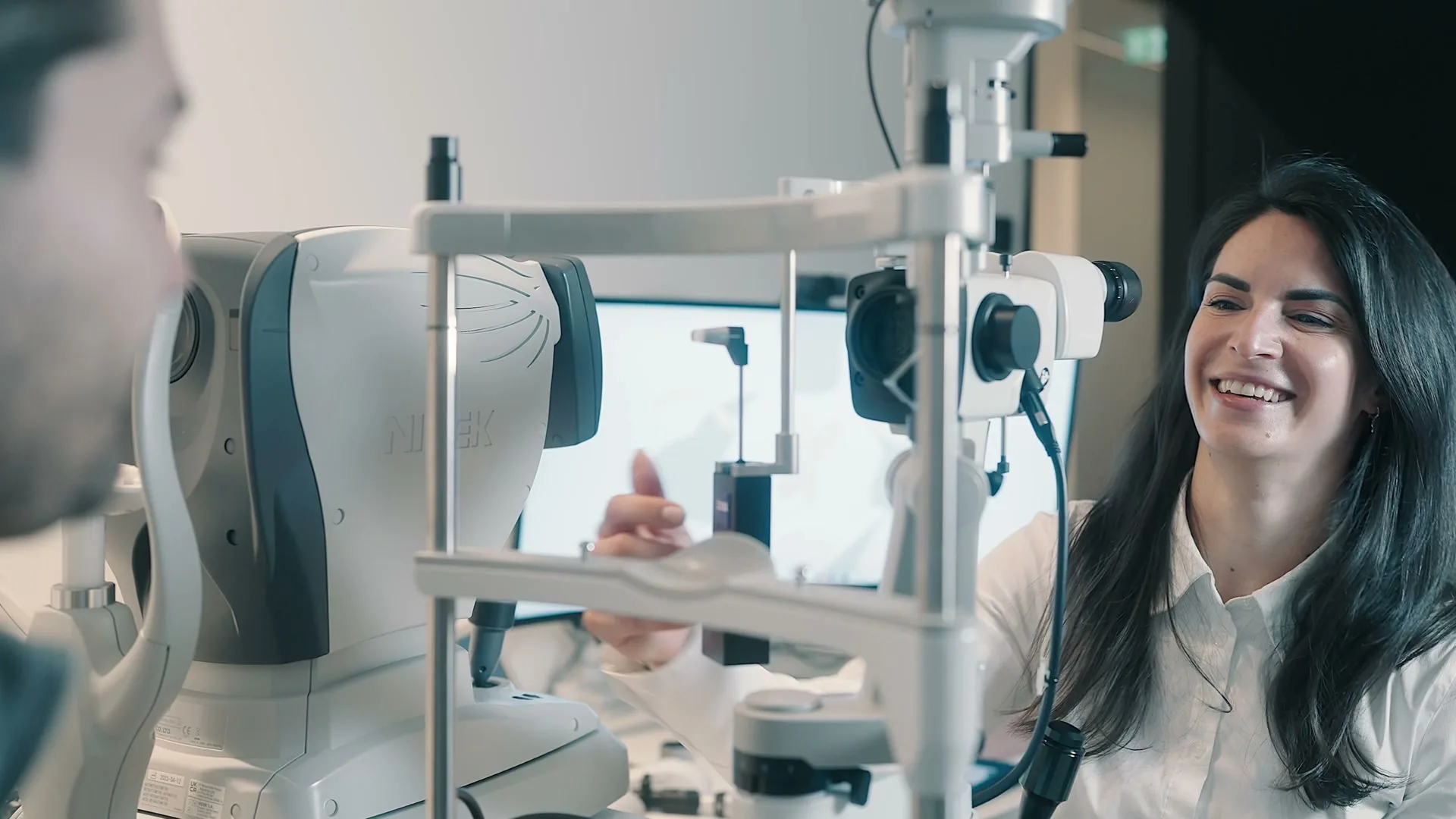
For one surgeon. For both eyes.
Prof. Dr. Mehdi Shajari has performed over 20,000 procedures, published numerous papers and trained several colleagues in this field. 97 % of eyes usually reach a visual acuity of 80 % or better after surgery, and the safety rate is 99.9 % (dr.vision analysis 2022–2026, n = 1,100).
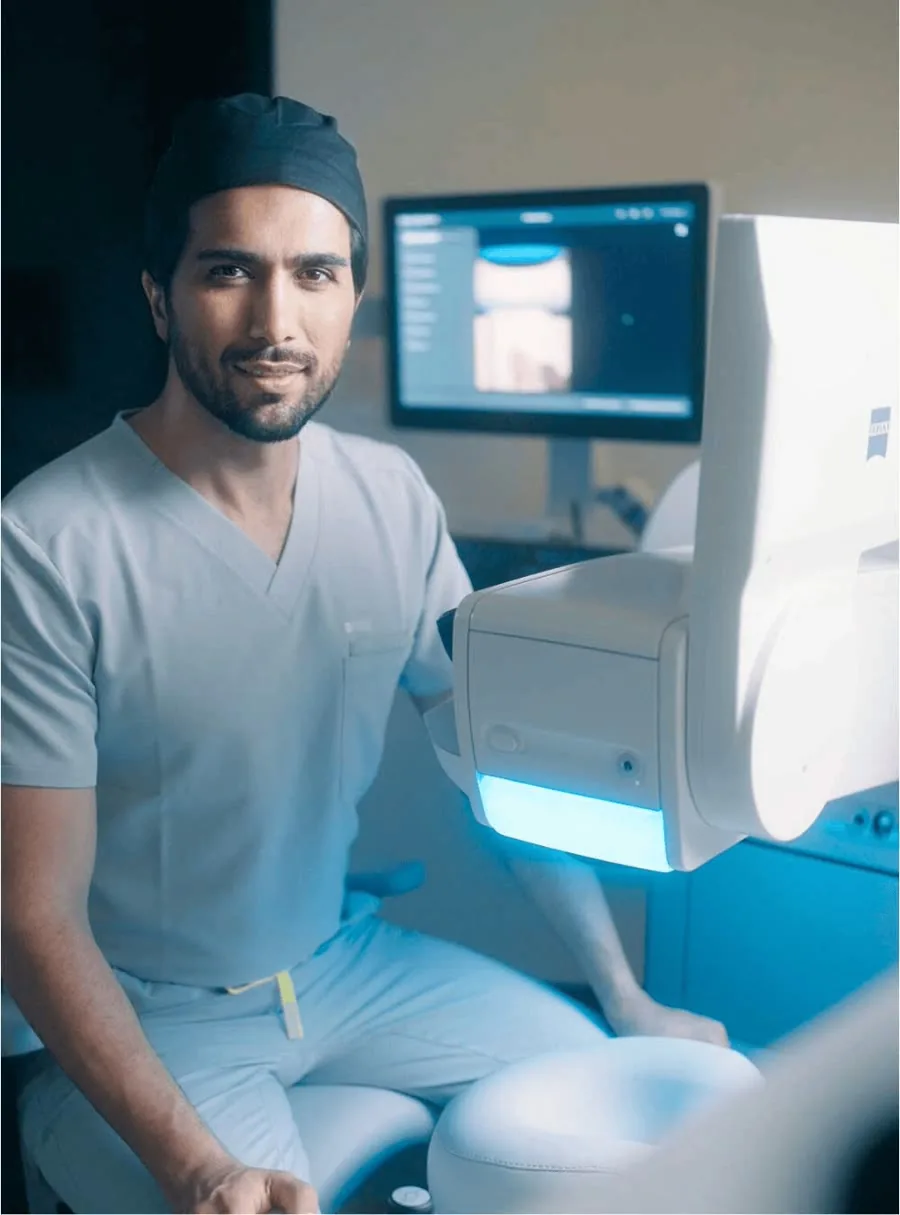
Every procedure: Prof. Dr. Mehdi Shajari. Personally.
Specialist in ophthalmology and professor of ophthalmology (German title: außerplanmäßiger Professor), over 80 publications on lens and corneal surgery, 12× FOCUS Top Doctor. Included in the price is that he examines and operates on you personally, not a changing team.
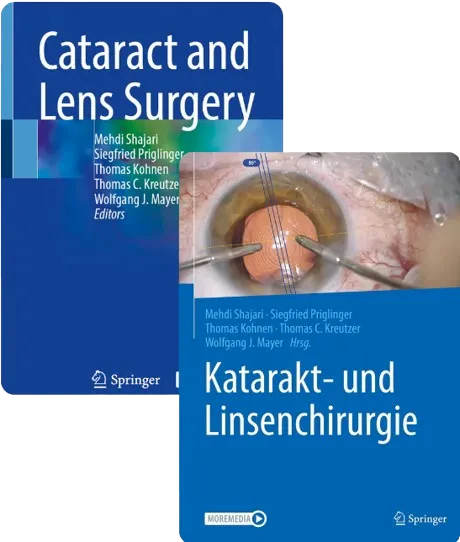
Prof. Dr. Mehdi Shajari has published numerous papers on freedom from glasses, teaches, and has trained several colleagues in this field.
376 reviews. Average 5.0.
376 Google reviews give dr.vision an average of 5.0 out of 5 stars. dr.vision does not check whether Google reviews come from treated patients.
“I had a lens exchange on both eyes with Prof. Shajari. From the first consultation to the surgery, the process was extremely professional and well structured.”
“My decision was well thought out, and after 1-2 other consultations I was certain: nobody operates on my eyes except Prof. Shajari.”
“I am more than satisfied with Prof. Dr. Shajari, his thorough consultation, and the care provided by him and his team.”
“I would have Prof. Dr. Shajari operate on me again at any time. His examination technique is at the highest level, his consultation extremely competent.”
Four patients. In their own words.
I saw wonderfully bright light.
You come home and wonder about the red that is standing somewhere in the yard.
I can see clearly again.
Seeing colors again, suddenly.
Still have questions about the costs?
“These are the questions about cataract costs we hear most often on the phone. Here are the answers.” Patient Care
dr.vision is a private practice without statutory insurance accreditation. Patients with statutory health insurance are self-paying patients with us and pay the full guide price, €6,998 for both eyes with a monofocal lens.
That depends on the lens and the practice. At dr.vision, the additional charge for both eyes is €244 (EDOF) or €878 (trifocal) compared with the monofocal lens; the guide price is €7,242 and €7,876 respectively, including the pre-operative examination, surgery and follow-up checks. Patients with statutory health insurance are self-paying patients with us and pay the full guide price.
Because dr.vision is a private practice without statutory insurance accreditation. Statutory patients are self-paying patients here and pay €6,998 for both eyes.
Not as an extra. At dr.vision both are included in the guide price of the surgery.
Depending on the plan, the surgery is often covered to a large extent, and a personal share usually remains. The premium lens depends on the plan: some plans reimburse the full lens, others only the monofocal portion. Ask in writing before the surgery.
Mostly only in part. You or your supplementary plan for remaining costs pay the rest. Your Beihilfe office can tell you exactly what applies.
Not as a separate service: private health insurance and Beihilfe reimburse the laser at most through a surcharge. Patients with statutory health insurance are self-paying patients with us. In 2024, the IQWiG found no added benefit over the standard surgery.
€6,998 for both eyes with a monofocal lens, €7,242 with an EDOF lens and €7,876 with a trifocal lens, each as a guide price according to GOÄ, including the pre-operative examination, surgery by Prof. Dr. Mehdi Shajari, lenses and aftercare.
The toric lens additionally corrects astigmatism. At dr.vision, the additional charge is available on request and appears in the cost estimate after the pre-operative examination. Whether Beihilfe and private health insurance pay for it depends on the Beihilfe office and the plan; patients with statutory health insurance are self-paying patients with us.
Yes. At dr.vision, 0 % over 12 months is possible, or financing through medipay with a down payment from €3.90 a day. What you pay yourself can be declared on your tax return as extraordinary expenses (§ 33 EStG). Whether and how much the tax office accepts depends, among other things, on your reasonable burden.
The most common is secondary cataract, in about 1 in 10 patients within 5 years; private health insurance and Beihilfe usually pay for the YAG laser treatment, while patients with statutory health insurance are self-paying patients with us. With a monofocal lens, you usually need reading glasses.
It should be available in writing before the surgery, state the lens type and all line items, and separate required services from optional ones. Do not sign additional agreements under time pressure; the standard surgery must not depend on buying extras.
Medically reviewed by Prof. Dr. Mehdi Shajari · As of October 2026 · Not legal or tax advice
How would you like to continue?
The first appointment is a free consultation. This is followed by the detailed pre-operative examination with Prof. Dr. Mehdi Shajari, including lens counseling. After that you receive a written cost estimate according to the GOÄ with the lens type, which you can use to ask your private health insurance (PKV) or Beihilfe in advance. Fastest by phone: 069 509 586 770 (available 24 hours).
In Frankfurt, Junghofstraße 16 · all measurements included
Our locations.
 Opening hours
Junghofstraße 16, 60311 Frankfurt am Main
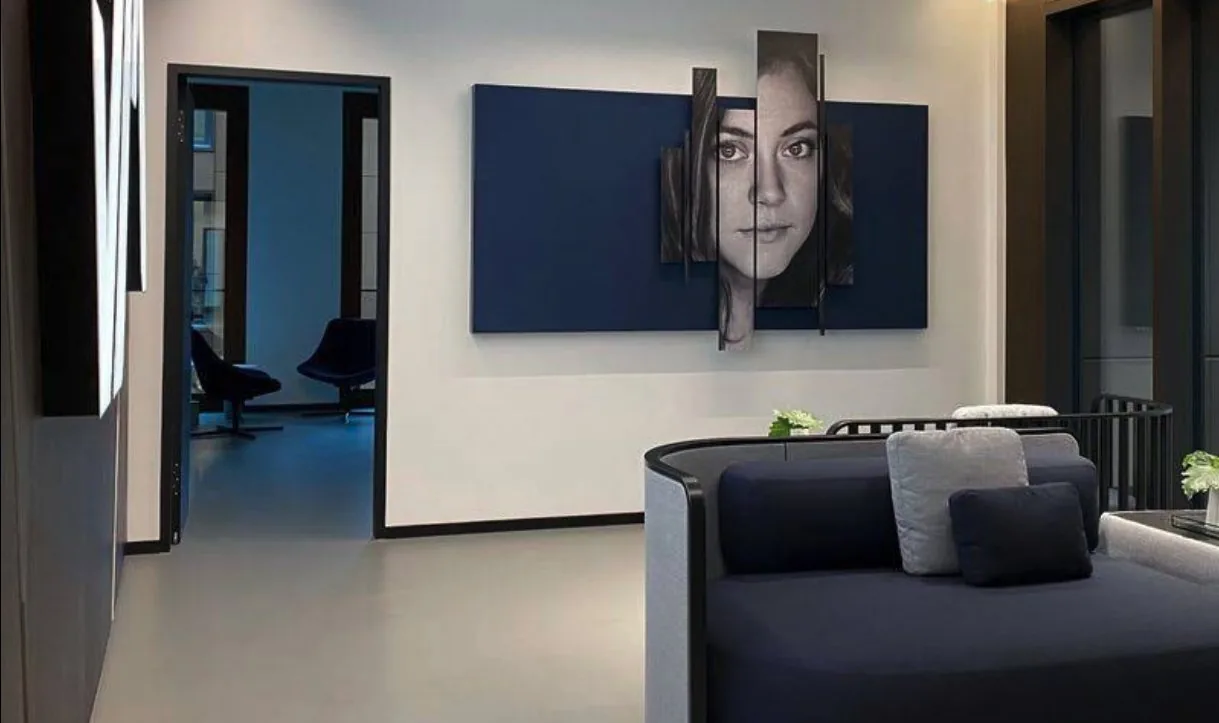 Opening 2027
Breite Straße 69, 40213 Düsseldorf (in the Neuer Stahlhof, corner of Graf-Adolf-Platz)
Until opening: preliminary talk in Frankfurt, Patient Care plans your travel.
Plan route Opening 2027
Lautenschlagerstraße 23, 70173 Stuttgart (2nd floor, step-free access)
Until opening: preliminary talk in Frankfurt, Patient Care plans your travel.
Plan routeMy name is Eva Maria Hohmann. On July 16, I had my second eye surgery with Professor Shajari. I received the second lens implant. The first surgery was on July 9, and I am very, very happy with the results. I also found the surgery, which took place while I was awake, so without anesthesia or sedatives, still quite bearable, because I could take part by looking into the light. And Professor Shajari exchanged the lens in the process. After each surgery, I drove home and felt well.
I was simply told by my treating eye doctor that I have a very strong cataract in one eye, and in the other eye as well. And on top of that I am also strongly farsighted. Different on both sides. The right eye was more affected, the left somewhat less. And Professor Shajari operated on the right eye first.
Yes, when I looked through the dressing the next morning, I first noticed that I saw wonderfully bright light. And then there was a note on the kitchen table and I thought, I just read something there. That was no longer possible at all with this eye. So I really could not read anything without glasses.
But I kept having moments of tiredness where I felt exhausted and really just thought, I have to get up now. I just have to go somewhere else now and stop looking at the screen. And in the evening after work I also noticed it very strongly, the problem with the refractive error. So in the evening after work I was no longer able to sit down in front of the TV. It was simply too much for me. And that gradually became more intense over the last months.
Then, thank God, came the preventive check-up at my eye doctor. And then it also came out that the cataract there was already so advanced. And the really very kindly meant advice not to get new glasses but really to think about a lens exchange.
Through my treating eye doctor. The two apparently know each other. He recommended Professor Shajari to me, but also knew patients who had already been to him. And they were all very satisfied. And I also watched one or two YouTube videos by Professor Shajari. And that actually gave me trust as well. I think it is very important, when someone operates on my eyes, that I trust that person.
No, I had no pain. Every now and then I felt a more or less strong pressure. But then Professor Shajari also said, now it presses. Well okay, then it presses. It is bearable and I did not concentrate on it. I just breathed deeply. It does not last long either, this moment where it presses, it comes and it goes. Then it is already fine. So it is not like it presses for half an hour. It passes very quickly. So Professor Shajari, I noticed, also has a very skilled hand at the eye, he also put on this dressing that opens the eye completely. I had only seen that in a picture on YouTube and thought, oh man, but you don't feel it at all. It really can't be noticed. I mean, the eye is numbed through and through beforehand. So the eyelids, the eyeball, they are really insensitive then.
Yes of course, I would always recommend him to anyone who has questions about their eyes, who maybe also has little time, can't find an eye doctor who has an appointment now. With specialist physicians there are often problems getting appointments. I can really only recommend him.
I also found the initial examination, when I was here for the very first time, very detailed and very appealing. Everything was examined with optical devices, very thoroughly. And so Professor Shajari had all my values before the surgery. And I had the feeling, yes, they know what they are doing here. And there are examination devices here that regular eye doctors do not have. For example, the measurement of the eyeball, they do not do that. The other device, the scanner camera for the retina, the back of the eye, I knew that one. The other measuring devices for the eyes, where the glasses prescription is measured, where visual acuity is measured, those are familiar too. But this is really thorough, and I also found the resident physicians and the assistants who performed the examinations all very friendly.
I would simply say, be honest with yourself. If you have an eye problem, tackle it, don't run away from it. It only gets worse with time. You could also have an accident or experience something unpleasant that does not have to be, if your eyes are in the best condition. And eye treatment is, as I once said, not the greatest party, but it goes very fast. As I said, in a nice environment, Professor Shajari is so friendly, also during the surgery, you simply forget what is actually being done. That is a good thing too, and just go, do it and then it is fine.
My name is Thomas Eckert, I am 65 years old, I am an apple wine innkeeper in Frankfurt-Niederrad.
I simply noticed deficits. I used to be able to look into the distance without any problem. For reading I had needed reading glasses for many years already, and I noticed that seeing into the distance was also becoming more and more problematic. So I decided to simply have it examined and went to Professor Shajari, whom I found through the internet, and within a few minutes he told me, it is a cataract in both eyes and must be removed surgically.
When driving at night it was really problematic. The oncoming lights affected the eye so much that it took a very long time until it became somewhat normal again. That means the eye was always under strain. And finally, and this was decisive, I noticed it at soccer, in the soccer stadium, that suddenly I could no longer even distinguish the numbers on the players' backs from the seating area.
I now have new lenses in both eyes, and I just had the last follow-up check and I feel absolutely fantastic. The most decisive thing as far as visual acuity is concerned will only turn out now, because the last eye was only done yesterday. I will wait and see. But I see incredibly well. He already said I am at 100 percent. And what was the most decisive and most striking thing from the first day was simply the light conditions, the brightness. Before, prior to the surgery, everything was ultimately as if seen through a very fine stocking in front of the eye. It was really dull in comparison. You come home and are amazed at the red that is standing somewhere in the yard or in the garden, a color you had certainly not seen in that way for years.
I simply opened the page on the internet in Frankfurt, and ultimately I wanted short distances, because I still have a lot to do. And Dr. Shajari's practice was, I believe, one of the first things I saw. And I called and it was completely problem-free. I got my first appointment right away. After that, on the very first day, we had already fixed the two surgery dates plus the examinations that followed. And everything happened exactly to the hour, to the minute, as agreed. And those are things I like.
I am 65 now, so we have also already been to one practice or another. It is of course spectacular when we now come into this, I have also experienced others, I simply like taking that in, because I immediately believe that with all this madness, how beautiful it all is, the corresponding equipment is of course there too. And I simply follow that. And from the first moment here I had the impression that I was in very professional and good hands.
I'm not particularly anxious about medical matters. By nature I have complete trust in our medicine. I have that, and that something can always go wrong somewhere, that may be, but that's not who I am and that's not how I approach things.
Then you are seated in the chair, the eye is treated with drops and moistened. With this chair you go into the operating room. Dr. Shajari is of course also a very calm person. So it's not the case that he makes you nervous on top of everything. None of that is the case. I wasn't nervous, he wasn't nervous. Yes, and then it begins. You simply look up into the light, and the eye is apparently taped open so that it can't close anymore. And yet you can still look down or look up, because you get instructions from him. Look straight ahead or look up, look straight ahead or look up, and then these reflexes come. Then everything went wonderfully, and I went home with my eye taped shut.
And today, well, last night I had a headache, which was not the case at all with the right eye. Then I got on my bike and came here, and now I have the final check and a one hundred percent result.
I would say at any time, if a conversation comes up or if I hear something and someone says, my God, I have this here or I cannot see there, I would say at any time, I went to Dr. Shajari, what happened to me there was simply all top.
I am 74 years old, my name is Fayez Chbib.
My vision was getting worse and I went to several eye doctors, but it was always the same examinations, pressure measurement and so on, but nobody recommended what could be done so that I could see better again.
I think someone from my family was in treatment here, and my sister told me, go to them, that is the right address. And then I called and an appointment was made.
I did not know for sure what I had, but I suspected that I had a cataract because I could no longer see dark things so well. Without mentioning the other eye doctors from before, I said, ask your sister, my sister knows good doctors, I suppose, which has now also proven right, I had never made an appointment before. It was pleasant, it went relatively quickly, and I was also impressed by the equipment, everything seemed to me to be state of the art. My wife was there too, she said, I think we are in the right practice here.
Of course, I could tell right the next day that it was better than before. And today I also found that I can see relatively well with my left eye.
What struck me very positively was, first of all, the equipment and how I was examined. I saw that for the first time here in Germany. And what was also impressive was all the data, how it was transferred immediately from A to B and how the professor then has everything on his three monitors. That was impressive. Everything was actually very trust-inspiring for me, yes. Because you shouldn't mess around with your eyes.
What I can tell people is, if you don't want to make too many wrong attempts, you should come here right away.
Yes, I am Elvira Siemens, I am 45 years old, I currently work as a teacher, and in fact I also worked for ten years earlier as a nurse in the eye operating room and knew a little of what was coming when I now had this surgery.
The first time I found out at all that I have a cataract, I was 17, because I wanted to get a driver’s license and failed the driver’s test and also did not get through the medical report at first. Then I found out that I have a congenital cataract, which means it is inborn, and I was born with it and did not know it any other way, and I was quite surprised that I was then told I cannot see all that well, but I had not felt limited. It is actually the case that I have a congenital cataract on both sides, in both eyes, but on the right it was more or less central and on the left it was rather peripheral, which is why my left eye could compensate superbly for whatever loss of vision there was, and I never noticed anything.
Nobody noticed anything.
No, I also never had the feeling that I see in any way limited. I actually then worked in the eye operating room at the university hospital, and of course I was then with the experts on site and knew exactly how the steps of the surgery go and how it works. And they, of course, always monitored it and so on, but then at some point I did notice a worsening of my vision, and then five or six years ago I was told that a subcapsular cataract is forming as well, meaning yet another worsening of the vision I had anyway. And then, honestly, I let it slide a bit, because I always thought, well, I can still see fine. And at some point I thought, now it really is getting worse and worse.
And then two or three months ago I had an eye infection. I had a chalazion, the whole eye was completely swollen shut. And then I happened to be here with Professor Shajari. That was really by chance. And then I found out that I am with one of the best cataract surgeons there is. After I also talked with my old colleagues, they told me, yes, no, whatever you do, stay with him. Yes, he is one of the good ones, really good. Well, and after my chalazion had healed, he measured my eyes again, and then it was somehow quite clear that my visual acuity was very poor.
Well, I was thrilled. Super nice, super friendly, extremely helpful, very attentive. First of all, getting appointments at all, my appointment was super fast, but in this practice in general you get appointments very quickly and easily, and I think the team works together really well. The professor himself, I found him incredibly friendly and caring, and you really feel that you are taken seriously, and at times I said, I actually only wanted to ask a question, I don't want to take up your time unnecessarily. I actually only wanted to write an email, and he said no, no, come in now, let's take a look. That is really very friendly and caring.
The result was as good as I never in my life would have expected, because you really could completely, the result is at 100 percent, yes, again. My eye has not gotten used to it yet, I must say. I still have a high sensitivity to glare, but what can be measured is apparently a perfect result.
So I have to say, what was the biggest aha moment for me was actually that I could see colors again so strongly. In recent years, for example, the colors pink and turquoise are much new for me. So pink roses are pink, they were always so milky. That is, for example, something I find truly wonderful, really great.
Some patients have already been here after I had been here, whom I sent here. And last but not least, my family will also come here soon for a check-up, my husband too, I think, definitely. It is absolutely recommendable, and I also know that patients who are perhaps not privately insured still take the money in hand and say, I will do the follow-up checks here. So I have the feeling that you are simply incredibly well looked after here. Just from the modern technology and everything, it is quick and then friendly. I think many patients are also willing to spend the money there.