 dr.vision
45–60 min
for both upper eyelids, outpatient, under local anesthesia.
Start here
What suits you?
Find out in 2 minutes which procedure suits your eyes.
Start the Suitability CheckOr by age:
< 45yearsGet rid of glasses & contact lenses 45–64yearsGet rid of reading glasses 65+yearsCataract & glasses-free★★★★★ 5.0 · 376 Google reviews · 20,000+ procedures
Decide well
What you should know beforehand.
Who operates?Prof. Dr. Mehdi ShajariFOCUS Top Doctor · operates on every patient personally What does it cost?Laser from €3,498 · Lenses from €6,886Prices for both eyes Is it safe?Safety & risks When will I be fit again?Work, sports, driving Would you rather read in peace first?Decision Guide Freedom from GlassesProcedures
Laser or lens?
Laser eye surgery
SMILE ProSmartSightFemto-LASIKTrans-PRKPRKPresbyond (laser away your reading glasses)All laser procedures at a glanceLaser procedures compared ›Lens surgery
ICLLens exchange (reading glasses)Cataract surgery with premium lensLens types: trifocal, EDOF, toricLens types compared ›Start here
Something wrong with your eyes?
A thorough eye check-up with us clarifies what is behind it.
Book an eye check-up★★★★★ 5.0 · 376 Google reviews
Eyelid lift · Hooded eyelid surgery · Blepharoplasty
An alert look. And a clear view upward again.
Droopy eyelids can make you look tired and can restrict your vision. Here you can learn how an eyelid lift works, how healing progresses day by day, when insurance pays, and what it costs.
 12× FOCUSTop Doctor
One hour in the operating room. Two weeks until everyday life.
45–60 min
for both upper eyelids, outpatient, under local anesthesia.
Day 5–7
the fine stitches are removed. After that the skin heals visibly fast.
after 7 days
swelling and bruising have mostly subsided enough that makeup is sufficient.
in the eyelid crease
Hidden when the eyes are open, after 3–6 months mostly a fine light line.
GOÄ
Written cost estimate after the consultation.
376 reviews. Average 5.0.
“His expertise and his commitment to patient care are truly impressive.”
“My conclusion: Best eye doctor in Frankfurt, best location in the city center, most modern practice, best care, friendly staff, hardly any waiting times!”
“You can see here that the focus is on the best result and comfort for patients, including opening hours!”
“From the greeting through the diagnosis/treatment to the aftercare, highly professional.”
Eyelid lift in five answers.
For anyone with three minutes. Each answer leads to the detailed chapter.
Through a cut in the natural eyelid crease, excess upper eyelid skin is removed, if needed also a narrow strip of muscle and bulging fatty tissue. The scar disappears in the crease. The procedure is outpatient and takes around one hour for both sides.
To the chapterOnly if the eyelid demonstrably limits the visual field. In that case, private health insurance (PKV) usually reimburses according to the plan, Beihilfe (allowance for German civil servants) according to your Beihilfe rate. No insurance pays for a purely aesthetic eyelid lift; patients with statutory health insurance are always self-paying patients with us.
Self-checkNot during the surgery, as the eyelid is locally numbed. Afterward it feels tight for two or three days. Cooling and a simple painkiller are enough for most people.
To the processSwelling is strongest on day 2 to 3, the stitches come out after about a week, and after around two weeks you are mostly inconspicuous again. The scar matures over three to six months.
Healing day by dayBilling under the German fee schedule for physicians (GOÄ), costs depending on scope. After the consultation you receive a written cost estimate.
CostsToo much skin above the eye. And a cut you cannot see.
Hooded eyelids develop when the skin of the upper eyelid loses firmness and falls over the eyelid crease, often in families, almost always with age. An eyelid lift, medically blepharoplasty, removes this excess in around one hour for both sides. It is one of the most common eyelid operations of all.
The upper eyelid is the thinnest skin of the body. Over the years it becomes looser, the eyelid crease disappears, and the skin rests on the lashes. Then your look appears tired although you are not. Sometimes the visual field becomes smaller at the top. An eyelid lift removes just enough skin that the eyelid closes and opens freely again.

0.5 mm
Because the upper eyelid skin is so thin, it loses elasticity early. It stretches, falls over the crease and, in extreme cases, rests on the lashes. Exactly this excess is removed in the eyelid lift.
2
Behind the eyelid muscle lie a middle and an inner fat pad. If they bulge forward, the inner corner of the eye looks swollen. If needed, they are carefully reduced, never removed completely, so that the eye does not look sunken.
100 %
The upper eyelid protects the cornea and distributes the tear film. That is why too much skin is never removed. This limit is the most important rule of every eyelid lift, and it is measured precisely before the surgery.
Not every “heavy eyelid” is a hooded eyelid. We distinguish four findings that often occur together. The treatment depends on which one predominates:
| Findings | What is going on? | How to recognize it | Treatment |
|---|---|---|---|
| Hooded eyelid (dermatochalasis) | too much skin above the eyelid crease | Eyelid margin sits normally, skin hangs over it | Upper eyelid lift |
| Drooping eyelid (ptosis) | the levator muscle or its tendon is weakened | the eyelid margin itself sits too low and covers the pupil | Levator surgery (ptosis correction), not a pure skin tightening |
| Sunken eyebrow | the brow has moved downward and pushes skin onto the eyelid | Brow sits below the bone edge, forehead is wrinkled to compensate | Brow lift, if needed combined with an eyelid lift |
| Eye bags | fat pads on the lower eyelid bulge forward | Swelling under the eye, stronger in the morning | Lower eyelid lift, a completely different surgery |
If only the skin is tightened although the eyelid itself sits too low, you will not be satisfied with the result. That is why, before every eyelid lift, we measure where the eyelid margin sits in relation to the pupil and how strongly the levator muscle works.
Medical or cosmetic: the measurement decides.
An eyelid lift is medically necessary if the upper eyelid demonstrably limits the visual field, typically when the skin rests on the lashes and part of the vision is missing at the top. This is proven with a visual field test and photos. Only then do private health insurance and Beihilfe (allowance for German civil servants) usually reimburse the costs; no insurance pays for a purely aesthetic eyelid lift.
Four questions, 30 seconds. Does not replace an examination.
Does the skin of your upper eyelid rest on your lashes or hang over the eyelid margin?
Do you see less at the top, for example traffic lights, signs or shelves, or do you have to tilt your head back?
Do you raise your eyebrows in the evening to see better, or is your forehead then tired and tense?
Is it mainly about looking fresher and more awake again?
Your assessment
The result does not replace an examination. It only shows which direction it is likely to go.
Arrange a consultation with measurementAt the perimeter (visual field testing device), you look at a point and press as soon as a light appears anywhere. With hooded eyelids, the upper light points are missing.
The same measurement while the eyelid is lifted with a piece of tape. If the visual field becomes significantly larger, the eyelid is the cause.
Standardized photos show where the skin sits in relation to the eyelid margin and the pupil. Insurers mostly require them together with the measurement.
We measure the distance from the eyelid margin to the center of the pupil and the strength of the levator muscle. This is how we tell a hooded eyelid from a drooping eyelid (ptosis).
| Your insurance | Medically necessary eyelid lift | Purely aesthetic eyelid lift |
|---|---|---|
| Private health insurance | usually reimbursed under the German fee schedule for physicians (GOÄ) and the plan; mostly a prior cost approval with measurement and photos | not reimbursed |
| Beihilfe | eligible for Beihilfe (allowance for German civil servants) if medical necessity is documented; the rest through private residual-cost insurance | not eligible for Beihilfe (allowance for German civil servants) |
| Statutory health insurance | dr.vision is a private practice: you pay yourself. In statutory-insurance practices, the eyelid lift is a statutory insurance service only with a documented limitation, often with an application | Self-paying patient |
| Tax | declare as extraordinary expenses, recognition depending on the reasonable burden | not deductible; plus 19% VAT on the doctor's invoice |
Reimbursement always according to your plan and on a case-by-case basis; no guarantee of reimbursement. More on this: Private health insurance · Beihilfe · Statutory health insurance · Taxes
There is no fixed number of degrees from which every insurer pays. What counts is the comparison: How large is the upper visual field with the eyelid hanging and with the eyelid lifted? Clear indications of medical necessity are skin that reaches over the eyelid margin to the pupil, a loss in the upper visual field that largely normalizes with the eyelid lifted, and symptoms in everyday life such as headaches from constantly raising the brows.
We document this so that your insurer can decide clearly in advance. How your plan draws the line is stated in the insurance terms or in the answer to the cost estimate.
Most patients want to see better and look fresher. These do not exclude each other. What alone matters for reimbursement is whether the functional limitation can be proven. If something purely aesthetic is done in addition, for example on the lower eyelid, that part is billed separately.
For almost everyone with excess upper eyelid skin. With a few exceptions.
Healthy adults whose eyelid skin hangs over the crease and whose eyelid can still close completely afterward are suitable. Caution is needed with dry eyes, active thyroid eye disease and blood thinners. Most patients are between 45 and 70 years old.
The classic case. The eyelid margin sits normally, only the skin above it is too much. This is where the eyelid lift works best.
You see significantly more with the eyelid lifted. Then the eyelid lift is additionally medically justified.
Well-controlled blood pressure significantly lowers the risk of secondary bleeding and bruising.
After the surgery, the eyelid often does not close completely in the first weeks. We treat dry eye beforehand, otherwise it gets worse. More on this at Dry eye.
Aspirin (ASA), clopidogrel or anticoagulants (blood-clotting inhibitors) increase the risk of bleeding. Whether and for how long they are paused is decided by your family doctor or specialist physician, never by you alone.
With thyroid eye disease, operate only after a stable phase. After laser eye surgery, wait a few months. Botox on the forehead or eyelid should have worn off so that the measurement is correct.
Cut, laser, injection. Honestly compared.
True excess skin can be removed permanently only with surgery. Laser and plasma procedures tighten mild hooded eyelids somewhat, botulinum toxin lifts the brow slightly for a few months (mostly about 3–4), and fillers last longer. Which method fits depends on how much skin is too much and whether the eyelid or the brow is the cause.
| Criterion | Upper eyelid lift (surgery) | Laser / plasma | Botox (brow lift) | Filler |
|---|---|---|---|---|
| For whom | clearly excess skin, visual field limited | mild hooded eyelids, good skin quality | slightly sunken brow, young skin | volume loss at the brow or temple |
| How it works | skin (and, if needed, fat) is removed | heat makes the skin shrink | relaxes the muscle that pulls the brow down | supports the brow from below |
| Result | clear, permanent | mild, often several sessions | mild, brow a few millimeters higher | mild, fresher look |
| Durability | mostly 10 years and longer | mostly only temporary | mostly about 3–4 months | mostly only temporary |
| Downtime | about 10–14 days | a few days of crusts and redness | none | 1–3 days of swelling possible |
| Scar | fine line in the eyelid crease | none, pigment changes possible | none | none |
| Medically reimbursable | yes, with a proven visual field limitation | no | no | no |
dr.vision offers Botox and fillers, laser treatment and upper eyelid lift. Durations are values from the literature based on experience and vary individually.
The only method that removes true excess skin. The first choice for moderate to pronounced hooded eyelids and for a limited visual field.
45–60 minboth upper eyelids, outpatient
Eye bags and wrinkles on the lower eyelid. Technically more demanding, with its own risk profile. Can be combined with the upper eyelid lift.
If the cause lies in the sunken brow, an eyelid lift alone helps only halfway. Then the brow is lifted as well, surgically or with Botox.
Awake, relaxed, in around an hour.
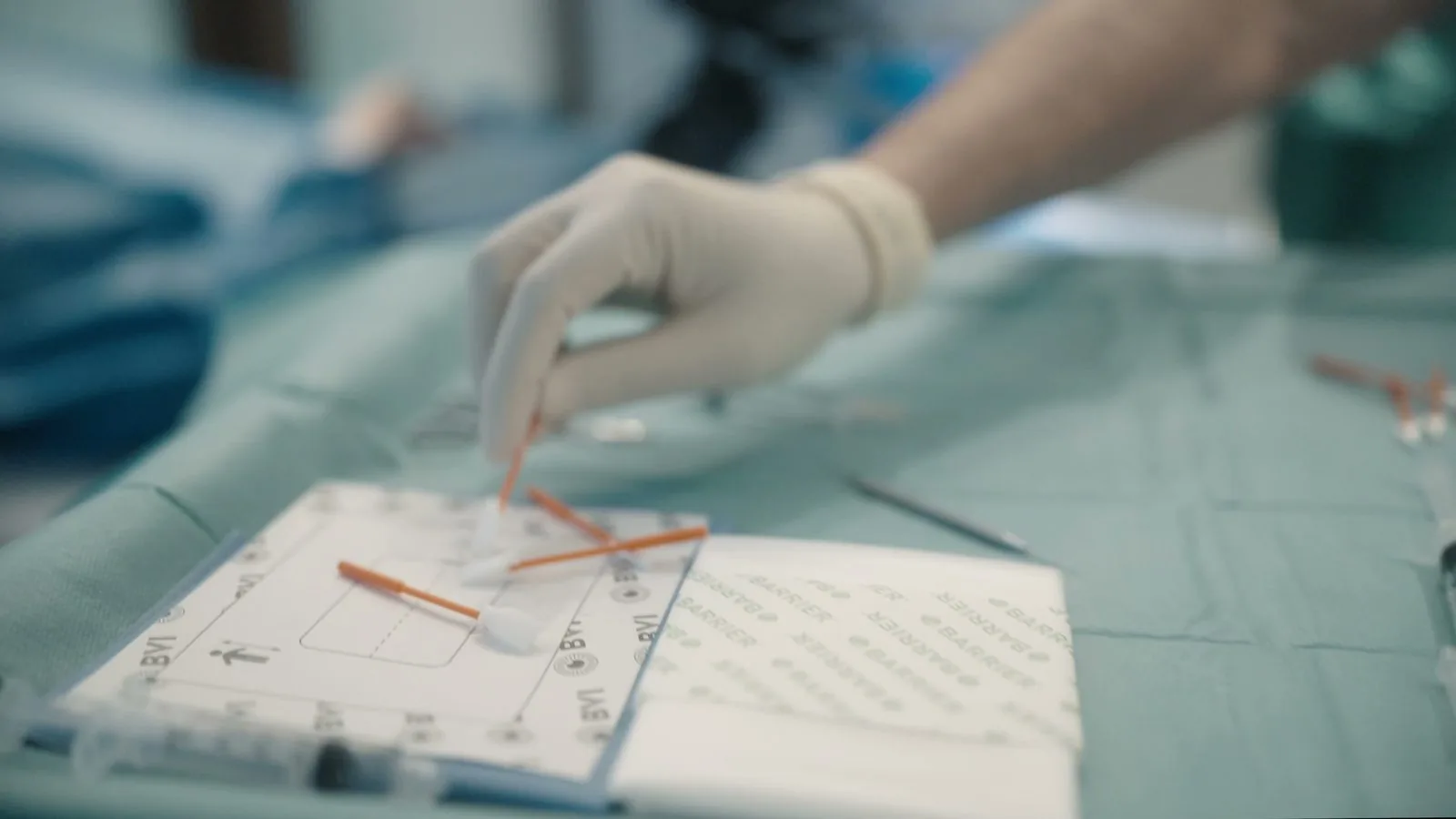
The eyelid lift is outpatient: the eyelid is locally numbed, you are awake and feel no pain. For both upper eyelids, the procedure takes around 45–60 minutes, you are at the practice for about two hours and go home the same day, accompanied and not behind the wheel yourself.
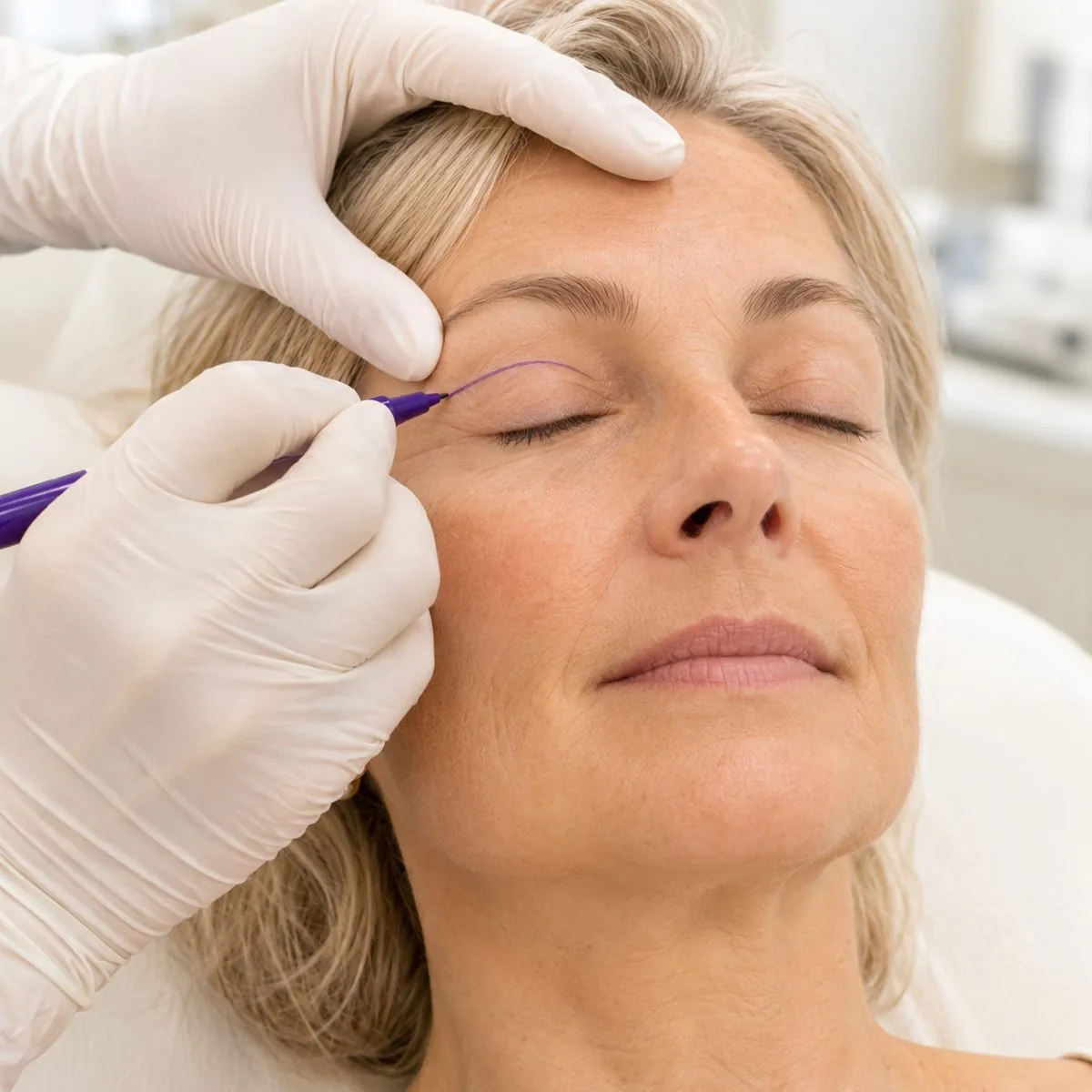

 0:00 · Marking
With a fine pen, Prof. Dr. Mehdi Shajari marks the eyelid crease and the skin to be removed, while you sit, because the skin falls differently when lying down. The width is checked with forceps: the eyelid must still be able to close completely afterward.
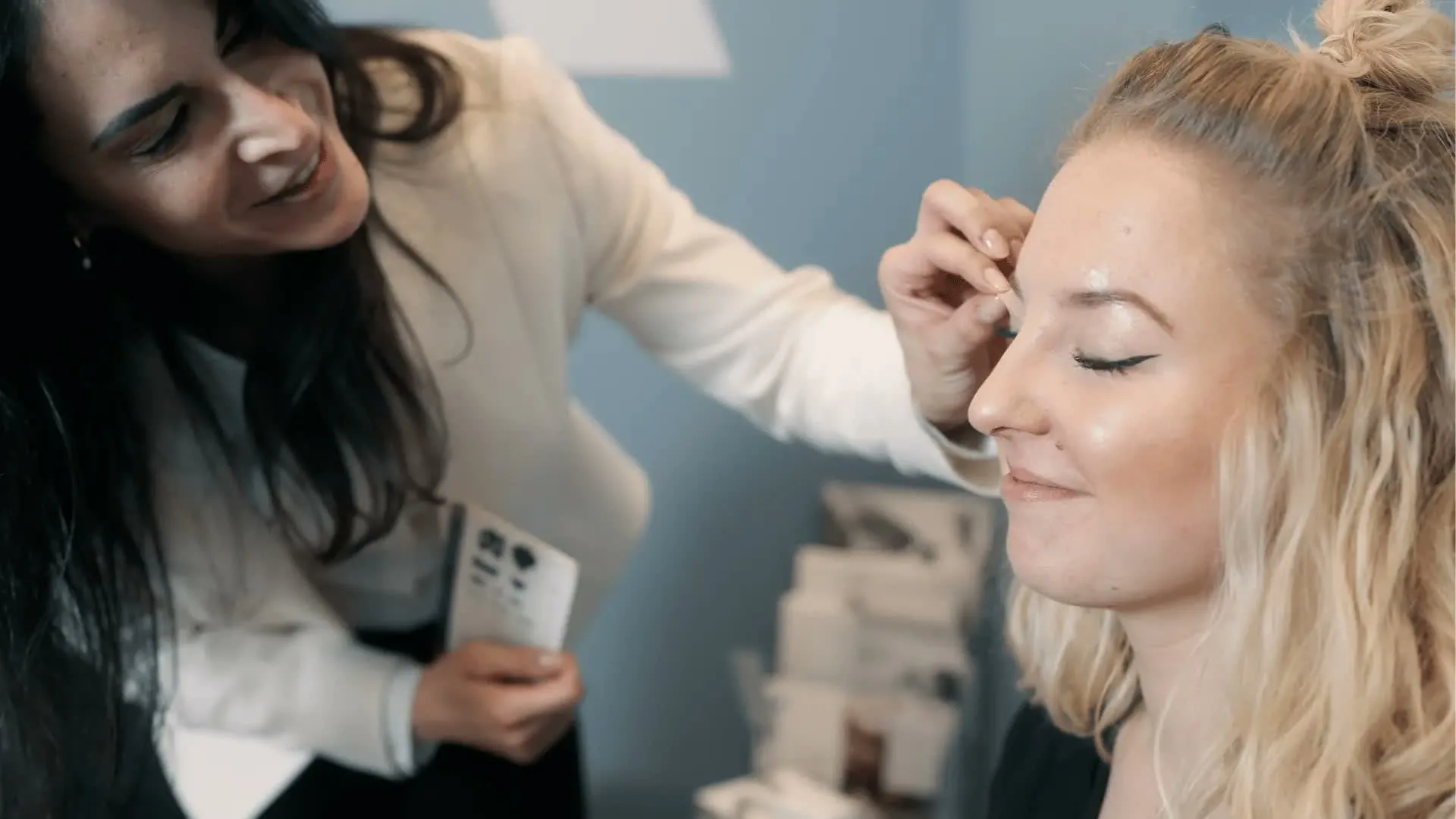 0:10 · Anesthesia
A numbing agent is injected under the eyelid skin with a very fine needle. This burns for a few seconds, after which the eyelid is numb. On request, there is a mild sedative.
0:15 · Removing skinAlong the marking, the strip of skin is removed, if needed a narrow strip of the ring muscle and part of the bulging fat pad at the inner corner of the eyelid. Bleeding is stopped immediately. At most you feel pulling and pressure.
0:45 · Stitch and coolingThe wound is closed with a very thin, continuous thread that lies in the eyelid crease. Then it is cooled. After a short rest, you go home with ointment, cooling pads and a written plan.
What is unpleasant is mainly the injection of the anesthetic, which burns for a few seconds. During the surgery you feel touch and pulling, but no pain. On the first evening and on days 1 to 2, the eyelid feels tight and pressured; some describe a feeling like after a sunburn. Cooling and an ordinary painkiller (acetaminophen, not aspirin) are enough for most people. Severe or increasing pain is not normal and must be checked immediately.
Stitches out after a week. Inconspicuous after two.
Swelling peaks on day 2–3, the stitches are removed after 5–7 days, and after around 10–14 days most patients hardly show the procedure anymore. The final result shows after about three months, when the last swelling has subsided too.
Tap a day.
The eyelids are slightly swollen, the stitch lies in the crease, some ointment shines on the eyelid. You can see normally, only slightly blurred from the ointment.
When the numbing wears off after two to three hours: tightness and burning. The eyelid may not close completely.
Cool (10 minutes on, 10 minutes off), rest with the upper body raised, do not bend over, do not lift heavy things. Do not drive.
Increasing pain, a tight, very hard eyelid or suddenly worse vision is an emergency: get in touch immediately via the emergency number in your documents.
Swelling is strongest on day 2 to 3, and bruises often move downward to the cheek. This looks dramatic, but is normal.
Tightness, foreign-body sensation, dry or watering eye because eyelid closure does not yet work completely.
Keep cooling, ointment according to plan, artificial tears gel in the evening. Reading and watching TV in moderation are allowed. Showering yes, but do not spray the stitch directly.
The swelling has subsided significantly, and the bruises turn yellow-green. The stitch is visible as a fine red line.
Removing the stitches takes a few minutes and pinches briefly. Afterward, the eyelid immediately feels freer.
Follow-up appointment with stitch removal at the practice. From about two days afterward, light makeup on the eyelid is possible, and often office work again.
Remaining discoloration can be covered up. The scar is still pink, the eyelid still looks a little stiff and the crease a little high.
A slight feeling of numbness or tension in the eyelid skin is normal and passes over weeks.
Work, appointments, driving (if eyelid closure is good), contact lenses after clearance. Light endurance training.
To others, the eyelid looks normal. The scar is still slightly reddened, and in the morning the eyelid can be somewhat more swollen.
Hardly anything anymore. The eyelid usually closes completely again.
Full training, swimming, sauna and tanning bed after clearance, mostly from week 3 to 4. Consistent sun protection on the scar.
The last swelling is gone, the eyelid crease has its final height, and the scar has matured into a fine light line.
Nothing anymore. A free view upward.
Final check, with a medical indication on request with a repeated visual field test for comparison.
Typical course; depending on skin, age, blood thinners and scope of the procedure, also faster or slower.
| Activity | From when | Good to know |
|---|---|---|
| Reading, TV, screens | from day 1, in moderation | Take breaks, artificial tears; the eye dries out faster when staring |
| Showering, washing hair | from day 1–2 | Head back, do not spray the stitch directly and do not rub |
| Office work | usually after 5–7 days | when you can live well with visible bruising |
| Driving | after about 1 week | when you see well and the eyelid no longer feels tight; never on the day of surgery |
| Glasses | immediately | light model that does not press on the stitch |
| Contact lenses | after 1–2 weeks | do not pull up the upper eyelid when inserting |
| Eye makeup | about 2 days after the stitch removal | use new products, remove thoroughly and gently in the evening |
| Jogging, fitness | after about 2 weeks | no straining, no head-down exercises in weeks 1–2 |
| Swimming, sauna, martial arts | after 3–4 weeks | Heat increases the swelling, chlorine irritates the scar |
| Sun, tanning bed | Sun protection immediately, tanning bed after 6 weeks | UV light permanently darkens fresh scars |
| Flying | after about 1 week | Cabin air is dry: put artificial tears in your carry-on |
It lies where the eyelid folds anyway.
Hardly. The cut lies in the natural eyelid crease and disappears in it when the eyes are open. The scar is reddish for 4–6 weeks; after 3–6 months, with normal healing, it can mostly be seen only as a fine, light line with the eye closed.
red
After the stitches are removed, the scar is visible as a thin red line, often slightly raised. At the outer end, where the skin is thicker, somewhat more noticeable.
pink
The redness fades and the scar becomes flatter. Small hardenings at the edge mostly resolve by themselves. Now gentle scar care helps most.
light
The scar has matured. With the eyes open, it lies in the crease; with the eyes closed, you can see it up close as a fine line.
For one year, sun protection factor (SPF) 50 on the scar or sunglasses. UV light permanently darkens fresh scars.
From about two weeks after the stitch removal, gently massage the scar several times a day with a fatty ointment or a silicone gel.
Itching is part of healing. Scratching and rubbing can widen the scar. Cooling helps against itching.
A thicker scar at the outer end is rare and can be treated after a few months, for example with a cortisone injection or a small correction.
The skin that was removed does not grow back. The result therefore usually lasts ten years or longer. The skin keeps aging, though, and the eyebrow sinks a little over the years. After many years, some patients want a second, usually smaller correction. Not smoking and sun protection extend the effect.
A good result is one where nobody notices the surgery. That is why it is better to remove a little too little skin than too much, the natural crease is preserved, and fatty tissue is reduced only as far as needed so that the eye does not look sunken. Friends often just say you look rested.

Not sure whether the surgery is necessary?
We will look at it together. Call us.
Jana from our Patient Care team answers questions about the process and costs and arranges the consultation with Prof. Dr. Mehdi Shajari, on request with a visual field test for the insurer. Phone reachable 24 hours a day, WhatsApp Mon–Fri 8:00–19:00, Sat 9:00–15:00.
Your path. In four steps.
At dr.vision, an eyelid lift takes place in four steps, from the consultation with measurement through the plan with cost estimate and the procedure to aftercare. From the consultation to the final follow-up check, it usually takes three to four months, but you only come to the practice about four times. Consultation, surgery and aftercare are in the hands of the same team.
Step 1 of 4
Clarify what bothers you and what really helps.
Please bring: a list of your medications, especially blood thinners, and your insurance details.
Medical or cosmetic?Step 2 of 4

In writing, before anything happens.
Private health insurance (PKV) and Beihilfe usually respond within 2–4 weeks. We help with any follow-up questions.
To the costsStep 3 of 4
About one hour, outpatient, under local anesthesia.
Come with someone. You will receive an emergency number that can be reached around the clock.
Process in detailStep 4 of 4
Stitches out, scar care, checking the result.
Questions in between by WhatsApp to Patient Care. Coming from farther away? By arrangement, your eye doctor or family doctor at home can also take care of removing the stitches; see travel.
Healing day by dayNormal in the first days: swelling, bruising down to the cheek, tightness, watering or dry eyes, incomplete eyelid closure during sleep, slightly blurred vision from the ointment.
Report immediately: increasing, throbbing pain, a tight, hard, bulging eyelid, suddenly worse vision or double vision, fever, purulent discharge. This can be a secondary bleed or an infection and must be treated the same day.
Often harmless. Rarely serious.
Almost everyone has swelling and bruising; dry eyes and incomplete eyelid closure are common in the first weeks and usually temporary. Serious complications such as bleeding behind the eye are rare, about 1 in 2,000, and with permanent loss of vision about 1 in 20,000. They must then be treated immediately.
The tissue reacts to the procedure; blood collects under the thin skin and moves downward.
almost always
of varying severity, peaking on days 2–3.
Agree on blood thinners beforehand, get blood pressure under control, operate gently, cool, and keep the upper body raised.
As long as the eyelid is swollen and does not close completely, more tear film evaporates. A feeling of a foreign body, burning or watering.
common in the first weeks
permanent cases are rare, especially with a pre-existing dry eye.
Detect and treat dry eye beforehand, never remove too much skin, artificial tears and gel at night after surgery.
The eyelid does not close fully during sleep. In the first weeks this is usually due to swelling; rarely it is permanent, if too much skin was removed.
temporarily common, permanent rare
Exact measurement of the remaining width while you sit upright, rather conservative removal. Gel and ointment at night until healed.
Both sides do not always heal the same way, the creases sit at different heights or some skin remains.
Wait until the swelling has completely gone after about three months. Then, if needed, a small correction under local anesthesia.
Thickened or reddened scar, usually at the outer end, small suture cysts (milia) along the stitches.
rare
Incision in the crease, fine stitches, early stitch removal, scar care and sun protection. Milia are easy to remove.
Redness, increasing swelling, warmth and pus at the stitches, often with fever.
under 1 in 100
the eyelids have a very good blood supply.
Sterile technique, antibiotic ointment, information about the warning signs. If infection is suspected, treatment on the same day.
Blood collects behind the eyeball and presses on the optic nerve. Signs: severe, increasing pain, a hard, bulging eye, worsening vision.
about 1 in 2,000
rare, but an emergency. With permanent loss of vision about 1 in 20,000.
Clarify blood thinners and blood pressure beforehand, reduce fatty tissue only carefully, meticulous control of bleeding, emergency number around the clock. If suspected, immediate relief of the pressure.
Frequencies from the specialist literature on blepharoplasty.
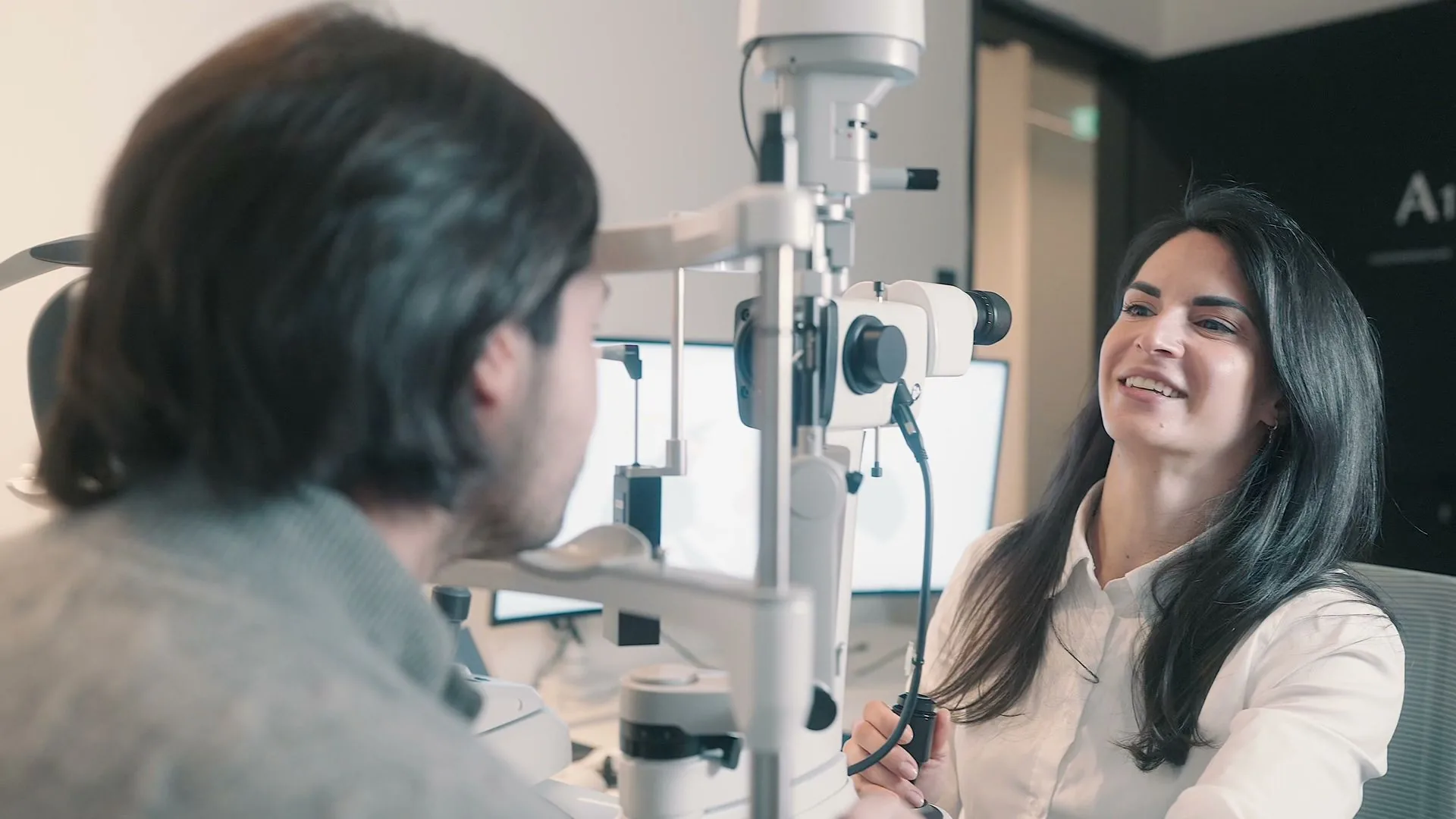
Because an eyelid is more than skin.
Before every eyelid lift, dr.vision has an eye doctor check eyelid closure, tear film and visual field, and aims for a natural result. Prof. Dr. Mehdi Shajari operates on every patient himself. 5.0 stars from 376 reviews.
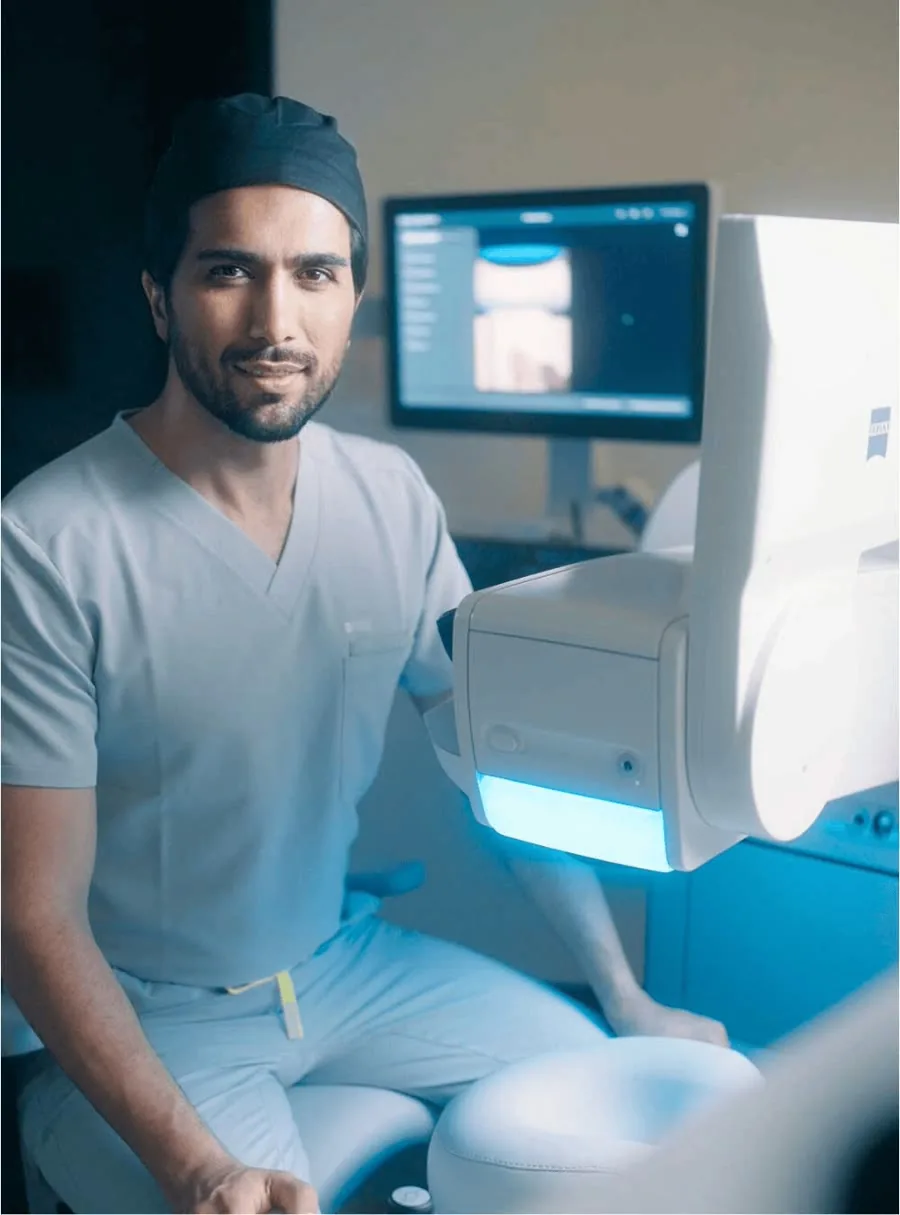
Prof. Dr. Mehdi Shajari. Personally.
Prof. Dr. Mehdi Shajari operates on every patient himself. He is a specialist in ophthalmology with a professorship and habilitation at the University of Frankfurt and also advises and treats aesthetically. You are advised, operated on and followed up by the same doctor.
“An eyelid is more than skin. It protects the cornea and spreads the tear film, so before every eyelid lift we first check how the eyelid works.”
Prof. Dr. Mehdi Shajari
With an eyelid lift, appearance is not the only thing that matters. Eye doctors see the eyelid as part of the eye: it protects the cornea, spreads the tear film and determines how much you can see upward. At dr.vision, this function is checked before every operation, and the result is checked afterward.
What you get with us.
Surgeon
Prof. Dr. Mehdi Shajari, in person.
Reviews
5.0
376 Google reviews
Function first
Measured before surgery.
Visual field with and without the lid lifted, standardized photos, eyelid measurements. This lets your private health insurance (PKV) or Beihilfe decide clearly before the surgery.
5.0
★★★★★
from 376 Google reviews
The person who marked your eyelid also checks the scar.
Crease
The natural eyelid crease stays, and the eye does not look sunken.
Mild droopy eyelids often need no incision.
Healing, scar, work, sports: we go through everything.
For the rare cases in which things need to move fast.
Billing under the German fee schedule for physicians (GOÄ), written cost estimate, financed on request.
Jana answers questions about the process, appointments and costs via WhatsApp, usually within 10–15 minutes. Phone available 24 hours, WhatsApp Mon–Fri 8:00–19:00, Sat 9:00–15:00.
Patient Care
Junghofstraße 16, free parking in the Junghofstraße parking garage.
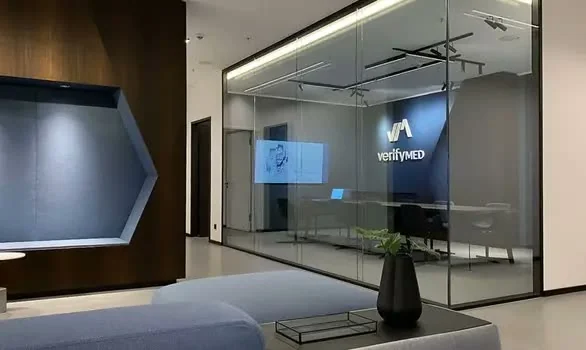
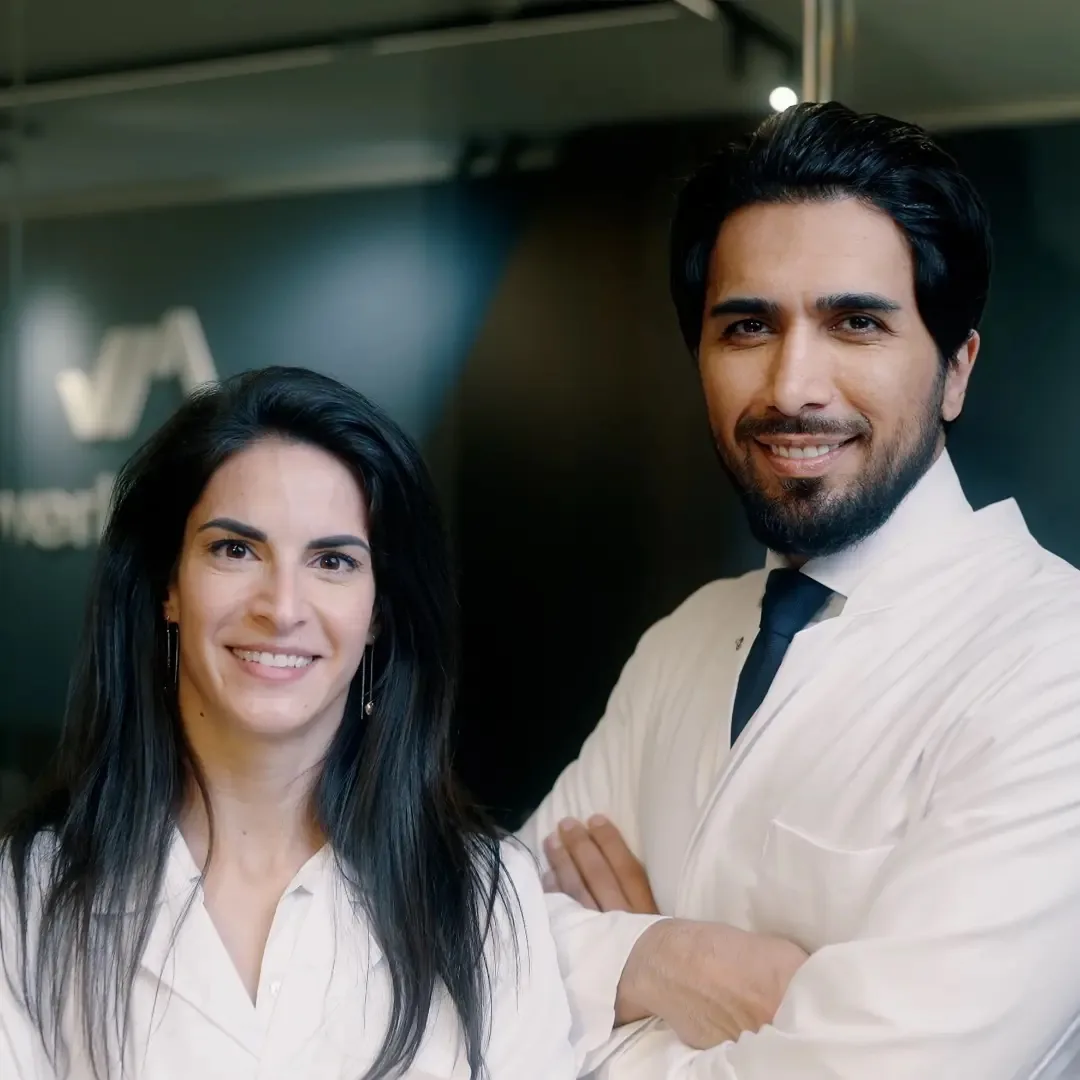
A look inside the practice and the team.

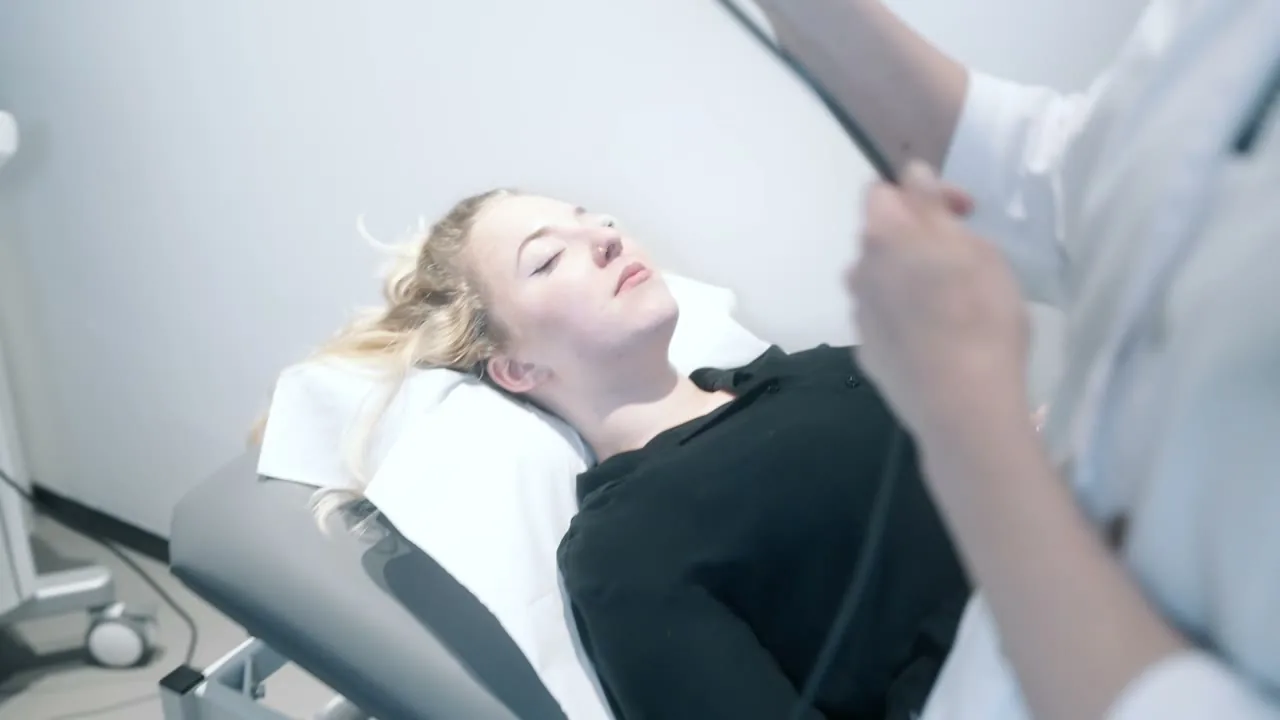

One price, in writing in advance.
An eyelid lift of both upper eyelids is billed according to GOÄ. The price depends on whether one or both eyelids are operated on, whether fatty tissue or the lower eyelid is added, and which anesthesia you choose. After the consultation, you receive a written cost estimate. For an aesthetic indication, value-added tax is added.
Under the German fee schedule for physicians (GOÄ)Costs depending on scope · written cost estimate after the consultation
Guide prices according to GOÄ: €2,500–3,000 for the surgical lift, €800–1,000 for laser, €300–600 for Botox and fillers.
If the eyelid lift is medically necessary, private health insurance (PKV) plans usually reimburse it according to GOÄ. Many insurers want to see the cost estimate with the visual field findings and photos beforehand. A purely aesthetic eyelid lift is not reimbursed by any insurance.
A medically necessary eyelid lift is eligible for Beihilfe (allowance for German civil servants) under the German fee schedule for physicians (GOÄ), documented by measurement and photos; your residual-cost insurance covers the rest. With our cost estimate, you can clarify in advance with your Beihilfe office what it will cover. More at Beihilfe.
dr.vision is a private practice without statutory health insurance accreditation; you pay yourself, after a written cost estimate. You can declare the costs of a medically necessary eyelid lift as extraordinary expenses on your tax return. Whether and how much the tax office recognizes depends, among other things, on your reasonable burden. More at Statutory health insurance.
Prefer installments? The eyelid lift can be financed like all procedures at dr.vision, including 0% over 12 months directly with us. How financing works is explained at Financing. What applies for tax purposes is explained at Taxes.
You are not alone
Questions about reimbursement? Our Patient Care team can help: 069 509 586 770 (available 24 hours)
| Procedure | Upper eyelid lift (blepharoplasty): removal of excess skin, if needed muscle and fat portions, incision in the eyelid crease |
|---|---|
| Duration | 45–60 minutes for both upper eyelids, outpatient, about two hours in the practice |
| Anesthesia | local, you are awake; mild sedative |
| Stitches | after about 5–7 days |
| Socially presentable | usually after 10–14 days |
| Scar | in the eyelid crease, after 3–6 months a fine light line |
| Durability | mostly 10 years and longer |
| Medically necessary | with a documented visual field restriction (measurement with and without the lid lifted, photos) |
| Costs | according to GOÄ, depending on the extent; for an aesthetic indication plus value-added tax |
| Insurance | If medically necessary, private health insurance (PKV) depending on the plan, Beihilfe according to your Beihilfe rate, patients with statutory health insurance as self-paying patients |
| Surgeon | Prof. Dr. Mehdi Shajari |
| Location | Junghofstraße 16, 60311 Frankfurt am Main · Düsseldorf and Stuttgart from 2027 (appointments in Frankfurt) |
Go deeper.
This page answers everything about the eyelid lift. Related topics on their own pages:
Stye, chalazion, allergy: what a suddenly thick eyelid means and what helps.
To the page Important before surgeryWhy a dry eye should be treated before an eyelid lift.
To the page SurgeonCareer, focus areas, positions, every step with a source.
To the profile CostsThe eyelid lift in installments, also 0 % over 12 months.
To financing Preventive careWhile you are here: check the retina, lens and eye pressure in one appointment.
To the check-up Not sure?You were recommended eyelid surgery and would like a second assessment.
Get a second opinionStill have questions?
The questions we hear most often in consultation hours, with our answers. Prof. Dr. Mehdi Shajari
The costs depend on whether one or both upper eyelids are operated on, whether the lower eyelid is added, and which anesthesia you choose. Billing is according to GOÄ. After the consultation, you receive a written cost estimate. Follow-up checks and stitch removal are included in the price.
Only if it is medically necessary, that is, if the upper eyelid demonstrably restricts the visual field. This is documented with a visual field test and photos. dr.vision is a private practice: patients with statutory health insurance pay themselves. Private health insurance usually reimburses a medically necessary eyelid lift according to the plan, and Beihilfe according to your Beihilfe rate, usually after prior approval of costs. No insurance pays for a purely aesthetic eyelid lift.
You can declare the costs of a medically necessary eyelid lift that you pay yourself as extraordinary expenses in your tax return. Whether and how much the tax office accepts depends, among other things, on your reasonable burden. A purely aesthetic eyelid lift is not deductible and is also charged value-added tax. Ask your tax advisor.
Not during the procedure: the eyelid is locally anesthetized, and you only feel the brief prick of the injection. Afterward, the eyelid feels tight and pressured for two to three days. Most patients manage with cooling and an ordinary painkiller.
For both upper eyelids, expect about 45 to 60 minutes in the operating room, and with preparation and a short rest period about two hours in the practice. The surgery is outpatient; you go home the same day, but not driving yourself.
There is no fixed minimum age. Most patients are between 45 and 70 years old, because skin loses elasticity with age. With congenital or inherited droopy eyelids, an eyelid lift can make sense even in your early 30s. What matters is the finding, not the year of birth.
Usually after 10 to 14 days. The stitches come out after about one week, after which remaining discoloration can be covered with makeup. Tinted glasses help in the first week. If you want to be on the safe side, plan two weeks for appointments where you will be seen.
Office work is often possible again after five to seven days, as long as you do not mind swelling and bruising around other people. Physically heavy work after about two weeks. For a medically necessary eyelid lift, you receive a certificate of incapacity for work.
Light activity such as walks right away, jogging and fitness after about two weeks, martial arts, swimming and sauna after three to four weeks. Contact lenses usually after one to two weeks, once the eyelid no longer feels tight. We will tell you the specifics at the follow-up check.
Hardly. The incision lies in the natural eyelid crease and is hidden when your eyes are open. In the first weeks the scar is reddened; after three to six months it is usually only visible as a fine, light line. Sun protection and scar care help.
As a rule, ten years or longer. The skin that was removed does not grow back, but the skin keeps aging. After many years, some patients have a second, usually smaller correction. Smoking and a lot of sun shorten the effect.
Both specialties operate on eyelids. Eye doctors with an eyelid focus (oculoplastic surgery) pay particular attention to function: eyelid closure, tear film, cornea and visual field. At dr.vision, Prof. Dr. Mehdi Shajari advises and operates.
Medically reviewed by Prof. Dr. Mehdi Shajari · As of October 2026
Everything important to read again and pass on.
Arrives by e-mail in about 60 seconds. No newsletter, just the guide and, if you wish, a follow-up from Patient Care. Privacy policy
How would you like to continue?
You arrange the consultation appointment by phone or online. At the first appointment, we examine your eyelids closely: eyelid crease, eyelid margin, brow, eyelid closure and tear film, with photos and, if vision might be limited, with a visual field test. You go home with an honest recommendation and a written cost estimate.
In Frankfurt, Junghofstraße 16 · with eyelid measurement and photos
Our locations.
 Opening hours
Junghofstraße 16, 60311 Frankfurt am Main
 Opening 2027
Breite Straße 69, 40213 Düsseldorf (in the Neuer Stahlhof, corner of Graf-Adolf-Platz)
Until opening: preliminary talk in Frankfurt, Patient Care plans your travel.
Plan route Opening 2027
Lautenschlagerstraße 23, 70173 Stuttgart (2nd floor, step-free access)
Until opening: preliminary talk in Frankfurt, Patient Care plans your travel.
Plan route