 dr.vision
3 min
on foot from Goetheplatz. Junghofstraße 16, Frankfurt city center.
Start here
What suits you?
Find out in 2 minutes which procedure suits your eyes.
Start the Suitability CheckOr by age:
< 45yearsGet rid of glasses & contact lenses 45–64yearsGet rid of reading glasses 65+yearsCataract & glasses-free★★★★★ 5.0 · 376 Google reviews · 20,000+ procedures
Decide well
What you should know beforehand.
Who operates?Prof. Dr. Mehdi ShajariFOCUS Top Doctor · operates on every patient personally What does it cost?Laser from €3,498 · Lenses from €6,886Prices for both eyes Is it safe?Safety & risks When will I be fit again?Work, sports, driving Would you rather read in peace first?Decision Guide Freedom from GlassesProcedures
Laser or lens?
Laser eye surgery
SMILE ProSmartSightFemto-LASIKTrans-PRKPRKPresbyond (laser away your reading glasses)All laser procedures at a glanceLaser procedures compared ›Lens surgery
ICLLens exchange (reading glasses)Cataract surgery with premium lensLens types: trifocal, EDOF, toricLens types compared ›Start here
Something wrong with your eyes?
A thorough eye check-up with us clarifies what is behind it.
Book an eye check-up★★★★★ 5.0 · 376 Google reviews
Eye doctor · Frankfurt am Main · private practice
Three minutes from Goetheplatz.
Your eye doctor in the middle of Frankfurt: from check-up to cataract surgery, plus laser eye surgery, ICL and lens exchange. You usually get an appointment within 24 to 48 hours, also evenings and Saturdays.
 12× FOCUSTop Doctor
In the middle of the city. Also on Saturday.
3 min
on foot from Goetheplatz. Junghofstraße 16, Frankfurt city center.
6 Days
open per week: Mon–Fri 8:00–19:00, Sat 9:00–15:00; no consultation hours on Thursdays, the office can be reached.
5,0
on average from 376 Google reviews.
3
Specialists in ophthalmology, two of them formerly senior physicians (Oberärztinnen) at the university eye hospital.
0 €
in the Junghofstraße parking garage under the practice. Validate the ticket at reception.
376 reviews. Average 5.0.
“I was at the practice to get a second opinion and I am really very satisfied with my experience. I got an appointment quickly and without complications. … Prof. Dr. Shajari took a lot of time, listened to me attentively, examined me thoroughly and responded to my wishes and needs. I felt taken seriously and very well advised.”
“I am really more than satisfied with Dr. Vision, Prof. Shajari and the whole team. Starting with scheduling the appointment, through communication – even with questions by WhatsApp you get a quick answer – to the care at the practice.”
“Scheduling worked smoothly and extremely efficiently. What impressed me particularly were the very short waiting times … The practice has a calm, trusting atmosphere, supported by top equipment, which immediately conveys a sense of security.”
“He is a very empathetic eye doctor who took the necessary time and still acts professionally throughout. I would recommend him without reservation and consult him again.”
Four patients. In their own words.
Then everything went fast.
There are always situations where glasses are limiting.
It really was not that bad.
It is an absolute liberation.
dr.vision in five answers.
For anyone with three minutes. Each answer leads to the detailed section.
Junghofstraße 16, 60311 Frankfurt am Main, in the city center. Hauptwache and Taunusanlage are 5 minutes away on foot, Goetheplatz 3 minutes; parking is free in the building.
DirectionsMonday to Friday 8:00–19:00, Saturday 9:00–15:00; no consultation hours on Thursdays, but phone and office are staffed. Patient Care answers by phone 24 hours, via WhatsApp Mon–Fri 8:00–19:00, Sat 9:00–15:00.
Opening hoursOphthalmology from preventive care, cataract and glaucoma through dry eyes and macula to children's eyes and acute cases. Plus freedom from glasses with laser or lens.
Servicesdr.vision is a private practice: billing according to the German fee schedule for physicians (GOÄ). Patients with statutory health insurance are welcome and pay themselves, privately insured patients submit the invoice.
Costs and insuranceProf. Dr. Mehdi Shajari, senior physician Ivana Pavlovic and Dr. Claudia Grunwald, supported by Jana and the Patient Care team. Depending on your concern, the doctor with the matching focus.
To the teamTwo pillars. One practice.
Under one roof you find ophthalmology for healthy eyes and freedom from glasses with laser or lens. Nine focus areas of ophthalmology and five paths to freedom from glasses, cared for by our team of doctors. Each card leads to the detailed page.
Preventive care, diagnosis and treatment, including surgery. For adults and children from 3 years.
Swipe through all nine focus areas.
Eye test, eye pressure, lens and retina in one appointment. Useful from 40 and with diabetes, high blood pressure or glaucoma in the family.
Diagnosis, observation and surgery with a monofocal, EDOF or trifocal lens when vision interferes with daily life.
Pressure measurement, OCT and visual field, then drops, laser or surgery. The common open-angle glaucoma does not hurt and is often noticed only late; an acute glaucoma attack, by contrast, hurts badly and is an emergency.
Searching for causes with tear film and eyelid margin diagnostics; treatment from artificial tears to OptiLight light therapy.
Early detection by OCT, for wet AMD the injection therapy (IVOM, injection into the eye) at regular intervals.
Eye test, strabismus, glasses for the child: examinations at a child-friendly pace, with time for the parents' questions.
Droopy eyelids that interfere with vision or make you look tired: consultation and procedure by the eye doctor.
Clarify vitreous opacities, rule out a retinal tear, discuss treatment. Sudden flashes are a case for right away.
Red eye, foreign body: call us, we look for an appointment on the same day. Sudden worse vision: go straight to the eye hospital or call 112.
Also: diabetes and the retina, keratoconus, secondary cataract (YAG laser), ophthalmological expert reports and the second opinion before surgery.
Seeing without glasses and contact lenses: by laser on the cornea or with a lens in the eye. Guide prices apply to both eyes.
Swipe through all five paths.
SMILE Pro/SmartSight, Femto-LASIK and Trans-PRK in our own laser surgery suite. From €3,498 for both eyes.
Implantable lens in front of your own lens, when the cornea is too thin for the laser. From €6,886 for both eyes.
Laser treatment against reading glasses, as long as the natural lens is clear. €6,398 for both eyes.
The natural lens is exchanged for an artificial lens: distance and reading glasses in one step with an EDOF (€7,242) or trifocal lens (€7,876); with a monofocal lens from €6,998.
Operate on a cataract and become glasses-free at the same time: EDOF from €7,242, trifocal €7,876 for both eyes.
Your concern. Your appointment.
For eight common concerns, the Navigator shows which appointment you need, who treats you and what to bring. With sudden vision problems, the rule is always: call, do not book online.
Choose a concern. The recommendation adapts.
Our recommendation
From 40, the risk of glaucoma and macular degeneration increases; both cause no symptoms for a long time. At the check-up we measure eye pressure and visual acuity and look at the lens, optic nerve and retina.
Orientation, not a diagnosis. For sudden loss of vision, severe pain or injuries outside our opening hours: the nearest eye hospital with an emergency department, in a life-threatening situation 112.

Not sure which appointment fits?
Call us. We sort it out with you.
Jana and the Patient Care team ask briefly about your symptoms and book the right appointment with the right doctor. Around the clock.
Junghofstraße 16. Between Hauptwache and Goetheplatz.
The practice is in the city center, 3 minutes on foot from Goetheplatz. You reach the stations Hauptwache and Taunusanlage in 5 minutes on foot; by car you park free of charge in the Junghofstraße parking garage directly under the practice.
| Address | dr.vision, Junghofstraße 16, 60311 Frankfurt am Main |
|---|---|
| Location | City center, 3 minutes from Goetheplatz |
| Phone | 069 509 586 770 (available 24 hours) |
| Patient Care by WhatsApp, Mon–Fri 8:00–19:00, Sat 9:00–15:00 | |
| Parking | Free in the Junghofstraße parking garage (under the practice) |
| S-Bahn and U-Bahn | Hauptwache and Taunusanlage, 5 min on foot |

Navigation: Junghofstraße 16. The Junghofstraße parking garage is directly under the practice; we validate the parking ticket at reception.
Get off at Hauptwache or Taunusanlage, then 5 minutes on foot. Most S-Bahn and U-Bahn lines stop at Hauptwache, from the surrounding area often without changing.
From the main station, take the S-Bahn one stop to Taunusanlage; on foot it is approx. 15–20 minutes. From the airport, S8 and S9 take you to Hauptwache in approx. 15 minutes.
For the retina, check-up, children and the pre-operative examination for freedom from glasses, we often dilate the pupils. You then see blurred and are sensitive to glare for several hours. Come by train or with a companion and bring sunglasses.
Companions are welcome, also in the examination room, if you wish. Those who prefer to wait will find cafés at Goetheplatz, at Freßgass and around Hauptwache within a few minutes' walk.
The practice has barrier-free access.
From Wiesbaden, Mainz, Darmstadt, Offenbach, Hanau or Bad Homburg? Travel times by car and S-Bahn are on the laser eye surgery location page; patients traveling from farther away find everything important under Travel from farther away.
Six days a week. Saturday included.
The practice is open Monday to Friday from 8:00 to 19:00 and Saturday from 9:00 to 15:00. You can reach Patient Care by phone 24 hours, via WhatsApp Mon–Fri 8:00–19:00, Sat 9:00–15:00; you can book appointments online around the clock.
| Monday | 08:00–19:00 |
|---|---|
| Tuesday | 08:00–19:00 |
| Wednesday | 08:00–19:00 |
| Thursday | 08:00–19:00 |
| Friday | 08:00–19:00 |
| Saturday | 09:00–15:00 |
| Sunday | closed |
| Phone | 069 509 586 770, reachable 24 hours |
|---|---|
| Mon–Fri 8:00–19:00, Sat 9:00–15:00, reply usually within 10–15 minutes | |
| Online appointment | around the clock in the appointment block of this page |
| Callback | Choose a time, Patient Care calls back |
| Evenings | Mon–Fri until 19:00 |
With sudden loss of vision, a shadow or curtain in the visual field, a chemical burn or an injury of the eye, do not wait for the next working day: go to the nearest eye hospital with an emergency department, in a life-threatening situation call 112. With a chemical burn, rinse the eye immediately for at least 15 minutes with plenty of clear water and keep rinsing until help arrives.
If you were operated on by us, use the emergency number from your surgery documents; it can be reached around the clock. Anything that can wait until the next morning, such as a slightly red eye without pain, we gladly clarify by phone from 8:00.
A short follow-up appointment is done sooner than an initial examination with dilating drops, where the drops need about 20–30 minutes to take effect. The pre-operative examination for freedom from glasses takes the longest. Patient Care tells you when booking how much time to plan.
On Saturdays from 9:00 to 15:00, examinations that need no surgical suite are possible, for example check-up, follow-up checks, dry eye or a consultation. Saturday appointments are in demand: it is best to book two to three weeks in advance.
From the call to the findings. In four steps.
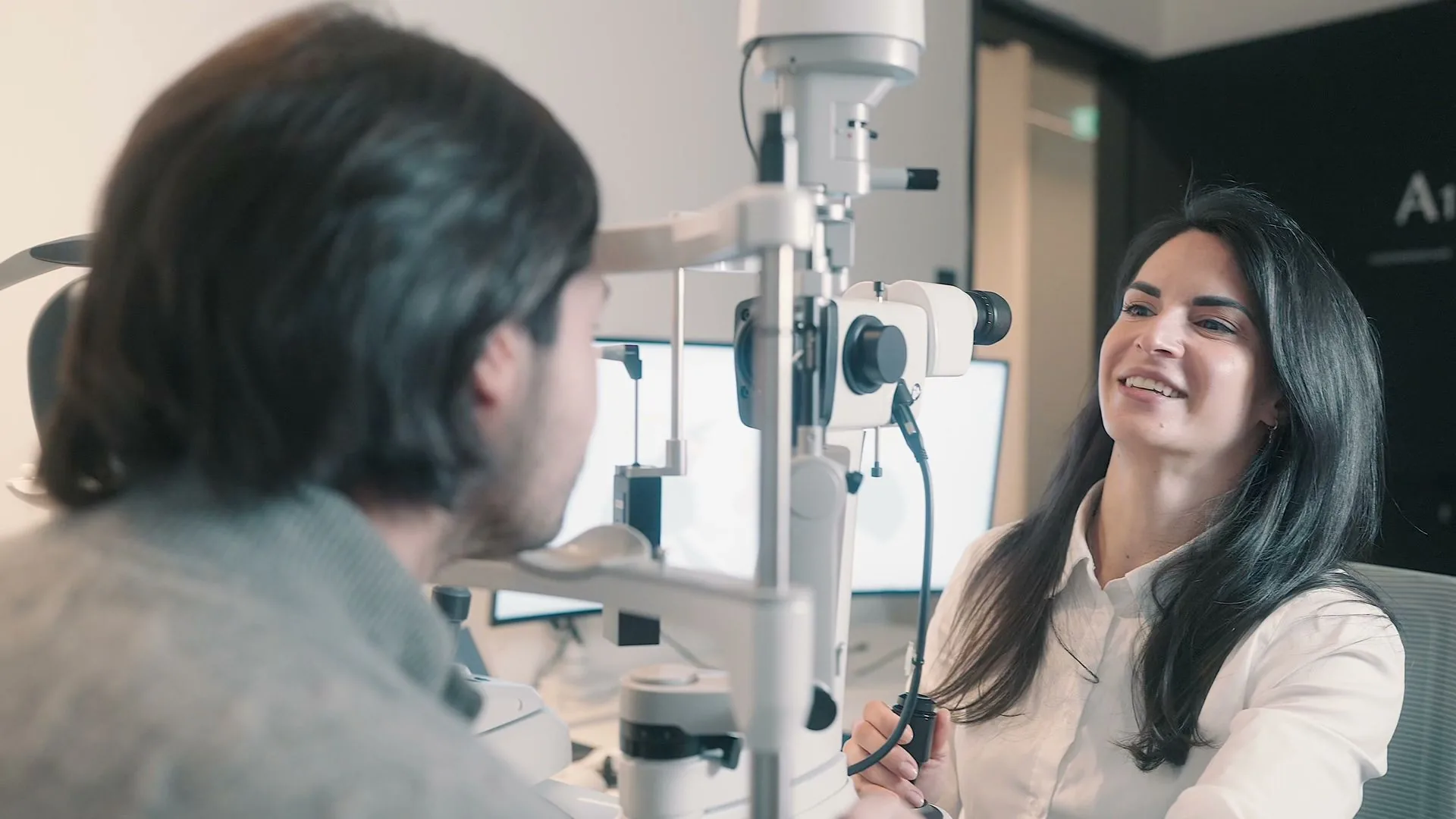
At the first visit we take our time: a talk, measurements, an examination at the slit lamp and a discussion in which every finding is explained to you. You go home with a clear plan, and your family doctor or eye doctor receives a report on request.
Step 1 of 4
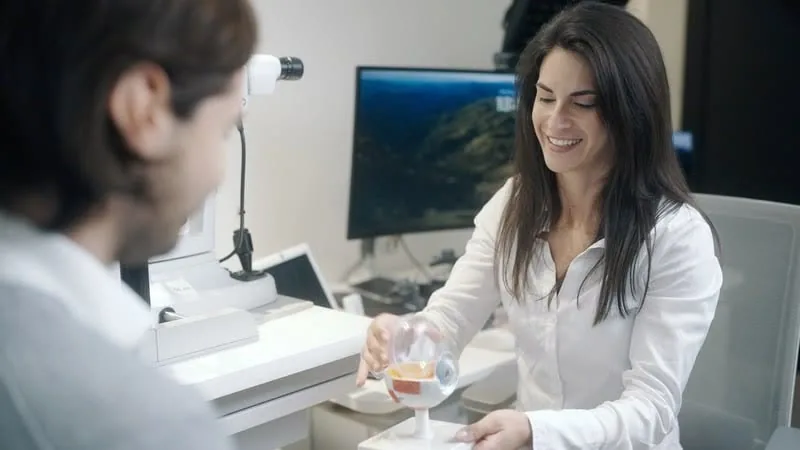
Online, by phone or by WhatsApp.
For acute symptoms, please call instead of booking online.
Choose appointmentStep 2 of 4
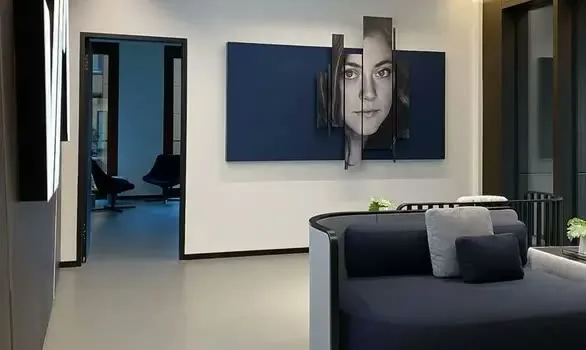
Check in, short questionnaire, validate parking ticket.
You do not need an insurance card; you receive an invoice according to the German fee schedule for physicians (GOÄ).
Step 3 of 4
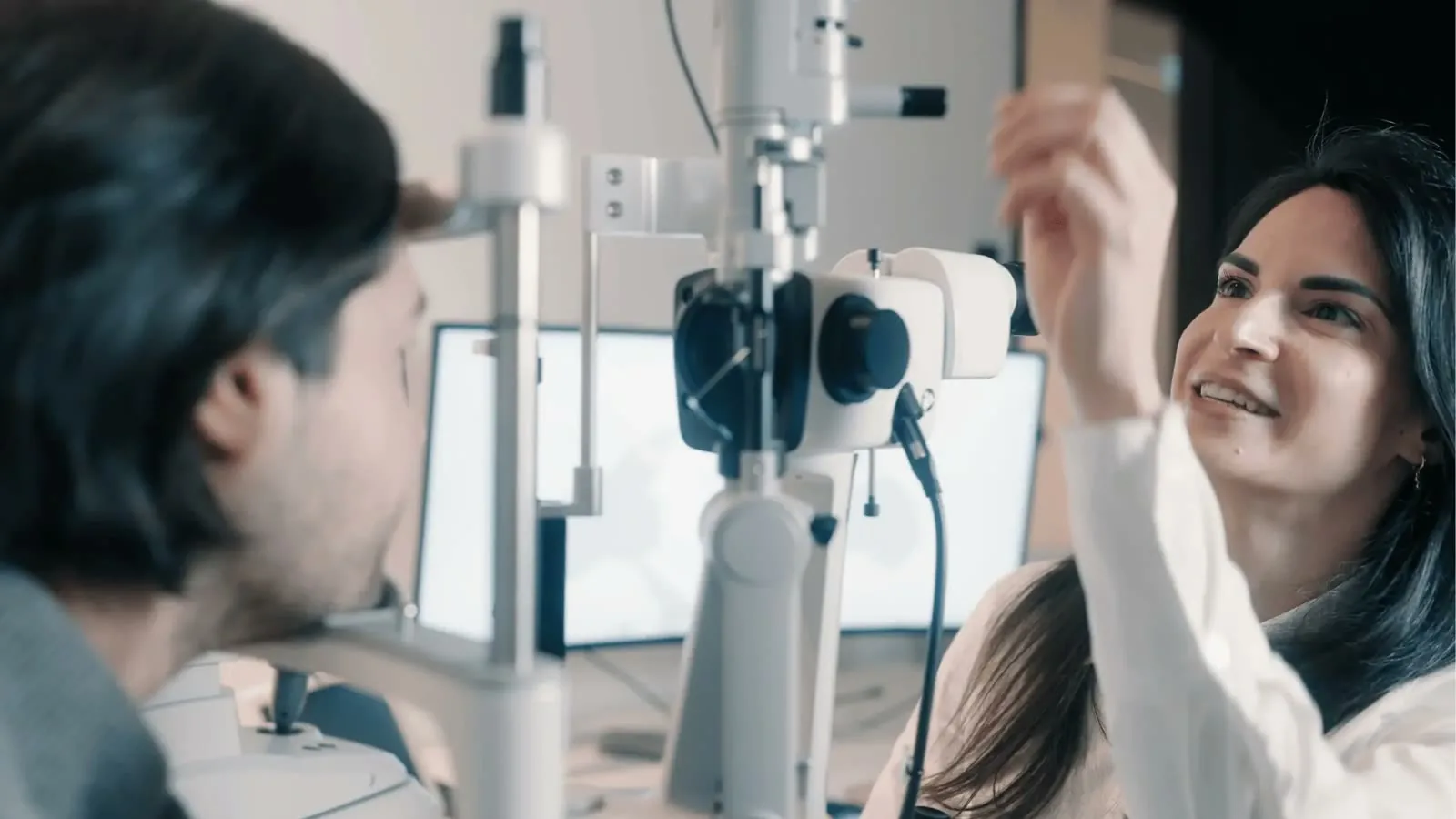
Measuring what you cannot see yourself.
The examinations do not hurt. Dilating drops blur vision for several hours, so come without your own car.
Step 4 of 4
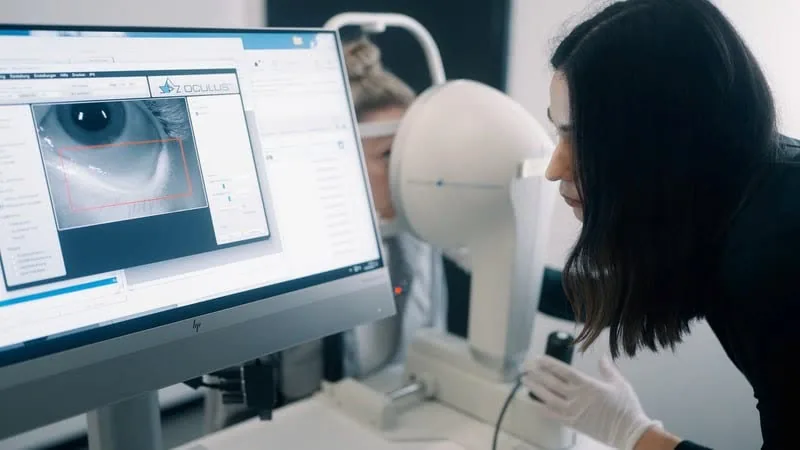
Every finding explained, on the image.
You receive the invoice according to the GOÄ in writing; before elaborate examinations, we state the amount beforehand.
On request, we send your family doctor, diabetologist or previous eye doctor a findings report. With diabetes this is useful because the retina findings feed into the treatment. You yourself receive the most important values in writing.
Because time is part of the treatment.
A team of doctors with experience from university medicine, modern diagnostics on site and 5.0 stars from 376 reviews. And a team in Junghofstraße that greets you by name at your second visit.
Three specialists. Each with their own focus.
Prof. Dr. Mehdi Shajari leads the practice and operates; Ivana Pavlovic, senior physician (Oberärztin), and Dr. Claudia Grunwald both come from the university eye hospital. So with a retina, glaucoma or pediatric issue, you end up with the doctor who treats it every day.
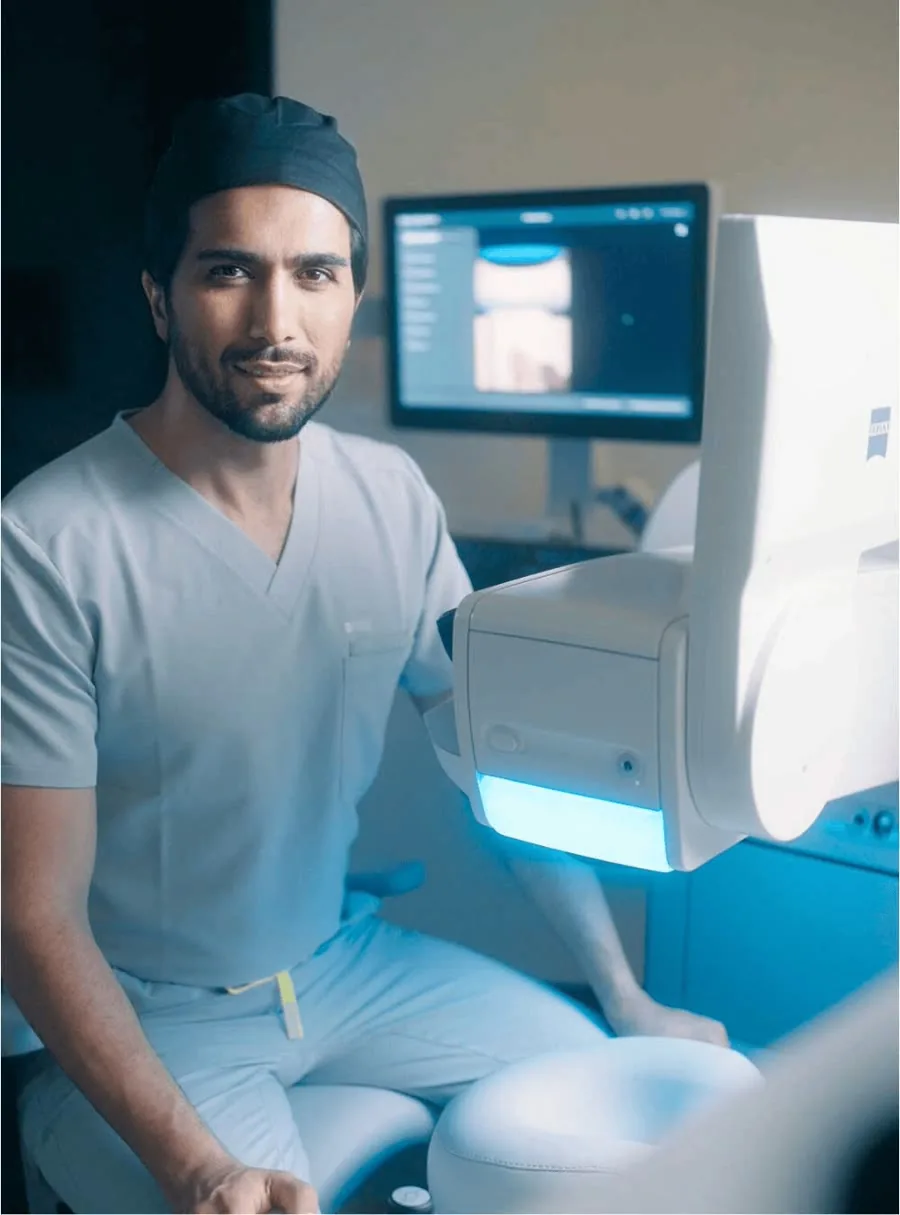 Medical director · surgeon
Professor of ophthalmology at the University of Frankfurt, 12× FOCUS Top Doctor. Focus areas: laser and lens surgery, cataract, glaucoma, cornea. Over 20,000 procedures in his career.
To the profile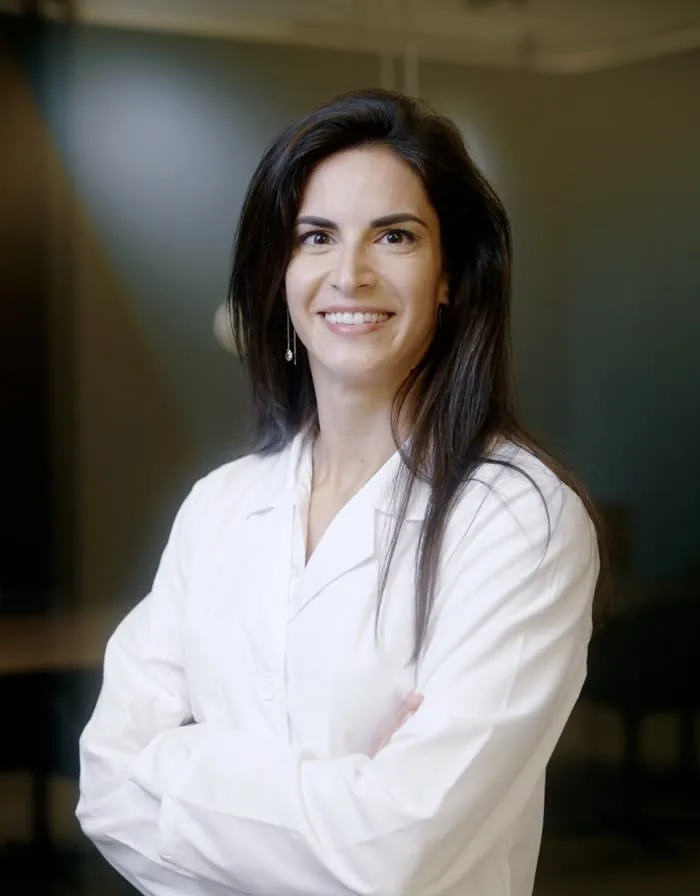 Senior physician · Specialist in ophthalmology
Formerly senior physician (Oberärztin) at the Frankfurt university hospital. Focus areas: emergencies, retina, pediatric ophthalmology, dry eye and eyelids.
To the profile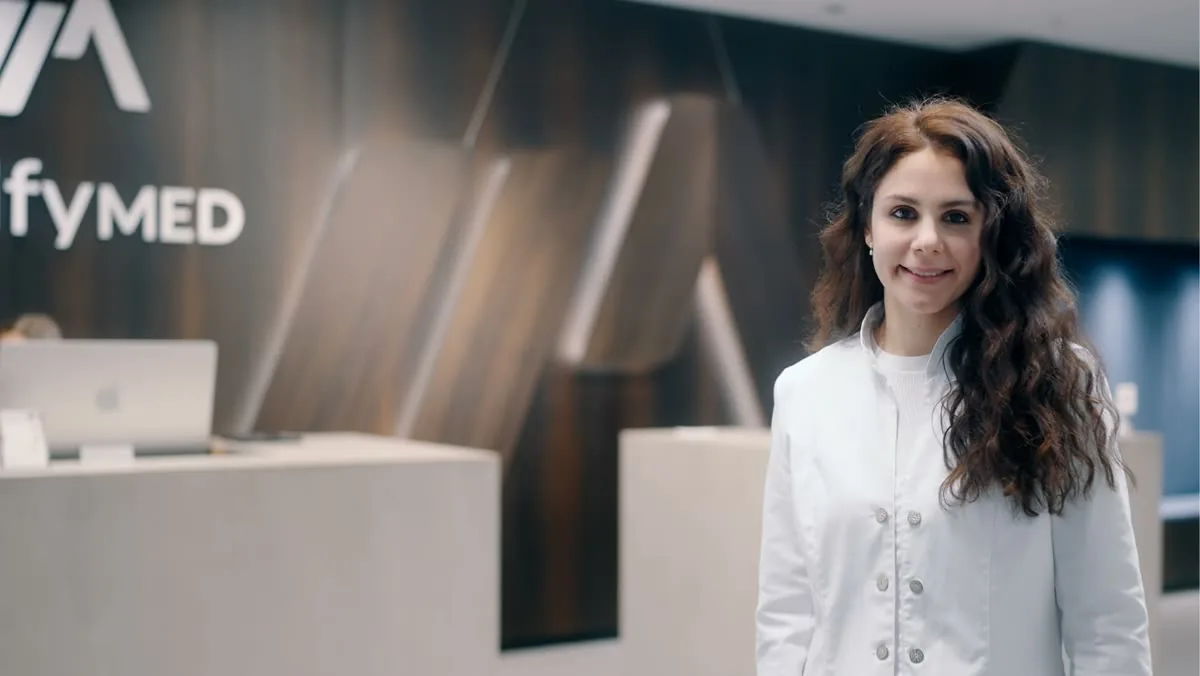 Specialist physician in ophthalmology
Formerly senior physician (Funktionsoberärztin) at the Frankfurt University Hospital. Focus areas: dry eye, glaucoma, retina and pediatric ophthalmology.
To the profilePatient Care: Jana and team, available 24 hours. In-house diagnostics including optical biometry and OCT, laser surgery with ZEISS VisuMax 800. All team members: Our team · Equipment: Technology and diagnostics.
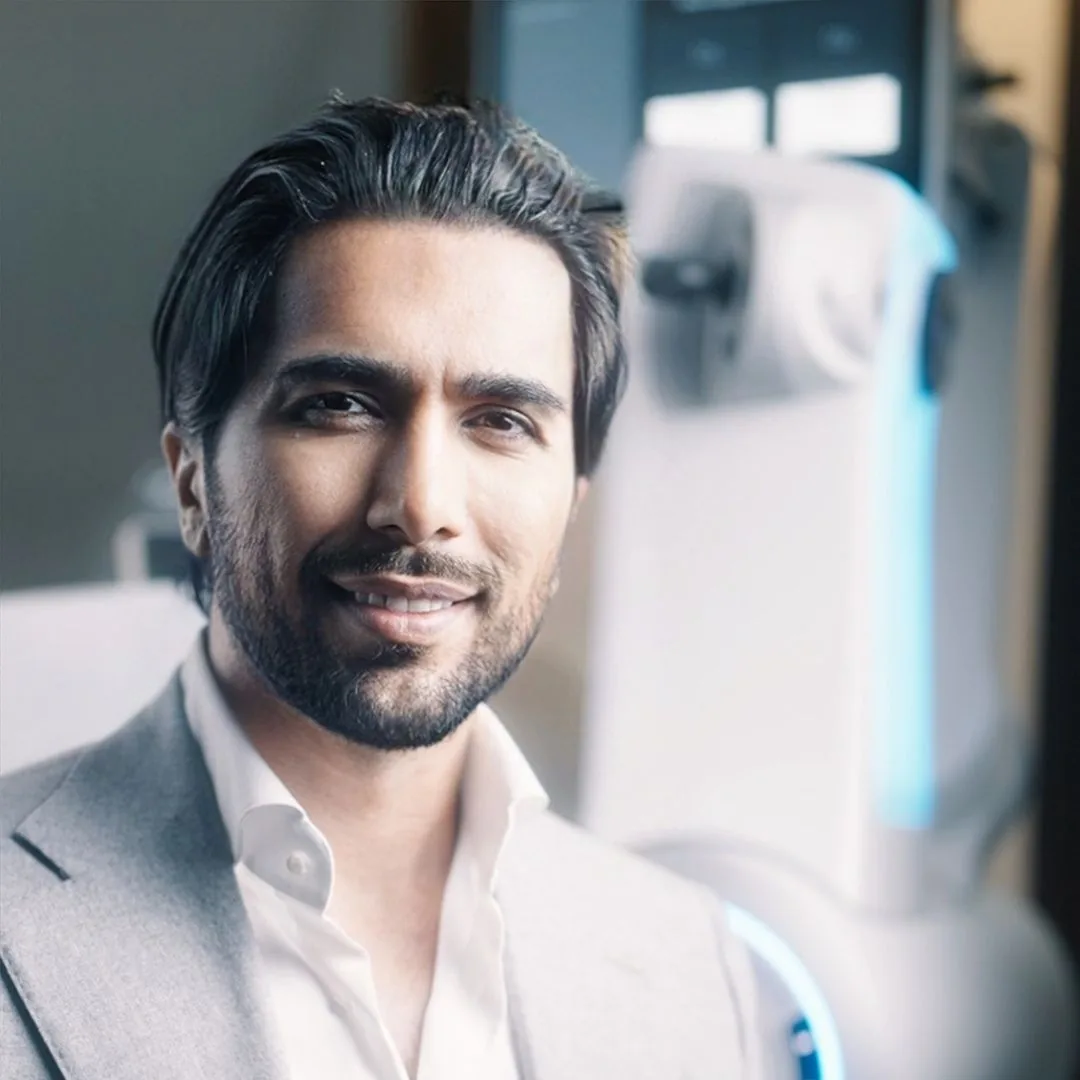
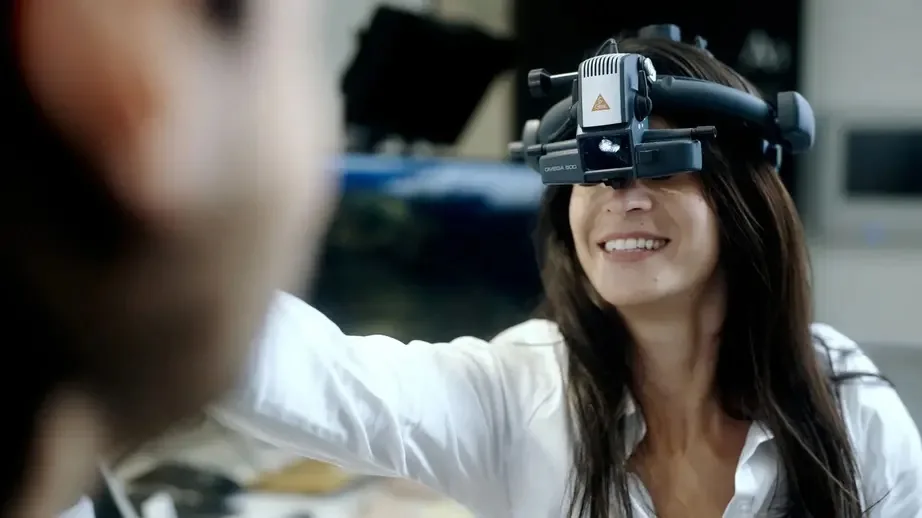
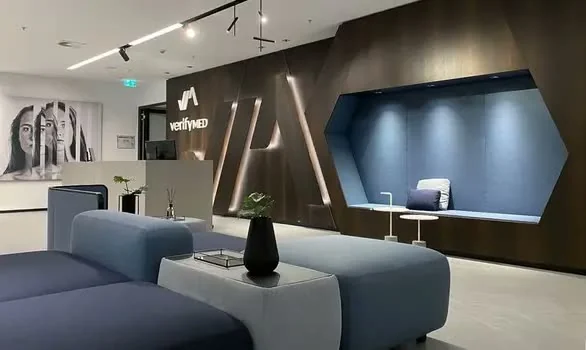
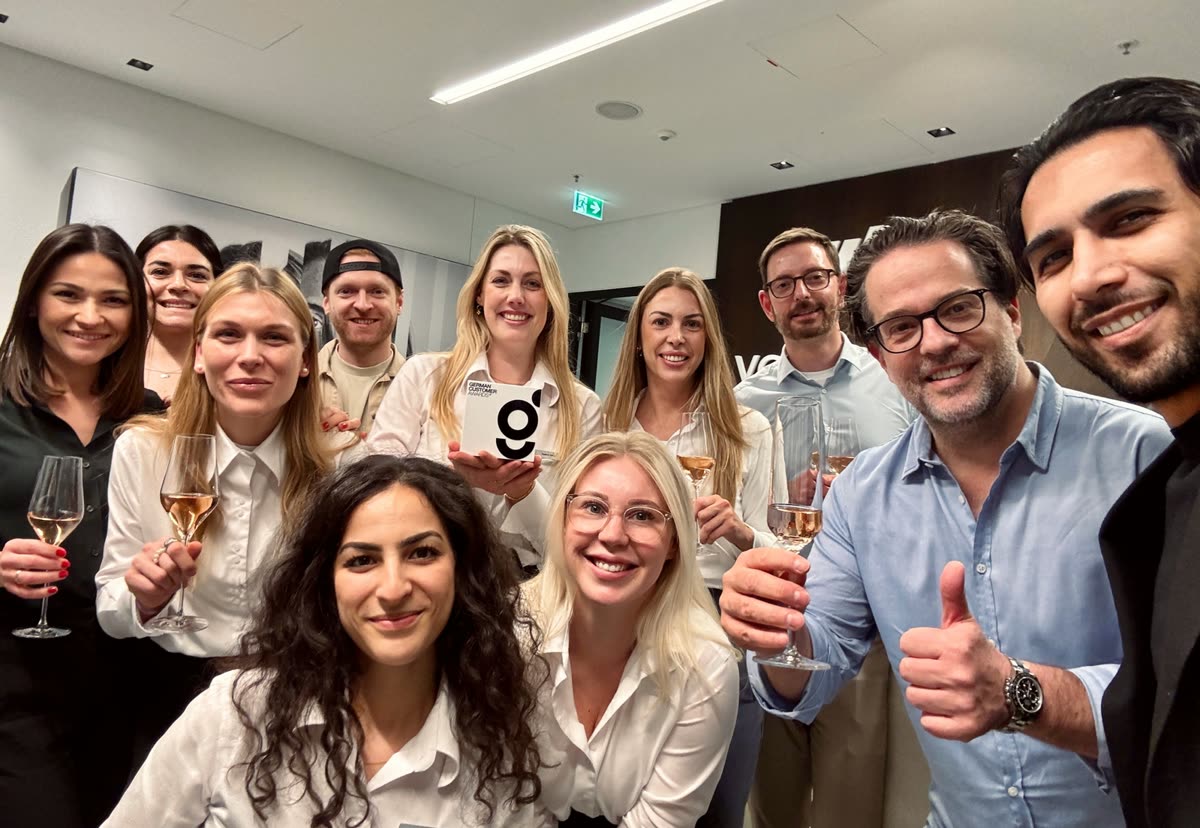
Bright, calm, in the middle of the city.
Yes. In our own laser surgery suite, in the same building.
Prof. Dr. Mehdi Shajari performs laser treatment on Junghofstraße with SMILE Pro/SmartSight, Femto-LASIK and Trans-PRK, from about 45 also with Presbyond; for high values he implants an ICL. Guide prices start at €3,498 for both eyes, for the ICL from €6,886. Procedures, Suitability Check, laser day and travel from the surrounding area are explained on their own page.
Five procedures, Suitability Check, the process on laser day, travel times from the Rhine-Main area.
To the page ComparisonSMILE Pro/SmartSight, Femto-LASIK and Trans-PRK: incision, pain, recovery, price.
To the comparison 2 minutesDiopters, age, cornea: which procedure fits your eyes?
Start the checkPrivate practice. Billed transparently.
Privately insured patients are billed through their insurance according to the German fee schedule for physicians (GOÄ). Patients with statutory health insurance and self-paying patients pay from €120. We always inform you about the costs in advance.
You receive an invoice according to the German fee schedule for physicians (GOÄ) and submit it to your insurance. Private health insurers usually reimburse medically necessary examinations and treatments according to the plan. For surgeries, clarify the reimbursement in advance with our cost estimate. More for the privately insured
Civil servants submit the invoice to Beihilfe (allowance for German civil servants) and their supplemental insurance. What Beihilfe covers is regulated by the respective federal state; for freedom from glasses it usually pays only in exceptional cases. More about Beihilfe
Patients with statutory health insurance are welcome and pay as self-paying patients; dr.vision has no statutory insurance accreditation. You receive a transparent invoice, and supplemental eye insurance is often worthwhile. More for patients with statutory health insurance
| Service | Costs | Note |
|---|---|---|
| Ophthalmology examination | Privately insured: according to the German fee schedule for physicians (GOÄ) through your insurance. Statutory health insurance or self-paying: from €120 | We always inform you about the costs in advance |
| Eye check-up | under the GOÄ | Contents and process on the check-up page |
| Laser eye surgery (both eyes) | €3,498 to €5,198 | Trans-PRK, Femto-LASIK, SMILE Pro, guide prices |
| ICL / Presbyond (both eyes) | from €6,886 / €6,398 | Guide prices confirmed after the pre-operative examination |
| Lens exchange, cataract with premium lens | from €6,998 | both eyes, EDOF €7,242, trifocal €7,876 |
Financing from €3.90 a day is possible for freedom from glasses, for example twelve months interest-free directly through the practice (financing). You can declare self-paid costs as extraordinary expenses in your tax return; whether and how much the tax office recognizes depends, among other things, on your reasonable burden (tax). All prices: Prices and costs · Ophthalmology: What does my insurance pay?
| Practice | dr.vision, private medical eye center |
|---|---|
| Address | Junghofstraße 16, 60311 Frankfurt am Main |
| Opening hours | Mon–Fri 08:00–19:00 · Sat 09:00–15:00 |
| Phone | 069 509 586 770 available 24 hours · WhatsApp Mon–Fri 8:00–19:00, Sat 9:00–15:00 |
| Parking | Free in the Junghofstraße parking garage (under the practice) |
| Public transit | Hauptwache and Taunusanlage (commuter train/subway), 5 min on foot |
| Doctors | Prof. Dr. Mehdi Shajari, senior physician Ivana Pavlovic, Dr. Claudia Grunwald |
| Ophthalmology | Check-up, cataract, glaucoma, dry eye, macula, children from 3, eyelids, floaters, acute |
| Freedom from glasses | Laser eye surgery, ICL, Presbyond, lens exchange, cataract surgery with premium lens |
| Billing | Private practice, GOÄ; patients with statutory health insurance as self-paying patients |
| Reviews | 5.0 out of 376 Google reviews · 12× FOCUS Top Doctor |
Still have questions?
“These are the questions we hear most often on the phone. Here are the answers.” Jana, Patient Care
At Junghofstraße 16, 60311 Frankfurt am Main, in the city center. The Hauptwache and Taunusanlage stops are a 5-minute walk away, Goetheplatz right around the corner. Phone 069 509 586 770 (available 24 hours).
Free in the Junghofstraße parking garage directly under the practice; we validate the parking ticket at reception. If you need pupil-dilating drops, however, you should not drive yourself afterward.
Only if no pupil-dilating drops were needed. These drops blur your vision and make you sensitive to glare for a few hours. This concerns mainly retina examinations, the check-up, children and the pre-operative examination for freedom from glasses. Then come by S-Bahn or U-Bahn or with a companion.
By S-Bahn one stop to Taunusanlage or two stops to Hauptwache, from there it is 5 minutes on foot. On foot from the main station it is about 15–20 minutes. From the airport, S8 and S9 go directly to Hauptwache.
Yes. The practice is open Monday to Friday from 8:00 to 19:00 and Saturday from 9:00 to 15:00. You can reach Patient Care by phone 24 hours, via WhatsApp Mon–Fri 8:00–19:00, Sat 9:00–15:00.
For acute symptoms, please call; we try to see you the same day. For plannable appointments such as a check-up or consultation, you can see the next free appointment directly in the appointment block of this page.
Your current glasses and, if applicable, contact lens data, a list of your medications and eye drops, earlier findings or doctor's letters and, for children, the examination booklet. Plan your ride home without your own car in case dilating drops are needed.
Yes, from 3 years. Pediatric ophthalmology is a focus of senior physician Ivana Pavlovic and Dr. Claudia Grunwald. Visual acuity, strabismus and the need for glasses are examined, often with pupil-dilating drops.
Yes, as self-paying patients. dr.vision is a private practice without statutory insurance accreditation. You receive an invoice according to the German fee schedule for physicians (GOÄ). Privately insured patients and those entitled to Beihilfe (allowance for German civil servants) submit the invoice to their insurance.
Privately insured patients are billed under the GOÄ through their insurer. Patients with statutory health insurance and self-paying patients pay from €120. We always inform you about the costs beforehand.
Yes. In our own laser surgery suite in Junghofstraße we offer SMILE Pro/SmartSight, Femto-LASIK, Trans-PRK and Presbyond, plus ICL and lens exchange. Prof. Dr. Mehdi Shajari operates personally. Everything about procedures, suitability and process is on our page laser eye surgery Frankfurt.
From 2027: Düsseldorf is to open in 2027, Stuttgart in the course of 2027. Until then, examinations and procedures take place in Junghofstraße. Patient Care gladly answers your questions before the visit by phone.
Medically reviewed by Prof. Dr. Mehdi Shajari · As of October 2026
How would you like to continue?
Choose what it is about: ophthalmology, consultation on freedom from glasses or an acute problem. You book plannable appointments directly online; for acute problems, please call. Patient Care can be reached around the clock.
Eye concerns at Junghofstraße 16 · Adults and adolescents from 13 years · Preventive care, acute symptoms and more
Our locations.
Opening hoursJunghofstraße 16, 60311 Frankfurt am Main
 Opening 2027
Breite Straße 69, 40213 Düsseldorf (in the Neuer Stahlhof, corner of Graf-Adolf-Platz)
Until opening: preliminary talk in Frankfurt, Patient Care plans your travel.
Plan route Opening 2027
Lautenschlagerstraße 23, 70173 Stuttgart (2nd floor, step-free access)
Until opening: preliminary talk in Frankfurt, Patient Care plans your travel.
Plan routeYes, so I'm Sevim, I'm 35 years old, and for many years now I've had the issue that I always wore a lot of contact lenses, but because of that I have very dry eyes. I couldn't really get used to glasses. Over the last few months I did wear them, to go easy on my eyes a bit, but in the long run I wanted a lasting solution, especially for sports and for activities where you don't want to always depend on glasses.
It actually started when I got my driver's license at 18; that was the first time I needed glasses for driving. Back then I still had a very slight vision problem. I think it started at minus 0.5 and minus 0.25 and then it actually got worse over the years. Also during my studies, because I read a lot, it kept getting worse. And then, I'm a lawyer, I took the state exam twice, and with each state exam it went down by about minus two. Exactly. And now I had minus four on the right side, until yesterday, and minus 3.75 on the left. So already a clear impairment in everyday life when you don't have a vision aid.
What bothered me most in general, when I was walking around, was simply that I couldn't see certain things sharply in the distance. I could tell from afar, while driving for example, that there was a sign there, but what was written on it, no chance. And then I started to blink and squint, because that always helps a bit with astigmatism. It really bothered me, and during sports it also annoyed me a lot that the glasses always slide down because of sweat and so on, and that is really annoying.
So I started to inform myself a few years ago about what comes into question. And then I went to a university hospital in Mainz and informed myself about the different procedures. I had a good feeling there too, but I always had real respect. Simply because it is a procedure on the eye and there are always horror scenarios in your head. What if you're one of the 0.0-something percent who then maybe can't see anything at all later. And then I dropped the idea again for the time being.
Then last year I took it up again, because I was having more and more problems with the contact lenses. Small infections again and again, and because of that I had to wear glasses a lot again and was really annoyed by it. And then last year I came to the practice here for the first time; I actually just googled for good reviews, and right at the first visit I had a very good feeling. That is, the feeling that I'm really in good hands here, that the doctor really takes time, explains everything calmly and also isn't annoyed when you have a follow-up question or so. I always find that very disturbing with doctors, because the patient simply has many questions, and when everything is answered, and very calmly, you simply get a good feeling. And in the end it is of course also the trust in the doctor that encourages you to choose one or the other.
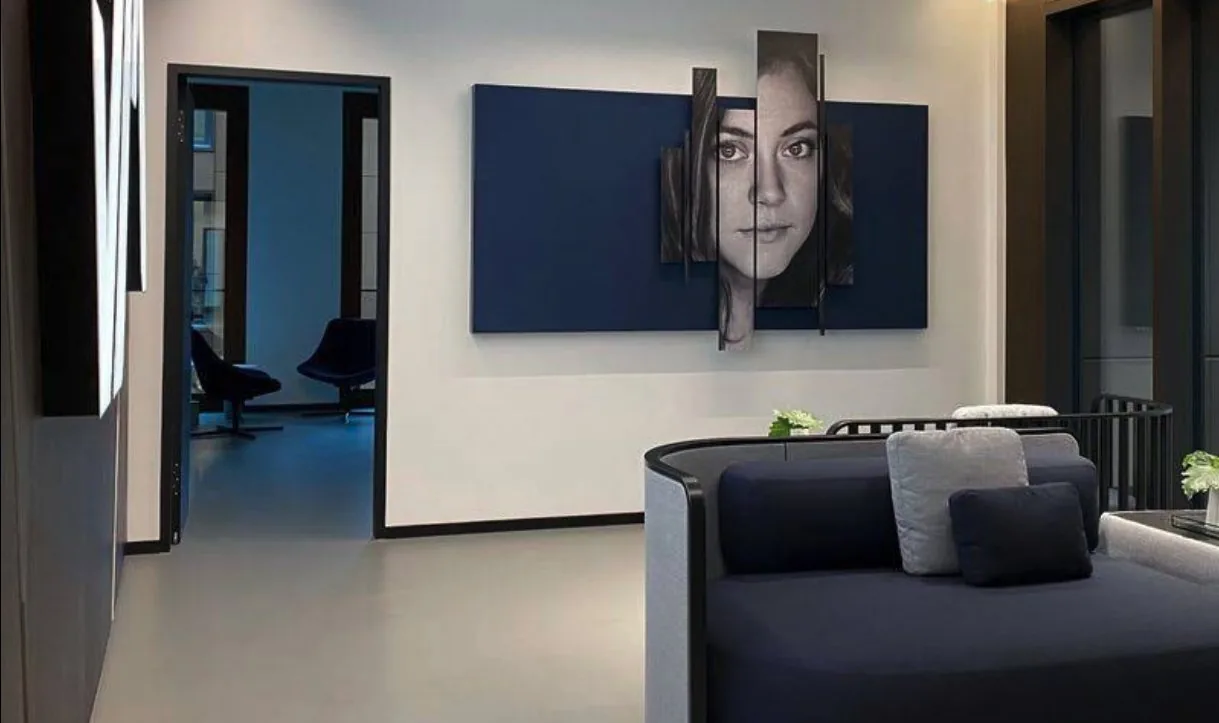
The first impression, when you walk into the practice, everything is somehow super chic, super clean and everyone is just very nice. You don't always get that at the doctor's, I think. Mostly you already have such annoyed medical assistants who give you the feeling right at the start that it's somehow stressful and so on, and here everything is actually always very calm, and for a procedure like this, that gave me a lot of trust.
That was a few weeks ago, and then I got the appointment for today, for yesterday, for the surgery, and for today the aftercare. That means between the decision, I'm doing it, and the procedure it was a few weeks. So not throughout all those weeks. I was really looking forward to it. I actually counted the days until it was finally time, and on the day itself I thought, oh no. You simply have respect for it, and I also have respect for the job and for the procedure as such, but there too I have to say I was completely well looked after, because the doctor talked with me the whole time. He kept reassuring me that everything is fine, that I'm doing everything right, and that was very calming. And he had also explained all the individual steps beforehand. So I knew exactly what was coming, and also during the procedure, I was slightly nervous, I was excited for sure, but I tried to cooperate well so that I don't wobble or anything, and then everything went very, very fast.
After getting up it was already like, okay, wow, I see better, and I also notice that it keeps getting better bit by bit. When I look into the distance, I think about what I saw before and what I see now. And you simply notice steadily that it keeps getting better. And I just found out that I'm already at 100 percent with my vision. So it really goes, really goes fast.
I think I informed myself very well. For me personally, it's always important to know what is going to happen. Because for me it gave a lot of calm that I already knew the individual steps. I also read up a bit more on the procedure, the differences between the procedures, and thought about what the consequences are and what the side effects could be. For me personally, it simply helps to know what is happening to me. And I think that's a tip I can give, too: of course, choose the doctor very carefully. I definitely recommend this doctor. I think I did everything right here. So I can really only encourage everyone to take this step as well.
My name is Markus Mielert. Before the surgery I was nearsighted and had presbyopia in its early stage, and that was corrected with LASIK.
In everyday life, glasses are definitely a limitation again and again, especially in bad weather, rain for example, but then also in summer with sunglasses, with non-prescription ones at the beach and so on. So there are always situations where glasses are limiting. And that always bothered me, besides the look, also that glasses are maybe not always 100% pretty. And what also came on top, a point I hadn’t thought of at all beforehand, was this presbyopia. I only found that out when I was here with Professor Shajari. He told me about it, and only then did I notice that I was affected at all. What I noticed in everyday life, for example: I looked at a phone list at work and wanted to look up a number and could hardly make it out. And I hadn’t been aware of that at all before, but this process apparently went very fast and then kept getting worse.
Yes, of course, in Frankfurt there are naturally many options for getting laser treatment. Of course, the first impression online is decisive. Both the look of the professor, that he made a very competent impression, and the reviews. The online reviews are the opener for the first contact. I actually only went to him, because the first conversation with him was also immediately great, he gave me a perfect impression, in the sense that he is 110 percent on top of his field. I am in very good hands, and so I didn't look any further at all.
First I sent an e-mail, because I don’t have private health insurance. I first wanted to know how it works with the pre-operative examination, what costs would come my way. Then I made this appointment, the first contact. Then I had a talk with him and first an eye test. At the second appointment the detailed tests were done, to determine that I am suitable for it, which procedure I am suitable for. That actually went very quickly. That was this second appointment, with all the tests. One thing he recommended to me, which was also very good: he recommended that I wear contact lenses with different strengths that simulate this post-surgery vision, because with this presbyopia combined with nearsightedness it has a different effect, since you have to treat the eyes differently with the laser. And that was also great, because through these contact lenses you could already see that the vision is perhaps a bit different from what you would have expected. That is very good, but it takes getting used to, and it was good to know what is coming.
Yes, it was very busy. It was always very calm in his office. There were many helping hands. Yes, no, but great, everyone was super focused and concentrated, calm, it was a good atmosphere, no stress, no hectic, nothing that gave you the feeling that something was not okay. I felt very welcome from the start, also with the preparation and so on, it was wonderful. During the surgery too, of course, it is a delicate thing on the eye. But he kept telling me, very reassuringly, which step of the process we were at, that everything was going well, and gave the impression that there were no problems. That was actually wonderful, and as I said, it actually went quite fast, faster than you would think.
I can of course recommend him without reservation, really flawless from A to Z. Laser eye surgery itself was always a topic that I could rule out for myself, because I didn't want to take the risk that something might go wrong. But probably the technology has now simply advanced so far that it has been perfected compared to how it was before. And I know now – I was lasered yesterday, and today the vision is wonderful. Let's see how it is in the long term, but as of now I would say it was the perfect decision. And I believe it makes life much better and of higher quality, without glasses, without restrictions. And I am looking forward to that.
Hi, I'm Sebastian, 37, I live near Frankfurt, and I have somehow always been annoyed that I have to change glasses so often. I have kids now, who knock them off my head or smear them. And for me that was mainly a hassle problem. Apart from the fact that I naturally have weak eyesight, but I actually always got along quite well with glasses. And then I tried contact lenses and noticed that my eyes are dry and it all didn't fit together so well. And then I saw that this offer exists here and first informed myself. So, what does one actually do? There are so many treatments you could have. I went a bit too deep down the rabbit hole and watched videos and saw what these surgeries look like, and at first I kept my distance. It took half a year until I had gathered my courage and thought, well, it can't be that bad. So many thousands of people do it. And then I simply looked more closely at which treatment suits me. Before the doctor had even advised me, I don't know if I am the perfect patient if I already come with an idea, but I came here with the goal of having a PRK treatment. So basically the treatment that many patients are a bit afraid of. Rightly so, you always read in experience reports that it probably hurts quite a bit and that it is the most unpleasant of all the variants, with long healing times and long aftercare times.
So I have a refractive error, diagnosed since fifth grade or so, but not particularly bad. Somewhere between one and two diopters, it got a little worse over time, then I was at one and a half or 1.75, and from about eighth grade, ninth grade or so, it stayed stable. So it simply didn't change at all anymore. And it really only bothered me in that the glasses themselves are of course an obstacle. But that is bearable, it's not really that bad. It became more unpleasant when I started, for example, sports where glasses get in the way.
Climbing, bouldering and things like that, you don't necessarily want to start with glasses on, and that was annoying. Then I started with contact lenses, always had dry eyes, always had to rub my eye, push them around, and I didn't like that at all. Then of course I looked at what solutions there are, how I can get away from this somehow. I can say that my fear beforehand turned out not to be entirely justified, because the whole thing was basically not that bad for me. You have your eyes lasered, and of course that is an uneasy feeling.
And you also go home with swollen-shut eyes, maybe. Everything is not so great, it burns a little. But compared with the stories I had heard, what really happened to me, I have to say, it was really not that bad. You can take painkillers, and I should say, the first day it burns a little, but by far not as badly as is often said, in my case. And on the second day I hardly noticed it anymore, and on the third it was okay.
In terms of pain, that is. Of course you can't see anything right away. You may have to wait a little until your eyes can open again, the swelling has gone down and so on. But from then on it is actually a simple, straightforward healing process. It gets better every day, the vision gets better.
And I think after one week, that was it, I could already make out everything again reasonably well. And now, after a month, I am glad that I did it. I have no complaints at all. When I walk through Frankfurt, I can see the tops of the skyscrapers and see everything sharply again, without glasses, without contact lenses, without discomfort. It is wonderful.
The thing is, I have two children, and my two boys are not necessarily careful when it comes to touching my eyes. Now and then a hand lands in my eye, and perhaps not all that gently. And when I think about it after gathering my information, that something in the eye might actually not be firmly healed yet. Because with LASIK or other treatments, a disc or a piece of a disc is cut, so to speak, folded back and then put back.
This flap, exactly. It only heals at the outer edge. And when I imagine someone hitting it with force, I don't feel comfortable. Of course, I also know, you hear from doctors too, that it is not necessarily the force you need to lift this flap again.
But nevertheless I simply don't feel comfortable with it and couldn't warm to it at all. And PRK is actually a method that, according to my research, really many people have had done, and which is routinely used in the armed forces or other organizations, where force on the eye is perhaps more likely to occur. But if they do it, how bad can it really be for me? And this putting things into perspective is what in the end made me say, okay, this is my variant, this is how I want to do it.
And it worked well. I think that is true for everyone who starts out with this bad gut feeling. You try to optimize, you know, what can I do so that the whole thing goes well. And when you look around, of course you look for someone who treats the eyes and has a certain reputation.
A doctor, professor, doctor, someone who works at the university hospital, is of course exactly right. For me it was also close to work, so there were simply geographical reasons to come here as well. But it all fit together well. The information material was good, I could look closely at what the prices are, what the conditions are, and I could make an appointment where I could also speak directly with the doctor.
That is also very important to me, not to speak with just anyone but with the doctor, and also to know that the person I speak with at the start is the one who will treat me. Basically I would say it was a good decision, I would do it again, and it is certainly not as bad as is often said. Very many people have the surgery, few people have problems with it, and we all know the internet, often only those who have problems speak up. Don't trust it too much, get in contact, find out how I can do this, which doctor can support me.
In this case it was very easy, the first conversation was directly with the treating doctor, and then you see whether you feel up to it or not. Definitely, I had very positive experiences, I am satisfied with the result. No complaints to this day, of course.
My name is Raquel Schulze Wischeler. I have basically worn glasses since I was 13. I was really nearsighted, you could say. Really, really. I could only see outlines without glasses. I had minus 6 in one eye, a diopter of minus 6, and almost minus five in the right one. I think everyone who wears contact lenses or glasses knows how stressful all of that is. The eye dries out completely. In the evening, when you are lying on the couch, you notice, okay, my eye is super tired, I really do not feel like doing anything anymore. Whether it is contact lenses or glasses. With that diopter, you have rather thick lenses, and you notice that over the day too. And just getting the feeling, or knowing, hey, I do not have to wear anything anymore, neither glasses that I always have to clean, nor contact lenses where I have to watch hygiene, that is an absolute liberation. And that felt more like a dream to me, and then I said, okay, now you dare to do it, and so I will do it.
Interestingly, I had already thought about having my eyes lasered about five years ago, but I was very afraid and then dropped the idea again. And lately I had big problems with my eyes because of chalazia, because my glands in the eyelids do not quite work, and so I had surgery twice. And then I said, okay, since I have already had surgery on my eye, you might as well dare it once more. And then I first just googled, came across dr. vision, saw, oh, there are really great reviews, and by coincidence my eye doctor had worked with him at the university hospital in Munich, and I had an eye doctor appointment beforehand and told her about it, I am getting my eyes lasered, and then she said, well, where? Then I told her the doctor's name. And then she said, yes, I know him, I worked with him. You can go there, he specializes in this, he is really great. And that took away the last bit of doubt for me.
And yes, then I came, had an appointment the next day. And right away I had the feeling that I was in the right hands. He sat down with me, explained all the risks to me, explained how it works, showed me the treatment room. And then the fear was somehow gone, and then I said, okay, I am doing it here. I was thrilled by the professionalism, first of the practice itself, which is superbly organized, and by the speed. You do not have long waiting times, you are examined, you have the feeling, okay, here they really examine thoroughly and extensively, and then of course it is explained to you on the screen, you can see it. So that was just totally professional for me. And so I felt safe right away.
Yes, my biggest fear was the eye itself. It is on the eye. And you have a reflex, a physical one. And the question of course was, okay, do I react, and does something go wrong because of that. But the fear was taken from me relatively quickly. I also talked about the fear. And then during the treatment I saw that the eye was held still. I did not feel that either. And then I calmed down relatively quickly. And I knew the eye was numbed. And so everything worked quite well.
I have no pain. I feel that something has happened to the eye, like a slight pressure, but it is one day after. I was already at work today, I have no pain.
Absolutely, so I can answer that question with yes, and go for it. It's not bad at all, it doesn't hurt at all, it's quick, and the healing process is pretty much there a day later. And it's an absolute quality of life. That's totally great.