 dr.vision
6 Months
Waiting period after laser surgery in Baden-Württemberg and Rhineland-Palatinate, followed by an expert report.
Start here
What suits you?
Find out in 2 minutes which procedure suits your eyes.
Start the Suitability CheckOr by age:
< 45yearsGet rid of glasses & contact lenses 45–64yearsGet rid of reading glasses 65+yearsCataract & glasses-free★★★★★ 5.0 · 376 Google reviews · 20,000+ procedures
Decide well
What you should know beforehand.
Who operates?Prof. Dr. Mehdi ShajariFOCUS Top Doctor · operates on every patient personally What does it cost?Laser from €3,498 · Lenses from €6,886Prices for both eyes Is it safe?Safety & risks When will I be fit again?Work, sports, driving Would you rather read in peace first?Decision Guide Freedom from GlassesProcedures
Laser or lens?
Laser eye surgery
SMILE ProSmartSightFemto-LASIKTrans-PRKPRKPresbyond (laser away your reading glasses)All laser procedures at a glanceLaser procedures compared ›Lens surgery
ICLLens exchange (reading glasses)Cataract surgery with premium lensLens types: trifocal, EDOF, toricLens types compared ›Start here
Something wrong with your eyes?
A thorough eye check-up with us clarifies what is behind it.
Book an eye check-up★★★★★ 5.0 · 376 Google reviews
Freedom from glasses · Career and sports
Police, pilot, armed forces, fire department, combat sports: what applies.
Police, cockpit, Bundeswehr (German armed forces) or martial arts: whether laser eye surgery is recognized is decided by your employer or aeromedical examiner according to their own rules. Here you can see what official information sheets say, with source and date. In the free initial consultation, we clarify which procedure fits.
 12× FOCUSTop Doctor
The information on this page comes from official information sheets and regulations with the date given for each (checked in October 2026). The Federal Police, each federal state, the armed forces, each fire department and the aviation authority decide under their own rules, which change. Get the current information sheet from your authority before you set an appointment, and bring it to the pre-operative examination.
376 reviews. Average 5.0.
376 Google reviews give dr.vision an average of 5.0 out of 5 stars. dr.vision does not check whether Google reviews come from treated patients.
“My brother and I decided on eye surgery after thinking about it for a long time, because we felt quite limited by glasses in everyday life, e.g. during sports, especially swimming, and in the rain.”
“Today I was at the third follow-up check and I am still absolutely satisfied. Even as a self-paying patient I can absolutely recommend the practice.”
“Everything went much better and more smoothly than expected. All the practice staff were extremely professional, friendly and obliging.”
“From the first minute I felt very comfortable in his practice, thanks to the professional routines of his staff and of him himself.”
Four patients. In their own words.
It really was not that bad.
It was a very good decision to come here.
Less than 24h after surgery, better than ever.
It is an absolute liberation.
Mostly laser on the cornea. Rarely lenses. Always with a waiting period.
6 Months
Waiting period after laser surgery in Baden-Württemberg and Rhineland-Palatinate, followed by an expert report.
−5 D
at most, for farsightedness +3 D: pre-operative limit of the Rhineland-Palatinate police.
no
According to the information sheet of the Rhineland-Palatinate police, lens surgery does not lead to fitness for duty. Laser on the cornea does.
1 Year
Waiting period after refractive surgery according to the information sheets of the cities of Schweinfurt and Braunschweig.
<0.75 D
Daily fluctuation: EASA stability limit for Class 1 after refractive surgery.
Laser eye surgery for work and sports in five answers.
For anyone with three minutes. Each answer leads to the detailed chapter.
In many German states, yes. Baden-Württemberg recognizes SMILE, LASIK and PRK procedures after a 6-month waiting period and an expert report from a university eye clinic. Rhineland-Palatinate requires that your values before surgery were no more than −5 or +3 D.
Police by stateAccording to the Rhineland-Palatinate police information sheet, no; in Baden-Württemberg it is not on the list. For high nearsightedness this is a real obstacle that you should know about before choosing a procedure.
Basic rulesYes. Under EASA rules, a medical after refractive surgery is possible if the values are stable, there are no complications, and glare and contrast vision are normal. For Class 1, artificial lenses must be monofocal.
Pilot and EASAOne without a corneal flap: SMILE Pro or Trans-PRK. The flap of a LASIK heals firmly in place, but it remains a weak point when the eye is hit. Training is usually possible after a few weeks, after consultation.
SportsGet the current information sheet from your employer or the requirements of your aviation medical examiner and bring it to the pre-operative examination. We then plan the procedure and timing backward from your hiring date.
TimetableFive rules that come up almost everywhere.
Police, fire departments, the armed forces and aviation do not only check how sharply you see. They also check how you got there. The procedure, your values before surgery and the time afterward all count.

| Rule | What it means | Source |
|---|---|---|
| 1 · Laser on the cornea is usually recognized | SMILE, LASIK, Femto-LASIK, PRK, Trans-PRK and LASEK are listed in the information sheets we have read. | Police BW 08/2025, Police RLP 11/2024 |
| 2 · Lens surgery often is not | According to the Rhineland-Palatinate police information sheet, an ICL or a lens exchange does not lead to fitness for duty; Baden-Württemberg lists only laser procedures. | Police RLP 11/2024, Police BW 08/2025 |
| 3 · The values before surgery count | Anyone who had too strong a refractive error beforehand is rejected despite a good result: in RLP above −5.0 or +3.0 D, in BW outside the KRC guidelines of 06/2022. | Police RLP 11/2024, Police BW 08/2025 |
| 4 · Waiting period, then a new examination | 6 months for the police in BW and RLP, 1 year for the fire departments of Schweinfurt and Braunschweig. After that, a findings report, often not from your own surgeon. | Information sheets Police BW, RLP; fire departments Schweinfurt, Braunschweig |
| 5 · You bear the costs and the risk | The employer reimburses nothing and does not guarantee hiring, even after a successful surgery. | Police BW 08/2025, Federal Police BPOL 4 40 003 |
The Refractive Surgery Commission (Kommission Refraktive Chirurgie, KRC) of the DOG and BVA assesses in Germany which refractive errors are considered established for which procedure, and sets limits for this. The Baden-Württemberg police require that your values before surgery were within the scope of the KRC guidelines of June 2022, and want to see this confirmed by a certificate. We work within these limits anyway: SMILE Pro with us up to −8 D and astigmatism up to 5 D. The KRC recommendations (as of 05/2024) give as the scope: Trans-PRK/PRK up to −6 D, cylinder up to 5 D; Femto-LASIK up to −8 D, cylinder up to 5 D, farsightedness up to +3 D; SMILE/SmartSight −1 to −8 D, cylinder up to 5 D. Source: dog.org
If your nearsightedness is above your employer's limit, for example above −5 D in Rhineland-Palatinate, even the best laser correction does not help. An ICL would often be the better choice medically, but it is not recognized there. Some authorities review individual cases: Rhineland-Palatinate gives an e-mail address of the Central Office for Health in its information sheet. Clarify this before you have surgery. At the pre-operative examination we tell you exactly which values you have, and we issue you the findings for your inquiry.
Your profession. The rules. The source.
Choose your profession. You will see the rules we found in official information sheets and regulations, with their date, and the procedure we therefore usually recommend.
The basis everywhere is the police service regulation PDV 300; the federal police and the states implement it with their own information sheets. We have read two state information sheets in the original. For all others: request the information sheet at the recruitment consultation.
| Authority | Recognized procedures | Waiting period, examination | Limits before surgery | Source |
|---|---|---|---|---|
| Baden-Württemberg | LASEK, PRK-LASEK, Trans-PRK, LASIK, Femto-LASIK, ReLEx-SMILE, SMILE Pro; others not | 6 months, then an expert report from a university eye clinic at your own expense, at the latest 8 weeks before hiring | within the scope of the KRC guidelines 06/2022, certificate required | Information sheet Police BW, as of 08/2025 |
| Rhineland-Palatinate | Laser on the cornea; according to the information sheet, lens surgery does not lead to fitness for duty | 6 months, then a final findings report from an eye doctor who was not your surgeon; among other things, corneal thickness, contrast vision, twilight vision and glare are tested | no more than −5.0 or +3.0 D | Police RLP, as of 11/2024 |
| Federal Police | PRK/Trans-PRK/LASEK, LASIK/Femto-LASIK and laser lenticule extraction (SMILE, CLEAR, SmartSight etc.) | An ophthalmological statement after refractive surgery in every case; waiting period at least 6 months after completed treatment (healing probation) | according to KRC: PRK up to −6 D, LASIK up to −8/+3 D, SMILE/SmartSight −1 to −8 D; cylinder in each case up to 5 D | Federal Police information sheet on visual ability |
| Saxony | Laser procedures | at least 6 months, pre-operative findings and follow-up findings | −5.0 or +3.0 D | Information sheet Police Saxony |
| Hesse, NRW, Bavaria, other states | varies by state | varies by state, in part with an expert report | varies by state | Recruitment consultation of the state |
What all the information sheets have in common: Your visual acuity without glasses must meet the PDV 300 values (in Rhineland-Palatinate, for example, at least 0.3 per eye from age 20, correctable to 1.0 and 0.8, astigmatism of at most ±2.5 D), and color vision, spatial vision, contrast vision and glare vision must be sufficient. Usually recommended: SMILE Pro or Trans-PRK, because they do not need a corneal flap and are accepted in all the information sheets we read.
For the armed forces we found no publicly available primary source. The following information comes from guides and personal accounts. What counts is what the career center or the troop doctor tells you.
| Item | What is reported | Status |
|---|---|---|
| Laser procedures | LASIK, PRK and SMILE are recognized | Ask the Bundeswehr career center for the rules |
| Waiting period | usually 12 months after the procedure until fitness is determined | Ask the Bundeswehr career center for the rules |
| Lens surgery (ICL, lens exchange) | leads to unfitness for duty | Ask the Bundeswehr career center for the rules |
| Special forces, flying duty | stricter rules, in part only surface procedures | Ask the Bundeswehr career center for the rules |
| Regulation | Central service regulation A1-831/0-4000 or its predecessor | Ask the Bundeswehr career center for the rules |
Usually recommended: SMILE Pro or Trans-PRK, not ICL. Plan at least one year between the procedure and your medical screening, until the career center confirms something different in writing.
For professional and private pilots in Germany, the EU rules apply (EASA Part-MED). The assessment is made by your aviation medical examiner (AME) or the aeromedical center. The wording of the provisions on refractive surgery is clear; it does not state a fixed waiting period.
| Medical | After refractive surgery (laser) | After lens surgery | Source |
|---|---|---|---|
| Class 1 (professional pilot) | A fit assessment is possible if: refraction stable (under 0.75 D daily fluctuation), no complications, glare sensitivity normal, mesopic contrast vision not impaired, assessment by a specialist in ophthalmology | possible after full recovery; the lens should be monofocal and must not impair color vision or night vision | EASA AMC1 MED.B.070, ED Decision 2019/002/R |
| Class 2 (private pilot) | possible with sufficient stability, without complications and without increased glare sensitivity | possible after full recovery, if the vision requirements are met | EASA AMC2 MED.B.070 |
| Cabin crew | fit after a satisfactory ophthalmological assessment | – | EASA AMC to MED.C.025 |
| Waiting period | no fixed period in the AMC text; depending on the procedure and healing, usually a few weeks to a few months until stability is shown | – | Ask your aviation medical examiner |
Usually recommended: SMILE Pro or Femto-LASIK with a large treatment zone, because glare and contrast at dusk are tested. From about age 45: for Class 1, no multifocal or trifocal lens, but monofocal. Medical expert reports for pilots: Eye doctor's expert reports.
Fire departments hire their civil servants through the respective city or municipality. There is therefore no nationwide information sheet. We have read two municipal information sheets; they agree on the waiting period.
| Authority | After laser surgery | Visual acuity | Other | Source |
|---|---|---|---|---|
| City of Schweinfurt | at least 1 year of waiting before assessment | with or without a vision aid 100 % / 80 %; without a vision aid under 70 % in one eye: not suitable | no contact lens wearers; farsightedness at most +2.5 D vision aid | Information sheet on fitness for fire service (vision) |
| City of Braunschweig | at least 1 year of waiting | without a vision aid at least 50 % (up to 20) or 30 %; with a vision aid 100 % / 80 % | farsightedness at most +2.5 D vision aid | Information sheet, as of 01/2022 |
| Volunteer fire department, respiratory protection | occupational medical examination (formerly G 26.3) | is checked at the fitness examination according to the DGUV recommendation (distance and near) | Contact lenses are often problematic under respiratory protection | Company doctor / occupational physician |
Usually recommended: SMILE Pro or Trans-PRK, one year before the planned recruitment test. For firefighters who wear contact lenses, laser surgery is often the way to be hired at all.
For truck and bus drivers (driver's license group 2), the vision requirements of the Driver's License Regulation (Fahrerlaubnis-Verordnung) apply. It states no waiting period after refractive surgery: what matters is that the values are reached.
| Group | Visual acuity | Correction | Source |
|---|---|---|---|
| Group 2 (C, CE, D, DE …) | better eye or both eyes together 0.8, worse eye 0.5; without correction not under 0.05 in either eye | Eyeglass lenses above +8.0 D not permitted, except intraocular lenses and contact lenses | FeV Annex 6 No. 2.2.1 |
| Group 1 (car, B, A …) | Vision test 0.7 / 0.7; otherwise at least 0.5 by an eye doctor | with or without a vision aid | FeV Annex 6 No. 1.1, 1.2 |
| After the procedure | Drive only once the values are reached; mind twilight and glare | Certificate from the eye doctor | FeV Annex 6 (vision test). There is no separate rule for laser surgery. Driving clearance at our follow-up check |
Usually recommended: SMILE Pro or Femto-LASIK; after the procedure, plan a few days until you are cleared, and drive at night only once halos no longer bother you. We issue the eye doctor's certificate under Annex 6. When you can drive again: When will I be fit again?
No flap if there are blows.
For sports there is no authority that decides, only two questions: Can the eye take a blow? And does water get into the eye? In general: sports usually after 1 week, swimming after 2 weeks. For contact and water sports, later:
| Sport | What matters | Usually recommended | Back to it |
|---|---|---|---|
| Martial arts (boxing, MMA, judo, karate) | Blows and pressure on the eye; a LASIK flap can shift even years later | SMILE Pro or Trans-PRK | Training after about 2–4 weeks, sparring and competition after about 1–3 months, after consultation |
| Diving | Water and germs, pressure from the mask; the surface must be completely healed | SMILE Pro; Trans-PRK with a longer break | after SMILE/LASIK approx. 3–4 weeks, after PRK approx. 6–8 weeks; have it cleared by an eye doctor first |
| Ball sports (soccer, handball, squash, basketball) | Ball and elbows; squash balls fit exactly into the eye socket | SMILE Pro or Trans-PRK | Training after approx. 1 week; matches after SMILE Pro after approx. 2 weeks, after Femto-LASIK and Trans-PRK after approx. 4 weeks; squash with protective eyewear |
| Horseback riding | Dust, sand, branches, risk of falling | all laser procedures | after approx. 1–2 weeks, sunglasses or protective glasses against dust |
| Swimming, water sports | Chlorine and germs | all laser procedures | after 2 weeks; swimming goggles in the first weeks |
| Running, cycling, fitness | Sweat, wind, dust | all laser procedures | usually after 1 week; sports glasses against the wind while riding |
There are no binding requirements for sports. The times for martial arts, ball sports, horseback riding and diving are values based on experience from the literature and from professional societies such as the GTÜM, which we have only from secondary sources. Your plan depends on your healing at the follow-up checks. A diving physician certifies fitness to dive.
In Femto-LASIK, a wafer-thin flap is cut into the cornea, folded up and put back after the laser treatment. It heals at the edge but never regains the full strength of untouched cornea. A hard blow can shift it even years later; this is rare and usually well treatable, but avoidable. SMILE Pro needs an incision of only a few millimeters, Trans-PRK no incision at all. That is why we recommend both for combat and ball sports, if your values allow it. More on the difference: SMILE or LASIK?
Usually SMILE Pro. For a thin cornea, Trans-PRK.
For professions with a fitness test and for contact sports, three things count: accepted, no flap, good night vision. SMILE Pro meets all three for nearsightedness up to −8 D. ICL is medically strong, but often not accepted by the police.
Swipe the table sideways to see all options.
| Criterion | SMILE Prosmall incision | Trans-PRKno incision | Femto-LASIKwith flap | ICLlens |
|---|---|---|---|---|
| Police BW recognized | yes (SMILE Pro) | yes | yes | not listed |
| Police RLP | Laser: yes | Laser: yes | Laser: yes | Lens surgery: no |
| Pilot (EASA) | possible | possible | possible | possible after recovery |
| corneal flap | no | no | yes | no |
| Combat and ball sports | suitable | suitable | Flap remains a weak point | after consultation |
| For which values | Nearsightedness up to −8 D, astigmatism up to 5 D | low to moderate values, thinner cornea | also farsightedness up to +3 D | from −6 D, thin cornea |
| Back to work | usually after 1–2 days | usually after 4–5 days | usually after 1–2 days | usually after 1–2 days |
| guide price, both eyes | €5,198 | €3,498 | €4,298 | from €6,886 |
Recognition according to the information sheets of the Baden-Württemberg police (08/2025) and Rhineland-Palatinate (11/2024), EASA AMC1/AMC2 MED.B.070. Procedures in detail: SMILE Pro, Trans-PRK, Femto-LASIK, ICL.
What suits my profession? Two questions.
Your profession or goal
Your glasses prescription
Recognized in Baden-Württemberg and Rhineland-Palatinate, without a corneal flap. After 6 months comes the expert report or the final findings report. Plan backward from your hiring date.
Guidance only, not a diagnosis and not a commitment from your employer. More detail on your eyes: Suitability Check. High values: ICL or laser?

Information sheet at hand?
Bring it to the pre-operative examination.
Jana from our Patient Care team answers your questions and arranges the pre-operative examination with Prof. Dr. Mehdi Shajari. There he discusses your employer's requirements with you. By WhatsApp usually in 10–15 minutes. Mon–Fri 8:00–19:00, Sat 9:00–15:00.
Plan backward from your hiring date.
The waiting period begins with the procedure. For the police in Baden-Württemberg and Rhineland-Palatinate it is 6 months, for the fire departments of Schweinfurt and Braunschweig 1 year, followed by an examination. This is what a typical timetable for the police looks like:
| When | What | Note |
|---|---|---|
| approx. 9–12 months before hiring | Get your state's information sheet, pre-operative examination with us | Your values before surgery are documented; you will need them later |
| approx. 8–10 months before | Procedure, usually SMILE Pro or Trans-PRK | Stable values for at least 12 months are required |
| Day 1, week 1, months 1–3 | Follow-up checks with us | Findings for your file |
| 6 months after the procedure | Expert report or final findings report | BW: university eye clinic; RLP: eye doctor who was not your surgeon |
| at the latest 8 weeks before hiring (BW) | Submit the expert report to the police medical service | Deadline according to information sheet BW 08/2025 |
Rhineland-Palatinate describes a route where you have the surgery after passing the selection process and continue as “provisionally fit” if the poor vision is the only reason for exclusion. Baden-Württemberg then requires that the surgery take place without delay and that the date be reported.
A laser surgery must be stated in the application, and the police doctor will notice it anyway. Anyone who conceals it risks the hiring.
With a waiting period of one year, it is worth checking at 17 or 18 whether your values are stable. Laser surgery is done only from age 18 and with stable values.
Everything your employer wants to see.
Most employers want the findings from before surgery and findings afterward, sometimes from a different doctor. We document from the start so that you do not have to request anything later.
Specialist medical certificate with your pre-operative values (sphere, cylinder, axis), corneal thickness and topography. Baden-Württemberg, for example, requires this already with the application.
Surgery report with procedure and device (ZEISS VisuMax 800 for SMILE Pro), follow-up findings, visual acuity without correction with Landolt rings, contrast and glare test on request.
Where an independent findings report is required (RLP: not the surgeon; BW: university eye clinic), we give you all the data. The expert report itself is issued by the other body.
Eye doctor's certificates and expert reports that we can issue ourselves, for example under FeV Annex 6: Eye doctor's expert reports.
Glare and twilight vision are tested.
Police and aviation do not only check visual acuity but explicitly glare sensitivity, contrast vision and twilight vision. This is exactly where the most frequent temporary side effects occur. Serious complications such as infections are very rare, under 1 in 1,000.
Rings or rays around lights, especially with a large pupil. Decisive for night duty, night flying and driving professions, and part of the fitness test.
after 3 months still in a good 4 in 10, usually mild (FDA study after LASIK); afterward usually continuing to decrease
common in the first weeks. That is why the test usually takes place only after months.
Measure the pupil in the dark, large treatment zone, contrast and glare test at the follow-up check.
The eyes feel dry or gritty, especially in cabin air, under respiratory protection, in wind and at the screen.
3 in 10 in the first weeks
Usually subsided after 3–6 months; less common with SMILE Pro than with LASIK.
Measure and treat the tear film beforehand. More: Dry eyes after laser surgery.
After Femto-LASIK, a hard blow to the eye can displace the corneal flap, even years later.
rare
affects only procedures with a flap.
For combat and ball sports, police and armed forces, choose SMILE Pro or Trans-PRK.
A residual refractive error remains. For fitness, visual acuity without glasses counts, so this is especially relevant here, and an enhancement can restart the waiting period.
2 to 5 in 100
at our clinic after SMILE Pro 0.6%.
Precise measurement, only with stable values. More: Enhancement.
Frequencies for SMILE Pro from the literature and our own analysis (n = 412, 01/2024–01/2026). Overview: Laser eye surgery: risks.
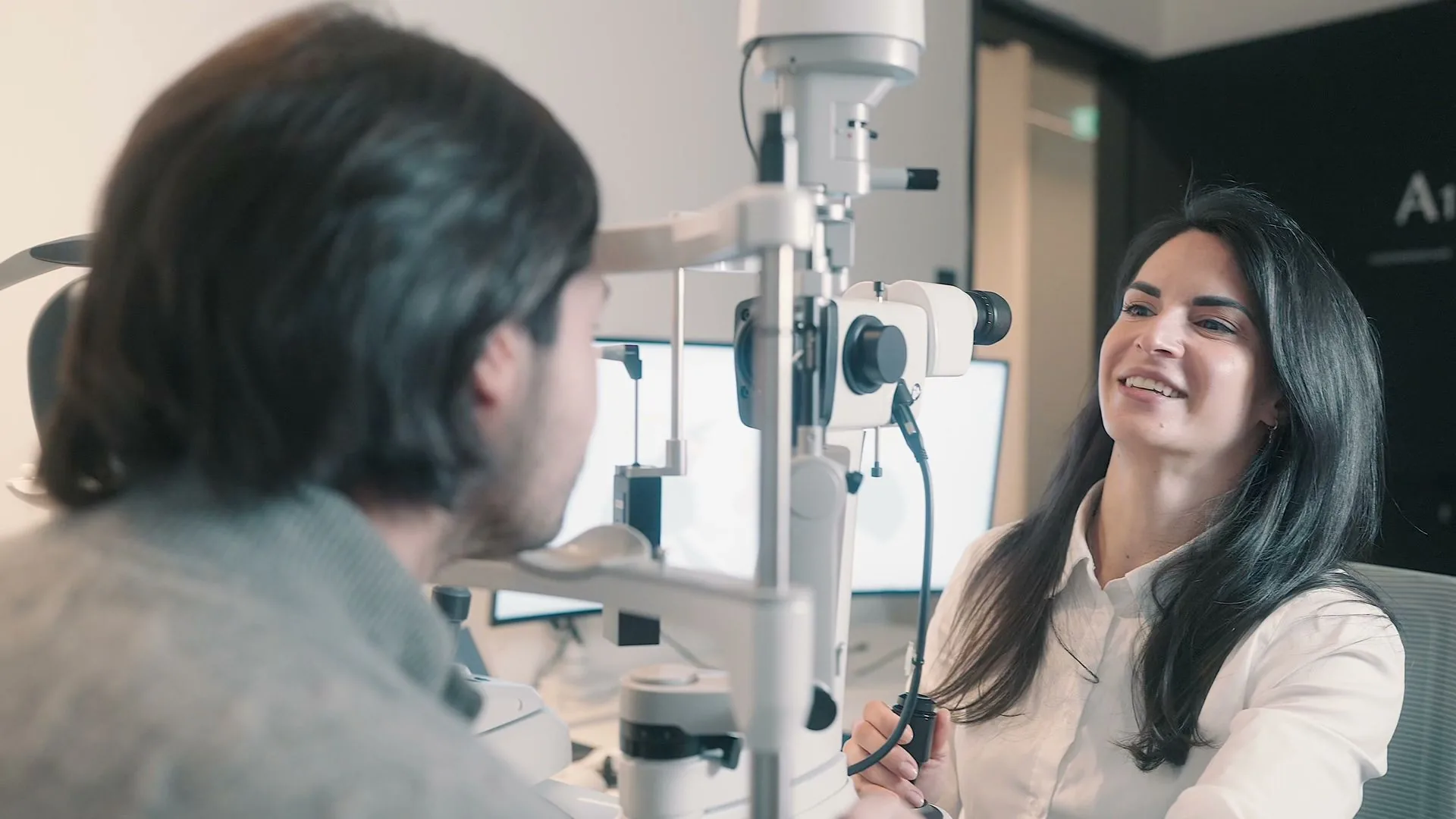
Because it must not only be sharp but also recognized.
One surgeon, over 20,000 procedures, procedures that are named in the information sheets, and documentation that police doctors and aviation doctors can read.
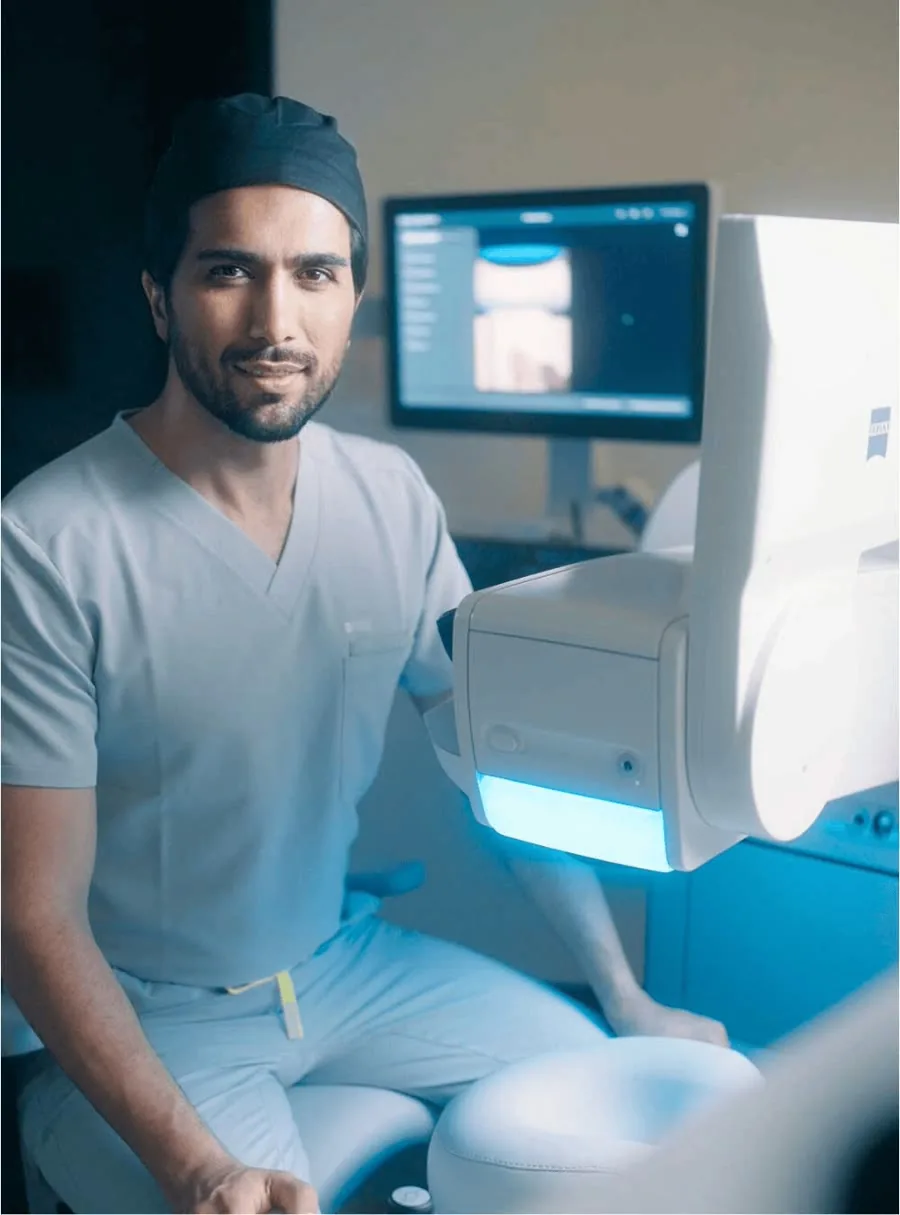
Every procedure: Prof. Dr. Mehdi Shajari. Personally.
Specialist in ophthalmology and professor (German title: außerplanmäßiger Professor) of ophthalmology, author of numerous publications on freedom from glasses, and teacher and trainer of several colleagues in this field. He performs the pre-operative examination and the procedure himself and discusses with you which procedure your employer recognizes, even if that means we advise against a procedure. At dr.vision, he treats you himself, not a rotating team.
From €3,498 to €5,198. As a rule, the employer does not pay.
Guide prices for both eyes: Trans-PRK €3,498, Femto-LASIK €4,298, SMILE Pro €5,198, SmartSight €5,198. Billing is private, under the GOÄ. The Baden-Württemberg police state explicitly that they reimburse nothing, neither during the application process nor after hiring; you also pay for expert reports afterward yourself.
| Item | Amount | Note |
|---|---|---|
| SMILE Pro, both eyes | €5,198 | financed from €3.90 a day* |
| Trans-PRK, both eyes | €3,498 | Trans-PRK |
| Femto-LASIK, both eyes | €4,298 | Femto-LASIK |
| Expert report afterward (e.g., university hospital, aviation medical examiner) | according to their billing | Costs are borne by the applicant (BW, Federal Police) |
Included in the guide price: pre-operative examination with a certificate of the pre-operative values, procedure by Prof. Dr. Mehdi Shajari and aftercare. * Representative example: €5,198 net loan amount · 72 months · fixed borrowing rate 9.49% p.a. · 9.90% effective annual interest rate · monthly installment €94.97 · total amount €6,837.84 · via medipay. Example 0% over 12 months directly at dr.vision: €5,198 cash price · no down payment · fixed borrowing rate 0% p.a. · 0% effective annual interest rate · monthly installment €433.17, last installment €433.13 · total amount €5,198. For police officers on duty, free medical care (Heilfürsorge) or Beihilfe usually does not pay for laser eye surgery, usually only if glasses or contact lenses are not possible and the authority has agreed beforehand (Beihilfe). Tax: Deducting laser eye surgery. Calculate an installment: Financing.
Go deeper.
This page puts the rules in context. These pages explain the procedures themselves:
Without a flap, recognized in all police information sheets read.
To SMILE Pro ProceduresNo incision at all, also with a thinner cornea.
To Trans-PRK ComparisonFlap or no flap: the difference in detail.
Read the comparison GuidesWork, sports, driving: all the times.
Read the guide ServiceCertificates for driver's license, work and aviation medical examiner.
To the expert reports OrientationWhich procedure suits your eyes?
Start the checkStill have questions?
“These are the questions I hear most often in consultation hours. Here are my answers.” Prof. Dr. Mehdi Shajari
In many German states, yes. Baden-Württemberg recognizes LASEK, PRK-LASEK, Trans-PRK, LASIK, Femto-LASIK, ReLEx-SMILE and SMILE Pro, after a 6-month waiting period and an expert report from a university eye clinic. Check the current information sheet of your state.
In Baden-Württemberg and Rhineland-Palatinate 6 months, followed by an expert report or final findings report. Other states and the Federal Police have their own information sheets; guides name 6 to 12 months.
In Rhineland-Palatinate at most −5.0 D for nearsightedness and +3.0 D for farsightedness. Baden-Württemberg requires that the values were within the scope of the KRC guidelines of June 2022.
Not in Rhineland-Palatinate: according to the information sheet, lens surgery does not lead to fitness for police duty there. Baden-Württemberg lists only laser procedures. If you have very high values, you should clarify this before choosing a procedure.
According to guides and patient reports, yes, usually about 12 months after the procedure; lens surgery is said to lead to unfitness for duty. We have not found a public primary source. Have the career center confirm the rules.
Yes. Under EASA rules, a fit assessment is possible for Class 1 if the refraction is stable (under 0.75 D daily fluctuation), there are no complications, glare sensitivity and twilight contrast are normal, and a specialist in ophthalmology confirms this.
For the Class 1 medical, intraocular lenses are supposed to be monofocal under EASA and not impair color vision or night vision. Multifocal or trifocal lenses are therefore usually not an option for professional pilots.
The information sheets of the cities of Schweinfurt and Braunschweig require at least one year after the surgery before fitness for fire service is assessed. Other municipalities may differ.
According to the Driver's License Regulation (Fahrerlaubnis-Verordnung) Annex 6, 0.8 in the better eye or both eyes together and 0.5 in the worse eye. No waiting period after laser eye surgery is set there; you may drive once the values are reached.
One without a corneal flap, so SMILE Pro or Trans-PRK. The flap of a LASIK heals firmly in place, but it remains a weak point when the eye is hit. Training usually after a few weeks, competition after consultation.
Only when the surface is completely healed: after SMILE Pro and LASIK it is usually 3–4 weeks, after PRK and Trans-PRK about 6–8 weeks. Have an eye doctor clear you before the first dive.
As a rule, no. The Baden-Württemberg police state explicitly that they reimburse nothing, neither during the application process nor after hiring. Later expert reports are also paid by applicants themselves.
Medically reviewed by Prof. Dr. Mehdi Shajari · As of October 2026
For your application folder.
Arrives by e-mail in about 60 seconds. No newsletter, just the guide and, if you wish, a follow-up from Patient Care. Privacy policy
How would you like to continue?
Bring the current information sheet from your employer or the requirements of your aviation doctor. At the pre-operative examination we measure your values, document them for your application and tell you honestly whether and with which procedure laser surgery makes sense for your path.
In Frankfurt, Junghofstraße 16 · pre-operative values in writing
Our locations.
 Opening hours
Junghofstraße 16, 60311 Frankfurt am Main
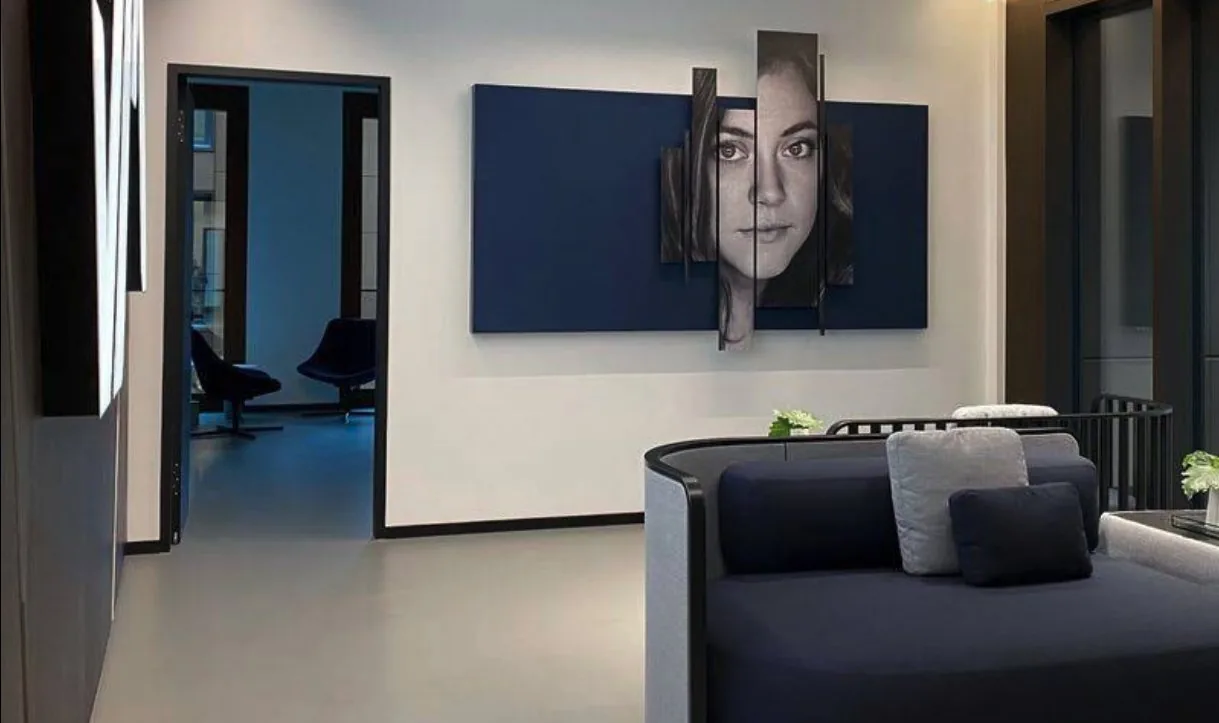 Opening 2027
Breite Straße 69, 40213 Düsseldorf (in the Neuer Stahlhof, corner of Graf-Adolf-Platz)
Until opening: preliminary talk in Frankfurt, Patient Care plans your travel.
Plan route Opening 2027
Lautenschlagerstraße 23, 70173 Stuttgart (2nd floor, step-free access)
Until opening: preliminary talk in Frankfurt, Patient Care plans your travel.
Plan routeHi, I'm Sebastian, 37, I live near Frankfurt, and I have somehow always been annoyed that I have to change glasses so often. I have kids now, who knock them off my head or smear them. And for me that was mainly a hassle problem. Apart from the fact that I naturally have weak eyesight, but I actually always got along quite well with glasses. And then I tried contact lenses and noticed that my eyes are dry and it all didn't fit together so well. And then I saw that this offer exists here and first informed myself. So, what does one actually do? There are so many treatments you could have. I went a bit too deep down the rabbit hole and watched videos and saw what these surgeries look like, and at first I kept my distance. It took half a year until I had gathered my courage and thought, well, it can't be that bad. So many thousands of people do it. And then I simply looked more closely at which treatment suits me. Before the doctor had even advised me, I don't know if I am the perfect patient if I already come with an idea, but I came here with the goal of having a PRK treatment. So basically the treatment that many patients are a bit afraid of. Rightly so, you always read in experience reports that it probably hurts quite a bit and that it is the most unpleasant of all the variants, with long healing times and long aftercare times.
So I have a refractive error, diagnosed since fifth grade or so, but not particularly bad. Somewhere between one and two diopters, it got a little worse over time, then I was at one and a half or 1.75, and from about eighth grade, ninth grade or so, it stayed stable. So it simply didn't change at all anymore. And it really only bothered me in that the glasses themselves are of course an obstacle. But that is bearable, it's not really that bad. It became more unpleasant when I started, for example, sports where glasses get in the way.
Climbing, bouldering and things like that, you don't necessarily want to start with glasses on, and that was annoying. Then I started with contact lenses, always had dry eyes, always had to rub my eye, push them around, and I didn't like that at all. Then of course I looked at what solutions there are, how I can get away from this somehow. I can say that my fear beforehand turned out not to be entirely justified, because the whole thing was basically not that bad for me. You have your eyes lasered, and of course that is an uneasy feeling.
And you also go home with swollen-shut eyes, maybe. Everything is not so great, it burns a little. But compared with the stories I had heard, what really happened to me, I have to say, it was really not that bad. You can take painkillers, and I should say, the first day it burns a little, but by far not as badly as is often said, in my case. And on the second day I hardly noticed it anymore, and on the third it was okay.
In terms of pain, that is. Of course you can't see anything right away. You may have to wait a little until your eyes can open again, the swelling has gone down and so on. But from then on it is actually a simple, straightforward healing process. It gets better every day, the vision gets better.
And I think after one week, that was it, I could already make out everything again reasonably well. And now, after a month, I am glad that I did it. I have no complaints at all. When I walk through Frankfurt, I can see the tops of the skyscrapers and see everything sharply again, without glasses, without contact lenses, without discomfort. It is wonderful.
The thing is, I have two children, and my two boys are not necessarily careful when it comes to touching my eyes. Now and then a hand lands in my eye, and perhaps not all that gently. And when I think about it after gathering my information, that something in the eye might actually not be firmly healed yet. Because with LASIK or other treatments, a disc or a piece of a disc is cut, so to speak, folded back and then put back.
This flap, exactly. It only heals at the outer edge. And when I imagine someone hitting it with force, I don't feel comfortable. Of course, I also know, you hear from doctors too, that it is not necessarily the force you need to lift this flap again.
But nevertheless I simply don't feel comfortable with it and couldn't warm to it at all. And PRK is actually a method that, according to my research, really many people have had done, and which is routinely used in the armed forces or other organizations, where force on the eye is perhaps more likely to occur. But if they do it, how bad can it really be for me? And this putting things into perspective is what in the end made me say, okay, this is my variant, this is how I want to do it.
And it worked well. I think that is true for everyone who starts out with this bad gut feeling. You try to optimize, you know, what can I do so that the whole thing goes well. And when you look around, of course you look for someone who treats the eyes and has a certain reputation.
A doctor, professor, doctor, someone who works at the university hospital, is of course exactly right. For me it was also close to work, so there were simply geographical reasons to come here as well. But it all fit together well. The information material was good, I could look closely at what the prices are, what the conditions are, and I could make an appointment where I could also speak directly with the doctor.
That is also very important to me, not to speak with just anyone but with the doctor, and also to know that the person I speak with at the start is the one who will treat me. Basically I would say it was a good decision, I would do it again, and it is certainly not as bad as is often said. Very many people have the surgery, few people have problems with it, and we all know the internet, often only those who have problems speak up. Don't trust it too much, get in contact, find out how I can do this, which doctor can support me.
In this case it was very easy, the first conversation was directly with the treating doctor, and then you see whether you feel up to it or not. Definitely, I had very positive experiences, I am satisfied with the result. No complaints to this day, of course.
I’m Teresa Schwenger, I’m 31 years old, I’m a project manager. I was nearsighted, so I didn’t see well at a distance, and at some point it was just super annoying with contact lenses, putting them in every morning, taking them out again in the evening. I think I wore contact lenses for about ten years, and then I also had the problem that my eye was no longer supplied with oxygen so well, which is why the little vessels grew further into the eye, and so I looked around for an alternative. Glasses were not an alternative for me, because I simply don’t like myself in glasses. It was always an issue with the swimming pool or the lake or the sea. Do you put your contact lenses in, can you dive, do you maybe lose a contact lens, and that was always really annoying. Or also when you stayed somewhere overnight, you always had your little contact lens case, your solutions and care products, which you had to take along, always a whole pack just for the contact lenses. I always found that very annoying, and also on long days, when I had put my contact lenses in very early, in the evening while watching TV I noticed, oh, this really annoys me now, I would like to take them out, and then watching TV with glasses on a couch, really very uncomfortable, and so that was a situation where I am now grateful that I will hopefully or probably never have them again.
And then I looked at which doctors in this area offer laser eye surgery, and I read through lots of reviews and looked at who is very good here. And the doctor here is really rated very, very highly, and I had a totally likeable first conversation with him and felt comfortable right away. I also saw all his awards, the FOCUS awards and so on, which reinforced my impression, and also lots of positive reviews, which I can confirm. So you feel very comfortable, and the work here is very professional. So it was a very good decision to come here, definitely.
Not quite so good. I was very nervous, had many worries and fears too. I would have liked to leave again right away on the day when I was sitting here. But I was received super kindly and warmly. Everything was explained to me well. Everyone was very warm, and they took the nervousness away. So I felt I was in good hands, and when it then started, the nervousness was already a bit less, because I knew that I was simply in good hands.
So I simply arranged the appointment, the first appointment, online, and then I got a call asking me to please stop wearing contact lenses from that point on, so that the eyes are already free of contact lenses, because things can still change there. Then the parking garage is right next door, you walk in here, and it is a very beautiful building and a very beautiful practice, definitely. I was welcomed warmly right away by the receptionists. Everything was explained to me well right away. I was given water and everything. Then I had the first tests. I was totally amazed at how many tests were done and with which devices. It's really incredible what names are on the devices and how expensive these devices are. But really everything was measured that I think can be measured in an eye. Then I had the conversation with the doctor. That was also really great, warm. He answered all the questions I had and took the time for me. I then said I would rather sleep on it for another night, because I am simply the type of person who plays it safe. But at home I actually already knew that I would like to have it done. The next day I called again and made a second appointment. The eyes were checked once more, again with a colleague of the doctor and with him. And then I had another informed-consent talk about what risks there are. I was able to ask my questions again and then got my treatment appointment very quickly. And on the day of the treatment, as I said, I was already here super nervous, but I was also welcomed very warmly. Many of my worries and fears were taken away.
Yes, exactly. So I got up this morning and I could see right away. That was my biggest worry, that I would no longer be able to see as I did before, but I could see perfectly right away. I also saw at a distance again. That was the exciting part in my case. I looked out of the window and also noticed the trees farther away. The outlines, which I otherwise always saw only like this, were clear and distinct. So it really is a change right away. I notice it totally, and it’s super nice.
Definitely, yes, absolutely. I felt super comfortable from the first second to the last. So definitely, if I ever have laser treatment again, then definitely here. I can only recommend it to everyone.
Yes, I definitely should have done it earlier, that's true, because I believe it really gives you a lot of quality of life back, and it is also good for the eyes. Of course, there is the treatment itself, but in the long run, as it was with me, because of the contact lenses, I had these tiny blood vessels, or I have them in my eye, because the eyes were not supplied well. Had I done this earlier with the lasers, it might not be as pronounced. So my appeal would be to do it earlier rather than too late.
I'm Duilio, I'm 22 years old. I was nearsighted before, with a prescription of minus 4.75. I actually looked into laser eye surgery a few years ago. But this practice didn't exist yet back then, and I informed myself a bit about it, and now I've finally come to the conclusion to have my eyes lasered.
So there was a free initial consultation here. I came here, first took a look at the practice, and I found the technology to be state of the art, and I also found Professor Shajari to be a very empathetic and very likable doctor, also very young, and so I then decided to have my eyes lasered here.
So the process was actually quite simple. You first came into a small room, where the eyes were cleaned a little, it burned briefly and then they were numbed and that was it. They were numbed with eye drops and then it went straight to the operating room and right there I was laid on the bed of the laser, the Carl ZEISS VisuMax 800, which is the newest laser, and then he actually started operating right away. I think I was only in the operating room for 15 to 20 minutes in total, while the laser itself took about ten seconds per eye.
Right, so after the surgery I got up first and couldn't see very sharply yet. I saw it as if it were milky cloudy. So my vision was milky cloudy, as if you were looking through a plastic cup when you hold it in front of your eyes. But I could already see better, or at least I had the feeling that I could already see almost better than I did before without glasses.
When I came for the follow-up check the day after, the optician took off the protective glasses and then I could really see, I saw him clearly, I saw the devices clearly, we did the tests, he said yes, you are at 100 percent in one eye, 125 percent in the other, exactly, so it was a great feeling, I then took out my sunglasses right away, because the sun was shining that day, and I went for a little walk through downtown Frankfurt. It was very nice, as I said, to see everything clearly without glasses not even 24 hours after the surgery, I think it was about half a day, 13, 14 hours after the surgery, yes, so it was really great.
My name is Raquel Schulze Wischeler. I have basically worn glasses since I was 13. I was really nearsighted, you could say. Really, really. I could only see outlines without glasses. I had minus 6 in one eye, a diopter of minus 6, and almost minus five in the right one. I think everyone who wears contact lenses or glasses knows how stressful all of that is. The eye dries out completely. In the evening, when you are lying on the couch, you notice, okay, my eye is super tired, I really do not feel like doing anything anymore. Whether it is contact lenses or glasses. With that diopter, you have rather thick lenses, and you notice that over the day too. And just getting the feeling, or knowing, hey, I do not have to wear anything anymore, neither glasses that I always have to clean, nor contact lenses where I have to watch hygiene, that is an absolute liberation. And that felt more like a dream to me, and then I said, okay, now you dare to do it, and so I will do it.
Interestingly, I had already thought about having my eyes lasered about five years ago, but I was very afraid and then dropped the idea again. And lately I had big problems with my eyes because of chalazia, because my glands in the eyelids do not quite work, and so I had surgery twice. And then I said, okay, since I have already had surgery on my eye, you might as well dare it once more. And then I first just googled, came across dr. vision, saw, oh, there are really great reviews, and by coincidence my eye doctor had worked with him at the university hospital in Munich, and I had an eye doctor appointment beforehand and told her about it, I am getting my eyes lasered, and then she said, well, where? Then I told her the doctor's name. And then she said, yes, I know him, I worked with him. You can go there, he specializes in this, he is really great. And that took away the last bit of doubt for me.
And yes, then I came, had an appointment the next day. And right away I had the feeling that I was in the right hands. He sat down with me, explained all the risks to me, explained how it works, showed me the treatment room. And then the fear was somehow gone, and then I said, okay, I am doing it here. I was thrilled by the professionalism, first of the practice itself, which is superbly organized, and by the speed. You do not have long waiting times, you are examined, you have the feeling, okay, here they really examine thoroughly and extensively, and then of course it is explained to you on the screen, you can see it. So that was just totally professional for me. And so I felt safe right away.
Yes, my biggest fear was the eye itself. It is on the eye. And you have a reflex, a physical one. And the question of course was, okay, do I react, and does something go wrong because of that. But the fear was taken from me relatively quickly. I also talked about the fear. And then during the treatment I saw that the eye was held still. I did not feel that either. And then I calmed down relatively quickly. And I knew the eye was numbed. And so everything worked quite well.
I have no pain. I feel that something has happened to the eye, like a slight pressure, but it is one day after. I was already at work today, I have no pain.
Absolutely, so I can answer that question with yes, and go for it. It's not bad at all, it doesn't hurt at all, it's quick, and the healing process is pretty much there a day later. And it's an absolute quality of life. That's totally great.