 dr.vision
How often?
In about 2 in 100 eyes, with us 0.6 %. More common with high prescriptions and farsightedness.
Figures and sourcesStart here
What suits you?
Find out in 2 minutes which procedure suits your eyes.
Start the Suitability CheckOr by age:
< 45yearsGet rid of glasses & contact lenses 45–64yearsGet rid of reading glasses 65+yearsCataract & glasses-free★★★★★ 5.0 · 376 Google reviews · 20,000+ procedures
Decide well
What you should know beforehand.
Who operates?Prof. Dr. Mehdi ShajariFOCUS Top Doctor · operates on every patient personally What does it cost?Laser from €3,498 · Lenses from €6,886Prices for both eyes Is it safe?Safety & risks When will I be fit again?Work, sports, driving Would you rather read in peace first?Decision Guide Freedom from GlassesProcedures
Laser or lens?
Laser eye surgery
SMILE ProSmartSightFemto-LASIKTrans-PRKPRKPresbyond (laser away your reading glasses)All laser procedures at a glanceLaser procedures compared ›Lens surgery
ICLLens exchange (reading glasses)Cataract surgery with premium lensLens types: trifocal, EDOF, toricLens types compared ›Start here
Something wrong with your eyes?
A thorough eye check-up with us clarifies what is behind it.
Book an eye check-up★★★★★ 5.0 · 376 Google reviews
Laser eye surgery enhancement · Guides
In about 2 in 100 eyes. Usually after 3 to 6 months.
Is your vision not quite sharp after laser eye surgery? In our own analysis, an enhancement was needed in 0.6 % of eyes. If it is medically advisable, at dr.vision it is usually possible without a co-payment within 6 months.
 12× FOCUSTop Doctor
About 2 in 100 lasered eyes need an enhancement; at dr.vision it was 0.6 % of 412 SMILE Pro eyes (01/2024–01/2026). It is more common with high prescriptions, astigmatism and farsightedness. Re-treatment with the laser is done after about 3 months at the earliest, once the values are stable, after SMILE Pro usually as a surface treatment or through a thin flap. If an enhancement is medically advisable, under our concept it is usually possible without a co-payment within 6 months; statutory health insurance does not pay for repeat refractive procedures.
Sources: dr.vision's own analysis (SMILE Pro, n = 412); KRC recommendations DOG/BVA 05/2024. Reviewed by Prof. Dr. Mehdi Shajari, October 25, 2026.
In five answers.
For anyone with three minutes. Each answer leads to the detailed chapter.
In about 2 in 100 eyes, with us 0.6 %. More common with high prescriptions and farsightedness.
Figures and sourcesNot every blur is a residual error. Often dryness, healing or, from about 45, the need for reading glasses is behind it.
Residual error checkAfter about 3 months at the earliest, when two measurements agree; after Trans-PRK rather after 6 months.
TimelineDepending on the first procedure: after SMILE Pro on the surface or through a thin flap, after LASIK by lifting the flap.
By procedureAt dr.vision, under our concept, usually without a co-payment within 6 months, also after Trans-PRK and PRK. Statutory health insurance does not pay; private health insurance (PKV) depending on the plan.
CostsAbout 2 in 100. With us 0.6 %.
Of 1,000 lasered eyes, about 20 need a second procedure. In our own analysis it was 6 in 1,000 when converted (SMILE Pro, n = 412). Studies report different rates, depending on how high the starting values were and at what residual value an enhancement was performed.
| Source | Procedures | Eyes / procedures | Enhancement or regression |
|---|---|---|---|
| dr.vision, own analysis 01/2024–01/2026 | SMILE Pro | 412 | 0.6 % |
| Kim et al., ESCRS Congress 2022 | SMILE · PRK · LASIK | 63.416 | Regression: 1.3% · 3.0% · 3.8% |
The rates are not directly comparable: studies differ in starting values, follow-up time and the remaining value at which a touch-up was done.
A low enhancement rate can mean different things: that the laser treatment was very accurate, that mostly low prescriptions were treated, that follow-up was short, or that a touch-up is done only from a large remaining value. A high rate, conversely, can mean that even small remainders are corrected or that many patients with high prescriptions and astigmatism were treated.
So always ask three things: How many eyes, what time period, from what remaining value? Our figure: 412 SMILE Pro eyes, 01/2024 to 01/2026, every second procedure on the same eye was counted. 94% were within ±0.5 D of the target without an enhancement.
Because every cornea heals differently.
The laser removes tissue accurate to the micrometer. How the cornea heals afterward, however, is individual: it can refill part of the removed tissue through cell growth (regression), or it reacts more or less strongly than calculated. According to the Commission for Refractive Surgery (KRC), the rate of such deviations generally increases with the extent of the correction.
The more tissue is removed, the more the healing can compensate. From about −6 D, the risk of partial regression rises noticeably.
The removal at the edge of the cornea is refilled more strongly. After Femto-LASIK for farsightedness, an enhancement is therefore more common than for nearsightedness.
Higher cylinder values and a rotation of the eye while lying down make the exact axis harder to hit. The VisuMax 800 compensates for eye rotation.
The cornea reacts somewhat differently, and measurement becomes harder because accommodation declines. A small remainder is also more noticeable.
If the nearsightedness was still changing before the procedure, it can keep progressing afterward. That is why 12 months of stability is a requirement.
Measurement with and without pupil-dilating drops, a break from contact lenses, treating dry eye beforehand, a nomogram from our own results. This keeps the rate low.
Not every blur is a residual error.
A true residual error is permanent and the same in two measurements. In the first three months, vision fluctuates in many people, usually because of the tear film. And if you are about 45 or older and read less well, you do not need an enhancement but have presbyopia. The check gives a first assessment.
Two questions. A first assessment.
How long ago was your procedure?
What bothers you most?
Classification
A first orientation, not a substitute for an examination. If pain increases, redness is severe or your vision suddenly worsens, call the emergency number you received after the procedure right away.
| What you notice | Likely cause | What helps |
|---|---|---|
| Vision fluctuates over the day, better after blinking | Dry tear film | Artificial tears, treatment of dry eye if needed; no laser |
| Slightly blurry in the first weeks, better day by day | Normal healing | Wait, keep your follow-up appointments |
| Distance vision permanently blurry, even with moist eyes | Residual nearsightedness or farsightedness | Measure; enhancement possible once stable |
| Double contours, shadows on letters | Residual astigmatism | Measure; enhancement if stable and bothersome |
| Halos at night after more than 3 months | Residual error or large pupil | Measure; enhancement if there is a residual error, otherwise wait |
| From about 45, reading is difficult, distance is good | Presbyopia | Reading glasses, Presbyond or lens exchange; no enhancement for distance |
| Slowly becoming blurry years later, glare | Early cataract, rarely a change in the cornea | Examination; cataract surgery if needed |

Unsure whether it is a residual error?
We measure again, even if you had your laser treatment elsewhere.
Jana from our Patient Care team arranges a follow-up check with Prof. Dr. Mehdi Shajari. Please bring the findings from your procedure. Phone available 24 hours, WhatsApp Mon–Fri 8:00–19:00, Sat 9:00–15:00.
Only when the target holds still.
About 3 months at the earliest. Until then, the cornea heals and the values still shift; according to the KRC, treatment is complete after three months in a normal course. A touch-up is done when two measurements a few weeks apart agree; after Trans-PRK, usually only after about 6 months.
Visual acuity fluctuates, and the eyes are often dry. Checks the next day and after one week show whether healing is going normally.
A small remainder can still change, in either direction. We treat dry eyes during this time because they distort every measurement.
Two matching measurements, a bothersome remainder, enough cornea: then we plan the enhancement. After SMILE Pro and Femto-LASIK usually between month 3 and 6.
The surface takes longer to heal fully and for the value to become stable. Touching up too early raises the risk of haze.
If an enhancement is medically advisable, under our concept it is usually possible without a co-payment within 6 months. After that it is still possible, with a cost estimate.
The first procedure determines the second.
After Femto-LASIK, the existing flap is usually lifted and the touch-up is done underneath. After SMILE Pro, a second SMILE is not possible according to the KRC; here the laser works on the surface, or the small access is widened into a thin flap. After an ICL (additional lens in front of your own lens), a laser usually corrects the remainder, as the KRC expressly provides.
| First procedure | How the enhancement is done | Earliest | Healing afterward | Special feature |
|---|---|---|---|---|
| SMILE Pro | Surface treatment (PRK/Trans-PRK) on the cap, or enlarging the cap into a thin flap (CIRCLE) or thin-flap LASIK | approx. 3 months | PRK: 4–5 days of discomfort; flap: 1–2 days | A second SMILE is not possible (KRC); with PRK, medication against haze |
| Femto-LASIK | Lift the flap and do the touch-up underneath; after years, alternatively PRK on the flap | approx. 3 months | 1–2 days | Rarely, surface cells grow in under the flap |
| Trans-PRK | Repeat Trans-PRK on the surface | approx. 6 months | 2–3 days of discomfort, about one week off work | Longer wait because of the risk of haze |
| ICL | Laser on the cornea (Femto-LASIK or PRK), rarely rotating or exchanging the lens | approx. 1–3 months | depending on the laser | If the lens size is wrong, exchange instead of laser |
| Presbyond | Fine correction of the distance or near eye, usually through the flap | approx. 3 months | 1–2 days | More common with Presbyond than with pure distance correction |
| Lens exchange | Laser on the cornea or a thin additional lens (add-on) | approx. 3 months | depending on the technique | See also the lens exchange page |
Swipe the table sideways →
Techniques after SMILE: overviews in CRSToday Europe and EuroTimes (ESCRS); principle “follow-up surgery with the same procedure not possible” and “additional laser procedure after phakic IOL”: KRC recommendations 05/2024.
Like the first time. Just shorter.
An enhancement has the same four steps as the first procedure: measure, decide, laser, check. The procedure itself usually takes under 15 minutes per eye, with numbing drops. As the first time, there is time to decide between the informed consent talk and the procedure.
Visual acuity, refraction (glasses prescription) with and without drops, corneal tomography and thickness, tear film. If needed, a second measurement after a few weeks.
approx. 60 minutesProf. Dr. Mehdi Shajari explains whether the enhancement is worthwhile, with which technique and what risk. A “leave it as it is” is also a recommendation.
Time to decide before the procedureNumbing drops, laser on the affected eye, usually only one. Afterward you rest briefly and are picked up.
One eye, a few minutes of laserCheck the next day and after one week, final check after about three months. Drops as planned.
As after the first procedureAt dr.vision: usually without a co-payment.
If an enhancement is medically advisable, under our concept it is usually possible without a co-payment within 6 months. After that you receive a written cost estimate. Statutory health insurance does not pay for repeat refractive procedures according to the KRC; private insurers reimburse depending on the plan.
0 €
Included under our concept when medically appropriate: re-measurement, procedure, follow-up checks.
individual
Billed according to the German fee schedule for physicians (GOÄ). You receive the cost estimate in writing before the procedure.
from 3,498 €
PRK/Trans-PRK €3,498, Femto-LASIK €4,298, SMILE Pro €5,198, SmartSight €5,198, Presbyond €6,398, ICL from €6,886. All prices
| Ask | Why it matters | At dr.vision |
|---|---|---|
| How long is the enhancement included in the price? | Time periods range from a few months to “lifelong” with conditions | 6 months |
| Does this apply to both eyes and all costs? | Sometimes the pre-operative examination, medication or follow-up checks are extra | Re-measurement, procedure, follow-up checks included |
| From what remaining value is an enhancement done? | Touching up too early or for too little uses up cornea without benefit | When the remainder is stable and bothers you in daily life |
| Who decides whether it makes sense? | The promise helps only if it is applied on medical grounds | Prof. Dr. Mehdi Shajari, together with you |
| What if no laser enhancement is possible? | With a thin cornea, alternatives are needed | We discuss ICL, glasses or a later lens exchange |
Statutory health insurance: the KRC expressly names repeat refractive surgeries as an exception to insurance coverage. The treatment of true complications, however, can be covered by the insurer in a practice accredited by statutory insurance. At dr.vision, as a private practice, patients with statutory health insurance pay themselves. Private health insurance: reimbursement depends on the plan, so submit the cost estimate in advance. More at Private health insurance and Statutory health insurance.
The cornea is the budget.
Every correction removes tissue. According to the KRC, at least 250 µm of cornea must remain under the treated zone, expressly “even after a follow-up surgery”. That is why we plan a reserve at the first procedure. If it is not enough, there are alternatives without removing more tissue.
One enhancement is possible; usually it is the only one. A third correction on the same eye is the rare exception.
Then no further tissue is removed, because otherwise a bulging of the cornea (ectasia) is a risk. Before every enhancement, we measure the thickness and shape of the cornea again.
Light glasses or a contact lens for certain situations, an implantable contact lens (ICL) for a higher remainder, and from about 50 a lens exchange that also corrects the remainder.
We also examine eyes that had their laser treatment elsewhere. What matters are the records of the first procedure: starting values, procedure, depth of removal, for SMILE the cap thickness, for LASIK the flap thickness. Without this data, the cornea's reserve can only be estimated. The costs are then based on GOÄ, and you receive a cost estimate in advance.
A residual error after laser eye surgery is a known result of individual wound healing, which is explained before the procedure, and by itself is not a sign of a treatment error. It occurs even with optimal planning and execution. That is why every practice should say clearly beforehand how it handles enhancements.

Plan precisely. Measure honestly.
dr.vision keeps the enhancement rate low through precise measurement before the procedure, treatment of dry eyes beforehand and planning based on its own results. Our enhancement rate is 0.6 % (SMILE Pro, n = 412). We publish it with the number of cases and the time period, because that is the only way you can compare providers.
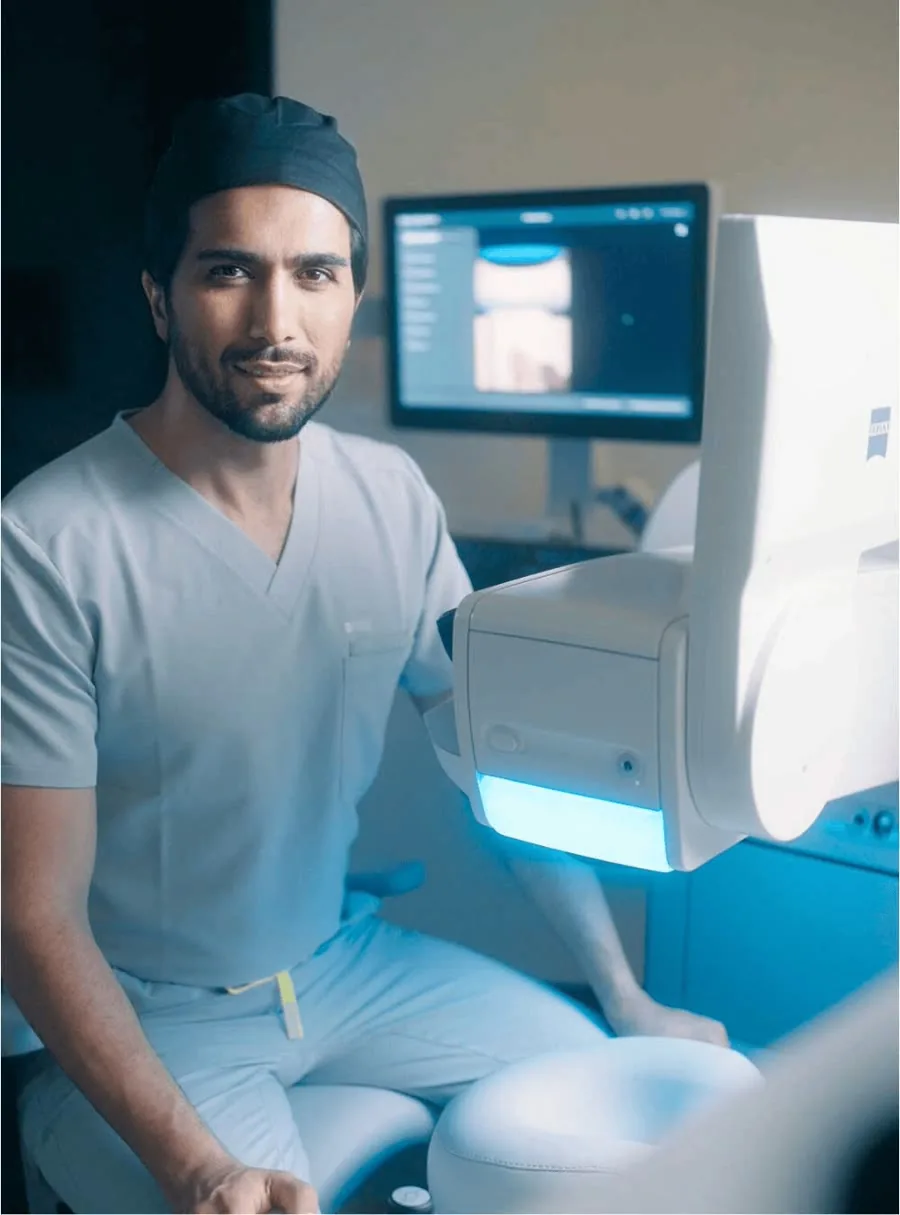
Prof. Dr. Mehdi Shajari. Personally.
Prof. Dr. Mehdi Shajari operates on every patient himself. He is a specialist in ophthalmology with a professorship and habilitation at the University of Frankfurt. Whoever performed your laser treatment also measures again and decides with you whether a second procedure is worthwhile. In his career he has performed 20,000+ procedures, SMILE Pro on the ZEISS VisuMax 800.
At dr.vision
Whoever examines you beforehand also operates on you: Prof. Dr. Mehdi Shajari in person.
We analyze every SMILE Pro treatment: 94 % within ±0.5 D of the target, 0.6 % enhancement. This data feeds into the planning of every new procedure.
We plan so that after the first procedure enough cornea remains for a possible enhancement, above the KRC's 250 µm limit.
Small remainders, dryness or presbyopia are no reason for a touch-up. We tell you when waiting is better.
Go deeper.
This page answers the question about enhancements. Related topics:
All risks of all procedures with frequencies and everyday comparisons.
View risksSide effectThe most common reason for fluctuating vision in the first months.
To the guidesAgeWhy reading glasses from about 45 are not a relapse, and what helps then.
To the guidesComparisonThe two procedures also differ in how an enhancement is done.
Read the comparisonCostsMarket prices, what is included and what to look out for.
To the guidesTrustOur standards from the pre-operative examination to the last follow-up check.
Learn more376 reviews. Average 5.0.
376 Google reviews give dr.vision an average of 5.0 out of 5 stars. dr.vision does not check whether Google reviews come from treated patients.
“I can only recommend the treatment here most warmly. The healing process went smoothly, and I was able to work again just two days later.”
“Professor Shajari assessed my eyes honestly and without sugarcoating and presented the current situation transparently.”
“I was able to get an appointment relatively quickly and was even moved up, which made getting started much easier for me.”
“My treatment was absolutely effective. Here they not only do laser eye surgery but also treat everyday eye problems or diseases such as conjunctivitis.”
Four patients. In their own words.
It really was not that bad.
Then everything went fast.
There are always situations where glasses are limiting.
It is an absolute liberation.
Still have questions?
The questions patients ask most often about this during consultation hours. Prof. Dr. Mehdi Shajari
In about 2 in 100 eyes. In our own analysis of 412 SMILE Pro eyes (01/2024–01/2026) it was 0.6 %. Studies report different rates depending on the procedure, definition and starting values.
The correction of the cornea is permanent. A partial regression occurs mainly in the first weeks and months, more often with high prescriptions and with farsightedness. What comes years later, reading glasses from about 45, is presbyopia and not a relapse.
After about three months at the earliest, when two measurements a few weeks apart show the same values. After Trans-PRK we usually wait longer, about 6 months, because the surface takes longer to heal. Enhancing too early means shooting at a moving target.
Yes, but not with a second SMILE: the Commission for Refractive Surgery expressly points out that follow-up surgery with the same procedure is not possible. Instead, the laser works on the surface (PRK), or the existing access is widened into a thin flap. Both are established.
That depends on the technique. If a flap is lifted, it is like Femto-LASIK: a few hours of burning, office work usually after 1–2 days. With a surface treatment (PRK), the first 4–5 days are uncomfortable, so expect about a week off work.
Usually not. A remainder of 0.25 to 0.5 D bothers very few people in daily life; 94% of our SMILE Pro eyes were within ±0.5 D of the target. What matters is whether you see worse in daily life, not the number. Every enhancement uses up cornea, which is why we often advise against it for small remainders.
If an enhancement is medically advisable, under our concept it is usually possible without a co-payment within 6 months. After that you receive a written cost estimate in advance.
Statutory health insurance usually does not: according to the Commission for Refractive Surgery, repeat refractive surgeries are expressly not an insurance benefit. Private insurers reimburse depending on the plan; submit the cost estimate beforehand.
Ask in writing: how long the enhancement is included, whether for both eyes, whether the pre-operative examination and aftercare are included, from what remaining value it applies and who decides whether it makes sense. A “lifelong guarantee” sounds good but is often tied to conditions.
No. Every correction removes corneal tissue, and according to the KRC at least 250 µm must remain under the treated zone, even after follow-up surgeries. That is why we plan a reserve at the first procedure and check the corneal thickness again before every enhancement.
The risks are similar; with a lifted flap, surface cells rarely grow in underneath, and with PRK after SMILE there is haze, which we prevent with a medication. What matters is that a weak cornea is ruled out beforehand.
Then there are alternatives: light glasses or a contact lens for certain situations, an implantable contact lens (ICL) for higher remaining values, and from about 50 a lens exchange, in which the artificial lens also corrects the residual error.
Medically reviewed by Prof. Dr. Mehdi Shajari · As of October 2026
Not ready yet? Everything important to read again and to pass on.
Arrives by e-mail in about 60 seconds. No newsletter, just the guide and, if you wish, a follow-up from Patient Care. Privacy policy
How would you like to continue?
You arrange the follow-up check or consultation by phone or online. Whether you had your laser treatment with us or elsewhere: we measure again, check the cornea and tear film, and tell you whether an enhancement makes sense. You go home with a written assessment and, if needed, a cost estimate.
In Frankfurt, Junghofstraße 16 · detailed pre-operative examination with Prof. Dr. Mehdi Shajari
Our locations.
 Opening hours
Junghofstraße 16, 60311 Frankfurt am Main
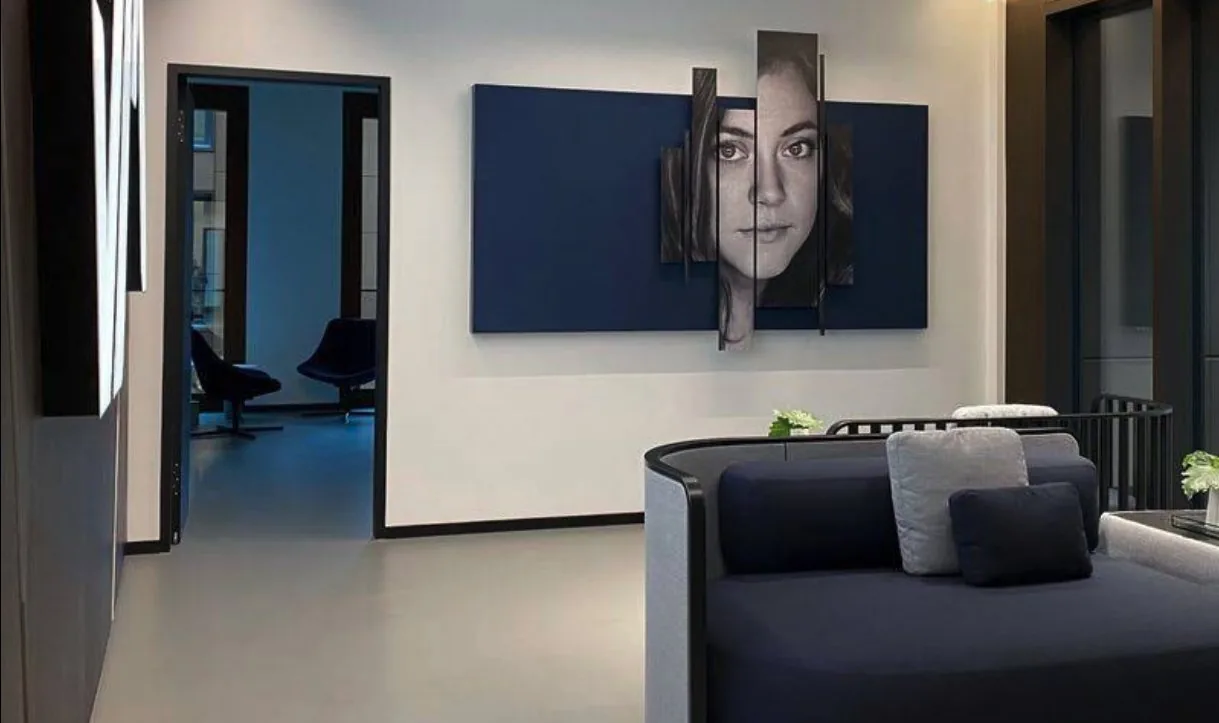 Opening 2027
Breite Straße 69, 40213 Düsseldorf (in the Neuer Stahlhof, corner of Graf-Adolf-Platz)
Until opening: preliminary talk in Frankfurt, Patient Care plans your travel.
Plan route Opening 2027
Lautenschlagerstraße 23, 70173 Stuttgart (2nd floor, step-free access)
Until opening: preliminary talk in Frankfurt, Patient Care plans your travel.
Plan routeHi, I'm Sebastian, 37, I live near Frankfurt, and I have somehow always been annoyed that I have to change glasses so often. I have kids now, who knock them off my head or smear them. And for me that was mainly a hassle problem. Apart from the fact that I naturally have weak eyesight, but I actually always got along quite well with glasses. And then I tried contact lenses and noticed that my eyes are dry and it all didn't fit together so well. And then I saw that this offer exists here and first informed myself. So, what does one actually do? There are so many treatments you could have. I went a bit too deep down the rabbit hole and watched videos and saw what these surgeries look like, and at first I kept my distance. It took half a year until I had gathered my courage and thought, well, it can't be that bad. So many thousands of people do it. And then I simply looked more closely at which treatment suits me. Before the doctor had even advised me, I don't know if I am the perfect patient if I already come with an idea, but I came here with the goal of having a PRK treatment. So basically the treatment that many patients are a bit afraid of. Rightly so, you always read in experience reports that it probably hurts quite a bit and that it is the most unpleasant of all the variants, with long healing times and long aftercare times.
So I have a refractive error, diagnosed since fifth grade or so, but not particularly bad. Somewhere between one and two diopters, it got a little worse over time, then I was at one and a half or 1.75, and from about eighth grade, ninth grade or so, it stayed stable. So it simply didn't change at all anymore. And it really only bothered me in that the glasses themselves are of course an obstacle. But that is bearable, it's not really that bad. It became more unpleasant when I started, for example, sports where glasses get in the way.
Climbing, bouldering and things like that, you don't necessarily want to start with glasses on, and that was annoying. Then I started with contact lenses, always had dry eyes, always had to rub my eye, push them around, and I didn't like that at all. Then of course I looked at what solutions there are, how I can get away from this somehow. I can say that my fear beforehand turned out not to be entirely justified, because the whole thing was basically not that bad for me. You have your eyes lasered, and of course that is an uneasy feeling.
And you also go home with swollen-shut eyes, maybe. Everything is not so great, it burns a little. But compared with the stories I had heard, what really happened to me, I have to say, it was really not that bad. You can take painkillers, and I should say, the first day it burns a little, but by far not as badly as is often said, in my case. And on the second day I hardly noticed it anymore, and on the third it was okay.
In terms of pain, that is. Of course you can't see anything right away. You may have to wait a little until your eyes can open again, the swelling has gone down and so on. But from then on it is actually a simple, straightforward healing process. It gets better every day, the vision gets better.
And I think after one week, that was it, I could already make out everything again reasonably well. And now, after a month, I am glad that I did it. I have no complaints at all. When I walk through Frankfurt, I can see the tops of the skyscrapers and see everything sharply again, without glasses, without contact lenses, without discomfort. It is wonderful.
The thing is, I have two children, and my two boys are not necessarily careful when it comes to touching my eyes. Now and then a hand lands in my eye, and perhaps not all that gently. And when I think about it after gathering my information, that something in the eye might actually not be firmly healed yet. Because with LASIK or other treatments, a disc or a piece of a disc is cut, so to speak, folded back and then put back.
This flap, exactly. It only heals at the outer edge. And when I imagine someone hitting it with force, I don't feel comfortable. Of course, I also know, you hear from doctors too, that it is not necessarily the force you need to lift this flap again.
But nevertheless I simply don't feel comfortable with it and couldn't warm to it at all. And PRK is actually a method that, according to my research, really many people have had done, and which is routinely used in the armed forces or other organizations, where force on the eye is perhaps more likely to occur. But if they do it, how bad can it really be for me? And this putting things into perspective is what in the end made me say, okay, this is my variant, this is how I want to do it.
And it worked well. I think that is true for everyone who starts out with this bad gut feeling. You try to optimize, you know, what can I do so that the whole thing goes well. And when you look around, of course you look for someone who treats the eyes and has a certain reputation.
A doctor, professor, doctor, someone who works at the university hospital, is of course exactly right. For me it was also close to work, so there were simply geographical reasons to come here as well. But it all fit together well. The information material was good, I could look closely at what the prices are, what the conditions are, and I could make an appointment where I could also speak directly with the doctor.
That is also very important to me, not to speak with just anyone but with the doctor, and also to know that the person I speak with at the start is the one who will treat me. Basically I would say it was a good decision, I would do it again, and it is certainly not as bad as is often said. Very many people have the surgery, few people have problems with it, and we all know the internet, often only those who have problems speak up. Don't trust it too much, get in contact, find out how I can do this, which doctor can support me.
In this case it was very easy, the first conversation was directly with the treating doctor, and then you see whether you feel up to it or not. Definitely, I had very positive experiences, I am satisfied with the result. No complaints to this day, of course.
Yes, so I'm Sevim, I'm 35 years old, and for many years now I've had the issue that I always wore a lot of contact lenses, but because of that I have very dry eyes. I couldn't really get used to glasses. Over the last few months I did wear them, to go easy on my eyes a bit, but in the long run I wanted a lasting solution, especially for sports and for activities where you don't want to always depend on glasses.
It actually started when I got my driver's license at 18; that was the first time I needed glasses for driving. Back then I still had a very slight vision problem. I think it started at minus 0.5 and minus 0.25 and then it actually got worse over the years. Also during my studies, because I read a lot, it kept getting worse. And then, I'm a lawyer, I took the state exam twice, and with each state exam it went down by about minus two. Exactly. And now I had minus four on the right side, until yesterday, and minus 3.75 on the left. So already a clear impairment in everyday life when you don't have a vision aid.
What bothered me most in general, when I was walking around, was simply that I couldn't see certain things sharply in the distance. I could tell from afar, while driving for example, that there was a sign there, but what was written on it, no chance. And then I started to blink and squint, because that always helps a bit with astigmatism. It really bothered me, and during sports it also annoyed me a lot that the glasses always slide down because of sweat and so on, and that is really annoying.
So I started to inform myself a few years ago about what comes into question. And then I went to a university hospital in Mainz and informed myself about the different procedures. I had a good feeling there too, but I always had real respect. Simply because it is a procedure on the eye and there are always horror scenarios in your head. What if you're one of the 0.0-something percent who then maybe can't see anything at all later. And then I dropped the idea again for the time being.
Then last year I took it up again, because I was having more and more problems with the contact lenses. Small infections again and again, and because of that I had to wear glasses a lot again and was really annoyed by it. And then last year I came to the practice here for the first time; I actually just googled for good reviews, and right at the first visit I had a very good feeling. That is, the feeling that I'm really in good hands here, that the doctor really takes time, explains everything calmly and also isn't annoyed when you have a follow-up question or so. I always find that very disturbing with doctors, because the patient simply has many questions, and when everything is answered, and very calmly, you simply get a good feeling. And in the end it is of course also the trust in the doctor that encourages you to choose one or the other.
The first impression, when you walk into the practice, everything is somehow super chic, super clean and everyone is just very nice. You don't always get that at the doctor's, I think. Mostly you already have such annoyed medical assistants who give you the feeling right at the start that it's somehow stressful and so on, and here everything is actually always very calm, and for a procedure like this, that gave me a lot of trust.
That was a few weeks ago, and then I got the appointment for today, for yesterday, for the surgery, and for today the aftercare. That means between the decision, I'm doing it, and the procedure it was a few weeks. So not throughout all those weeks. I was really looking forward to it. I actually counted the days until it was finally time, and on the day itself I thought, oh no. You simply have respect for it, and I also have respect for the job and for the procedure as such, but there too I have to say I was completely well looked after, because the doctor talked with me the whole time. He kept reassuring me that everything is fine, that I'm doing everything right, and that was very calming. And he had also explained all the individual steps beforehand. So I knew exactly what was coming, and also during the procedure, I was slightly nervous, I was excited for sure, but I tried to cooperate well so that I don't wobble or anything, and then everything went very, very fast.
After getting up it was already like, okay, wow, I see better, and I also notice that it keeps getting better bit by bit. When I look into the distance, I think about what I saw before and what I see now. And you simply notice steadily that it keeps getting better. And I just found out that I'm already at 100 percent with my vision. So it really goes, really goes fast.
I think I informed myself very well. For me personally, it's always important to know what is going to happen. Because for me it gave a lot of calm that I already knew the individual steps. I also read up a bit more on the procedure, the differences between the procedures, and thought about what the consequences are and what the side effects could be. For me personally, it simply helps to know what is happening to me. And I think that's a tip I can give, too: of course, choose the doctor very carefully. I definitely recommend this doctor. I think I did everything right here. So I can really only encourage everyone to take this step as well.
My name is Markus Mielert. Before the surgery I was nearsighted and had presbyopia in its early stage, and that was corrected with LASIK.
In everyday life, glasses are definitely a limitation again and again, especially in bad weather, rain for example, but then also in summer with sunglasses, with non-prescription ones at the beach and so on. So there are always situations where glasses are limiting. And that always bothered me, besides the look, also that glasses are maybe not always 100% pretty. And what also came on top, a point I hadn’t thought of at all beforehand, was this presbyopia. I only found that out when I was here with Professor Shajari. He told me about it, and only then did I notice that I was affected at all. What I noticed in everyday life, for example: I looked at a phone list at work and wanted to look up a number and could hardly make it out. And I hadn’t been aware of that at all before, but this process apparently went very fast and then kept getting worse.
Yes, of course, in Frankfurt there are naturally many options for getting laser treatment. Of course, the first impression online is decisive. Both the look of the professor, that he made a very competent impression, and the reviews. The online reviews are the opener for the first contact. I actually only went to him, because the first conversation with him was also immediately great, he gave me a perfect impression, in the sense that he is 110 percent on top of his field. I am in very good hands, and so I didn't look any further at all.
First I sent an e-mail, because I don’t have private health insurance. I first wanted to know how it works with the pre-operative examination, what costs would come my way. Then I made this appointment, the first contact. Then I had a talk with him and first an eye test. At the second appointment the detailed tests were done, to determine that I am suitable for it, which procedure I am suitable for. That actually went very quickly. That was this second appointment, with all the tests. One thing he recommended to me, which was also very good: he recommended that I wear contact lenses with different strengths that simulate this post-surgery vision, because with this presbyopia combined with nearsightedness it has a different effect, since you have to treat the eyes differently with the laser. And that was also great, because through these contact lenses you could already see that the vision is perhaps a bit different from what you would have expected. That is very good, but it takes getting used to, and it was good to know what is coming.
Yes, it was very busy. It was always very calm in his office. There were many helping hands. Yes, no, but great, everyone was super focused and concentrated, calm, it was a good atmosphere, no stress, no hectic, nothing that gave you the feeling that something was not okay. I felt very welcome from the start, also with the preparation and so on, it was wonderful. During the surgery too, of course, it is a delicate thing on the eye. But he kept telling me, very reassuringly, which step of the process we were at, that everything was going well, and gave the impression that there were no problems. That was actually wonderful, and as I said, it actually went quite fast, faster than you would think.
I can of course recommend him without reservation, really flawless from A to Z. Laser eye surgery itself was always a topic that I could rule out for myself, because I didn't want to take the risk that something might go wrong. But probably the technology has now simply advanced so far that it has been perfected compared to how it was before. And I know now – I was lasered yesterday, and today the vision is wonderful. Let's see how it is in the long term, but as of now I would say it was the perfect decision. And I believe it makes life much better and of higher quality, without glasses, without restrictions. And I am looking forward to that.
My name is Raquel Schulze Wischeler. I have basically worn glasses since I was 13. I was really nearsighted, you could say. Really, really. I could only see outlines without glasses. I had minus 6 in one eye, a diopter of minus 6, and almost minus five in the right one. I think everyone who wears contact lenses or glasses knows how stressful all of that is. The eye dries out completely. In the evening, when you are lying on the couch, you notice, okay, my eye is super tired, I really do not feel like doing anything anymore. Whether it is contact lenses or glasses. With that diopter, you have rather thick lenses, and you notice that over the day too. And just getting the feeling, or knowing, hey, I do not have to wear anything anymore, neither glasses that I always have to clean, nor contact lenses where I have to watch hygiene, that is an absolute liberation. And that felt more like a dream to me, and then I said, okay, now you dare to do it, and so I will do it.
Interestingly, I had already thought about having my eyes lasered about five years ago, but I was very afraid and then dropped the idea again. And lately I had big problems with my eyes because of chalazia, because my glands in the eyelids do not quite work, and so I had surgery twice. And then I said, okay, since I have already had surgery on my eye, you might as well dare it once more. And then I first just googled, came across dr. vision, saw, oh, there are really great reviews, and by coincidence my eye doctor had worked with him at the university hospital in Munich, and I had an eye doctor appointment beforehand and told her about it, I am getting my eyes lasered, and then she said, well, where? Then I told her the doctor's name. And then she said, yes, I know him, I worked with him. You can go there, he specializes in this, he is really great. And that took away the last bit of doubt for me.
And yes, then I came, had an appointment the next day. And right away I had the feeling that I was in the right hands. He sat down with me, explained all the risks to me, explained how it works, showed me the treatment room. And then the fear was somehow gone, and then I said, okay, I am doing it here. I was thrilled by the professionalism, first of the practice itself, which is superbly organized, and by the speed. You do not have long waiting times, you are examined, you have the feeling, okay, here they really examine thoroughly and extensively, and then of course it is explained to you on the screen, you can see it. So that was just totally professional for me. And so I felt safe right away.
Yes, my biggest fear was the eye itself. It is on the eye. And you have a reflex, a physical one. And the question of course was, okay, do I react, and does something go wrong because of that. But the fear was taken from me relatively quickly. I also talked about the fear. And then during the treatment I saw that the eye was held still. I did not feel that either. And then I calmed down relatively quickly. And I knew the eye was numbed. And so everything worked quite well.
I have no pain. I feel that something has happened to the eye, like a slight pressure, but it is one day after. I was already at work today, I have no pain.
Absolutely, so I can answer that question with yes, and go for it. It's not bad at all, it doesn't hurt at all, it's quick, and the healing process is pretty much there a day later. And it's an absolute quality of life. That's totally great.