 dr.vision
approx. 20 min
for both eyes. Awake, numbing drops, outpatient.
Start here
What suits you?
Find out in 2 minutes which procedure suits your eyes.
Start the Suitability CheckOr by age:
< 45yearsGet rid of glasses & contact lenses 45–64yearsGet rid of reading glasses 65+yearsCataract & glasses-free★★★★★ 5.0 · 376 Google reviews · 20,000+ procedures
Decide well
What you should know beforehand.
Who operates?Prof. Dr. Mehdi ShajariFOCUS Top Doctor · operates on every patient personally What does it cost?Laser from €3,498 · Lenses from €6,886Prices for both eyes Is it safe?Safety & risks When will I be fit again?Work, sports, driving Would you rather read in peace first?Decision Guide Freedom from GlassesProcedures
Laser or lens?
Laser eye surgery
SMILE ProSmartSightFemto-LASIKTrans-PRKPRKPresbyond (laser away your reading glasses)All laser procedures at a glanceLaser procedures compared ›Lens surgery
ICLLens exchange (reading glasses)Cataract surgery with premium lensLens types: trifocal, EDOF, toricLens types compared ›Start here
Something wrong with your eyes?
A thorough eye check-up with us clarifies what is behind it.
Book an eye check-up★★★★★ 5.0 · 376 Google reviews
Presbyond · Laser Blended Vision
Arms getting too short for reading? Presbyond usually lasers away reading glasses, in about 20 minutes, and you are usually back at your desk after 1 to 2 days. Prof. Dr. Mehdi Shajari operates personally.
 12× FOCUSTop Doctor
Laser away your reading glasses. In about 20 minutes.
The Presbyond treatment at dr.vision takes about 20 minutes for both eyes, as an outpatient procedure with numbing drops. The safety rate for procedures performed by Prof. Dr. Mehdi Shajari is 99.9%, and most people are back at the office after 1 to 2 days.
approx. 20 min
for both eyes. Awake, numbing drops, outpatient.
99.9%
safety rate for procedures by Prof. Dr. Mehdi Shajari.
1–2 Days
usually, until you are back at your desk.
2
eyes, two tasks: one emphasizes distance, one near, both with more depth of focus. The brain merges both images.
6,398 €
Guide price for both eyes, according to the German fee schedule for physicians (GOÄ). Or from €3.90 a day.
376 reviews. Average 5.0.
“I was thoroughly delighted with the care from the first appointment to the surgery.”
“Dr. Shajari himself is not only a masterful surgeon but also a very empathetic doctor.”
“I recommend him without reservation and am very grateful for the time and the intensive care he devoted to me.”
Presbyond in five answers.
For anyone with three minutes. Each answer leads to the detailed chapter.
Presbyond (Laser Blended Vision) is a laser eye surgery procedure from ZEISS for presbyopia. One eye is set slightly more for distance and the other slightly more for near, both with extended depth of focus. The brain merges the images.
To the chapterFor people with presbyopia, typically about 45 to 60, whose own lens is still clear. We correct nearsightedness and astigmatism at the same time. Whether it suits you is shown by the pre-operative examination and the simulation test.
Suitability CheckDistance, screen and newspaper mostly without glasses. For very small print in dim light, light reading glasses may remain. Getting used to it takes a few weeks.
Vision with PresbyondIf your lens is clear, Presbyond is the smaller procedure. If it shows first clouding or you are clearly farsighted, we honestly advise a lens exchange. With clouding, cataract surgery will be due in a few years anyway.
Laser or lensAt dr.vision €6,398 for both eyes as a guide price, private medical billing according to the GOÄ. Private insurers reimburse depending on the plan; patients with statutory health insurance pay themselves. Financed on request. You can declare the costs as extraordinary expenses in your tax return. Whether and how much the tax office accepts depends, among other things, on your reasonable burden.
CostsOne eye for distance. One for near. More depth.
From about 45, the lens loses its elasticity and no longer focuses on near objects. Presbyond leaves the lens alone and instead reshapes the cornea: one eye slightly more for distance, the other slightly more for near, both with more depth of focus. Your brain turns this into one sharp image.
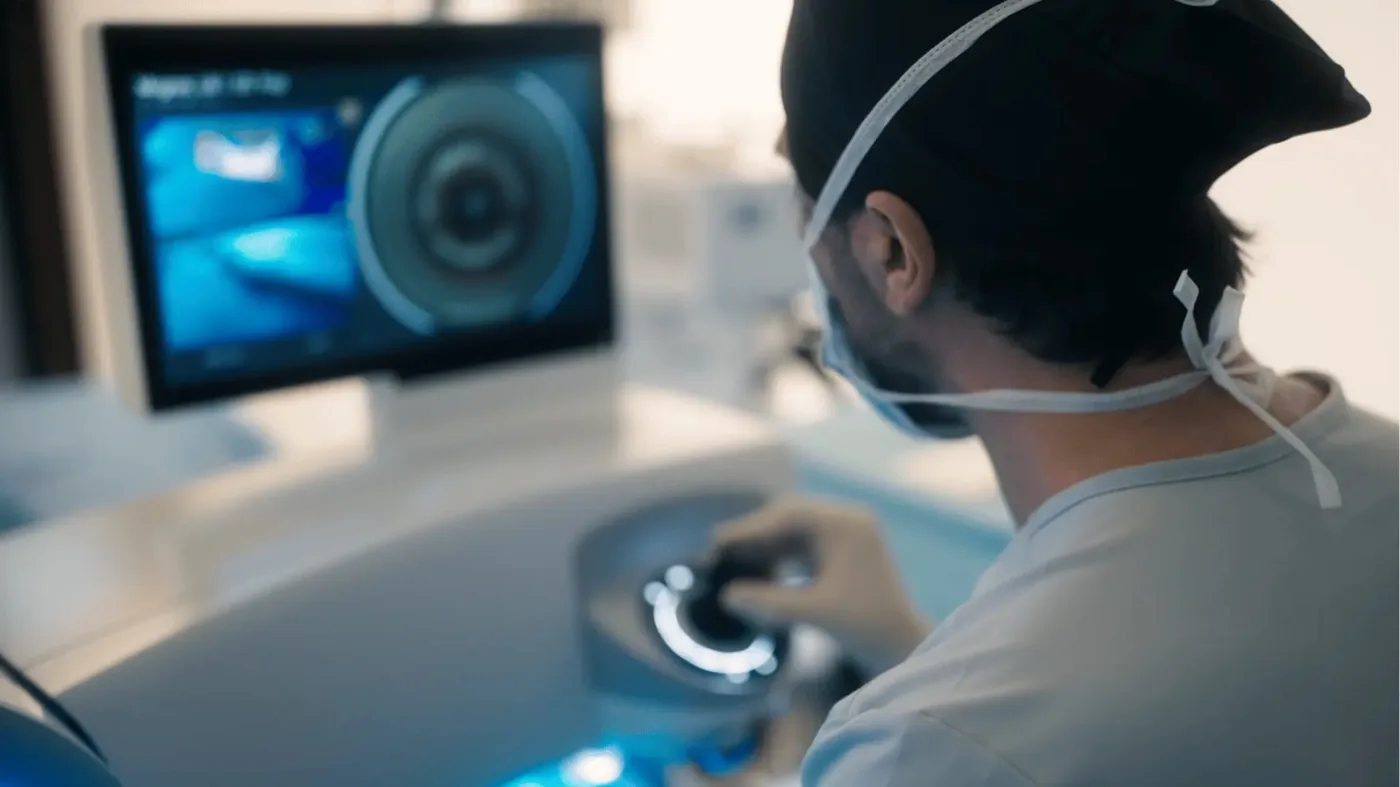
0 D target
Your leading eye is set for sharp vision at a distance: road, TV, faces on the other side of the street. We measure which eye leads during the pre-operative examination.
−1.5 D approx.
It is set to be slightly nearsighted. With it, you read your phone, menu and newspaper. The difference between the two eyes is smaller than with classic monovision, which is why getting used to it is easier.
1 Image
A special laser profile extends the sharp range in each eye. The distance and near ranges overlap in the middle, the so-called blend zone. Your brain merges both visual impressions into one.
To see up close, the lens of the eye must curve. In young years, it is soft and elastic, and a small muscle changes its shape in fractions of a second. With every year of life, the lens becomes a little firmer. From about the early to mid 40s, the remaining elasticity is no longer enough for reading distance: You hold your phone farther away, need more light, and at some point the first pair of reading glasses lies on the table.
Presbyopia is not a disease but a normal aging process. It affects normally sighted, nearsighted and farsighted people alike. Nearsighted people notice it later because they can take off their glasses to read; farsighted people notice it earlier. Until about the early 60s, the need for near correction continues to increase, and after that it stays largely stable.
| Solution | What it does | Limit |
|---|---|---|
| Reading glasses | Replaces the missing near focus | Putting on and taking off, distance blurred through the glasses |
| Progressive glasses | All distances in one lens | Narrow viewing zones, head posture, sports |
| Presbyond | Cornea shaped so that both eyes together cover distance to near | Getting used to it is necessary, your own lens continues to age |
| Lens exchange | Your own lens is replaced by an artificial lens with extended depth of focus | Procedure inside the eye, halos depending on the lens |
With classic monovision, one eye is set for distance and the other clearly nearsighted for near, often with a difference of 2 diopters or more. Each eye then sees sharply only in its own range, and the transition in the middle is missing. Many people do not cope with this: The image looks unsteady, and depth perception suffers.
Presbyond works with a smaller difference between the eyes and a special, non-linear laser profile that extends the depth of focus in each eye. As a result, the distance eye still sees well in the intermediate range, and so does the near eye. Both ranges overlap. In studies, clearly more people tolerate this “blended” vision than classic monovision. In our experience, Presbyond suits about 80 to 90 out of 100 interested people. Only your own simulation test is reliable for you.
Presbyond is a treatment profile based on Femto-LASIK. Two ZEISS lasers work one after the other: The femtosecond laser VisuMax 800 cuts a wafer-thin corneal layer (flap), which is folded aside. Then the excimer laser MEL 90 reshapes the cornea underneath according to your individual profile: one eye for distance, one for near, both with extended depth of focus. The flap is laid back and adheres without a stitch.
At the same time, we correct any existing nearsightedness, farsightedness or astigmatism. In everyday life, you then usually need neither distance glasses nor reading glasses. You can read more about the basic technique on the Femto-LASIK page.
From 45, with reading glasses. And a clear lens.
Typical patients are between about 45 and 60, who need reading glasses for near vision and see well at a distance or are nearsighted. Two things are decisive: Your own lens is still clear, and you cope with the principle in the simulation test. Check in four questions what suits you.
Choose your answers. The result adjusts immediately.
1 · How old are you?
2 · How do you see in the distance today?
3 · Has an eye doctor found beginning clouding of the lens?
4 · Do you drive a lot at night for work or need the best depth perception?
Your result
Clear lens, age in the typical range: This is the starting point Presbyond was developed for. Whether you cope with mixed vision is shown by the simulation test before you decide.
How you see with Presbyond Schedule an initial consultationOrientation, not a diagnosis. What matters are the cornea, lens and retina in the pre-operative examination.
Four starting points. Four different experiences.
Presbyond corrects presbyopia together with the rest of your refractive error: at dr.vision nearsightedness up to −8 D, farsightedness up to +3 D and astigmatism up to 5 D. Nearsighted and normally sighted people with reading glasses gain the most. With pronounced farsightedness, a lens exchange is often the more stable solution.
| Starting point | Today | After Presbyond | What matters |
|---|---|---|---|
| Nearsighted | Distance only with glasses; many take off their glasses to read | Distance without glasses, the near eye takes over phone and newspaper | Those who like to read without glasses today notice the difference most. The simulation test shows whether the near eye is enough. |
| Normally sighted with reading glasses | Distance good, reading only with reading glasses | Distance stays sharp, the near eye is set to be slightly nearsighted | A previously healthy distance eye is changed only a little. What matters is whether you get used to mixed vision. |
| Farsighted | Often glasses for distance and near, presbyopic early | Both correctable up to about +3 D | The tissue removal is more extensive, and the effect is less stable over the years. A lens exchange is often a better fit. More: Farsightedness. |
| With astigmatism | Outlines slightly distorted at all distances | Cylinder up to 5 D is corrected in the same procedure | Without correction, both eyes would stay slightly blurred; that would disturb mixed vision. |
Distance, screen, reading. With both eyes.
Each eye alone is a compromise. Both together cover distance through reading. Tap through: this is how you see today without glasses, this is how each eye sees alone after Presbyond, and this is how both together see. For fine print in dim light, some people still need light reading glasses.
Tap a view. The three images show what you see without glasses.

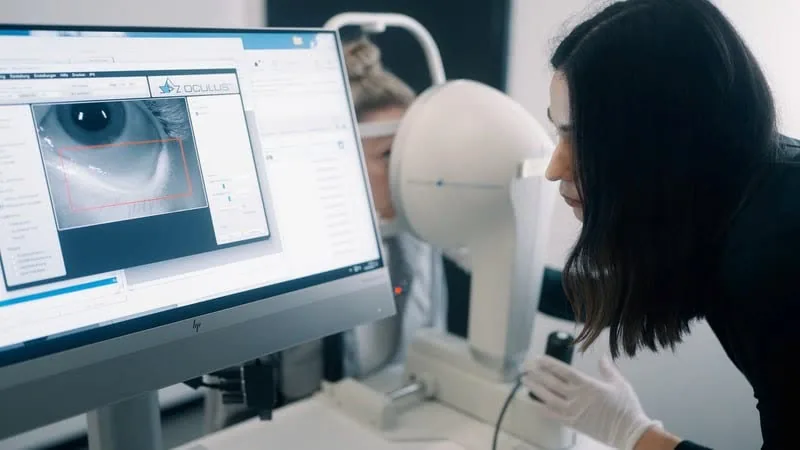
This is how it is for most people who come to us: At a distance you see well, with glasses or contact lenses. The screen at arm's length becomes more tiring, and for phone, menu and package inserts you reach for reading glasses. Every year, a little more strength is needed.
Your leading eye is set for distance. Thanks to the extended depth of focus, its sharp range reaches closer than today, into the intermediate range. For reading it is not enough alone; the second eye takes over that.
The second eye is set to be slightly nearsighted. Phone and newspaper are sharp, and so is the screen. At a distance it sees somewhat blurred on its own. If you cover the distance eye, you notice this. With both eyes open, most people no longer notice it after getting used to it.
For each distance, the brain takes the sharper image. Because the sharp ranges of both eyes overlap, there is no gap in the middle. Driving, laptop, phone and newspaper work in everyday life without glasses. For very small print in dim light, for example in a restaurant in the evening, some people occasionally use light reading glasses.
Astigmatism? We correct it in the same procedure, otherwise outlines would stay slightly distorted in both eyes.
Halos, starbursts, glare. What can be different at night.
In the first weeks, many people see halos around headlights; they usually decrease clearly within three months. At night, the near eye is somewhat softer at a distance; with both eyes, most people do not notice it. If you drive a lot at night for work, discuss exactly that with us before the simulation test.

Choose an effect. The photo shows what it looks like.
Bright rings around headlights and street lamps, mainly in the first weeks, while the cornea heals and the surface of the eye is dry.
Rays around light sources. Stronger with a large pupil in the dark, which is why we measure the pupil before the treatment.
A bright veil in backlight. Usually a sign of dry eyes in the healing phase and well treatable with artificial tears.
From the first day, you see clearly sharper. The brain learns the interplay of both eyes in the following weeks. Many describe it like this: In the first week they still notice which eye is currently “working”, and after a few weeks no longer. Most people have gotten used to it after 4 to 6 weeks; for some it takes up to three months.
What helps: keep both eyes open, do not constantly cover one eye and compare, live everyday life normally. Artificial tears in the first weeks noticeably improve image quality, because a dry surface makes sharpness fluctuate even more.
Because the eyes are set slightly differently, depth perception (stereo vision) may decrease somewhat. In everyday life, when driving and in most sports, this plays no noticeable role; ball sports, golf and skiing work after healing as before. If you depend on the finest depth perception for work, for example at the surgical microscope or as a professional pilot, you should clarify this beforehand with us and, if necessary, with your employer or aviation medical examiner.
Try first. Then laser.
Before every Presbyond treatment, we simulate the result on site during the pre-operative examination: one eye for distance, one for near. In our experience, Presbyond suits about 80 to 90 out of 100 interested people. The simulation test shows you before you decide whether you are one of them. If not, we recommend a suitable alternative.
In the pre-operative examination, we measure which eye leads. This eye becomes the distance eye, and the other takes over near vision.
In the pre-operative examination, we simulate the distribution that we would later laser. That way you see how distance and near work together.
If you cope well, Presbyond suits you. If not, there are three ways: a smaller difference between the eyes, a distance-only correction with reading glasses, or a lens exchange.
If you drive a lot at night for work or work at a microscope, tell us before the simulation test. In these situations, every bit of contrast and depth perception counts.
The simulation test is part of the pre-operative examination and takes place on site at the practice.

Unsure whether laser or lens?
We clarify that together. Call us.
Jana from our Patient Care answers your questions and arranges the pre-operative examination with Prof. Dr. Mehdi Shajari, reachable 24 hours a day.
Laser or lens? Your lens decides.
Both ways can replace reading glasses. Presbyond reshapes the cornea and leaves your lens in the eye, while a lens exchange replaces it with an artificial lens. If the lens is clear, Presbyond is the smaller procedure. If it shows first clouding, we advise a lens exchange, because otherwise cataract surgery will be due in a few years anyway. The prices are close together: €6,398 for Presbyond, from €6,998 for a lens exchange, each for both eyes.
The classic starting point for Presbyond. Your own lens is kept with all its advantages: natural contrast, hardly any halos, no procedure inside the eye.
Then Presbyond corrects presbyopia and, if present, nearsightedness or astigmatism in one step. For nearsighted people, it is often the procedure of first choice.
Presbyond works exclusively on the cornea; the eye is not opened. For many, this is the decisive difference.
Then a lens exchange is the more honest solution: It corrects presbyopia and beginning cataract at the same time, and a cataract can no longer develop afterward. More on the Cataract page.
With farsightedness, a lens exchange is usually more stable. And because it does not touch the corneal nerves, it hardly increases the risk of dry eyes.
Then nothing needs to happen. Good reading glasses are a completely legitimate solution. We will tell you that too, if that is the case.
Three alternatives. Each in direct comparison.
The three alternatives to Presbyond are lens exchange, reading or progressive glasses, and monovision with contact lenses.
Choose an alternative. Presbyond is always on the left, the chosen alternative on the right.
| Criterion | Presbyond | Lens exchange | Glasses | Contact lenses |
|---|---|---|---|---|
| What happens | Laser shapes the cornea: one eye for distance, one for near, both with extended depth of focus | Your own lens is replaced by an EDOF lens (extended depth of focus) or a trifocal lens | Reading or progressive glasses, to put on and take off | Monovision with contact lenses: one eye for distance, one for near |
| Procedure | on the cornea, the eye is not opened | inside the eye | none | none |
| Own lens | stays, continues to age | is replacedCataract ruled out afterward | stays | stays |
| Typical age | about 45 to 60, clear lens | from the mid 50s, certainly with beginning clouding | any | any, as long as the eyes tolerate lenses |
| Nearsightedness, farsightedness, cylinder | corrected as well: up to −8 D, +3 D, 5 D | corrected as well, in the same procedure | in the lenses of the glasses | in the contact lenses |
| Without glasses in everyday life | usually yesFine print in dim light sometimes light reading glasses | usually yes, depending on the lens | no | as long as you wear the lenses |
| Night vision | halos at first, still noticeable after 3 months in about 5 in 100 | depending on the lens; trifocal 1 in 10 at first, under 1 in 50 after 3 months | unchanged | unchanged |
| Dry eyes | common in the first months | hardly | none | Contact lenses can dry out the eyes |
| Adjustment | a few weeks, can be checked beforehand in the simulation test | a few weeks to months with multifocal lenses | Progressive: a few days to weeks | a few days |
| Fit for work | after 1–2 days | after 2–3 days | immediately | immediately |
| Adjustable, reversible? | adjustable by enhancement, up to two distance eyes with reading glasses | lens can be exchanged, but it is involved | at any time | at any time |
| Costs | €6,398 both eyes | from €6,998 both eyes | at the optician, new every few years | ongoing costs |
Guide prices for both eyes according to the GOÄ, including pre-operative examination, treatment by Prof. Dr. Mehdi Shajari and aftercare. You receive your exact costs in writing after the pre-operative examination, before you decide.
In detail: Presbyond or lens exchange compared in depth, all ways to get rid of reading glasses.
Your own lens continues to age after Presbyond. At some point, often only after many years, a cataract can develop. The surgery is then possible as usual. For calculating the artificial lens, it helps to know the values from before the laser treatment; you receive these data from us in writing. With cataract surgery, you can continue the blended vision strategy with artificial lenses or switch to a multifocal lens.
The German Ophthalmological Society and its Commission for Refractive Surgery (KRC) advise against procedures that laser multifocal patterns into the cornea (“PresbyLaser”). Presbyond works differently: with a slight difference between the two eyes and extended depth of focus in each eye, not with several focal points in one eye. We follow the KRC's recommendations, check mixed vision beforehand in the simulation test, and advise a lens exchange when the lens is beginning to cloud. If there is a refractive error in addition to presbyopia, the KRC also names Femto-LASIK as monovision (as of 05/2024, section 1.2).
Your path without reading glasses. In four steps.
The Presbyond treatment at dr.vision takes place in four steps, from the initial consultation through the pre-operative examination with simulation test and the day of treatment to aftercare. From the first question to the last follow-up check: You know what is happening at every step. Between the pre-operative examination and the treatment there are at least 24 hours of time to think it over, and before you decide, you check mixed vision in the simulation test.
Step 1 of 4
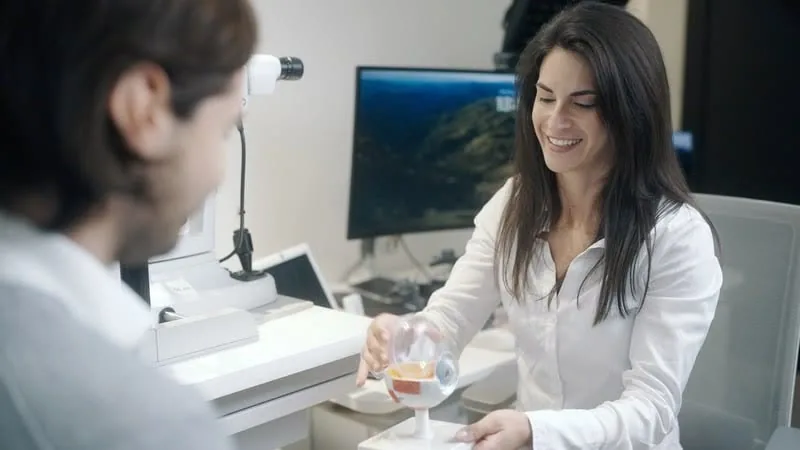
Clarify whether laser or lens is an option for you.
Bring: glasses, contact lens pass, previous findings. At the practice, duration about 30–45 minutes.
Schedule an initial consultationStep 2 of 4
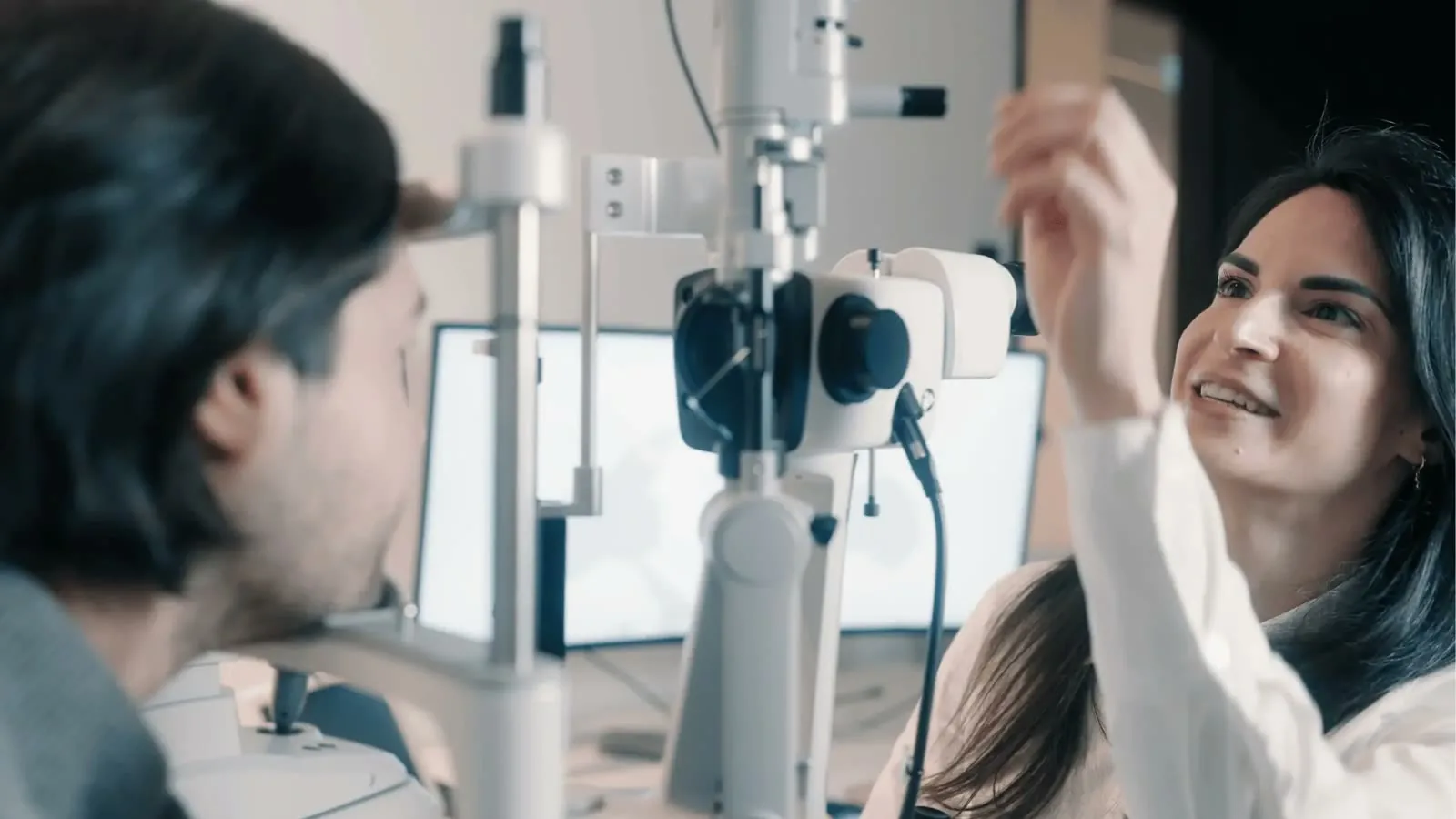
Measure everything. Then simulate on site.
Beforehand: Please leave out soft contact lenses 10–14 days before the pre-operative examination (rigid lenses 3–4 weeks) and again for 3 days before the treatment. You go home with a written recommendation and a cost estimate. The pre-operative examination is included in the price of the treatment; without a procedure, it is charged separately.
How will I see afterward?Step 3 of 4

Both eyes in about 20 minutes. Awake, numbed with drops.
A companion is nice, but not necessary. Please come without eye makeup, have artificial lashes removed beforehand and arrange your ride home: You will not drive yourself that day.

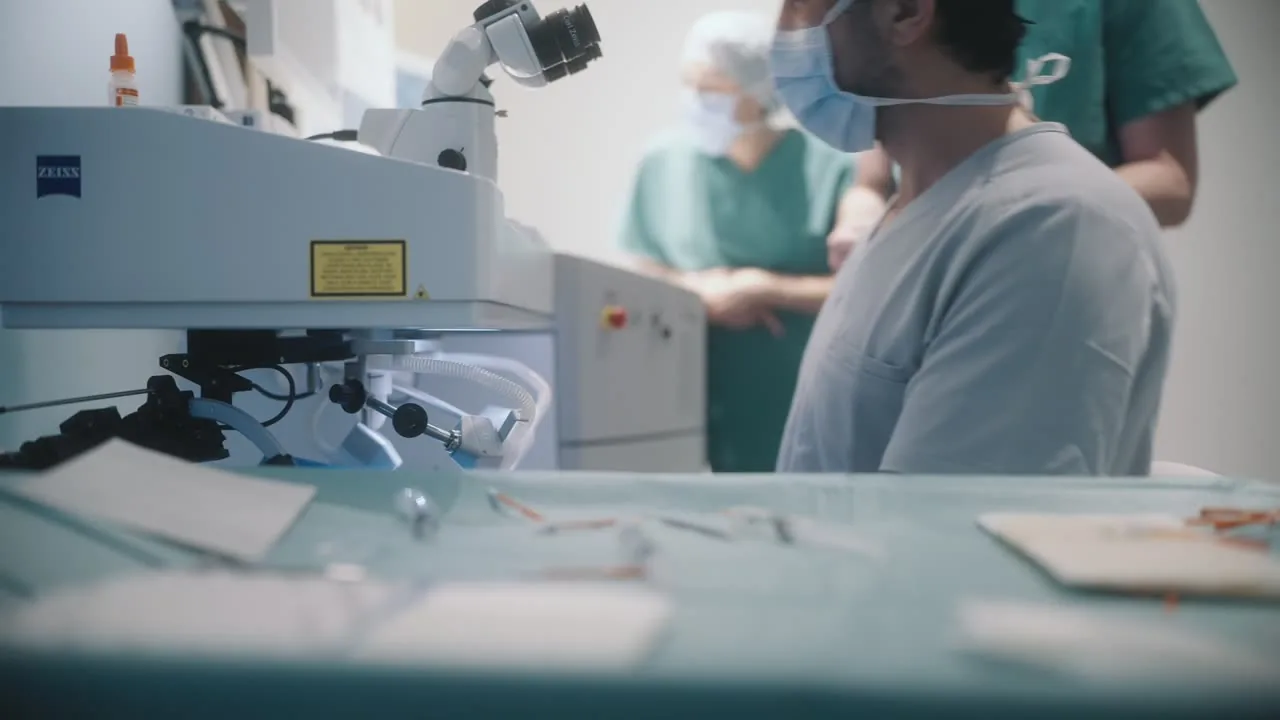

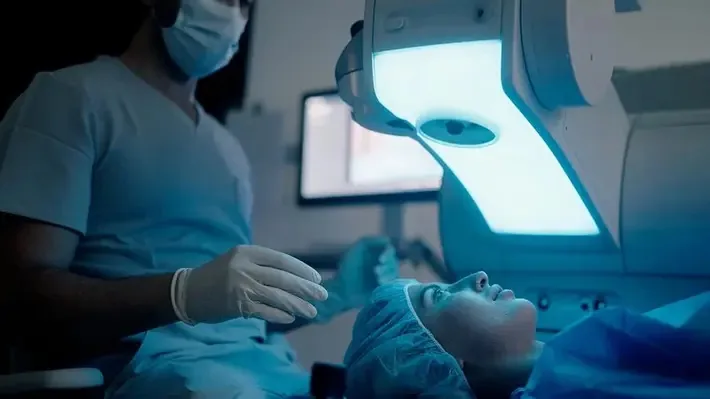 Preparation · Drops
You lie comfortably, and the eye is numbed with drops. An eyelid holder prevents blinking. You feel touch, but no pain.
Femtosecond laser · FlapIn a few seconds, the femtosecond laser makes a precise cut in the cornea. The flap is folded aside.
Excimer laser · ProfileOne eye for distance, one for near, both with extended depth of focus. You look at a light, and an eye tracker follows every eye movement.
Flap back · doneIt adheres on its own and protects the treated area. Then the second eye follows. A short rest, a check, and home.
With Presbyond, both eyes are treated in the same session. This is standard for laser procedures on the cornea and makes sense because the eyes are meant to work together as a team: Only with both eyes does the mixed vision arise that the brain gets used to. Each eye is planned and lasered individually.
You are awake and hear our voice the whole time. Numbing is done with drops. During suction for the femtosecond laser, you feel brief pressure, and the light gets darker for a few seconds. While the excimer laser works, you hear a soft clicking and may briefly smell something reminiscent of burnt hair. You have no pain. If you are very tense, you receive a light sedative on request.
Step 4 of 4
Follow-up checks until the eyes are a team.
Antibiotic and anti-inflammatory drops for about 1–2 weeks, artificial tears for a few weeks. Emergency number around the clock. The follow-up checks are included in the price.
After Presbyond, most people are back at the office after 1 to 2 days. You can usually drive after the follow-up check the next day. Light exercise is possible after about 1 week and swimming after two weeks. All procedures side by side: When am I fit again?
| Activity | From when | Note |
|---|---|---|
| Screen, phone, reading | From the next day | Take breaks, use artificial tears; near vision becomes even better in the first weeks |
| Driving | As a rule after the follow-up check the next day | At night only when halos no longer bother you |
| Work (office) | Usually after 1–2 days | Dust, construction sites, kitchen: about 1 week |
| Showering, washing hair | From the day after the procedure | No water and no shampoo in the eye |
| Jogging, fitness, cycling | Light exercise after about 1 week | No sweat in the eye, do not rub |
| Eye makeup | After 1 week | Use new products |
| Swimming, sauna | After 2 weeks | In the sea and lakes after about 4 weeks |
| Ball sports, combat sports | After about 2 weeks | Protective glasses; the flap remains vulnerable to hard blows |
| Flying | From the day after the procedure, once cleared at the follow-up check | Dry cabin air: artificial tears in your carry-on |
Just a few hours after the treatment, most people see clearly better, and the next morning usually well at a distance. Near vision takes a little longer: The surface of the cornea smooths, the tear film stabilizes, and the brain learns to connect the two eyes. After a few weeks, vision is stable in everyday life, and final after about three months. Fluctuations over the day, especially in the evening at the screen, are normal during this time and usually a sign of dry eyes.
Normal in the first hours and days: burning and tearing for some hours, then a sandy feeling, light sensitivity, small red spots on the white of the eye (from the suction, harmless, gone within two weeks), fluctuating sharpness and dry eyes over some weeks.
Report immediately: increasing pain, clearly worse vision after initial improvement, severe redness with light sensitivity, or a feeling that the flap has shifted (for example after a blow to the eye). You receive an emergency number that can be reached around the clock.
For patients traveling a long way
Under 72 hours hrs
Treated and back home.
Questions? We help with travel, accommodation and appointments.
Your travel plan
We plan glasses prescription, contact lens break, appointments and an overnight stay within walking distance together.
All measurements, the simulation test on site and the conversation with Prof. Dr. Mehdi Shajari, at least 24 hours before the treatment.
Both eyes in about 20 minutes, then rest at the hotel.
On request, your local eye doctor takes over the further follow-up checks, with our plan.
Safe does not mean without risk.
The safety rate for procedures performed by Prof. Dr. Mehdi Shajari is 99.9%. The most common effects of Presbyond are companions of healing: dry eyes and halos in the first weeks. In addition there is a risk that exists only with blended vision: that you do not get used to the interplay of the eyes. That is why we test beforehand.
When the flap is cut, fine corneal nerves that control tear flow are severed. Until they have regrown, the eyes feel dry and burn, or vision fluctuates in the evening at the screen.
up to 5 in 10
noticeable in the first weeks, still bothersome after a year in about 1 in 20.
Measure the tear film beforehand and treat dry eye before the procedure. Afterward, preservative-free artificial tears and, if needed, further therapy. With pronounced dryness, we advise a lens exchange beforehand.
Rings and rays around lights in the dark, plus somewhat less contrast in dim light. The causes are healing of the cornea, a dry surface and the large pupil at night.
common in the first weeks
still noticeable after three months in about 5 in 100, rarely bothersome.
Measure the pupil in the dark, adjust the profile accordingly, artificial tears. If you drive a lot at night, mention this before the simulation test.
After healing, one eye does not hit the target exactly, or distance and near should be distributed somewhat differently. Then the laser is used for further work.
about 1–2 in 10
in studies on Laser Blended Vision; more often than with distance-only correction, because two targets must be hit.
Exact measurement, experienced planning and an interval of at least three months before we enhance, so that the values are stable.
The brain does not merge the two images satisfactorily. Vision seems unsteady, depth perception unfamiliar, and reading tiring.
rare
The simulation test shows beforehand whether you cope with mixed vision.
Check beforehand in the simulation test. And if it does not suit you after all: The difference between the eyes can be reduced by enhancement, up to two distance eyes with reading glasses.
Wrinkles in the flap or cells under the flap (epithelial ingrowth). Rarely: displacement after a blow in the first weeks.
under 1 in 100
requiring treatment; most can be corrected well.
Precise cut with the VisuMax 800, check the day after the treatment, protection from rubbing in the first weeks. Wrinkles or ingrowth are treated by lifting and smoothing the flap.
A non-infectious inflammatory reaction between the flap and the cornea, usually in the first 1–5 days. Vision becomes slightly milky; pain is rare.
about 1 in 100
usually mild.
We detect it at the checks after the procedure. Cortisone drops almost always clear it up completely; rarely, the flap has to be rinsed.
Bacteria get under the flap or into the cornea. Signs in the first days: increasing pain, redness, worse vision.
under 1 in 1,000
Sterile working, antibiotic drops, a check the day after the treatment and an emergency number around the clock. If infection is suspected, we treat on the same day.
After the tissue removal, the cornea is too weak and bulges forward over months to years. Vision becomes blurred and distorted.
about 1 in 1,000 or rarer
with careful pre-operative examination.
Measure corneal thickness and shape precisely, rule out risk eyes (signs of keratoconus) and remove only as much as remains safe. In the rare case, cross-linking stabilizes the cornea.
Frequencies from the literature on Femto-LASIK and Laser Blended Vision. More: Risks of all laser procedures, dry eyes after laser eye surgery.
First give your brain time: Getting used to it usually takes a few weeks, and for some up to three months. If mixed vision is still bothersome after that, there are ways back. With an enhancement, the near eye can be set more toward distance. Then you see the same with both eyes again, sharp at a distance, and read with reading glasses. That is not the goal, but a safe fallback.
The correction on the cornea is permanent. What changes is your own lens: Until about the early 60s, it can focus on near objects less and less well. For most people, near vision nevertheless stays suitable for everyday life, because the near eye does the work. If needed, an enhancement is possible, provided the cornea is thick enough. If the lens clouds later, cataract surgery follows, and with it vision can be set again for all distances.

Because they are your eyes.
One surgeon for both eyes, the latest ZEISS lasers VisuMax 800 and MEL 90, 5.0 stars from 376 reviews. And honest advice, even if in the end a lens exchange or reading glasses are the better choice.
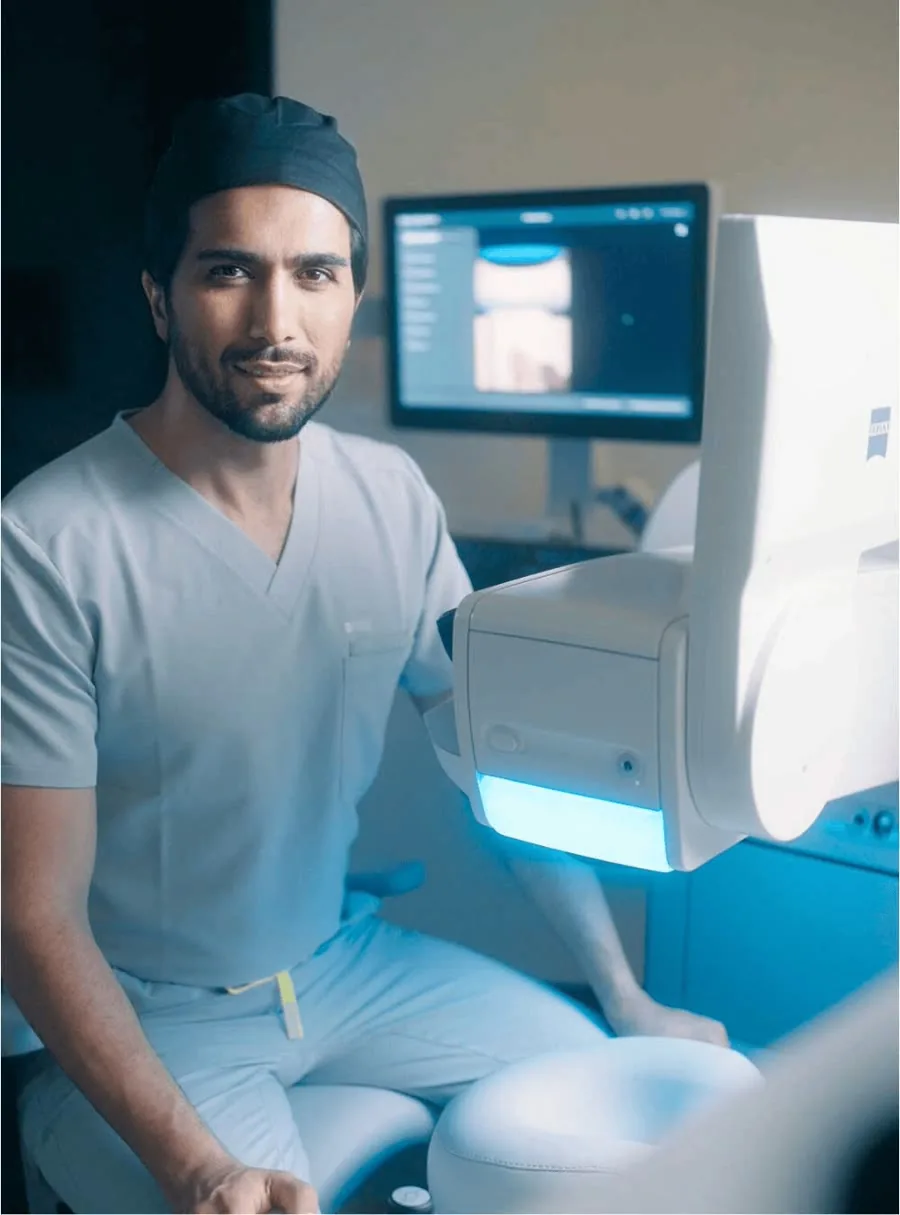
Every treatment: Prof. Dr. Mehdi Shajari. Personally.
Prof. Dr. Mehdi Shajari operates on every patient himself. He is a specialist in ophthalmology and professor of ophthalmology (German title: außerplanmäßiger Professor), has over 80 publications on lens and corneal surgery and is an international Key Opinion Leader for ZEISS in laser correction of presbyopia. On @fragdrvision he explains to around 120,000 people how eyes work.
Prof. Dr. Mehdi Shajari has published numerous papers on freedom from glasses, teaches, and has trained several colleagues in this field.
What you get with us.
One surgeon
Both eyes, every treatment. ZEISS key opinion leader for Presbyond.
Reviews
5.0
376 Google reviews
Laser or lens
Even if reading glasses are the best solution.
Corneal thickness and shape, tear film, pupil, lens, retina. Plus the simulation test on site. You go home with a written recommendation and a cost estimate.
5.0
★★★★★
from 376 Google reviews
No changing team. The person who performs your pre-operative examination also treats you.
2
ZEISS lasers in tandem: VisuMax 800 and MEL 90.
If an enhancement is medically sensible, under our concept it is usually possible within 6 months without a co-payment.
We adjust the leading eye, near target and depth of focus to your everyday life and your simulation test.
Presbyond, SMILE Pro/SmartSight, Femto-LASIK, ICL (additional lens in front of your own lens) and lens exchange. We recommend what suits your eyes.
Billing according to the GOÄ, financed on request. You receive your exact costs in writing after the pre-operative examination, before you decide.
Jana answers questions about the process, appointments and costs via WhatsApp, usually within 10–15 minutes, Mon–Fri 8:00–19:00, Sat 9:00–15:00. We are available by phone around the clock.
Patient Care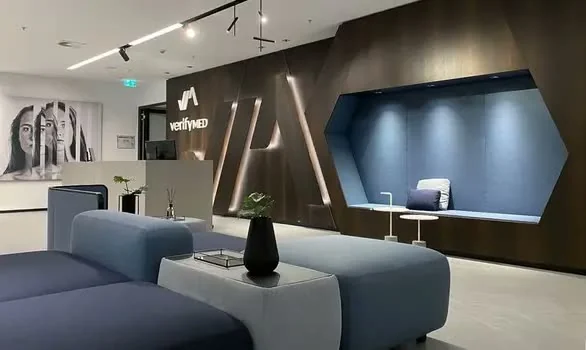
Junghofstraße 16, free parking in the building.
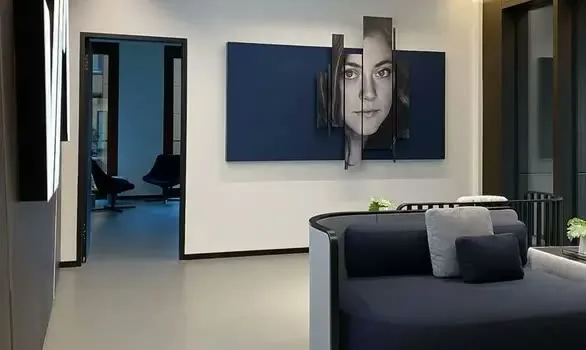
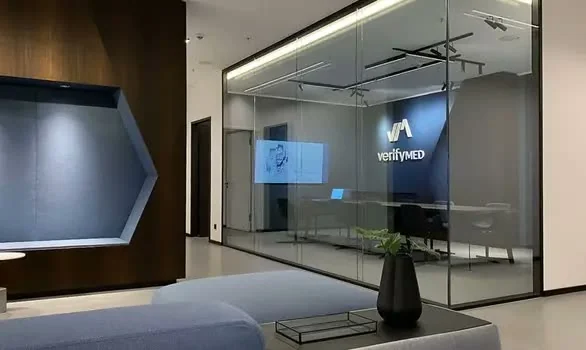
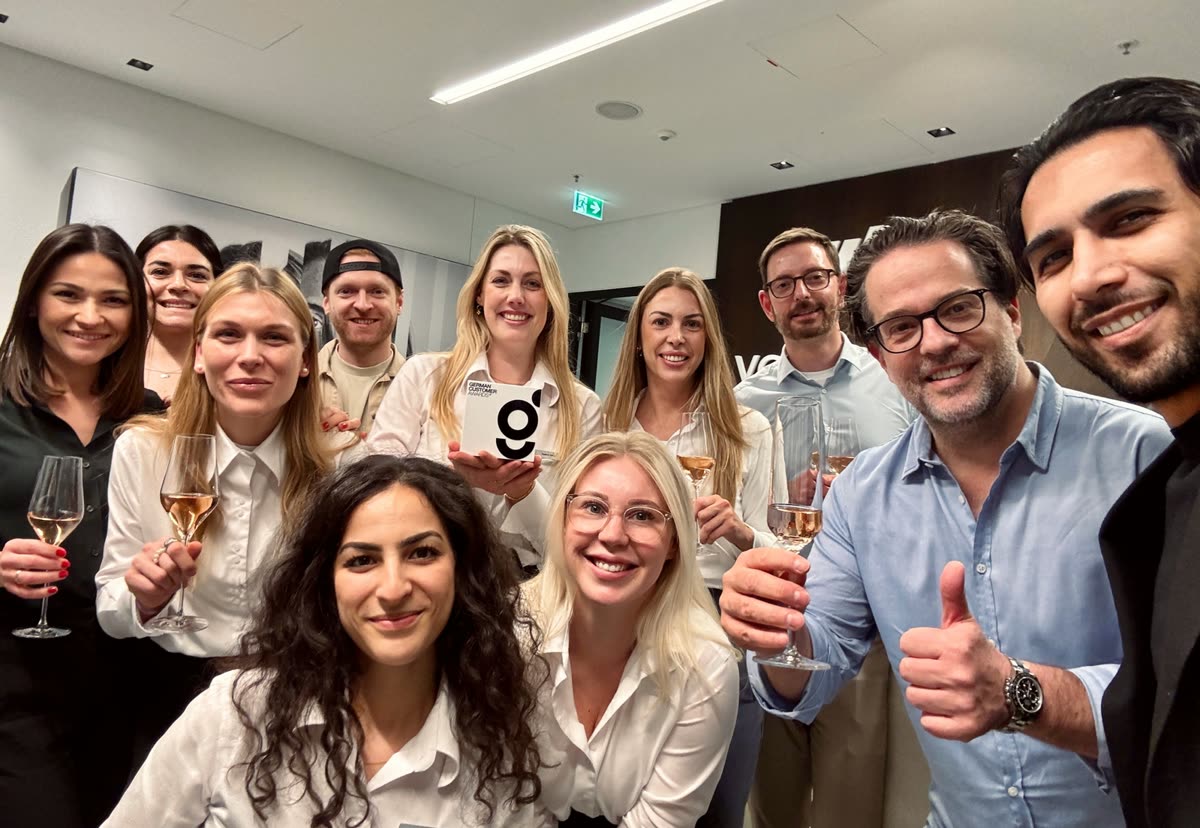
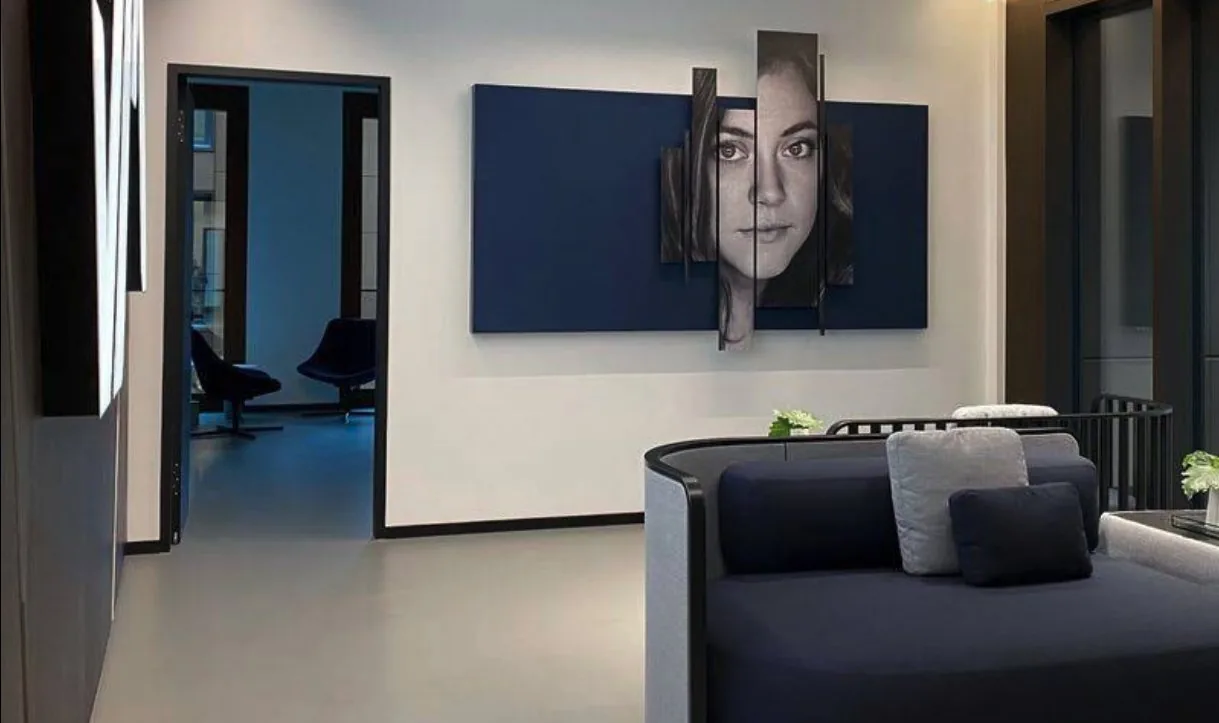
A look inside the practice and the team.
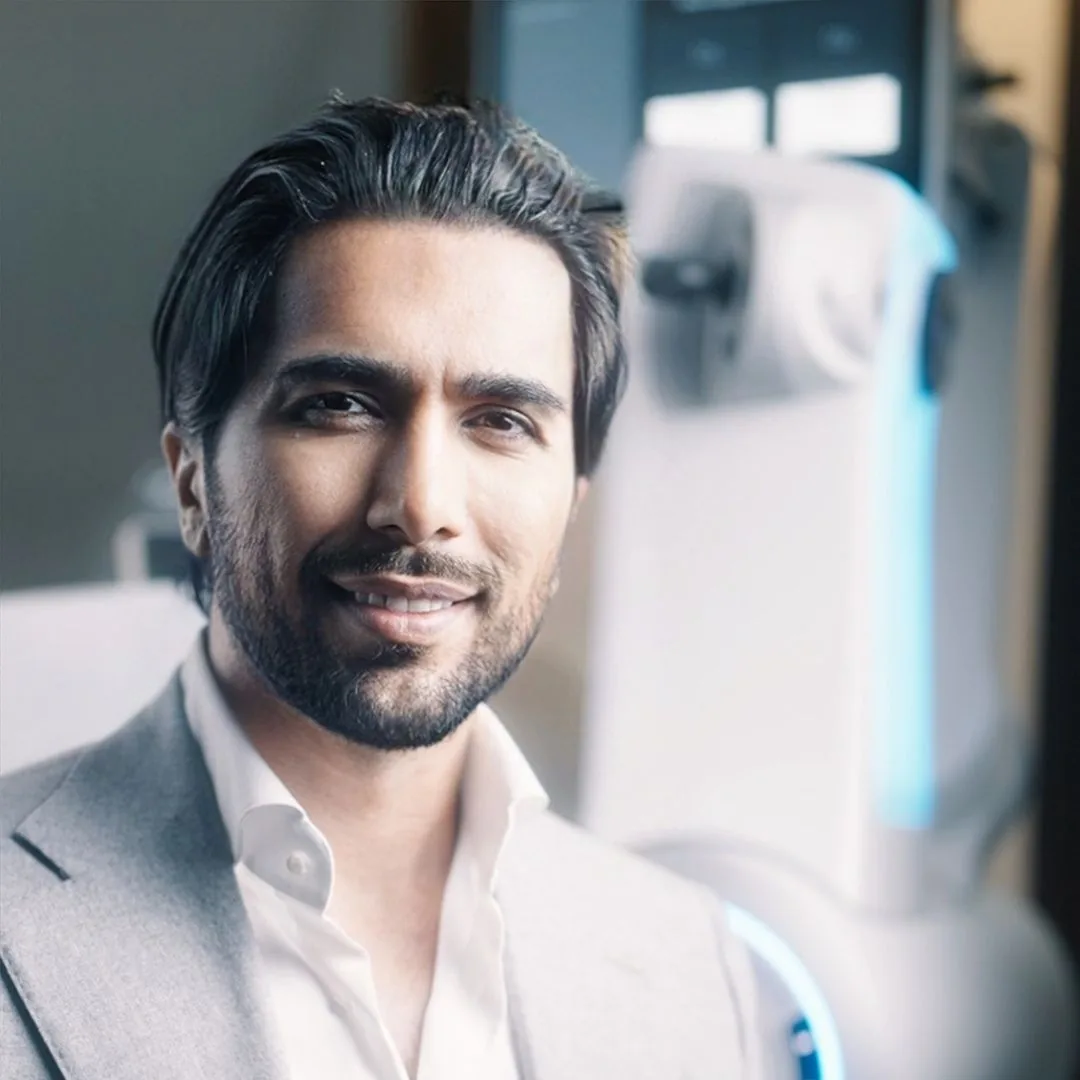
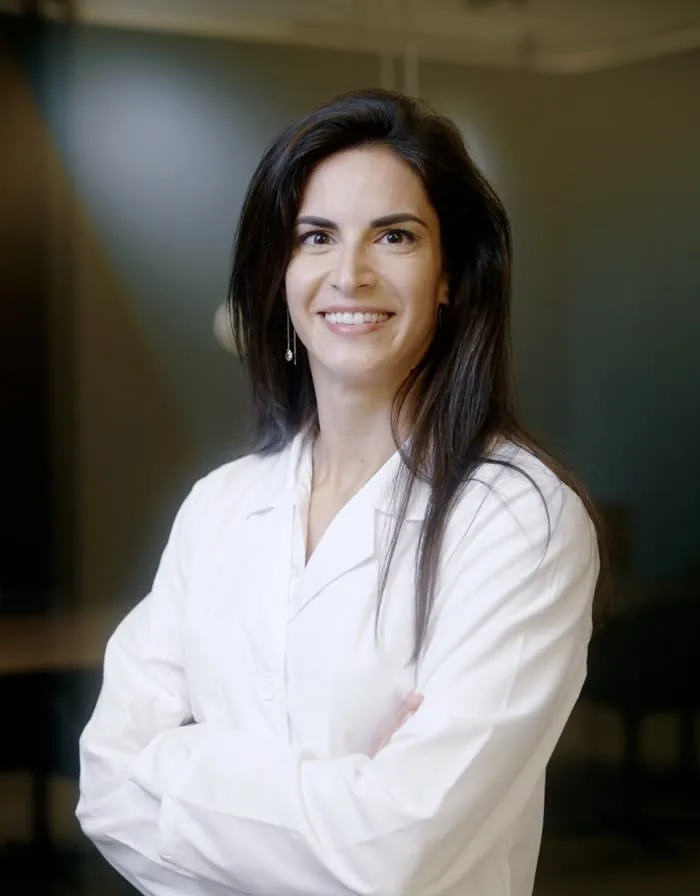
Prof. Dr. Mehdi Shajari performs the Presbyond treatment himself, at dr.vision at Junghofstraße 16 in Frankfurt am Main, 5 minutes from Hauptwache.
Transparent prices. In writing before the treatment.
Guide price for both eyes: €6,398, private medical billing according to the GOÄ (German fee schedule for physicians), including pre-operative examination, treatment by Prof. Dr. Mehdi Shajari and aftercare. You receive your exact costs in writing after the pre-operative examination, before you decide. Private insurers reimburse laser eye surgery in full or in part depending on the plan; patients with statutory health insurance are self-paying patients with us.
€6,398Guide price · Presbyond, both eyes · Billing according to the GOÄ
* Representative example: €6,398 net loan amount · 72 months · fixed nominal interest rate 9.49% p.a. · 9.90% effective annual interest rate · monthly installment €116.90 · total amount €8,416.80 · via medipay. Example 0% over 12 months directly with dr.vision: €6,398 cash price · no down payment · fixed nominal interest rate 0% p.a. · 0% effective annual interest rate · monthly installment €533.17, last installment €533.13 · total amount €6,398.
Whether your private health insurance (PKV) reimburses laser eye surgery depends on the plan. Many plans cover the correction of a refractive error in full or in part; presbyopia alone is assessed differently. You receive a cost estimate according to the GOÄ in advance, to which your insurer can give a binding answer. Reimbursement with private health insurance
Refractive laser treatments are generally not eligible for Beihilfe (allowance for German civil servants), unless glasses and contact lenses are not possible for medical reasons. Your private supplementary insurance can cover part of it depending on the plan. With our cost estimate, you can check in advance with the Beihilfe office and your supplementary insurer what they cover. More about Beihilfe
dr.vision is a private practice without statutory insurance accreditation, and laser eye surgery is not a service of statutory health insurance. You pay yourself, after a written cost estimate and financed on request. You can declare the costs for tax purposes as extraordinary expenses. Statutory health insurance

Financing calculator
1Which treatment?
2How long would you like to pay?
3Your installment
– per day
–
Non-binding example calculation based on the guide price, as in the price calculator. 12 months interest-free directly at dr.vision, 24–72 months through medipay: 9.49% fixed nominal interest rate p.a., 9.90% effective annual interest rate, interest rate as of 12/2025. Daily rate = monthly installment ÷ 30.44 days. If the installment over 72 months is above €3.90 a day, a one-time down payment reduces it to €3.90. Representative example in the footnote*. Photo: Direct Media, StockSnap (CC0).
You can claim medical costs you bear yourself as extraordinary expenses (§ 33 EStG) in your tax return. Whether and how much the tax office accepts depends, among other things, on your reasonable burden (1–7% of income). From us you receive the GOÄ invoice and a medical certificate; we are not tax advisors. Worked examples: Deducting laser eye surgery for tax purposes.
The laser technology is related, the effort is not. For Presbyond, we additionally determine the leading eye and the target value for the near eye, carry out the simulation test and plan a separate depth-of-focus profile for each eye. In addition, the conversations are longer and the follow-up checks during the adaptation phase are closer together. Femto-LASIK (guide price €4,298 for both eyes) corrects only the refractive error at a distance; from about 45, reading glasses then remain.
You are not alone
Questions about reimbursement? Our Patient Care team can help: 069 509 586 770 (available 24 hours)
| Procedures | ZEISS PRESBYOND Laser Blended Vision based on Femto-LASIK |
|---|---|
| For whom | Presbyopia, typically about 45 to 60, own lens clear, simulation test passed |
| Correction range | Nearsightedness up to −8 D, farsightedness up to +3 D, astigmatism up to 5 D |
| Laser | ZEISS VisuMax 800 (femtosecond laser) and MEL 90 (excimer laser) |
| Duration | about 20 minutes for both eyes, on the same day |
| Anesthesia | Drops, sedative on request |
| Fit for work (office) | usually after 1–2 days |
| Adjustment | usually a few weeks, stable after about 3 months |
| Sports / swimming | light exercise after about 1 week / after 2 weeks |
| Enhancement | about 1–2 in 10 |
| Costs for both eyes | €6,398 (guide price according to the GOÄ) |
| Financing | 0% over 12 months or 24 to 72 months through medipay |
| Insurance | Private health insurance (PKV) depending on the plan, Beihilfe generally not, patients with statutory health insurance as self-paying patients |
| Treating physician | Prof. Dr. Mehdi Shajari |
| Location | Junghofstraße 16, 60311 Frankfurt am Main · Düsseldorf and Stuttgart 2027 (preliminary talk already in Frankfurt) |
Go deeper.
Here you read the most important points about Presbyond. More detail follows on these pages, each with the assessment of Prof. Dr. Mehdi Shajari and the questions from consultation hours:
Laser or lens against reading glasses: vision, risks, durability and costs in a detailed comparison.
To the comparison From 45All ways to deal with presbyopia, from progressive glasses to the artificial lens.
To the overview A lens instead of a laserIf your own lens is beginning to cloud or you are clearly farsighted, from €6,998 .
To lens exchange Basic techniqueThe procedure on which Presbyond is built, also for farsightedness, €4,298 for both eyes.
To Femto-LASIK Later in lifeIf your own lens becomes cloudy: process, lens choice and costs, also after Presbyond.
To cataract LocationAll laser procedures at dr.vision on Junghofstraße, directions, parking, appointments.
To the locations pageStill have questions?
“These are the questions about Presbyond that I hear most often in consultation hours. Here are my answers.” Prof. Dr. Mehdi Shajari
Usually from about 45, when presbyopia is noticeable and you need reading glasses for near vision. Up to about 60, Presbyond is a good option as long as your own lens is clear. After that, or with beginning clouding of the lens, a lens exchange is usually the more lasting solution.
Yes. We correct nearsightedness, farsightedness and astigmatism in the same procedure. Nearsighted people are even particularly well suited. How much can be corrected depends on the corneal thickness, which we measure in the pre-operative examination.
Presbyond is possible up to about +3 diopters. With farsightedness, however, the tissue removal is more extensive and the effect is less stable over the years than with nearsightedness. That is why, with pronounced farsightedness, especially from the mid 50s, a lens exchange is often the better solution. We discuss this after the pre-operative examination.
That depends mainly on your own lens. If it is clear and you are about 45 to 60, Presbyond is the smaller procedure. If the lens shows first clouding, you are clearly farsighted or you have dry eyes, we tend to advise a lens exchange. The guide price is €6,398 for Presbyond and from €6,998 for a lens exchange, each for both eyes.
Generally not. The eyes are numbed with drops. During suction, you feel brief pressure, usually no pain. After the treatment, the eyes burn and tear for a few hours, and after that they usually feel only dry or sandy.
Both eyes are treated in the same session, and the pure laser time is only seconds to a few minutes per eye. With preparation, it is about 20 minutes in the operating room. You must not drive yourself afterward; have someone pick you up or take a taxi.
Yes. The simulation test is part of the pre-operative examination. On site, we simulate the result: one eye for distance, one for near. Then we evaluate together whether mixed vision suits you. If it does not, you receive a different recommendation.
In everyday life usually not: For phone, newspaper, screen and distance, you do not need glasses. For very small print in dim light, such as a package insert in the evening, some people occasionally use light reading glasses. There is no guarantee of complete freedom from glasses.
Yes, most people drive at night as before once they have gotten used to it. In the first weeks, halos around headlights are common; they usually decrease clearly within three months. If you drive a lot at night for work, discuss this with us before the simulation test.
From the first day, you see clearly sharper. The brain learns the interplay of both eyes in the following weeks: Most people have gotten used to it after about 4 to 6 weeks, and some need up to three months. It helps to keep both eyes open and to use artificial tears.
The correction of the cornea is permanent. Your own lens, however, continues to age: Until about the early 60s, presbyopia still increases somewhat, and at some point a cataract can develop. If needed, an enhancement is possible, and with a later cataract, a lens exchange.
At the office usually after 1 to 2 days. For screen work, breaks and artificial tears help in the first weeks. For dust, dirt or physical work, plan on about one week. Light exercise after about 1 week, swimming and sauna after two weeks.
Most people get used to it within a few weeks, and almost all after passing the simulation test. If mixed vision remains bothersome, the near eye can be switched to distance by enhancement. Then both eyes are set for distance, and you use reading glasses for reading.
At dr.vision, the guide price is €6,398 for both eyes, billed according to the GOÄ, with the cost estimate in writing after the pre-operative examination. Statutory health insurers do not pay for laser eye surgery; dr.vision is a private practice, and patients with statutory health insurance are self-paying patients. Private insurers reimburse in full or in part depending on the plan.
You can declare the costs as extraordinary expenses in your tax return. Whether and how much the tax office accepts depends, among other things, on your reasonable burden. You can finance it, for example, with €117 per month over 72 months through medipay or from €533 per month interest-free over 12 months directly at dr.vision. You receive the documents for insurance and taxes from us.
Medically reviewed by Prof. Dr. Mehdi Shajari · As of October 2026
Not ready yet? Everything important to read again and to pass on.
Arrives by e-mail in about 60 seconds. No newsletter, just the guide and, if you wish, a follow-up from Patient Care. Privacy policy
How would you like to continue?
Online, by phone at 069 509 586 770 (reachable 24 hours) or via WhatsApp. The first appointment is a free consultation, and you may wear your contact lenses. After that, following 10 to 14 days without contact lenses (rigid lenses 3 to 4 weeks), comes the detailed pre-operative examination with Prof. Dr. Mehdi Shajari: corneal thickness and ‑shape, tear film, lens and retina, plus a talk about whether Presbyond, a lens exchange or reading glasses suit you best. You go home with a written recommendation and a cost estimate.
In Frankfurt, Junghofstraße 16 · all measurements included
Our locations.
 Opening hours
Junghofstraße 16, 60311 Frankfurt am Main
 Opening 2027
Breite Straße 69, 40213 Düsseldorf (in the Neuer Stahlhof, corner of Graf-Adolf-Platz)
Until opening: preliminary talk in Frankfurt, Patient Care plans your travel.
Plan route Opening 2027
Lautenschlagerstraße 23, 70173 Stuttgart (2nd floor, step-free access)
Until opening: preliminary talk in Frankfurt, Patient Care plans your travel.
Plan routePresbyopia can't be treated with a laser. True or false? In fact, this is one of the biggest misconceptions or misjudgments there is in ophthalmology. For a long time it was not possible to treat presbyopia. That means people who needed reading glasses could not be treated with a laser. Today, however, that is a thing of the past. There are procedures with which presbyopia can be treated with a laser, too. And that is exactly what we will look at now. It is called Presbyond.
What is presbyopia in the first place? Presbyopia is a situation where, often from around the age of 40, 45 or 50, we can no longer increase the refractive power of our eye. When we are young, we are able to change the shape of our lens, and so we can focus sharply on objects nearby and also see normally in the distance. But at some point in life, this part here, this is the lens in the eye, is no longer so flexible and we can no longer increase our refractive power, so to speak. Then we develop presbyopia, with the consequence that we can no longer focus sharply up close. What you often see is that patients or people have to hold their phone, most often, farther and farther away from themselves, because they can no longer increase the refractive power. And as a rule, this can then only be fixed with reading glasses. Today there is, on the one hand, the option of correcting it surgically as well, with an implanted lens. That means the lens that is no longer flexible is exchanged, and a lens is inserted that can focus sharply at several distances. Or, alternatively, the eye is treated with a laser. And that laser treatment now has a very special profile, and that is exactly what we will look at next.
I come from Frankfurt, and perhaps you have heard of the so-called Goethe gaze. Goethe was in a very special situation. Throughout his life he was actually able to get along quite well without reading glasses, because he had a special feature in both eyes. The refractive power was different in his two eyes. In one eye he had an increased refractive power for near vision, and with the other eye he could see very well in the distance. Today this is called monovision, and it is actually used in surgery. That means one eye sees well at one distance, for example up close, and the other eye at another distance, for example far away. And in the Presbyond procedure we do exactly that, on the one hand. If we imagine we have the right and the left eye, and we have the situations near, intermediate distance, meaning a monitor, and far, for example a television. Then with the Goethe gaze, for example, one eye saw sharply up close and the other eye in the distance. With the Presbyond procedure we now do something different. With Presbyond, we set one eye for near, and the other eye for distance as well. But there is an addition. And that addition is that we add some depth of focus. That means it is no longer a single point that can be seen sharply, for example only near vision, but through depth of focus, through induced depth of focus, we can see near and intermediate distance with one eye. And with the other eye we do the same, in a way, for the intermediate and near distance. And this gives a very big advantage: the images of both eyes harmonize better with each other, because we have an overlap zone here. People often speak of the blend zone. This is the overlap zone that makes the image between both eyes very harmonious. And on the other hand, each individual eye on its own has more depth of focus, which means we can see more objects sharply at different distances.
Who is Presbyond suitable for? Basically, anyone who has presbyopia is a Presbyond candidate. Other refractive errors may be present as well. The main thing is that presbyopia is already present. That means, for example, someone who has had no glasses all their life, so with normal vision, and now notices in older age that they slowly need reading glasses. These people can be treated with Presbyond. But so can people who have worn glasses all their life and now want to be free of everything, so to speak. So someone who was nearsighted, for example, and has now also become presbyopic: both the nearsightedness and the presbyopia could be corrected in the same procedure. The same applies to astigmatism and also to farsightedness. Of course, there are certain limits within which all this is possible. So you can't correct any refractive error of any strength with Presbyond. But those are the general rules that apply to laser treatment anyway. For example, we can't just treat someone with 10 diopters with a laser. That is legally allowed, but I would not recommend simply treating someone with 10 diopters with a laser. There are better procedures for that. As a rule, I would prefer a lens procedure there. But for lower refractive errors, so anything up to six diopters of nearsightedness, for example, plus additional presbyopia, Presbyond, or the laser procedure itself, is very, very well suited.
How does Presbyond work now? Ultimately, the procedure itself, the surgery itself, is more or less very similar to Femto-LASIK. So actually nothing changes for the patient or for the doctor. Only the device has to be set up slightly differently to apply this special profile, so that you get this depth of focus. That is really the only thing that has to be programmed differently. But the surgical procedure is like Femto-LASIK. We have recorded some videos on exactly how it works, which you are welcome to watch. What is a big difference compared to the usual Femto-LASIK treatments, however, is the preparation. There are certain tests that we have to do specifically for Presbyond, because we really have to be sure that the person tolerates a certain difference between the two eyes. We have to clarify that beforehand. And only if the person tolerates it, so to speak, if they cope with the eyes being set differently and with a certain depth of focus being built in, only then do we carry out a Presbyond procedure. That means the surgery itself is like Femto-LASIK, but the preparation is considerably more involved than for Femto-LASIK.
Let's go over the risks and side effects. Ultimately, they are just the same as with Femto-LASIK. There are two special features, which I will come to as well, but the majority is identical to Femto-LASIK. That means the main problem with Presbyond is again dry eye, as with Femto-LASIK otherwise. So you have to be prepared to use artificial tears more often for at least three to six months after the surgery, so that you do not have a foreign-body sensation. A disadvantage that is specific to Presbyond compared with normal Femto-LASIK is that there is a higher risk of optical phenomena. By optical phenomena I mean stray light, rings of light, and perhaps also that you do not tolerate the difference between the two eyes as well. Because we have to induce more depth of focus, it can happen that, for example, when you look at a light source, you perceive a ring of light or notice more stray light. This is rare, but it does happen from time to time. It has to be said that most patients, the very large majority, well over 90 percent, get used to these optical phenomena within six months. In a small number of patients it unfortunately persists beyond six months. Fortunately, what can be done then is that the depth of focus can be taken out again. So it is not the case that a person who cannot tolerate it at all is stuck; it is not like with a lens exchange, for example, where you are really limited in your options for correction. With Presbyond you have these correction options. That means if there really should be someone who does not tolerate it at all, this depth of focus can be removed again, so that the person no longer has these optical phenomena. The other thing I see as a certain risk, which is different from normal Femto-LASIK: because we have a very complex profile that we laser into the cornea, there is a higher rate of enhancements. That means you have to be prepared for a certain probability that the person might need to be treated with the laser again after three, four, five or six years, to restore near vision.
So what is the alternative to Presbyond? The alternative to Presbyond, if someone wants to get rid of presbyopia surgically, so I'm not talking about contact lenses and glasses here, if you want to get rid of it surgically, is multifocal lenses. That means we exchange the natural lens: we go into the eye and insert a multifocal lens. In my opinion, as a rule, this is clearly inferior to the laser procedure. Why? Because it has a much higher risk profile. There are certain situations where I would say you would still prefer a lens exchange. For example, if someone has strong farsightedness, or in any case if they already have a cataract, then a lens exchange has to be done. But otherwise you can say that for the majority of patients, the Presbyond procedure is the clearly gentler option compared with a lens exchange. As long as you do not already have dry eyes before the surgery. If you already have dry eyes before the surgery, then I would say better not to use a laser, and rather to perform a lens exchange. But on the whole, in terms of its safety profile, the laser procedure is safer than most of the other options available for correcting presbyopia surgically.
So, bottom line, to pick up where we started: yes, the eyes can be treated with a laser even with presbyopia. It is a very good procedure because it has an extremely high safety profile. If the person does not already suffer from dry eyes before the surgery, it is often also the preferred method for correcting presbyopia. I hope you enjoyed the video and now know that presbyopia can also be treated with a laser. If you have further questions about it, then come by in Frankfurt. I will look at your eye and we will discuss together what the best solution for you would be. Whether it really is Presbyond, or whether we should prefer a lens exchange for some reason. I look forward to your visit, and see you soon, I hope.