 dr.vision
approx.8 sec
the laser works per eye. Both eyes in about 20 minutes.
Start here
What suits you?
Find out in 2 minutes which procedure suits your eyes.
Start the Suitability CheckOr by age:
< 45yearsGet rid of glasses & contact lenses 45–64yearsGet rid of reading glasses 65+yearsCataract & glasses-free★★★★★ 5.0 · 376 Google reviews · 20,000+ procedures
Decide well
What you should know beforehand.
Who operates?Prof. Dr. Mehdi ShajariFOCUS Top Doctor · operates on every patient personally What does it cost?Laser from €3,498 · Lenses from €6,886Prices for both eyes Is it safe?Safety & risks When will I be fit again?Work, sports, driving Would you rather read in peace first?Decision Guide Freedom from GlassesProcedures
Laser or lens?
Laser eye surgery
SMILE ProSmartSightFemto-LASIKTrans-PRKPRKPresbyond (laser away your reading glasses)All laser procedures at a glanceLaser procedures compared ›Lens surgery
ICLLens exchange (reading glasses)Cataract surgery with premium lensLens types: trifocal, EDOF, toricLens types compared ›Start here
Something wrong with your eyes?
A thorough eye check-up with us clarifies what is behind it.
Book an eye check-up★★★★★ 5.0 · 376 Google reviews
Laser eye surgery · SMILE Pro
Glasses-free. Without a flap.
Your path to everyday life without glasses and contact lenses: The laser works for about 8 seconds per eye, without a corneal flap, and you are usually back at the office after 1–2 days. Prof. Dr. Mehdi Shajari operates on you personally, with experience from over 20,000 procedures.
 12× FOCUSTop Doctor
About 8 seconds of laser. Per eye.
approx.8 sec
the laser works per eye. Both eyes in about 20 minutes.
96%
of treated eyes see fully sharp without glasses after 3 months.
1–2 Days
until screen and office. Sports usually after a week.
2–3 mm
is the size of the only access in the cornea. No cover that can shift.
5.198 €
Guide price for both eyes. Or from €3.90 a day.
376 reviews. Average 5.0.
“We chose the ‘Smile Pro method’ even though it is the most expensive, because safety was the priority for our eyes.”
“… I would like to thank the whole team, who looked after and welcomed me warmly and professionally from the first consultation to my follow-up check after the Relex Smile surgery.”
“During my visit to Dr. Mehdi Shajari's practice, I was impressed by the high quality of care and the professionalism.”
“Dr. Shajari's approach is truly remarkable. He is not only highly qualified, but also reliable and always reachable.”
Four patients. In their own words.
It is an absolute liberation.
Less than 24h after surgery, better than ever.
Then everything went fast.
Constantly switching between glasses & contact lenses – not anymore.
SMILE Pro in five answers.
For anyone with three minutes. Each answer leads to the detailed chapter.
A laser eye surgery procedure for nearsightedness. The laser shapes a wafer-thin disc inside the cornea, which is removed through an access of a few millimeters. The cornea changes its curvature, and you see clearly. Without a flap.
To the chapterMostly yes, if you are between 18 and about 45 years old, are nearsighted up to −8 diopters with up to 5 diopters of astigmatism, and your values have been stable for 12 months. SMILE Pro does not correct farsightedness.
Suitability CheckBoth deliver very good results. SMILE Pro needs no corneal flap: fewer severed nerves, dry eyes less often in the first months, no flap risks during sports. LASIK remains the choice for farsightedness.
ComparisonUsually not during the treatment, as the drops numb the eye. You feel pressure. Afterward, a foreign-body sensation for a few hours. Screen and office work mostly after 1–2 days, sports after one week, swimming and sauna after two weeks.
The first daysAt dr.vision, €5,198 for both eyes as a guide price, including pre-operative examination, procedure and aftercare. Financed from €3.90 a day or 0% over 12 months. Patients with statutory health insurance are self-paying patients; private insurers reimburse depending on the plan.
CostsNo flap. No removal at the surface.
The laser draws a lens-shaped disc inside the cornea, as thin as a hair. It is removed through an access of a few millimeters. The cornea becomes flatter, and light again falls precisely onto the retina. The surface stays almost untouched.

−8 D max.
The image forms in front of the retina instead of on it. In the distance everything blurs, up close you see well. SMILE Pro corrects this up to −8 diopters, plus astigmatism up to 5 diopters.
2–3 mm access
The femtosecond laser shapes a lenticule in the corneal tissue whose thickness exactly matches your diopters. Prof. Dr. Mehdi Shajari separates it and removes it through a small side access. No flap is created, as in LASIK.
approx. 8 sec
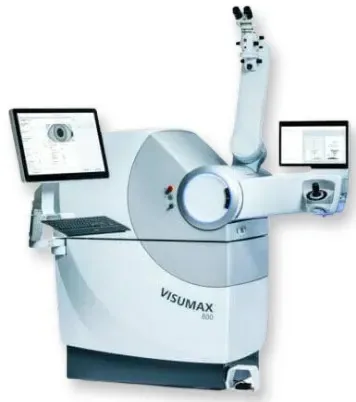
The VisuMax 800 works significantly faster than its predecessor. A shorter laser time means: holding still for less time, less eye movement, more precise centering. The suction gently holds the eye in place.
SMILE stands for “Small Incision Lenticule Extraction”, that is, removal of a lenticule through a small incision. The procedure has existed for more than ten years and is used millions of times worldwide. SMILE Pro is the same principle with the ZEISS VisuMax 800, the newest laser generation.
The difference lies in speed and control: the VisuMax 800 creates the lenticule in around 8 seconds instead of around 25–30 seconds with its predecessor. A centering aid and compensation for eye rotation while lying down help to align astigmatism precisely. For you this means: holding still for less time, less tension. However, as with any procedure, the result depends above all on the pre-operative examination and the surgeon.
The front layers of the cornea carry most of its strength. In LASIK, a flap is cut and folded back exactly there; it grows back at the edge, but no longer carries its full share. In SMILE Pro, these layers are preserved except for the small access, and the lenticule is removed from deeper down.
That is why, in the pre-operative examination, we measure the thickness of your cornea at many points (pachymetry) and its shape (topography, tomography). We only recommend laser treatment if enough tissue remains after the correction. A bulging of the cornea (ectasia) is very rare, well under 1 in 1,000, and this selection lowers its risk further.
Four questions. One honest answer.
SMILE Pro suits nearsightedness up to −8 diopters and astigmatism up to 5 diopters, from age 18 and with values that have been stable for 12 months. For anything above that there are better ways, and we will tell you about them. Choose your values, and the result appears immediately.
1 · Your prescription (stronger eye)
2 · Astigmatism (cylinder)
3 · Your age
4 · Has your prescription changed in the last 12 months?
Your result
Good prerequisites
Your values are in the range where SMILE Pro delivers very good results. Whether your cornea is thick enough and your tear film is in order is shown by the pre-operative examination.
Schedule the pre-operative examination Compare all proceduresGuidance, not a diagnosis. Prof. Dr. Mehdi Shajari makes the decision after measuring corneal thickness, corneal shape, pupil and tear film.
Up to 5 diopters of cylinder.
At dr.vision, SMILE Pro corrects astigmatism up to 5 diopters, together with the nearsightedness in one procedure. The axis is decisive: when you lie down, the eye rotates slightly, and the ZEISS VisuMax 800 compensates for this rotation. Above 5 diopters, Femto-LASIK or a toric ICL (additional lens in front of your own lens) is the better way.
The lenticule is not shaped round, but along the axis of your astigmatism. Nearsightedness and cylinder disappear in the same procedure, without a second laser.
We mark the axis while you are sitting. If the eye rotates when you lie down, the VisuMax 800 aligns the lenticule accordingly. That is exactly what the centering aid of the new laser is for.
Uncorrected astigmatism distorts contours and strengthens halos around lights. Those who have it corrected as well usually see more calmly at night.
Then the value is outside our SMILE Pro range. Femto-LASIK corrects up to about 6 D, the toric ICL up to about 6 D, without removing corneal tissue.
If the cornea is unevenly shaped, an early keratoconus is often behind it. In that case we do not use the laser, but stabilize first. The tomography in the pre-operative examination shows this.
In the column “Zyl” or “cyl”. A value of −1.5 means 1.5 diopters of astigmatism. More on this: Correcting astigmatism.
With the first SMILE lasers, astigmatism was corrected somewhat less completely than with LASIK in some studies, mainly because the eye rotates while lying down and the axis then no longer matches exactly. The VisuMax 800 has a centering aid and compensation for eye rotation for this. With us, marking the axis while sitting is part of every treatment with cylinder.
If a bothersome residual error remains after three months nonetheless, it can be corrected; in our evaluation an enhancement was necessary in 0.6% of eyes overall.
SMILE Pro corrects nearsightedness, not presbyopia. From about 45, your own lens loses the ability to focus up close. If you read without glasses at −3 diopters today, after the laser treatment you will see clearly in the distance and need reading glasses up close, sooner or later.
Between 40 and 45, SMILE Pro is often still a good choice if you know and accept this. From about 45, we rather recommend Presbyond (one eye set slightly for near) or a lens exchange, which solves distance and near at the same time and anticipates a later cataract. At the pre-operative examination, we test what suits your daily life. All age limits at a glance: Laser eye surgery: from what age, until when?
Objective and subjective refraction (your exact diopters, also with the pupil dilated by drops), corneal thickness at many points, corneal shape and back surface (tomography), pupil size in the dark, tear film, eye pressure, retina. You leave soft contact lenses out for 10–14 days for this (rigid ones 3–4 weeks), because they temporarily deform the cornea. Before the procedure, 3 days without contact lenses. The duration of approx. 30–45 minutes is a guide value.
Equally sharp. A different way to get there.
Both procedures achieve comparable visual acuity for nearsightedness. The difference is the route: LASIK folds open a cover and in doing so cuts through a large part of the corneal nerves, while SMILE Pro manages with an access of 2–3 mm. Dry eyes affected 3 in 10 of our patients in the first weeks; after LASIK the share is higher in studies.
SMILE Pro is always on the left, the selected procedure on the right.
| Criterion | SMILE Pro | Femto-LASIK | Trans-PRK | ICL |
|---|---|---|---|---|
| What happens | Laser shapes a disc (lenticule) in the cornea, removal through a small access | Corneal flap, a second laser shapes underneath | Laser removes tissue at the surface, without a cut | Lens is placed in front of your own lens, cornea stays untouched |
| Nearsightedness | up to −8 D | up to about −8 D | up to about −6 D | up to about −18 D |
| Farsightedness | no | up to about +4 D | only low values | up to about +10 D |
| Astigmatism | up to 5 D | up to about 6 D | up to about 3 D | up to 6 D (toric ICL) |
| Access | 2–3 mm, no flap | Flap all around except for a hinge | no incisionbut a wound on the surface | access at the edge of the corneaprocedure inside the eye |
| Dry eyes | 3 in 10 in the first weeks | more common than after SMILE Pro | temporary, a few weeks | rare |
| Pain afterward | a few hours of foreign-body sensation | 4–6 hours of burning | clearly noticeable for 4–5 days | hardly |
| Sharp vision | good on day 1, sometimes still slightly blurry | usually the next morning | after 1–2 weeks, stable after 1–3 months | usually after a few days |
| Work (office) | after 1–2 days | after 1–2 days | after 5–7 days | after 1–2 days |
| Contact sports | usually after 2 weeksno flap that can shift | limitedFlap can shift with a blow | very well suited, after healing | after 2 weeks at the earliest, after consultation |
| Enhancement | possible, mostly as a surface treatment | flap is lifted again | again on the surface | exchange the lens or additional laser treatment |
| Reversible? | no | no | no | yesremove or exchange |
| guide price, both eyes | €5,198 | €4,298 | €3,498 | from €6,886 |
Guide prices for both eyes according to the German fee schedule for physicians (GOÄ), including the pre-operative examination, the procedure by Prof. Dr. Mehdi Shajari and aftercare; you receive your written cost estimate after the pre-operative examination. From about age 45, Presbyond (€6,398) and lens exchange (from €6,998) are added.
In even more detail: SMILE Pro or Femto-LASIK in detail, all laser procedures compared, ICL or laser eye surgery
Without a flap, there is no cover that can shift from a blow to the eye. Martial arts, handball, climbing: SMILE Pro is our first choice here.
Fewer severed nerves usually mean less dryness in the first months. If you already had problems with contact lenses, you benefit from this.
At a screen we blink less often. A more stable tear film in the first weeks makes everyday work more comfortable.
The front, load-bearing layers of the cornea are preserved except for the small access. No wound at the surface as with PRK.
For farsightedness, for astigmatism over 5 D, and when an earlier LASIK is to be enhanced. We recommend the procedure that suits your eyes.
After SMILE Pro, some people still see slightly blurred on the first day, while after LASIK vision is often already sharper. After a few days the difference is gone.
“I do not ask first: Which laser is the most modern? I ask: What do you do in your life, and what does your cornea look like? For nearsighted patients without special features, SMILE Pro is usually my first choice.”
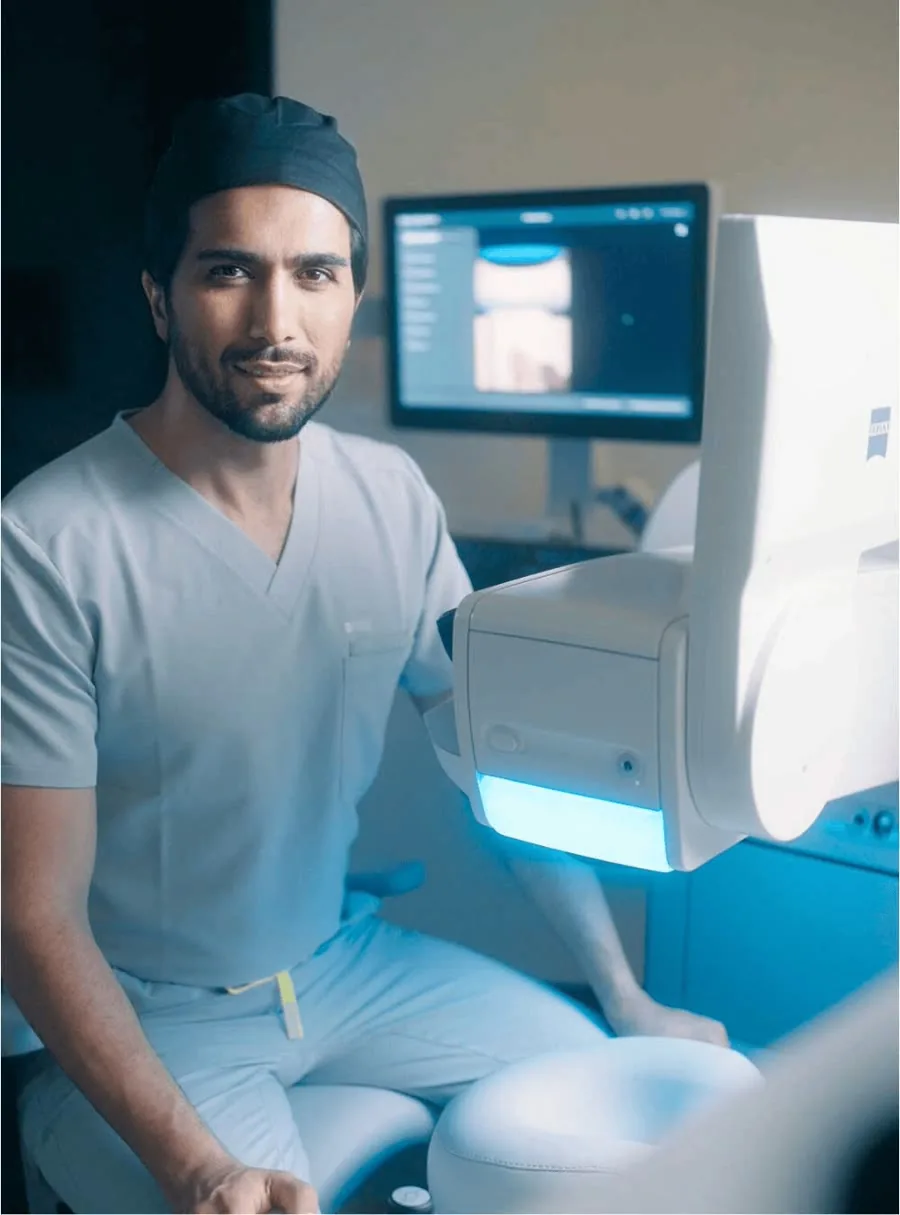 Prof. Dr. Mehdi Shajari
Every laser cuts part of the corneal nerves that control blinking and tear production; with SMILE Pro only at the small access, with LASIK along the entire flap edge. In our patients, 3 in 10 had dry eyes in the first weeks after SMILE Pro; preservative-free artificial tears almost always suffice. How long it lasts and what helps: Dry eyes after laser eye surgery.
Trans-PRK is the only procedure entirely without a cut: the laser removes the cornea from the outside. In return, the top cell layer has to grow back. This takes a few days, during which the eyes burn, water and are sensitive to light; you often see clearly only after 1–2 weeks.
SMILE Pro works deeper in the tissue but leaves the surface almost intact. As a result, you are usually back at the office after 1–2 days. We recommend Trans-PRK when the cornea is too thin for SMILE Pro, with very low values, or if you absolutely want no incision. More on the page about Trans-PRK.
Every laser correction removes corneal tissue, and the higher the diopters, the more. From about −8 D, the lenticule becomes so thick that too little load-bearing tissue would remain. Here Prof. Dr. Mehdi Shajari inserts an implantable contact lens (ICL): it sits behind the iris in front of your own lens, cannot be felt and can be removed if needed.
The ICL is also an option with a thin cornea or markedly dry eyes, where we do not want to cut nerves. More on the page about the ICL and in the comparison ICL or laser eye surgery.
Farsightedness up to about +4 D we correct with Femto-LASIK; SMILE Pro is not used for this in Germany. Presbyopia from about age 45 is not corrected by SMILE Pro: Presbyond sets one eye slightly for near and extends the depth of focus, and lens exchange replaces your own lens with a multifocal lens. If the lens is already cloudy, the cataract is the main focus.

Unsure whether SMILE Pro suits you?
We clarify that together. Call us.
Jana from our Patient Care answers your questions and arranges the pre-operative examination with Prof. Dr. Mehdi Shajari, reachable 24 hours a day.
Your path to freedom from glasses. In four steps.
At dr.vision, SMILE Pro takes place in four steps, from the pre-operative examination through informed consent, planning and laser day to aftercare. The procedure itself takes approx. 20 minutes for both eyes. At every step you know what is happening and what to bring.
Step 1 of 4

Measure everything. Find the suitable procedure.
Please leave out soft contact lenses 10–14 days beforehand (rigid lenses 3–4 weeks) and again for 3 days before the procedure. The pre-operative examination is included in the price of the treatment; without a procedure, it is charged separately.
Schedule the pre-operative examinationStep 2 of 4
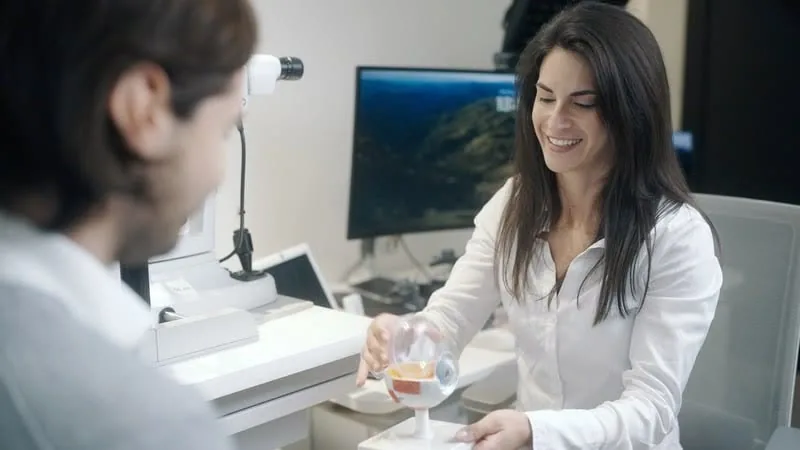
You know exactly beforehand what will happen.
For travelers: pre-operative examination on day 1, treatment on day 2.
Read the risks beforehandStep 3 of 4
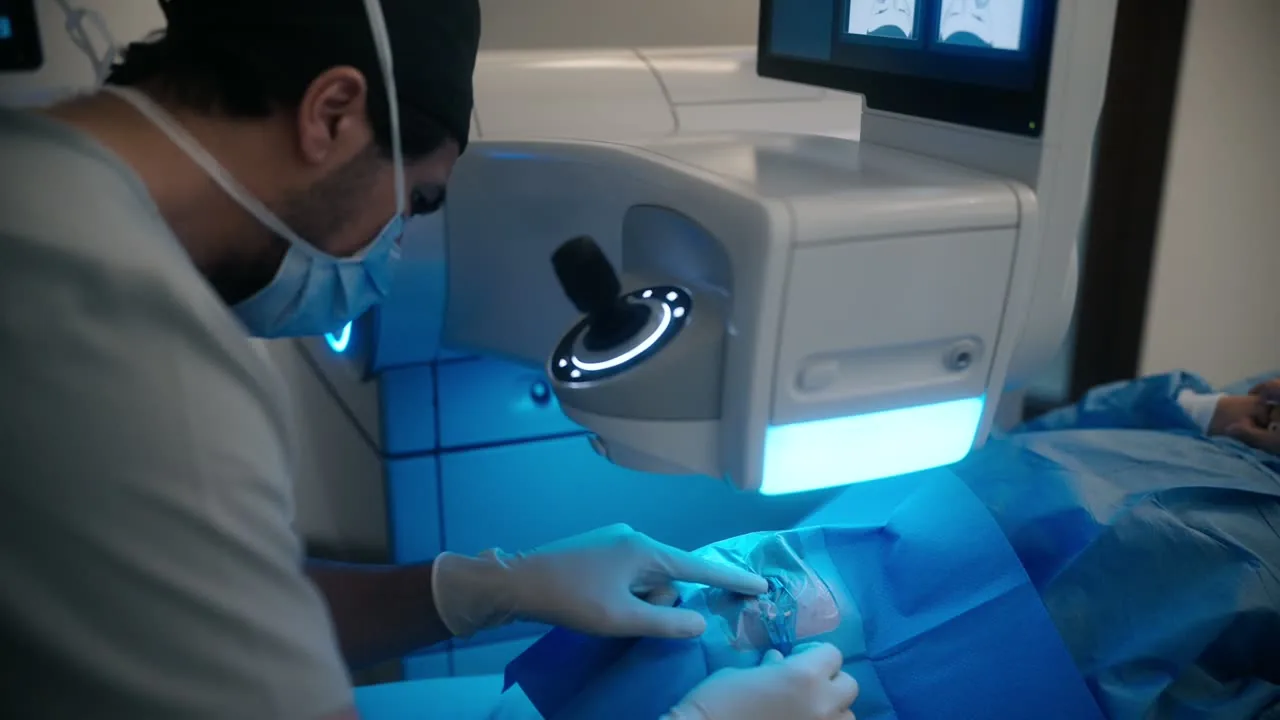
Around 8 seconds of laser per eye. Awake, numbed with drops.
A companion is nice, but not necessary. Please come without eye makeup and perfume, have artificial eyelashes removed beforehand and arrange your ride home: you will not drive yourself on this day.
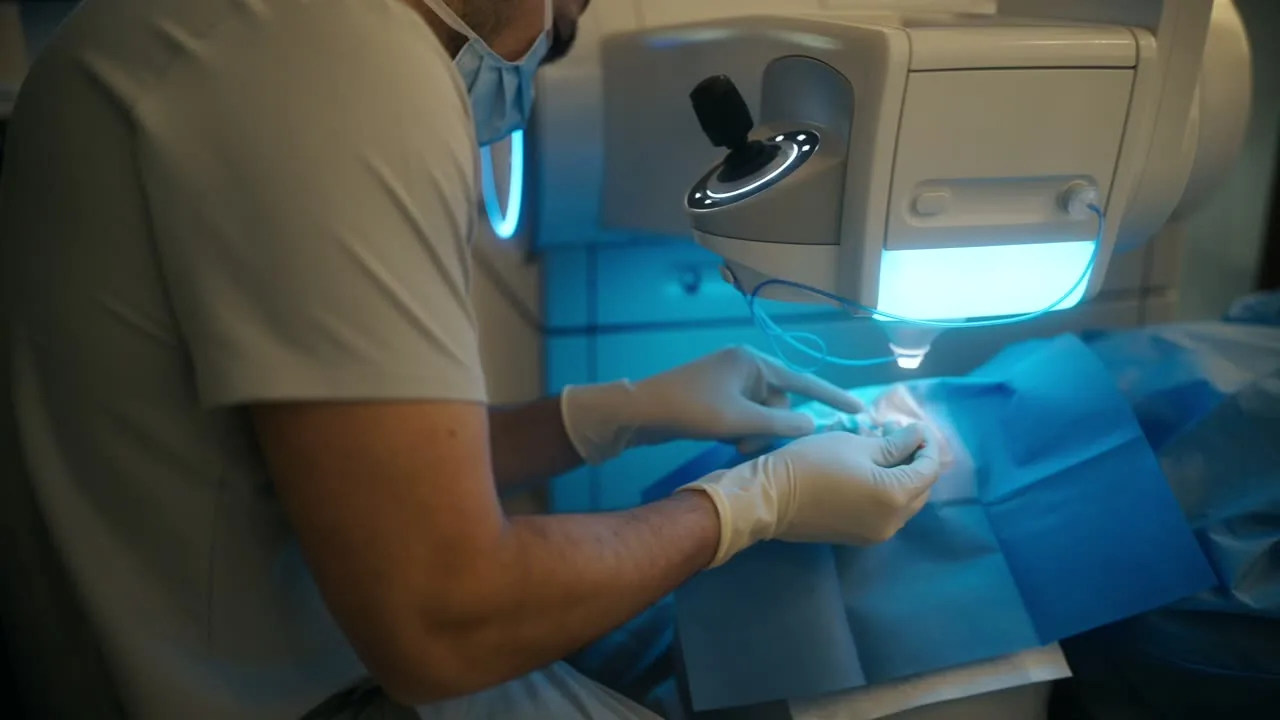 Preparation
Numbing eye drops, a sterile drape, an eyelid holder so that you do not have to blink. You lie comfortably on a couch.
0:30 · SuctionYou look at a fixation light, and a curved contact glass gently holds the cornea in place. The image briefly turns gray. This is normal.
0:38 · LaserThe laser draws the lenticule and the small access into the cornea. You hear a soft clicking and feel nothing.
3:00 · Removing the lenticuleProf. Dr. Mehdi Shajari separates the lenticule under the microscope and pulls it out. No flap, no stitch. Then the second eye.
During the treatment you feel no pain. The drops completely numb the cornea. What you do notice: the eyelid holder, light pressure during the suction, a gray or darker image for a few seconds, and a sensation of touch when the lenticule is separated. Afterward, many say: “That was it?”
When the numbing wears off after about an hour, the eye burns or scratches for a few hours as if from a grain of sand, waters and is sensitive to light. Sleeping helps. By the next morning this is usually over. If you are very nervous, you can have a mild sedative on request.
Blinking is impossible: an eyelid holder keeps the eye open, and the drops prevent the feeling of dryness. During the roughly 8 seconds of laser time, a curved contact glass holds the cornea in place with light suction, so the eye cannot shift. If you move your head strongly, the suction releases and the laser stops immediately. Then we start again; this rarely happens and can almost always be continued in the same appointment.
Step 4 of 4
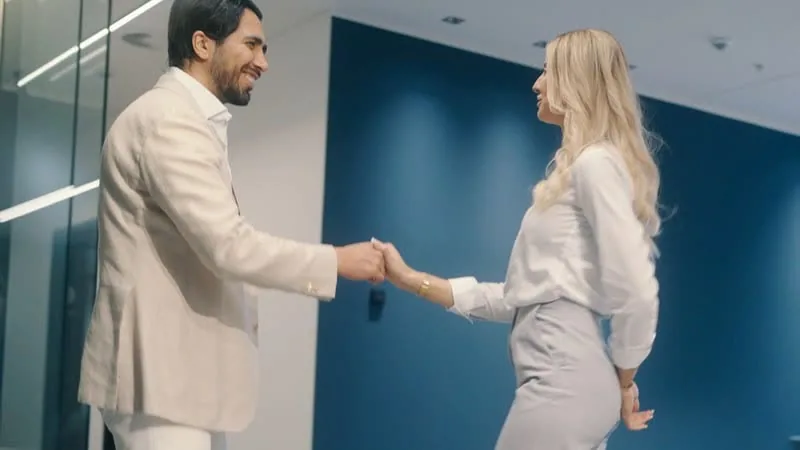
Three follow-up checks, then you are done.
Antibiotic and anti-inflammatory drops for about 1–2 weeks. Emergency number around the clock. Patients from far away can have the later follow-up checks done by their own eye doctor.
Office usually after 1–2 days, sports after a week, swimming after two weeks. All procedures side by side: When am I fit again?
| Activity | From when | Note |
|---|---|---|
| TV, phone, reading | In the evening, briefly | On the first evening, it is better to close your eyes and sleep |
| Screen, office | Usually after 1–2 days | Take breaks, keep artificial tears within reach |
| Driving | As a rule after the follow-up check the next day | When your visual acuity meets the requirements; at night only once halos no longer bother you |
| Showering, washing hair | From the day after the procedure | No water and no shampoo directly in the eye |
| Jogging, fitness, cycling | Usually after 1 week | Do not rub sweat into the eye, sports glasses outdoors |
| Contact and ball sports | Usually after 2 weeks | No flap that can shift; protective glasses advisable |
| Swimming, sauna | Usually after 2 weeks | In lakes and the sea after about 4 weeks |
| Eye makeup | Usually after 1 week | Use new products (germs) |
| Flying | From the day after the procedure, once cleared at the follow-up check | Dry cabin air: artificial tears in your carry-on |
Right after the procedure you see as through a fogged-up window. By the next morning, the image is good enough for everyday life and the follow-up check for most people, often still a little soft. In the first week it becomes noticeably clearer, and fine details such as contrast in dim light mature over 4–12 weeks. With higher diopters it takes somewhat longer than with low ones. The final check after 1–3 months shows the final result.
Normal in the first days: scratchiness and a sandy feeling, tears, light sensitivity, sharpness that fluctuates over the day, a small red spot on the white of the eye from the suction (harmless, disappears in one to two weeks), halos around lights at night.
Report right away: increasing pain, clearly worse vision after initial improvement, strong redness with pus or light sensitivity. This can be an infection: very rare, under 1 in 1,000, and well treatable if you come quickly. You receive an emergency number that can be reached around the clock.
Measured, not promised.
We evaluate every treatment. Of the 412 eyes that Prof. Dr. Mehdi Shajari treated with SMILE Pro between 01/2024 and 01/2026, 96% saw with full sharpness without glasses after three months. An enhancement was necessary in 0.6%.
96%
Measured as uncorrected visual acuity of 100% (visual acuity 1.0) or better, dr.vision evaluation 01/2024–01/2026, n = 412 eyes.
0.6 %
Mostly because a residual amount of diopters remained. If an enhancement makes medical sense, under our concept it is usually possible within 6 months without a co-payment.
The correction in the cornea is permanent: the removed lenticule does not grow back. Studies with follow-up over ten years show a stable refractive power with SMILE. A slight return of nearsightedness is possible if the eye itself is still growing; that is why we only treat with the laser once your values have been stable for 12 months.
What changes is your own lens. From about 45, almost everyone needs reading glasses, whether lasered or not. From about 60, a cataract can develop. Neither has anything to do with SMILE Pro, and both can be treated well later. Keep your laser data; we give it to you so that the artificial lens can be calculated precisely later.
If a bothersome residual error remains after three months, we correct it. Since there is no flap, this is usually done as a surface treatment (PRK) or with another laser technique in the cornea, depending on corneal thickness and the residual value. In our cases this was necessary in 0.6% of eyes; in the literature and in our consent forms we assume about 2 in 100. If an enhancement is medically sensible, it is usually possible within 6 months without a co-payment under our concept. More: Enhancement after laser eye surgery.
For patients traveling a long way
Under 72 hours hrs
Lasered and back home.
Questions? We help with travel, accommodation and appointments.
Your travel plan
We plan glasses prescription, contact lens break, appointments and an overnight stay within walking distance together.
All measurements and the talk with Prof. Dr. Mehdi Shajari, at least 24 hours before the laser.
Both eyes in approx. 20 minutes, around 1.5 hours at the practice.
On request, your local eye doctor takes over the further follow-up checks, with our plan.
Safe does not mean without risk.
The most common side effect is dry eyes in 3 in 10 in the first weeks, well treatable with artificial tears. About 2 in 100 need an enhancement. Serious complications such as an infection are very rare, under 1 in 1,000.
Burning, a sandy feeling, fluctuating sharpness, especially at the screen and in the evening. The cause is severed corneal nerves, which control tear production. With SMILE Pro there are significantly fewer than with LASIK.
3 in 10
in the first weeks; afterward it decreases continuously. Permanent symptoms are rare.
Measure the tear film before the procedure and treat any existing dry eye first. Afterward, preservative-free artificial tears and, if needed, eyelid margin care. A check at every appointment.
Rings and rays around lights in the dark, especially when driving. They occur while the cornea heals, and when the pupil is larger at night than the treated zone.
common in the first weeks
After three months, they still bother about 5 in 100.
Measure the pupil in the dark, choose the optical zone to fit, treat dry eye. If a residual amount of diopters remains that strengthens halos, we correct it.
The cornea heals slightly differently in every person. If a residual nearsightedness or astigmatism remains that bothers you, it can be treated again after three months at the earliest.
2 in 100
In our evaluation it was 0.6% (n = 412).
Precise measurement with and without pupil dilation, stable values as a prerequisite. Enhancement within 6 months usually without a co-payment.
A red spot on the white of the eye, caused by the suction during the docking. It looks dramatic, but does not affect vision.
common
and harmless.
Nothing needed. The spot fades by itself in one to two weeks, like a bruise.
Germs get into the access or the interface in the cornea. Signs in the first days: increasing pain, strong redness, worse vision.
under 1 in 1,000
Sterile conditions, antibiotic drops after the procedure, a check on the day after the procedure and an emergency number around the clock. If infection is suspected, we treat the same day.
After laser treatment the cornea becomes too weak and slowly bulges forward. Vision worsens over months to years.
well under 1 in 1,000
very rare, most likely with an undetected keratoconus.
Tomography of the front and back surface and thickness measurement before every procedure. If anything is unusual, we advise against laser treatment. An ectasia can be stabilized with cross-linking.
Frequencies from our own analysis (n = 412, 01/2024–01/2026) and the literature. All laser procedures compared by risk: Laser eye surgery: risks and side effects.
Halos, starbursts, glare. Mostly only at the beginning.
In the first weeks, many patients see rings or rays around lights while the cornea heals. After three months, about 5 in 100 are still bothered by them. Larger pupils and higher diopters increase the risk; that is why we measure your pupil in the dark.

Simplified depiction. Photo: Patrick Tomasso, Unsplash (CC0).
Tap an effect. The photo shows what it looks like.
Blindness from SMILE Pro is practically not described in the medical literature. The laser works only in the cornea, the very front part of the eye; the lens, retina and optic nerve are not touched. The most serious complications, infection and ectasia, are very rare and treatable if detected early. That is why the check on the following day and the emergency number are a fixed part of the treatment.
If the suction releases during the laser time, the VisuMax 800 stops immediately. Depending on the timing, we start again, or, in agreement with you, we switch to another procedure, such as Trans-PRK. That the lenticule is hard to separate rarely happens and requires experience from the surgeon. We discuss these situations in the informed-consent talk so that nothing surprises you.

Because they are your eyes.
One surgeon for both eyes, over 20,000 procedures, the newest ZEISS laser, 5.0 stars from 376 reviews. And a team that knows you from the first call to the last follow-up check.
Every procedure: Prof. Dr. Mehdi Shajari. Personally.
Prof. Dr. Mehdi Shajari operates on every patient himself. He accompanies you from the first conversation to the final check. He is a specialist physician and professor of ophthalmology (German title: außerplanmäßiger Professor) and has 80+ publications on corneal and lens surgery. On @fragdrvision he explains to around 120,000 people how eyes work.
“The laser works for eight seconds. The important work happens beforehand: finding out whether your cornea can tolerate it and which procedure suits your life. And saying honestly when laser treatment is not the best solution.”
Prof. Dr. Mehdi Shajari
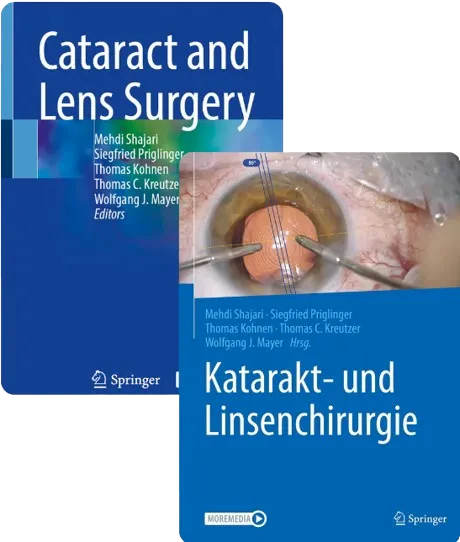
Prof. Dr. Mehdi Shajari has published numerous papers on freedom from glasses, teaches, and has trained several colleagues in this field.
What you get with us.
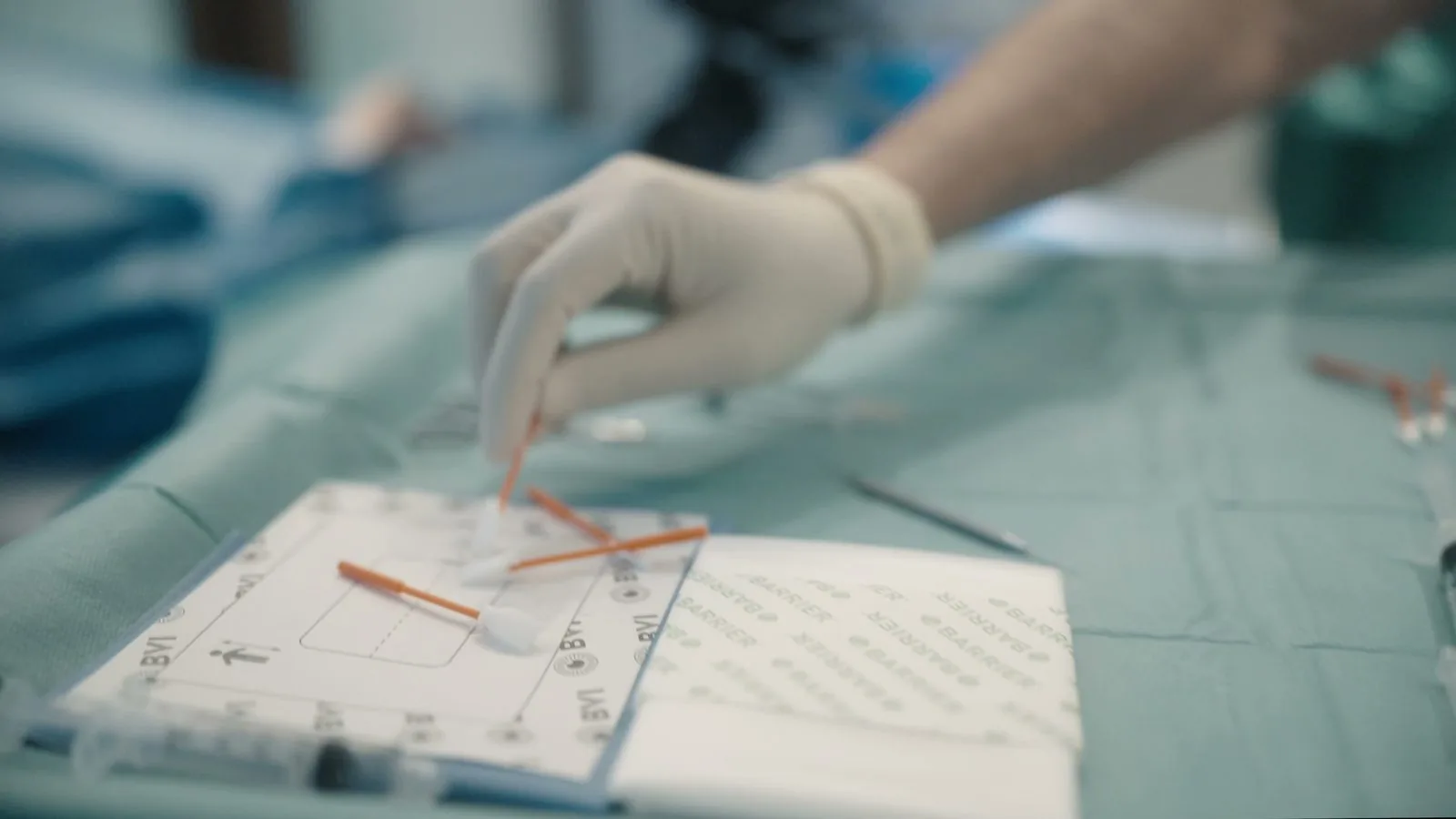
One surgeon
Both eyes, every procedure. Over 20,000 procedures.
Reviews
5,0
376 Google reviews
Choice of procedure
Even if SMILE Pro is not the right choice.
Corneal thickness, tomography, pupil in the dark, tear film, diopters with and without drops. You go home with a written recommendation and a cost estimate.
5,0
★★★★★
from 376 Google reviews
No changing team. Whoever does your pre-operative examination also performs your laser treatment.
800
ZEISS VisuMax, the latest generation for SMILE Pro.
If a residual amount of diopters bothers you: within 6 months, usually without a co-payment.
96% full visual acuity after three months.
Femto-LASIK, SMILE Pro, Trans-PRK, Presbyond and ICL. We recommend what suits your eyes.
Guide price €5,198 for both eyes, written cost estimate after the pre-operative examination, financed on request.
Jana answers questions about the process, appointments and costs via WhatsApp, usually within 10–15 minutes, Mon–Fri 8:00–19:00, Sat 9:00–15:00. We are available by phone around the clock.
Patient Care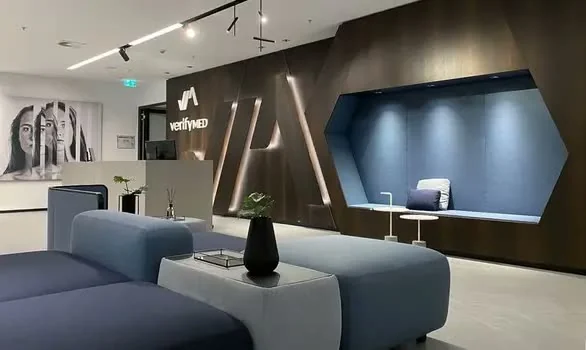
Junghofstraße 16, free parking in the building.
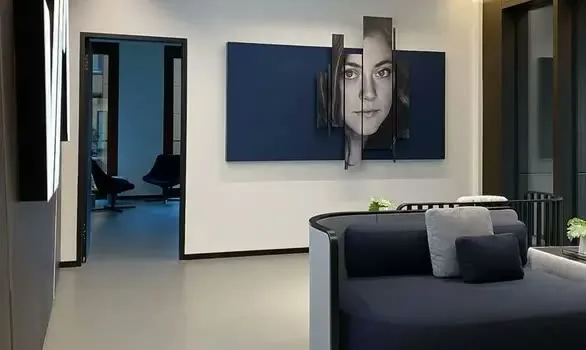
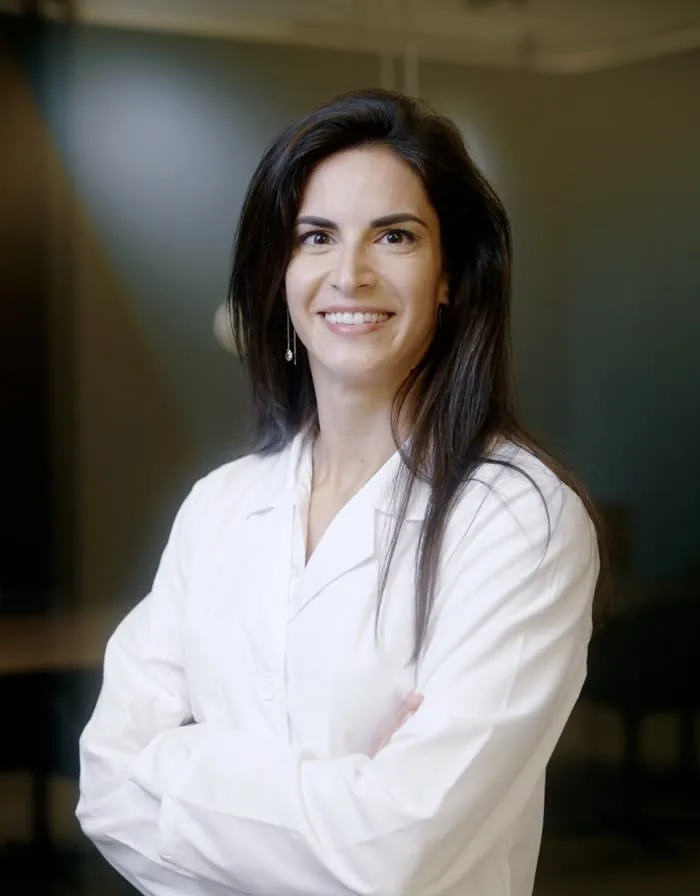
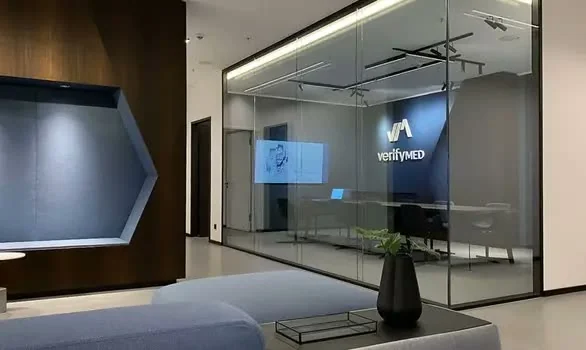
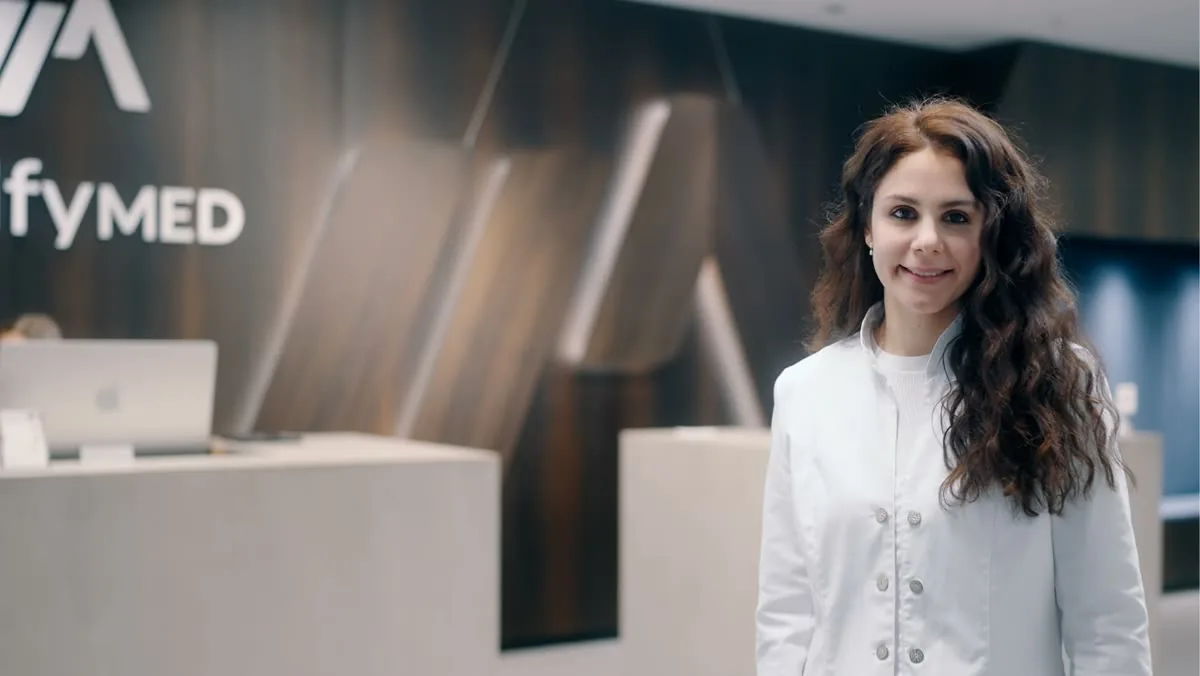
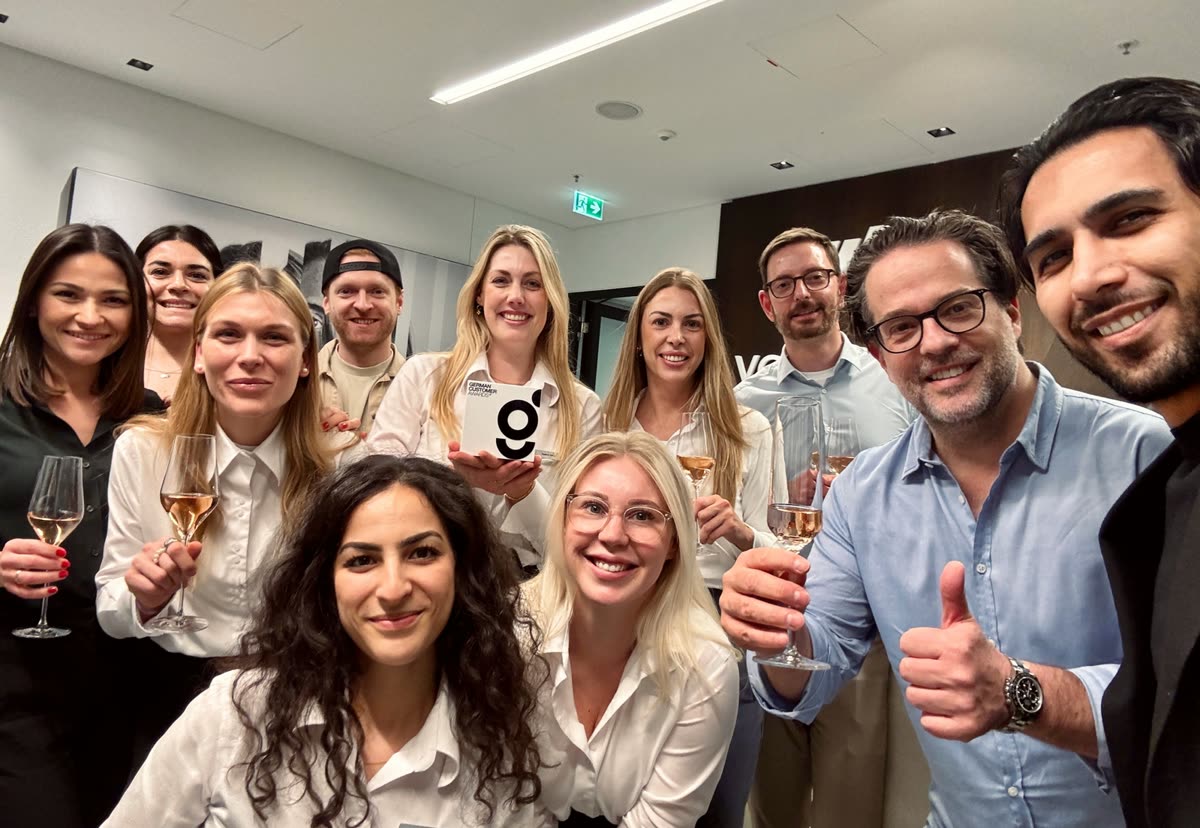
A look inside the practice and the team.
One price. In writing before the procedure.
Guide price for both eyes: €5,198, including the pre-operative examination, the procedure by Prof. Dr. Mehdi Shajari and aftercare. You receive your exact cost estimate in writing after the pre-operative examination, before you decide. Financed from €3.90 per day. Statutory health insurers do not pay, private insurers depending on the plan.
€5,198Guide price · SMILE Pro, both eyes · billing according to the German fee schedule for physicians (GOÄ)
* Representative example: €5,198 net loan amount · 72 months · fixed borrowing rate 9.49% p.a. · 9.90% effective annual interest rate · monthly installment €94.97 · total amount €6,837.84 · via medipay. Example 0% over 12 months directly with dr.vision: €5,198 cash price · no down payment · fixed borrowing rate 0% p.a. · 0% effective annual interest rate · monthly installment €433.17, last installment €433.13 · total amount €5,198.
Since a ruling of the Federal Court of Justice (BGH, judgment of March 29, 2017, case no. IV ZR 533/15), a refractive error can count as an illness and laser treatment as medically necessary treatment. Many private health insurers have since reimbursed part of the cost, and some exclude laser eye surgery. With our cost estimate, you can make a binding inquiry in advance. Reimbursement by private health insurance (PKV)
Beihilfe (allowance for German civil servants) usually does not reimburse laser eye surgery, or only in exceptional cases; the rules differ between the federal government and the states. Your private supplementary insurance for the remaining costs can still cover a share. We write the documents so that both can answer clearly. More on Beihilfe
dr.vision is a private practice without statutory insurance accreditation, and statutory health insurers generally do not pay for laser eye surgery. You pay yourself, after a written cost estimate and financed on request. You can declare the costs as extraordinary expenses in your tax return. Whether and how much the tax office accepts depends, among other things, on your reasonable burden. Statutory health insurance

Financing calculator
1Which treatment?
2How long would you like to pay?
3Your installment
– per day
–
Non-binding example calculation based on the guide price, as in the price calculator. 12 months interest-free directly at dr.vision, 24–72 months through medipay: 9.49% fixed nominal interest rate p.a., 9.90% effective annual interest rate, interest rate as of 12/2025. Daily rate = monthly installment ÷ 30.44 days. If the installment over 72 months is above €3.90 a day, a one-time down payment reduces it to €3.90. Representative example in the footnote*. Photo: Direct Media, StockSnap (CC0).
You can declare the costs as extraordinary expenses in your tax return. Whether and how much the tax office accepts depends, among other things, on your reasonable burden. You need the invoice according to the German fee schedule for physicians (GOÄ) and our medical certificate; we are not tax advisors. Calculation examples by tax rate: Deducting laser eye surgery from taxes.
The price difference from Femto-LASIK (€4,298) and from PRK/Trans-PRK (€3,498) comes mainly from the laser: for every SMILE Pro eye, single-use materials and a treatment license from the manufacturer are incurred, plus the purchase of the VisuMax 800. The medical service, pre-operative examination and aftercare are equally thorough with all procedures. Which procedure fits best medically is decided by the pre-operative examination, not by the price.
You are not alone
Questions about reimbursement? Our Patient Care team can help: 069 509 586 770 (available 24 hours)
| Suitable for | Nearsightedness up to −8 D, astigmatism up to 5 D, from age 18, values stable for 12 months |
|---|---|
| Not for | Farsightedness (→ Femto-LASIK), over −8 D (→ ICL), presbyopia from about 45 (→ Presbyond, lens exchange) |
| Laser | ZEISS VisuMax 800, approx. 8 seconds per eye |
| Duration | both eyes approx. 20 minutes, about 1.5 hours at the practice |
| Anesthesia | Drops, sedative on request |
| Access | 2–3 mm, no flap, no stitch |
| Fit for work (office) | usually after 1–2 days |
| Sports / swimming | usually after 1 week / after 2 weeks |
| Result | 96% full visual acuity after 3 months, enhancement 0.6% (n = 412) |
| Costs for both eyes | €5,198 guide price, from €3.90 a day or 0% over 12 months |
| Insurance | Private health insurance (PKV) depending on the plan, Beihilfe (allowance for German civil servants) mostly not, patients with statutory health insurance as self-paying patients. Taxes: declare as extraordinary expenses, recognition depending on the reasonable burden |
| Surgeon | Prof. Dr. Mehdi Shajari |
| Location | Junghofstraße 16, 60311 Frankfurt am Main · Düsseldorf and Stuttgart 2027 (preliminary talk already in Frankfurt) |
Go deeper.
This page is the summary. The detailed pages on the other procedures, each with Prof. Dr. Mehdi Shajari's assessment and the questions from consultation hours:
Dryness, sports, enhancement and price compared directly, criterion by criterion.
To the comparison ComparisonSMILE Pro, Femto-LASIK and Trans-PRK: which comes out ahead on which criterion.
To the laser comparison High valuesImplantable lens for nearsightedness from −6 D. From €6,886 for both eyes.
To ICL From 45When presbyopia joins nearsightedness, €6,398 for both eyes.
To Presbyond SafetyHow dangerous laser eye surgery really is, with frequencies for all procedures.
To the risks LocationPractice, travel, parking and all laser procedures at dr.vision in Frankfurt.
To the locations pageStill have questions?
“These are the questions I hear most often about SMILE Pro in consultation hours. Here are my answers.” Prof. Dr. Mehdi Shajari
At dr.vision, we correct nearsightedness up to −8 diopters and astigmatism up to 5 diopters with SMILE Pro. Technically the device could do more, but beyond −8 diopters too much cornea would be removed. In that case the implantable contact lens (ICL) is the safer choice. Between −6 and −8 diopters both are possible, laser or ICL. The pre-operative examination shows whether your cornea is thick enough for your values.
At 40 mostly yes, if you know that reading glasses will be added from about 45. SMILE Pro corrects nearsightedness, not presbyopia. From about 45 we often recommend Presbyond or a lens exchange, because they solve distance and near vision at the same time. In the pre-operative examination we test what suits your daily life.
No, not with us. We use SMILE Pro for nearsightedness with or without astigmatism. We correct farsightedness up to about +4 diopters with Femto-LASIK; for presbyopia, Presbyond or a lens exchange come into question.
Yes. At dr.vision, SMILE Pro corrects astigmatism up to 5 diopters together with nearsightedness in one procedure. The ZEISS VisuMax 800 compensates for the slight rotation of the eye while lying down. Over 5 diopters, we tend to advise Femto-LASIK or a toric ICL.
Usually not during the treatment; the eyes are numbed with drops. You feel light pressure during the suction. When the numbing wears off, the eye scratches and waters for a few hours as if from a grain of sand. By the next morning this is usually over. Increasing pain is not normal; in that case, call us.
The laser works for around 8 seconds per eye. Including preparation, removing the lenticule and both eyes, the procedure takes approx. 20 minutes. You are at the practice for about an hour and a half. You may not drive yourself on this day.
Blinking is not possible; an eyelid holder keeps the eye open. During the laser time, a contact glass holds the cornea in place with light suction. With a strong movement, the suction releases and the laser stops immediately. Then we start again, mostly in the same appointment.
Screen and office work usually after 1–2 days. Driving usually after the follow-up check the next day. At night only once halos no longer bother you. If your job involves dust, dirt or water, plan for about a week.
Jogging, fitness and cycling mostly after a week, swimming and sauna after two weeks. Because there is no flap that can shift from a blow, contact and ball sports are mostly possible after about two weeks. Sports glasses make sense in the first weeks.
The correction in the cornea is permanent; the removed tissue does not grow back. The prerequisite is that your values were stable for 12 months beforehand. What still changes with age is your own lens: from about 45 come reading glasses, later possibly a cataract. Neither has anything to do with SMILE Pro.
For nearsightedness, both achieve comparable visual acuity. SMILE Pro needs no corneal flap: fewer severed nerves, dry eyes less often in the first months and no flap that can shift during sports. LASIK is better for farsightedness and stronger astigmatism. After the pre-operative examination, we recommend the procedure that suits your eyes.
The principle is the same: a lenticule is removed through a small access. SMILE Pro uses the newer ZEISS VisuMax 800, which creates the lenticule in around 8 seconds instead of a significantly longer time and compensates better for eye rotation and centering. For you, this means holding still for less time.
At dr.vision, €5,198 for both eyes as a guide price, including pre-operative examination, procedure and aftercare; you receive the written cost estimate after the pre-operative examination. Statutory health insurance does not pay, private insurers depending on the plan, Beihilfe (allowance for German civil servants) mostly not. Financing from €3.90 a day over 72 months or from €433 a month interest-free over 12 months directly with dr.vision.
You can declare the costs as extraordinary expenses on your tax return. Whether and how much the tax office recognizes depends, among other things, on your reasonable burden. From us you receive the invoice under the German fee schedule for physicians (GOÄ) and a medical certificate. It is best to clarify the details with your tax advisor.
Medically reviewed by Prof. Dr. Mehdi Shajari · As of October 2026
Not ready yet? Everything important to read again and to pass on.
Arrives by e-mail in about 60 seconds. No newsletter, just the guide and, if you wish, a follow-up from Patient Care. Privacy policy
How would you like to continue?
Online, by phone at 069 509 586 770 (reachable 24 hours) or via WhatsApp. The first appointment is a free consultation, and you may wear your contact lenses. After that, following 10 to 14 days without contact lenses (3 to 4 weeks for rigid lenses), comes the detailed pre-operative examination with Prof. Dr. Mehdi Shajari: diopters, corneal thickness, tomography, pupil, tear film and a discussion about whether SMILE Pro or another procedure suits your eyes. You go home with a written recommendation and a cost estimate.
In Frankfurt, Junghofstraße 16 · all measurements included
Our locations.
 Opening hours
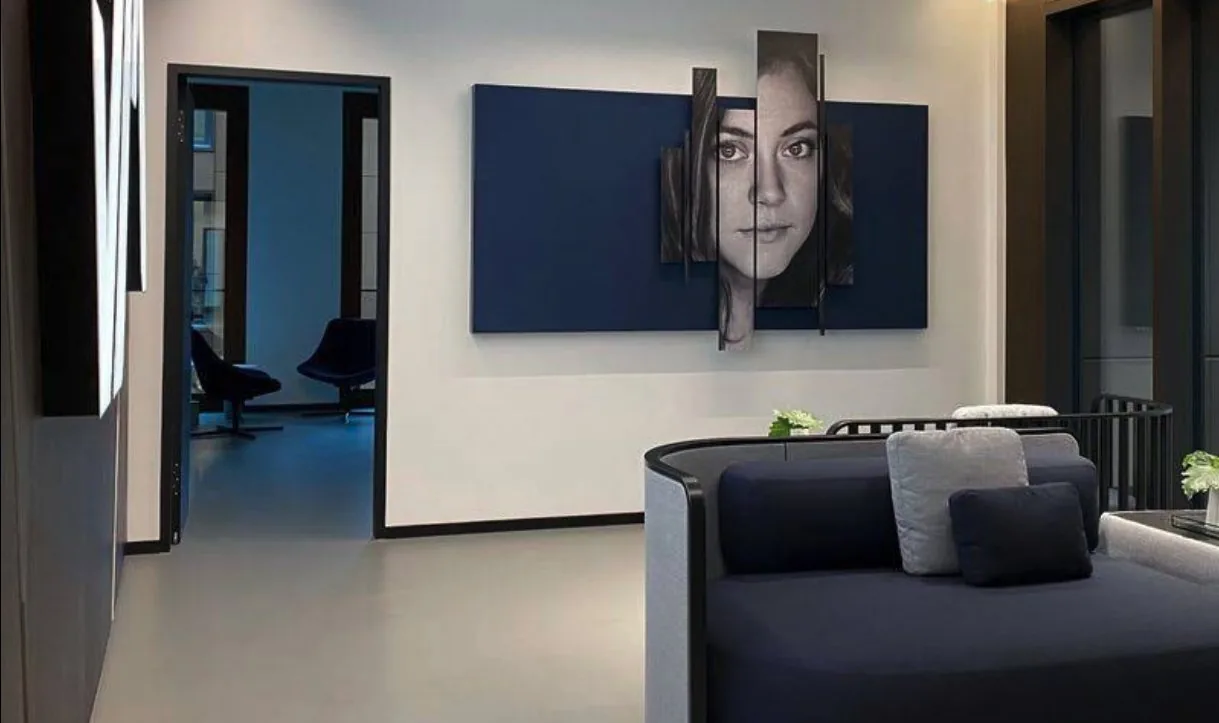
Junghofstraße 16, 60311 Frankfurt am Main
 Opening 2027
Breite Straße 69, 40213 Düsseldorf (in the Neuer Stahlhof, corner of Graf-Adolf-Platz)
Until opening: preliminary talk in Frankfurt, Patient Care plans your travel.
Plan route Opening 2027
Lautenschlagerstraße 23, 70173 Stuttgart (2nd floor, step-free access)
Until opening: preliminary talk in Frankfurt, Patient Care plans your travel.
Plan routeMy name is Raquel Schulze Wischeler. I have basically worn glasses since I was 13. I was really nearsighted, you could say. Really, really. I could only see outlines without glasses. I had minus 6 in one eye, a diopter of minus 6, and almost minus five in the right one. I think everyone who wears contact lenses or glasses knows how stressful all of that is. The eye dries out completely. In the evening, when you are lying on the couch, you notice, okay, my eye is super tired, I really do not feel like doing anything anymore. Whether it is contact lenses or glasses. With that diopter, you have rather thick lenses, and you notice that over the day too. And just getting the feeling, or knowing, hey, I do not have to wear anything anymore, neither glasses that I always have to clean, nor contact lenses where I have to watch hygiene, that is an absolute liberation. And that felt more like a dream to me, and then I said, okay, now you dare to do it, and so I will do it.
Interestingly, I had already thought about having my eyes lasered about five years ago, but I was very afraid and then dropped the idea again. And lately I had big problems with my eyes because of chalazia, because my glands in the eyelids do not quite work, and so I had surgery twice. And then I said, okay, since I have already had surgery on my eye, you might as well dare it once more. And then I first just googled, came across dr. vision, saw, oh, there are really great reviews, and by coincidence my eye doctor had worked with him at the university hospital in Munich, and I had an eye doctor appointment beforehand and told her about it, I am getting my eyes lasered, and then she said, well, where? Then I told her the doctor's name. And then she said, yes, I know him, I worked with him. You can go there, he specializes in this, he is really great. And that took away the last bit of doubt for me.
And yes, then I came, had an appointment the next day. And right away I had the feeling that I was in the right hands. He sat down with me, explained all the risks to me, explained how it works, showed me the treatment room. And then the fear was somehow gone, and then I said, okay, I am doing it here. I was thrilled by the professionalism, first of the practice itself, which is superbly organized, and by the speed. You do not have long waiting times, you are examined, you have the feeling, okay, here they really examine thoroughly and extensively, and then of course it is explained to you on the screen, you can see it. So that was just totally professional for me. And so I felt safe right away.
Yes, my biggest fear was the eye itself. It is on the eye. And you have a reflex, a physical one. And the question of course was, okay, do I react, and does something go wrong because of that. But the fear was taken from me relatively quickly. I also talked about the fear. And then during the treatment I saw that the eye was held still. I did not feel that either. And then I calmed down relatively quickly. And I knew the eye was numbed. And so everything worked quite well.
I have no pain. I feel that something has happened to the eye, like a slight pressure, but it is one day after. I was already at work today, I have no pain.
Absolutely, so I can answer that question with yes, and go for it. It's not bad at all, it doesn't hurt at all, it's quick, and the healing process is pretty much there a day later. And it's an absolute quality of life. That's totally great.
I'm Duilio, I'm 22 years old. I was nearsighted before, with a prescription of minus 4.75. I actually looked into laser eye surgery a few years ago. But this practice didn't exist yet back then, and I informed myself a bit about it, and now I've finally come to the conclusion to have my eyes lasered.
So there was a free initial consultation here. I came here, first took a look at the practice, and I found the technology to be state of the art, and I also found Professor Shajari to be a very empathetic and very likable doctor, also very young, and so I then decided to have my eyes lasered here.
So the process was actually quite simple. You first came into a small room, where the eyes were cleaned a little, it burned briefly and then they were numbed and that was it. They were numbed with eye drops and then it went straight to the operating room and right there I was laid on the bed of the laser, the Carl ZEISS VisuMax 800, which is the newest laser, and then he actually started operating right away. I think I was only in the operating room for 15 to 20 minutes in total, while the laser itself took about ten seconds per eye.
Right, so after the surgery I got up first and couldn't see very sharply yet. I saw it as if it were milky cloudy. So my vision was milky cloudy, as if you were looking through a plastic cup when you hold it in front of your eyes. But I could already see better, or at least I had the feeling that I could already see almost better than I did before without glasses.
When I came for the follow-up check the day after, the optician took off the protective glasses and then I could really see, I saw him clearly, I saw the devices clearly, we did the tests, he said yes, you are at 100 percent in one eye, 125 percent in the other, exactly, so it was a great feeling, I then took out my sunglasses right away, because the sun was shining that day, and I went for a little walk through downtown Frankfurt. It was very nice, as I said, to see everything clearly without glasses not even 24 hours after the surgery, I think it was about half a day, 13, 14 hours after the surgery, yes, so it was really great.
Yes, so I'm Sevim, I'm 35 years old, and for many years now I've had the issue that I always wore a lot of contact lenses, but because of that I have very dry eyes. I couldn't really get used to glasses. Over the last few months I did wear them, to go easy on my eyes a bit, but in the long run I wanted a lasting solution, especially for sports and for activities where you don't want to always depend on glasses.
It actually started when I got my driver's license at 18; that was the first time I needed glasses for driving. Back then I still had a very slight vision problem. I think it started at minus 0.5 and minus 0.25 and then it actually got worse over the years. Also during my studies, because I read a lot, it kept getting worse. And then, I'm a lawyer, I took the state exam twice, and with each state exam it went down by about minus two. Exactly. And now I had minus four on the right side, until yesterday, and minus 3.75 on the left. So already a clear impairment in everyday life when you don't have a vision aid.
What bothered me most in general, when I was walking around, was simply that I couldn't see certain things sharply in the distance. I could tell from afar, while driving for example, that there was a sign there, but what was written on it, no chance. And then I started to blink and squint, because that always helps a bit with astigmatism. It really bothered me, and during sports it also annoyed me a lot that the glasses always slide down because of sweat and so on, and that is really annoying.
So I started to inform myself a few years ago about what comes into question. And then I went to a university hospital in Mainz and informed myself about the different procedures. I had a good feeling there too, but I always had real respect. Simply because it is a procedure on the eye and there are always horror scenarios in your head. What if you're one of the 0.0-something percent who then maybe can't see anything at all later. And then I dropped the idea again for the time being.
Then last year I took it up again, because I was having more and more problems with the contact lenses. Small infections again and again, and because of that I had to wear glasses a lot again and was really annoyed by it. And then last year I came to the practice here for the first time; I actually just googled for good reviews, and right at the first visit I had a very good feeling. That is, the feeling that I'm really in good hands here, that the doctor really takes time, explains everything calmly and also isn't annoyed when you have a follow-up question or so. I always find that very disturbing with doctors, because the patient simply has many questions, and when everything is answered, and very calmly, you simply get a good feeling. And in the end it is of course also the trust in the doctor that encourages you to choose one or the other.
The first impression, when you walk into the practice, everything is somehow super chic, super clean and everyone is just very nice. You don't always get that at the doctor's, I think. Mostly you already have such annoyed medical assistants who give you the feeling right at the start that it's somehow stressful and so on, and here everything is actually always very calm, and for a procedure like this, that gave me a lot of trust.
That was a few weeks ago, and then I got the appointment for today, for yesterday, for the surgery, and for today the aftercare. That means between the decision, I'm doing it, and the procedure it was a few weeks. So not throughout all those weeks. I was really looking forward to it. I actually counted the days until it was finally time, and on the day itself I thought, oh no. You simply have respect for it, and I also have respect for the job and for the procedure as such, but there too I have to say I was completely well looked after, because the doctor talked with me the whole time. He kept reassuring me that everything is fine, that I'm doing everything right, and that was very calming. And he had also explained all the individual steps beforehand. So I knew exactly what was coming, and also during the procedure, I was slightly nervous, I was excited for sure, but I tried to cooperate well so that I don't wobble or anything, and then everything went very, very fast.
After getting up it was already like, okay, wow, I see better, and I also notice that it keeps getting better bit by bit. When I look into the distance, I think about what I saw before and what I see now. And you simply notice steadily that it keeps getting better. And I just found out that I'm already at 100 percent with my vision. So it really goes, really goes fast.
I think I informed myself very well. For me personally, it's always important to know what is going to happen. Because for me it gave a lot of calm that I already knew the individual steps. I also read up a bit more on the procedure, the differences between the procedures, and thought about what the consequences are and what the side effects could be. For me personally, it simply helps to know what is happening to me. And I think that's a tip I can give, too: of course, choose the doctor very carefully. I definitely recommend this doctor. I think I did everything right here. So I can really only encourage everyone to take this step as well.
So, my name is Zhao Xingshu, I come from China and have been working in Germany for 20 years. I have been nearsighted since childhood in China, and it has always bothered me a lot. In Germany I started doing sports and also tech. I work a lot with computers and my phone. And I always had to switch between glasses and contact lenses. And as I grew older, it became very, very unpleasant and also very time-consuming for me.
I have always wanted to find someone who is not only professional but can also offer good service. Then I read about it online and found the professor. Then I called him, and the appointment came very, very quickly. And the next day I was already here and met my professor. He made a very professional impression on me. And also really very nice and kind. And what I liked best is the speed of the services. And I think that is actually what is most lacking in Germany.
The first impression was not the typical eye doctor's practice but a very professional consulting company. Well, because I myself work in a technical role for consulting companies, the first moment felt a bit very different to me, but at the same time I liked it a lot, because I really like this customer-focused, patient-focused approach, the fast speed with the appointment, and the professional consultation. That was my first impression.
Of course, absolutely. I have already sent my husband here, and my child. Yes, and I think I would recommend it to all my Chinese friends in Frankfurt as well.