 dr.vision
OCT
Retina and optic nerve in layers, plus visual field, eye pressure, and optical biometry.
Start here
What suits you?
Find out in 2 minutes which procedure suits your eyes.
Start the Suitability CheckOr by age:
< 45yearsGet rid of glasses & contact lenses 45–64yearsGet rid of reading glasses 65+yearsCataract & glasses-free★★★★★ 5.0 · 376 Google reviews · 20,000+ procedures
Decide well
What you should know beforehand.
Who operates?Prof. Dr. Mehdi ShajariFOCUS Top Doctor · operates on every patient personally What does it cost?Laser from €3,498 · Lenses from €6,886Prices for both eyes Is it safe?Safety & risks When will I be fit again?Work, sports, driving Would you rather read in peace first?Decision Guide Freedom from GlassesProcedures
Laser or lens?
Laser eye surgery
SMILE ProSmartSightFemto-LASIKTrans-PRKPRKPresbyond (laser away your reading glasses)All laser procedures at a glanceLaser procedures compared ›Lens surgery
ICLLens exchange (reading glasses)Cataract surgery with premium lensLens types: trifocal, EDOF, toricLens types compared ›Start here
Something wrong with your eyes?
A thorough eye check-up with us clarifies what is behind it.
Book an eye check-up★★★★★ 5.0 · 376 Google reviews
Ophthalmology · Private eye doctor in Frankfurt
Private eye doctor in Frankfurt. With time for your eyes.
An eye doctor who takes time for you: we examine thoroughly and calmly explain the findings. Appointment usually within 24 to 48 hours, also in the evening and on Saturdays. If surgery is necessary, Prof. Dr. Mehdi Shajari performs it personally.
 12× FOCUSTop Doctor
Thoroughly examined. Appointment usually within 24 to 48 hours.
OCT
Retina and optic nerve in layers, plus visual field, eye pressure, and optical biometry.
5,0
Stars on average from 376 Google reviews.
6 Days
Monday to Friday 8:00–19:00, Saturday 9:00–15:00. For acute symptoms at short notice.
12×
FOCUS Top Doctor: Prof. Dr. Mehdi Shajari performs cataract and lens surgery himself.
GOÄ
Private medical billing, with cost information beforehand. Patients with statutory health insurance as self-paying patients.
376 reviews. Average 5.0.
A clear recommendation, 5 stars for this eye doctor! Dr. Shajari is extremely competent, thorough and incredibly friendly. I was able to book an online appointment very easily and was seen right away, without waiting. Dr. Shajari carried out all the examinations thoroughly and explained the findings to me as well as the best treatment option for me. The whole team is very nice and takes excellent care of the patients. The practice is superbly organized, with modern furnishings and the latest devices. The team places great value on the patients' needs. I can recommend dr. vision without reservation!
I had a sudden deterioration in my vision. The eye doctor I usually go to told me that nothing could be done about it. I was not satisfied with that and went to another eye doctor. That is how I came across Prof. Dr. Mehdi Shajari. I got an appointment on the same day and there was no waiting time. The staff is very friendly and professional. The practice is modern and extremely well equipped. Prof. Dr. Mehdi Shajari examined me extremely thoroughly, took a lot of time to answer my questions and also showed me visually which problem could be seen in my eye. He is a very competent and likable doctor. Beyond that, it is clearly noticeable that Prof. Dr. Mehdi Shajari is a passionate physician who consistently continues his examinations until he has identified the exact cause. I felt in the best hands at all times. Prof. Dr. Mehdi Shajari was able to find the cause of my sudden deterioration in vision and fix the problem. I am very grateful to him for that and can therefore absolutely recommend him.
Like my predecessors, I was truly delighted. I got an appointment at very short notice and, unfortunately, cataract was diagnosed. The devices used were state of the art and Prof. Shajari was able to show me exactly which problems were present in my eye. Just one week later I had surgery and everything went great. By now I see great again and am endlessly grateful for the wonderful treatment by Prof. Shajari. Thank you so much!
I got an appointment with Dr. Shajari at short notice, in which he examined me with the latest devices and informed me very well about the next steps. Thank you very much!
Ophthalmology in five answers.
For anyone with a minute. Each answer leads to the detailed section.
Appointments without statutory insurance quotas, more time in the appointment, examinations according to medical need and surgery by Prof. Dr. Mehdi Shajari personally. Patients with statutory health insurance who had to wait for a specialist appointment waited 42 days on average in 2024 (all specialties).
The comparisonFlashes, showers of dark specks, a shadow or sudden vision loss are emergencies. Red, painful eye: today. Much else can be planned.
NavigatorCataract and glaucoma, macular degeneration, dry eye, keratoconus, diabetic retinopathy, eyelid and acute cases, plus laser eye surgery, preventive care, expert reports and second opinions.
All topicsSpecialist physicians in ophthalmology, including senior physician (Oberärztin) Ivana Pavlovic. Surgery is performed by Prof. Dr. Mehdi Shajari personally.
The teamPrivate health insurance: billing under the GOÄ through your insurer. Statutory health insurance or self-paying: from €120. Costs always in advance.
CostsMore time. Shorter paths. A surgeon in the house.
Medically, the same standards apply everywhere. What differs is the organization: how quickly you get an appointment, how much time the doctor has and whether diagnosis and surgery are in one hand.

The honest comparison.
Patients with statutory health insurance who had to wait for a specialist appointment waited an average of 42 days in 2024 (all specialties). At dr.vision, you usually get an appointment within 24 to 48 hours. A private practice is not bound by insurance quotas, bills according to the German fee schedule for physicians (GOÄ), and can plan time and examinations according to medical need.
| Criterion | dr.vision (private practice) | Typical statutory-insurance practice |
|---|---|---|
| Wait for an appointment | Usually within 24 to 48 hours, next available appointment visible online; for acute symptoms usually on the same or next business day. | For specialists on average 42 days for patients with statutory health insurance who had to wait (2024, all specialties) |
| Time in the appointment | Initial examination with conversation, without time pressure from quarterly flat rates | Payment mostly by flat rate per quarter |
| Examinations | Thorough and with modern diagnostics such as OCT, visual field and biometry, explicitly also for early detection, for example of glaucoma | Early detection without suspicion (e.g. glaucoma screening, some OCT) is usually not paid for by the insurer, often a self-pay service (IGeL) |
| Who examines | Specialist physicians in ophthalmology, for procedures Prof. Dr. Mehdi Shajari personally | Specialist physicians |
| Surgery from one source | Cataract, lens surgery, laser: from diagnosis to surgery in one hand | Often referral to a surgery center or a hospital |
| Billing | Invoice under the GOÄ; information about the expected costs beforehand | Via the health insurance card, no invoice (except IGeL) |
Wait time: answer of the German federal government, average across all specialist groups; for eye doctors it varies greatly locally. The column “statutory-insurance practice” describes typical conditions, not a specific practice.
The German fee schedule for physicians (GOÄ) sets a base amount for each service. Depending on the effort, it is multiplied by a factor, usually up to 2.3 times, with special justification up to 3.5 times; a higher factor is possible after a written agreement before the treatment. Which factor applies with us is stated in your cost information. Self-paying patients must be informed in writing about the expected costs before the treatment. Privately insured patients submit the invoice to their insurer and, if applicable, to Beihilfe. Costs in ophthalmology
What do you have? And how urgent is it?
Choose what you notice. The Navigator sorts it into four levels: emergency, today, in the next few days, plannable. And it shows the page where everything else is explained. It does not replace an examination.
Tap what you notice.
The four levels: Emergency immediately · Today on the same day · In the next few days · Plannable within a few weeks.
Urgency: Plannable
Glare that increases over months, faded colors and glasses that no longer fit often point to cataract, sometimes also to dry eye. Both are well treatable.
Arrange an examination Not sure? Call 069 509 586 770 (reachable 24 hours)Guidance, not a diagnosis. If you are unsure whether it is urgent, call. We ask follow-up questions and tell you.
From preventive care to surgery.
Nine conditions, six treatments, and five services, all in one practice at Hauptwache. Surgery is performed by Prof. Dr. Mehdi Shajari, with numerous publications on freedom from glasses, and who has taught and trained several colleagues in this field.
Conditions
Each disease has its own page with symptoms, examination, all treatment options and costs.
Common
Cornea, eyelid, acute
Treatment and service
From light therapy to surgery, plus preventive care, expert reports and second opinions.
Treatments
Examination and service

Something wrong with your eyes?
Call us. We will find an appointment.
Jana from our Patient Care team answers your questions and arranges the appointment, for acute symptoms usually on the same or next working day.
Thorough. And none of it hurts.
Depending on your concern, we combine up to nine examinations, from the slit lamp to OCT. All are painless, most are contact-free. Only after dilating drops are you not allowed to drive for a few hours.
| Examination | What it shows | Duration | Noticeable? |
|---|---|---|---|
| Eye test and refraction | How sharply you see and which glasses strength you need | a few minutes | No |
| Slit lamp | Eyelids, cornea, lens and the front of the eye under the microscope | a few minutes | No, only bright light |
| Eye pressure measurement | The pressure in the eye, the most important treatable risk factor for glaucoma | under 1 minute | No; depending on the method drops or a puff of air |
| Retina with dilated pupil | Retina, optic nerve and vessels out to the periphery | Drops take about 20–30 min to work | No, afterward sensitive to glare for a few hours, do not drive |
| OCT | Layers of the retina, macula and optic nerve at the thousandth-of-a-millimeter scale | a few minutes | No, contact-free |
| Visual field | Gaps at the edge of vision, for example in glaucoma | approx. 5–10 min per eye | No, requires concentration |
| Corneal measurement | Shape and thickness of the cornea, for example in keratoconus or before laser surgery | a few minutes | No, contact-free |
| Tear film analysis | Amount and stability of the tear film, condition of the eyelid margin glands | a few minutes | No |
| Optical biometry | Length of the eye and curvature of the cornea; basis for the lens calculation before cataract surgery | a few minutes | No, contact-free |
Which examinations you need depends on your concern. Among others, optical biometry and OCT. Technology & diagnostics
Regularly from 40. More often with risk.
The professional societies recommend glaucoma screening from age 40, at shorter intervals from age 60. With diabetes, high nearsightedness or glaucoma in the family, shorter intervals apply. We set the exact interval after your first examination.
| Group | How often | Shorter with | More |
|---|---|---|---|
| Children | Immediately if anything stands out; detect weak vision early | Strabismus, nystagmus, premature birth, glasses in the parents | To the page |
| 18 to 39 without symptoms | As needed, for example with new vision problems | High nearsightedness: check the retina regularly | To the page |
| From 40 | Glaucoma screening; interval based on findings, according to the professional societies every 5 years | Glaucoma in the family, nearsightedness over 4 D, elevated eye pressure: shorter | To the page |
| From 60 | Lens, macula and optic nerve; according to the professional societies every 2–3 years | Glare, distorted lines, glaucoma in the family | To the page |
| Diabetes | Retina with dilated pupil, every 2 years without findings and at low risk, otherwise yearly or according to plan | Poorly controlled blood sugar, high blood pressure, pregnancy | To the page |
Intervals for glaucoma according to the S2e guideline of the DOG and BVA (AWMF 045-015, as of 03/2024). In detail: Eye preventive care at every age
Four steps. One explained finding.
From the call to the plan: at every step you know what is happening. With pupil dilation, the visit takes somewhat longer.
Step 1 of 4

Online, by phone or WhatsApp.
Please bring: glasses, previous findings, medication list. Do not drive yourself if your pupils are dilated.
Choose appointmentStep 2 of 4
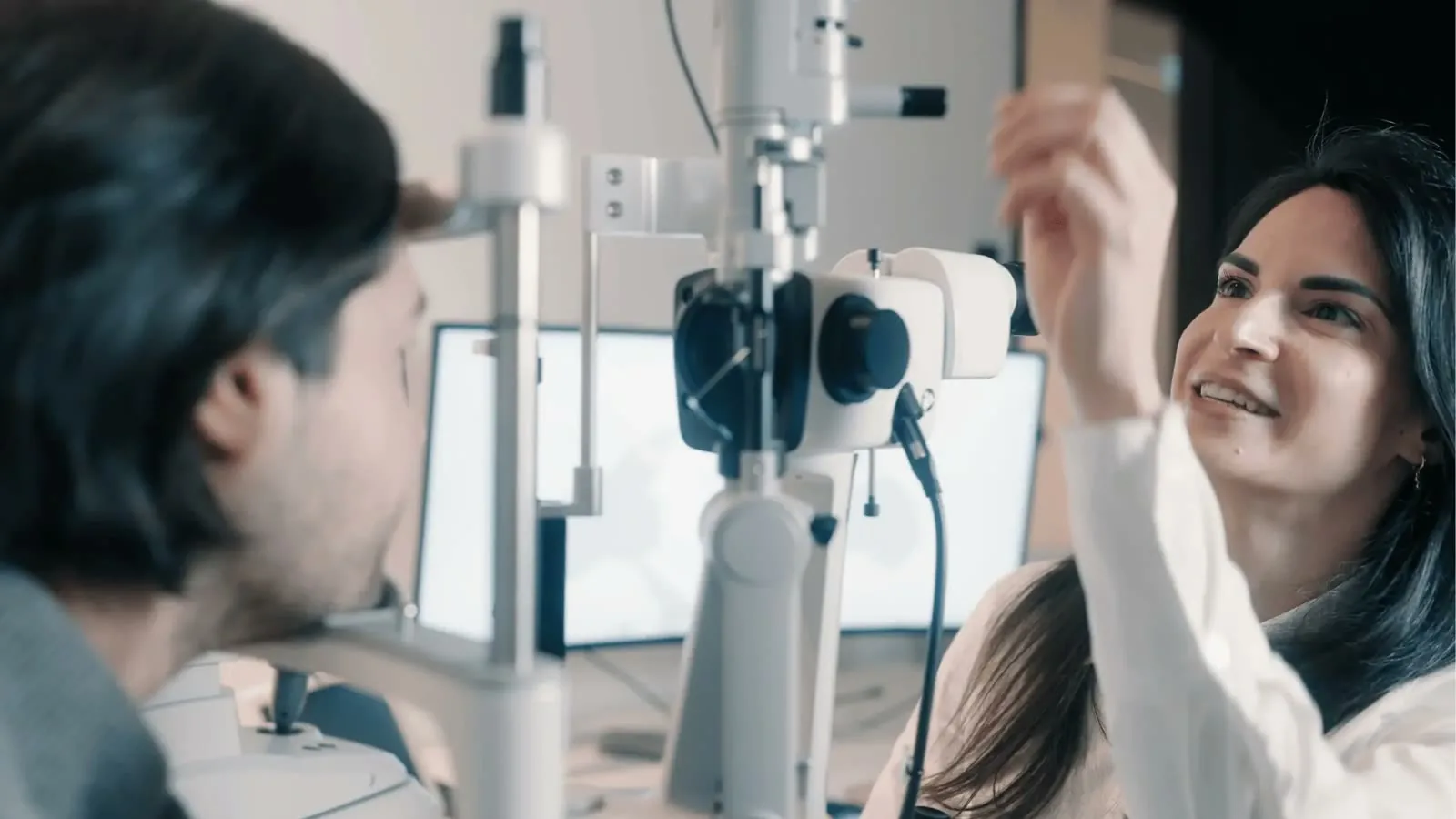
Everything your concern needs.
None of the examinations hurts.
Which examinations?Step 3 of 4
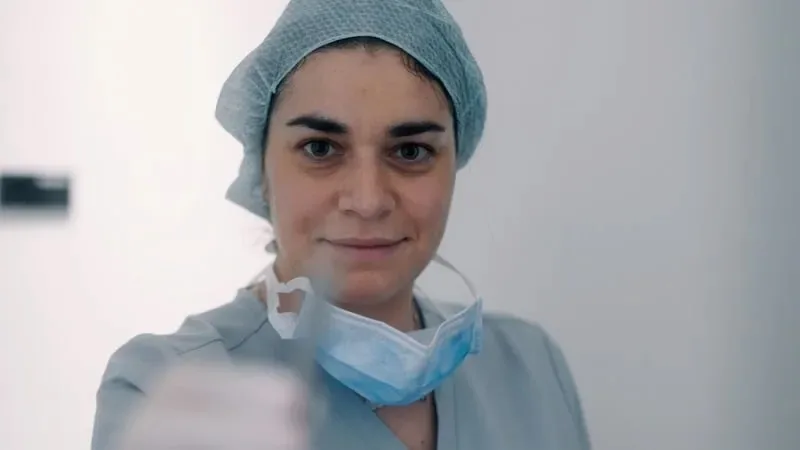
The findings, explained calmly.
On request a doctor's letter to your family doctor or previous eye doctor.
Step 4 of 4

Treat and follow up.
If surgery is planned, Prof. Dr. Mehdi Shajari operates personally; you receive a written cost estimate beforehand.

Because they are your eyes.
More time in the appointment, modern diagnostics, a surgeon in the house and 5.0 stars from 376 Google reviews. And a Patient Care team that knows you from the first call to the follow-up check.
Three doctors. One team.
At the consultation hours, you are examined by specialist physicians in ophthalmology. If surgery is needed, Prof. Dr. Mehdi Shajari performs it personally, 12× FOCUS Top Doctor (2023–2027: cataract, refractive surgery, corneal diseases, glaucoma as well since 2025).
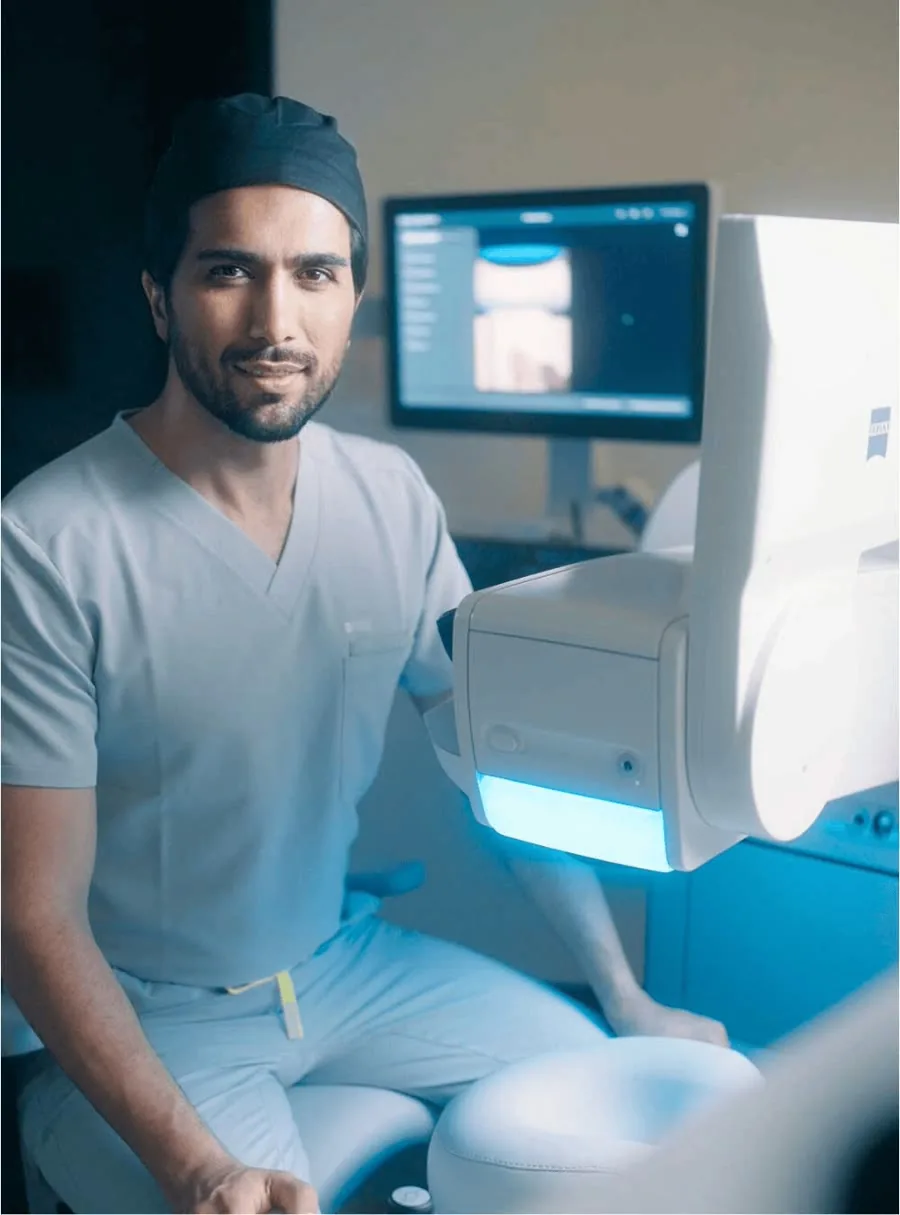 Surgeon
Specialist physician and professor of ophthalmology (German title: außerplanmäßiger Professor), numerous publications on freedom from glasses, teaching and training of several colleagues in this field.
View profile Senior physician
 (Oberärztin) and specialist in ophthalmology. Several years a senior physician at Frankfurt University Hospital, where she led the general outpatient clinic and the departments for eyelids and children.
View profile Specialist physician
Specialist in ophthalmology, formerly senior physician (Funktionsoberärztin) at Frankfurt University Hospital. Focus includes early detection, diagnostics and treatment of glaucoma.
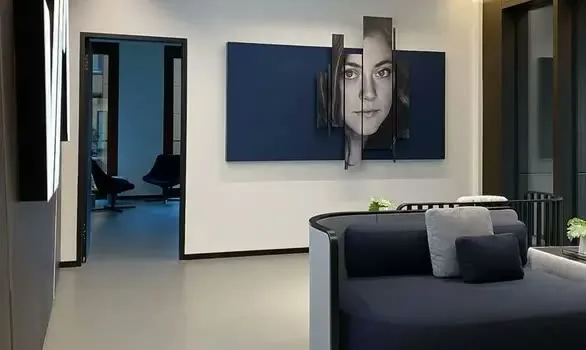
View profileOne team. In the middle of Frankfurt.


Under the GOÄ. Transparent beforehand.
Privately insured patients are billed under the GOÄ through their insurer. Patients with statutory health insurance and self-paying patients pay from €120. We always inform you about the costs beforehand.
| Service | Guide price | Note |
|---|---|---|
| Initial examination with consultation | from €120 | Depends on the examinations needed |
| Eye check-up | on the check-up page | Preventive care without symptoms |
| OCT of the retina or optic nerve | under the GOÄ | According to medical necessity |
| Cataract surgery | €6,998 · €7,242 · €7,876 | Both eyes, monofocal · EDOF · trifocal |
| IVOM (injection into the eye), OptiLight, eyelid lift | depending on the treatment | On the respective page |
Private health insurance generally reimburses medical services under the GOÄ within your plan; how much you bear yourself depends on deductible and plan. For procedures, you receive a written cost estimate beforehand. More for privately insured patients
Beihilfe reimburses medical services under the GOÄ in part; the remaining share is reimbursed by your private supplementary insurance depending on the plan; a personal contribution is possible. Our invoices are structured so that Beihilfe offices can process them directly. More about Beihilfe
dr.vision has no statutory insurance license. You pay yourself, after receiving cost information beforehand. You can declare medical costs as extraordinary expenses in your tax return. Whether and how much the tax office recognizes depends, among other things, on your reasonable burden. More for patients with statutory health insurance
Ophthalmology as a privately insured or self-paying patient: GOÄ, reimbursement, examples.
Costs in detail CataractWith a premium lens: what private health insurance and Beihilfe pay, and what they do not.
To the guides TaxTreatments you pay for yourself as extraordinary expenses.
Here is howGo deeper.
Guides from the consultation hours, reviewed by Prof. Dr. Mehdi Shajari:
Preventive care at every age, from child to 80.
Preventive care plan CataractMonofocal, EDOF or trifocal: what fits your daily life.
Read the guide CataractProcess, healing and daily life after cataract surgery.
Read the guide AcuteWhen you should come immediately and how to get an appointment at short notice.
Urgent appointment Second opinionWhen it is worthwhile and what we check.
Learn more GlossaryFrom macula to tonometry, explained clearly.
To the glossaryStill have questions?
Medically, the same standards apply to both. The difference is in the organization: a private practice bills under the German fee schedule for physicians (GOÄ) and is not bound by quarterly flat rates and statutory insurance quotas. At dr.vision this means more time in the appointment, examinations according to medical necessity without discussion about extra services, and a surgeon in the house.
Yes. dr.vision has no statutory insurance license, so you are a self-paying patient with us. Before the treatment you receive cost information; you can submit the invoice under the GOÄ to a supplementary insurance or, after your health insurer's prior approval, under cost reimbursement (at most at the statutory rate). You can also declare medical costs as extraordinary expenses in your tax return. Whether and how much the tax office recognizes depends, among other things, on your reasonable burden.
We try to make appointments available at short notice, often on the same or the next day. You can see the next available appointment at dr.vision in Frankfurt online. For acute symptoms, please call 069 509 586 770 (reachable 24 hours), and we will look for an appointment on the same or next business day. For comparison: patients with statutory health insurance who had to wait for a specialist appointment waited an average of 42 days in Germany in 2024 (all specialties).
Sudden vision loss, a shadow or curtain in the visual field, flashes with showers of dark specks, a chemical burn or an injury are emergencies. For a chemical burn, rinse the eye immediately for at least 15 minutes with plenty of water, call 112 and keep rinsing until help arrives. For sudden vision loss, go immediately to the nearest eye hospital. For other symptoms, call us during opening hours; outside them, the nearest eye hospital is the right place.
Your current glasses and, if available, your contact lens passport, previous findings and doctor's letters, a list of your medications and eye drops. If your pupils are dilated, you may not drive yourself for a few hours afterward; plan for someone to accompany you or use public transport.
Depending on your concern: vision test and refraction, slit lamp, eye pressure measurement, examination of the retina with a dilated pupil, OCT of the retina and optic nerve, visual field, corneal measurement, tear film analysis, and optical biometry before lens surgery. None of these examinations hurts.
Not if your pupils were dilated with drops: your vision is blurred for a few hours and you are sensitive to glare. Without pupil dilation, you can usually drive normally. We tell you when you book whether dilation is planned.
From 40, the professional societies recommend glaucoma screening, at shorter intervals with increasing age. With diabetes, high nearsightedness or glaucoma in the family, regular check-ups are especially important. We set the appropriate interval after the first examination.
Yes, on request. You receive the findings explained in the conversation, and we send a doctor's letter to your family doctor or your previous eye doctor so that treatment stays coordinated.
Privately insured patients are billed under the GOÄ through their insurer. Patients with statutory health insurance and self-paying patients pay from €120. We always inform you about the costs beforehand.
Private health insurance generally reimburses medical services under the GOÄ within your plan, and Beihilfe in part according to your assessment rate. How much you bear yourself depends on deductible and plan. For planned procedures, you receive a written cost estimate beforehand, which you can submit to your insurer.
Medically reviewed by Prof. Dr. Mehdi Shajari · As of October 2026
How would you like to continue?
Choose an appointment online or call; for acute symptoms we look for an appointment on the same or next working day. You go home with an explained finding and a plan, on request with a doctor's letter to your family doctor.
In Frankfurt, Junghofstraße 16 · examination with OCT if needed
Our locations.
 Opening hours
Junghofstraße 16, 60311 Frankfurt am Main
 Opening 2027
Breite Straße 69, 40213 Düsseldorf (in the Neuer Stahlhof, corner of Graf-Adolf-Platz)
Until opening: preliminary talk in Frankfurt, Patient Care plans your travel.
Plan route Opening 2027
Lautenschlagerstraße 23, 70173 Stuttgart (2nd floor, step-free access)
Until opening: preliminary talk in Frankfurt, Patient Care plans your travel.
Plan route