069 509 586 770Available 24/7 Book an appointment

Glossary · Guides

Glossary of Ophthalmology and Freedom from Glasses

93 technical terms. Briefly explained.

93 technical terms from findings, informed consent, and consultation, each explained in one to three sentences, from diopter to vault. With a search function and a link to the detailed page. If you still have questions, you can usually get an appointment within 24 to 48 hours.

5,0 · 376 Google reviews 12× FOCUS Top Doctor
Short answer

What do the most important technical terms mean at the eye doctor and in laser eye surgery?

The diopter (D) measures the strength of a refractive error: minus means nearsighted, plus means farsighted. The corneal thickness (pachymetry, on average about half a millimeter) helps decide which laser procedure is possible. The lenticule is the small disc of tissue removed in SMILE Pro. The flap is the lid of Femto-LASIK.

93 terms from A for aberrations to Z for cylinder. Reviewed by Prof. Dr. Mehdi Shajari, as of October 25, 2026.

What do the technical terms in ophthalmology and freedom from glasses mean?

From A to Z.

The glossary explains 93 terms from laser eye surgery, lens surgery and ophthalmology in one to three sentences. Type a term into the search field or jump via the letters; each entry leads to the page that covers the topic in detail.

93 terms

A

AberrationsHigher-order aberrations
Fine irregularities in the way the eye bends light that glasses cannot correct. They can reduce contrast and night vision; modern laser profiles try not to add new ones. Laser procedures compared
Axial length
The length of the eye from the cornea to the retina, usually around 23 to 24 mm. A long eye is typical of nearsightedness; axial length is the most important measurement for calculating the power of an artificial lens. Which lens for cataract?
Accommodation
The ability of the eye's lens to change its shape and so focus between distance and near. It declines from around age 40; this causes presbyopia. Get rid of reading glasses
PresbyopiaPresbyopia
The declining ability to see sharply up close because the lens becomes stiffer with age. It usually begins between 40 and 50 and affects everyone, including people who have had laser eye surgery earlier. Get rid of reading glasses
AmblyopiaLazy eye
One eye sees worse even with glasses because it did not develop properly in childhood, for example due to strabismus or very different values between the eyes. It is treatable mainly in childhood. Pediatric eye doctor
AMDAge-related macular degeneration
A disease of the area of sharpest vision (macula) in older age. The dry form progresses slowly; the wet form is treated with injections into the eye (IVOM). Macular degeneration
Anti-VEGF
Medications that slow the growth of abnormal blood vessels under the retina. They are given as an injection into the vitreous, for example in wet AMD or diabetic macular edema. Injection therapy (IVOM)
AstigmatismAstigmatism
The cornea, more rarely the lens, is not evenly curved but is more strongly curved in one direction. As a result, vision is distorted or blurred at all distances; on a glasses prescription the value appears as cylinder (cyl) with an axis. Correcting astigmatism
Eye pressureTonometry
The pressure of the fluid in the eye, measured in mmHg; about 10 to 21 mmHg is usual. Raised pressure is the most important treatable risk factor for glaucoma. Glaucoma

B

ConjunctivaConjunctiva
The thin, transparent mucous membrane that covers the white of the eye and the inside of the eyelids. When it is inflamed, the eye is red, itches or waters. Conjunctivitis
Biometry
The optical measurement of the eye before lens surgery: axial length, corneal curvature, and anterior chamber depth. At dr.vision as optical biometry. Which lens for cataract?
BlepharitisEyelid margin inflammation
A chronic inflammation of the eyelid margins, often with blocked oil glands. It is a common cause of dry, burning eyes and is treated with eyelid hygiene or light therapy. Dry eye
BlepharoplastyEyelid lift
Surgery in which excess skin and, if needed, fatty tissue is removed from the upper or lower eyelid. It corrects drooping eyelids and can free up a restricted field of vision again. Eyelid lift

C

ChalazionChalazion
A painless, firm lump in the eyelid caused by a blocked oil gland. Unlike a stye, it is not an acute infection and often recedes slowly. Swollen eyelid
Cross-linkingCXL
A treatment that strengthens the cornea with vitamin B2 drops and UV light. It is meant to stop keratoconus from progressing, not to improve visual acuity. Keratoconus and cross-linking

D

Diabetic retinopathy
Damage to the fine blood vessels of the retina caused by diabetes. It causes no symptoms for a long time; this is why regular retina check-ups are important for people with diabetes. Diabetes and the retina
DiopterD
The unit of measurement for the refractive power of a lens and thus for the strength of a refractive error. Minus values mean nearsightedness, plus values farsightedness; −3 D means that without glasses everything beyond about 33 cm becomes blurred. Correcting nearsightedness

E

EDOF lensExtended Depth of Focus
An artificial lens with extended depth of focus. It covers distance and intermediate ranges (screen, dashboard) and usually causes fewer halos than a trifocal lens; for reading small print you often still need weak glasses. EDOF lens
EctasiaKeratectasia
A bulging and thinning of the cornea after a laser procedure, similar to keratoconus. It is very rare; the risk rises when too little supporting tissue remains or the cornea was already weak beforehand. Laser eye surgery with a thin cornea
Endophthalmitis
A severe infection inside the eye that can occur after surgery on the open eye (lens, ICL, injections). It is very rare and must be treated immediately. Laser eye surgery: risks
Endothelium
The innermost cell layer of the cornea. It pumps fluid out of the cornea and so keeps it clear; its cells do not regenerate. Before an ICL the cell density is measured, and afterward it is checked every year. ICL
Epithelium
The outermost cell layer of the cornea, only about 50 µm thin. It renews itself within a few days; in Trans-PRK it is removed and grows back. Trans-PRK
Excimer laser
A laser with ultraviolet light that removes corneal tissue layer by layer without heating it. It is used in PRK, Trans-PRK and Femto-LASIK. Trans-PRK

F

Femto-LASIK
A laser eye surgery procedure in which a femtosecond laser cuts a thin corneal lid (flap), the excimer laser underneath shapes the cornea, and the lid is folded back. It also corrects farsightedness. Femto-LASIK
Femtosecond laser
A laser with extremely short pulses that cuts inside the cornea without injuring the surface. In SMILE Pro it creates the lenticule, and in Femto-LASIK the lid. SMILE Pro
Flapcorneal flap
The thin corneal layer that is cut and folded back in LASIK. It then adheres on its own but remains a permanent interface in the cornea. Femto-LASIK
FloatersVitreous opacities
Shadows, dots or threads that drift through the field of view, caused by condensations in the vitreous. Usually harmless; suddenly seeing many new floaters with flashes of light is an emergency. Floaters
FundusBack of the eye
The back wall of the eye with the retina, optic nerve and blood vessels. It is examined with a magnifying lens, slit lamp or wide-angle image, best with a dilated pupil. Eye check-up

G

Visual field
The area an eye perceives when gazing steadily. Visual field testing (perimetry) shows losses such as those that occur in glaucoma. Glaucoma
Vitreous
The clear, gel-like mass that fills the inside of the eye behind the lens. With age it becomes liquid and can detach from the retina. Floaters
GlaucomaGlaucoma
A disease in which the optic nerve is slowly damaged, usually by eye pressure that is too high. It goes unnoticed for a long time; treatment is with drops, laser (SLT) or surgery. Glaucoma
GOÄGerman fee schedule for physicians
The fee schedule under which private doctors bill. As a private practice, dr.vision bills according to the GOÄ at all locations; private health insurers and Beihilfe (allowance for German civil servants) reimburse depending on the plan. Private health insurance

H

HalosHalos
Rings around light sources, especially at night. They often occur in the first weeks after laser eye surgery and, to a small degree, permanently with multifocal lenses. Laser eye surgery: risks
Haze
A fine, veil-like clouding of the cornea after surface treatments such as PRK. It is usually temporary and more common with higher corrections. Trans-PRK
HordeolumStye
An acute, painful bacterial infection of a gland on the eyelid margin. It usually heals within a few days with warmth and hygiene. Swollen eyelid
CorneaCornea
The clear, curved front surface of the eye, about half a millimeter thick. It provides roughly two thirds of the eye's refractive power and is the place where the correction is made in laser eye surgery. Laser eye surgery with a thin cornea
HyperopiaFarsightedness
The eye is built too short; the image forms behind the retina. Young people compensate for this with the lens; with age, near vision becomes blurred first and later distance vision too. Correcting farsightedness

I

ICLImplantable Collamer Lens
A thin artificial lens that is placed in front of your natural lens without removing it. It corrects mainly nearsightedness from −6 D and is suitable for a thin cornea; it can be removed again. ICL
IOLIntraocular lens
An artificial lens that replaces your own lens in cataract surgery or lens exchange. There are monofocal, EDOF, trifocal and toric lenses. Lens types
IPLIntense Pulsed Light
A light therapy on the eyelids that treats blocked eyelid glands and inflammation in dry eye. At dr.vision under the name OptiLight. OptiLight
IVOMIntravitreal operative medication delivery
The injection of a medication into the vitreous, for example in wet AMD or blood vessel occlusions. It is performed under sterile conditions and with numbing drops. Injection therapy (IVOM)

K

Capsular bag
The wafer-thin envelope of the eye's lens. In cataract surgery it is preserved and holds the artificial lens; if it becomes cloudy later, this is called secondary cataract. Secondary cataract
CataractCataract
The clouding of the eye's lens, usually age-related; from around age 65, more than half of people have an early lens clouding. It is treated by exchanging it for a clear artificial lens. Cataract
Keratoconus
A progressive thinning and cone-shaped bulging of the cornea, usually starting in youth. It is usually stopped with cross-linking; laser eye surgery is ruled out in keratoconus. Keratoconus
KRCCommission for Refractive Surgery
The joint commission of the German Ophthalmological Society (DOG) and the Professional Association of Ophthalmologists (BVA). It evaluates refractive procedures and sets their areas of application and limits. Laser eye surgery: risks
NearsightednessMyopia
The eye is usually too long; the image forms in front of the retina. Near vision is sharp, distance vision is blurred. The values on a glasses prescription have a minus. Correcting nearsightedness

L

LASIK
Short for laser in situ keratomileusis: laser eye surgery with a corneal lid. Today the lid is usually cut with the femtosecond laser instead of a microkeratome (Femto-LASIK); at dr.vision, LASIK is only available as Femto-LASIK. Femto-LASIK
Lenticule
A lens-shaped small disc of tissue that the femtosecond laser forms inside the cornea in SMILE Pro. It is removed through a small incision; this changes the refractive power. SMILE Pro
Lens exchangeRLE, refractive lens exchange
Your own, still clear lens is exchanged for an artificial lens to correct a refractive error and presbyopia. Usually from around age 45 to 50; a cataract can no longer develop afterward. Lens exchange

M

MaculaYellow spot
The area of sharpest vision in the center of the retina. You use it to read and to recognize faces. Macular degeneration
MIGSMinimally invasive glaucoma surgery
Surgery with tiny stents or incisions that improve the drainage of aqueous humor and so lower eye pressure. Often combined with cataract surgery. Glaucoma
Monofocal lens
An artificial lens with a single point of focus, usually for distance. It is the standard lens in cataract surgery; afterward you need reading glasses for near vision. Lens types
Monovision
One eye is set for distance, the other slightly for near. The brain combines both images; you should test it with contact lenses beforehand. Presbyond
Multifocal lensMultifocal lens
Umbrella term for artificial lenses with several focus ranges, such as bifocal and trifocal lenses. They reduce dependence on glasses but can cause halos. Trifocal lens
MydriasisPupil dilation
The widening of the pupil with drops so that the back of the eye can be examined completely. Afterward you are sensitive to glare for several hours and must not drive. Eye check-up

N

EnhancementEnhancement
A second laser procedure when a bothersome residual error remains after the first. Needed in about 2 of 100 eyes; the prerequisite is enough remaining cornea. Enhancement
Secondary cataract
A clouding of the capsular bag behind the artificial lens, months to years after lens surgery (cataract or lens exchange). It is removed in a few minutes with the YAG laser. Secondary cataract
RetinaRetina
The light-sensitive layer on the back wall of the eye that converts the image into nerve signals. People with high nearsightedness have a higher risk of holes and detachments. Diabetes and the retina
Retinal detachmentAmotio
The retina detaches from its underlying layer. Warning signs are flashes of light, suddenly many floaters and a shadow in the field of vision; this is an emergency. Floaters

O

OCTOptical coherence tomography
A contact-free cross-sectional imaging method using light that shows the retina, optic nerve or cornea in layers. Important in AMD, glaucoma and diabetes. Eye check-up

P

Pachymetry
The measurement of corneal thickness, today usually done optically across the whole surface. It helps decide which laser eye surgery procedure is possible. Laser eye surgery with a thin cornea
Phakic lensphakic IOL
An artificial lens that is inserted in addition to your own lens; “phakic” means your own lens stays in the eye. The best known is the ICL. ICL
Presbyond
A laser procedure for presbyopia: one eye is set for distance, the other slightly for near, with extended depth of focus. For people from around age 45 with a still clear lens. Presbyond
PRKPhotorefractive keratectomy
The oldest laser eye surgery procedure: the top layer is removed and the corneal surface is shaped with the excimer laser. No incision, but some days of discomfort. PRK
PTApercent tissue altered
The share of the corneal thickness that the lid or cap and the removal together alter. Values from 40% are regarded in studies as a risk marker for ectasia. Laser eye surgery with a thin cornea
Pupillometry
The measurement of pupil size in dim light. Wide pupils can make halos more likely after laser eye surgery and influence the planning of the treatment zone. Laser procedures compared

R

Refraction
The refractive power of the eye and the measurement of the matching glasses values. A distinction is made between objective refraction (device) and subjective refraction (you compare lenses). Eye check-up
Refractive surgery
All procedures that correct a refractive error so that you see without glasses: laser eye surgery, ICL, lens exchange and Presbyond. Laser eye surgery
Residual bedResidual stroma
The supporting corneal tissue that remains under the lid or cap after the laser removal. According to the KRC it must be at least 250 µm, even after an enhancement. Laser eye surgery with a thin cornea

S

Schirmer test
A strip of filter paper in the corner of the eyelid measures how much tear fluid is produced in five minutes. It is one of several measurements for dry eye. Dry eye
SLTSelective laser trabeculoplasty
A gentle laser on the drainage system of the eye that lowers eye pressure in glaucoma. It can replace or supplement drops. Glaucoma
SmartSight
A lenticule procedure on the SCHWIND laser, similar to SMILE: the laser forms a small disc of tissue in the cornea, which is removed through a small incision. SmartSight
SMILE Pro
Laser eye surgery without a lid: the ZEISS VisuMax 800 femtosecond laser forms a lenticule that is removed through an incision under 4 mm. For nearsightedness up to about −8 D and astigmatism up to 5 D. Suitability depends mainly on corneal thickness, corneal shape and the stability of your values. SMILE Pro
Slit lamp
The eye doctor's microscope with a narrow slit of light. It is used to examine the eyelids, cornea, lens and, with a magnifying lens, the back of the eye. Eye check-up
Spherical equivalentSE
A single value that combines the sphere and cylinder values: sphere plus half the cylinder. −4.0 sph and −1.0 cyl become −4.5 D. Correcting nearsightedness
Stroma
The middle, thickest layer of the cornea, made of ordered collagen fibers. The laser corrects within it; it gives the cornea its strength. Laser eye surgery with a thin cornea

T

TomographyCorneal tomography
The three-dimensional measurement of the cornea, including front and back surface and thickness distribution. It is mandatory before any laser eye surgery and detects early keratoconus. Laser eye surgery with a thin cornea
TopographyCorneal topography
The map of the curvature of the front surface of the cornea. It shows astigmatism and irregularities but, unlike tomography, not the back surface. Astigmatism
Toric lens
An artificial lens or ICL with a built-in cylinder that also corrects astigmatism. It is aligned along a specific axis. Toric lens
Trans-PRK
A form of PRK in which the excimer laser also removes the top layer, without contact and without alcohol. Often the first choice for a thin cornea. Trans-PRK
Tear film
The thin film of fluid on the eye made of an oil layer, a water layer and a mucus layer. If it is disturbed, dry eyes result; it is always checked before laser eye surgery. Dry eye
Trifocal lens
An artificial lens with three focus ranges: distance, intermediate and near. Most people manage without glasses afterward; at first, halos at night are common. Trifocal lens
Dry eyeSicca syndrome
A disturbed tear film with burning, a foreign-body sensation or changing vision. Often temporary after laser eye surgery; treated with artificial tears, eyelid care or light therapy. Dry eye

V

Vault
The distance between the ICL and your own lens, measured in micrometers. It must be neither too small (risk of lens clouding) nor too large (risk of a rise in pressure) and is checked after the procedure. ICL
VisuMax 800
The femtosecond laser from ZEISS with which SMILE Pro is performed at dr.vision. It forms the lenticule in a few seconds. SMILE Pro
Visual acuityVisual acuity
The measure of visual acuity. Acuity 1.0 corresponds to 100% and counts as normal visual acuity; 0.5 means that you only recognize a character from half the distance. Eye check-up
Vitrectomy
The surgical removal of the vitreous, for example in retinal detachment or very bothersome floaters. It is a procedure inside the eye with its own risks. Floaters
Anterior chamber
The space filled with aqueous humor between the cornea and the iris. Its depth decides whether an ICL has room; the KRC gives about 2.8 mm as the lower limit for nearsightedness. ICL

W

FarsightednessHyperopia
See hyperopia. Can be corrected up to about +4 D with Femto-LASIK; at higher values usually with an ICL, from around age 45 usually with a lens exchange. Correcting farsightedness
Wavefront
The measurement of all refractive errors of the eye, including higher-order aberrations. Wavefront-guided laser profiles are meant to compensate for these as well. Laser procedures compared

Y

YAG laserNd:YAG laser
A laser that cuts through tissue inside the eye with short pulses without opening the eye. At dr.vision we use it to remove secondary cataract (YAG capsulotomy). Secondary cataract

Z

Zonular fibers
Fine supporting fibers from which the eye's lens is suspended. If they are weak, lens surgery is more demanding. Lens exchange
Cylindercyl
The value on the glasses prescription for astigmatism, always together with the axis in degrees. A cylinder of −1.5 D means a moderate curvature. Astigmatism

How do I read my glasses prescription and my eye doctor's findings?

The abbreviations that appear in almost every set of findings.

A glasses prescription usually lists three values per eye: sph (nearsightedness or farsightedness), cyl (astigmatism) and the axis in degrees, plus add for reading glasses. Findings also include visual acuity, eye pressure in mmHg and corneal thickness in µm. The table shows what the abbreviations mean.

Abbreviations in glasses prescriptions and eye doctor's findings
AbbreviationMeaningExampleWhat it means
R / L, OD / OSRight / left eye (Latin oculus dexter / sinister)ODValue for the right eye
sphSphere: nearsightedness (−) or farsightedness (+) in diopters−3.25Nearsighted, blurred beyond about 30 cm without glasses
cylCylinder: astigmatism in diopters−1.00Mild to moderate astigmatism
A / AxisDirection of the astigmatism in degrees (0–180°)175°Astigmatism aligned almost horizontally
addAddition: near-vision supplement for reading or progressive glasses+2,00Pronounced presbyopia
SESpherical equivalent: sph + ½ cyl−3.75One value for the overall strength
Visual acuity (cc / sc)Visual acuity with (cc) or without (sc) correction1,0Normal visual acuity (100%)
Tonometry / IOPEye pressure in mmHg16 mmHgWithin the usual range of about 10 to 21 mmHg
CCT / PachyCentral corneal thickness in µm535 µmAverage thickness
PDPupillary distance in mm63 mmDistance between the pupils, for making glasses

Swipe the table sideways →

Example values for explanation, not standard values for your eye. What your values mean for laser eye surgery: Suitability Check · nearsightedness · astigmatism

Which ophthalmology terms are often confused?

Sounds similar. Isn't.

Six pairs of terms regularly cause misunderstandings in consultation hours. The most consequential is mixing up cataract and glaucoma: one is a clouded lens that surgery can fully resolve, the other is optic nerve damage, where lost vision does not come back.

Cataract · Glaucoma

Lens or optic nerve

Cataract: the lens becomes clouded, and surgery replaces it. Glaucoma: the optic nerve is damaged, usually by high eye pressure. Cataract · Glaucoma

Topography · Tomography

Surface or the whole cornea

Topography measures the curvature at the front, tomography also the back surface and thickness. Before laser eye surgery, tomography is what counts.

LASIK · Femto-LASIK · SMILE

Lid or no lid

LASIK and Femto-LASIK work with a lid (flap), SMILE Pro without one, through a lenticule.

SMILE Pro or Femto-LASIK?

ICL · Lens exchange

In addition or instead

The ICL is added to your own lens and can be removed again. In lens exchange, your own lens is replaced. ICL · Lens exchange

Stye · Chalazion

Acute or chronic

A stye is a painful infection on the eyelid margin, a chalazion a painless lump in the eyelid.

Swollen eyelid

Farsighted · presbyopic

Eye structure or age

Farsightedness is caused by an eye that is too short and is present from birth. Presbyopia develops in the lens from around age 40. Farsightedness · Reading glasses

How do patients experience their treatment at dr.vision?

376 reviews. Average 5.0.

376 Google reviews give dr.vision an average of 5.0 out of 5 stars. dr.vision does not check whether Google reviews come from treated patients.

“The staff was friendly, the doctor explained my case well and the treatment was easy to understand.”
Hellen Nicodemus · Google
“You notice at first glance that he is very competent. He takes time for a thorough conversation and explains everything clearly.”
Stylianos Traoudas · Google
“Dr. Shajari is very trustworthy, friendly, competent and explains his approach and the modern equipment clearly: the examination does not even require pupil dilation.”
Giulia Di Rienzo · Google
“The doctor took a lot of time, explained everything clearly and advised me competently. I was also helped quickly and reliably when my findings report was prepared.”
Janine · Google

Frequently asked questions about ophthalmology terms

Still have questions?

The questions patients ask most often about this during consultation hours. Prof. Dr. Mehdi Shajari

What is a diopter?

The diopter (D) is the unit of measurement for the refractive power of a lens and thus for the strength of a refractive error. Minus values mean nearsightedness, plus values farsightedness. At −3 D, everything beyond about 33 cm becomes blurred without glasses.

What do sph, cyl and axis mean on a glasses prescription?

Sph (sphere) is nearsightedness or farsightedness in diopters. Cyl (cylinder) is astigmatism in diopters; the axis states in degrees from 0 to 180 the direction in which it lies. Add (addition) is the near-vision supplement for reading glasses.

What is a lenticule?

A lens-shaped small disc of tissue that the femtosecond laser forms inside the cornea in SMILE Pro. It is removed through an incision of a few millimeters; this changes the curvature of the cornea and thus its refractive power.

What is the difference between a flap and a lenticule?

The flap is the corneal lid of Femto-LASIK, which is folded up and afterward lies back in place. The lenticule is the small disc of tissue in SMILE Pro that is removed; here there is no lid, only a small access.

What is the difference between topography and tomography?

Topography measures the curvature of the front surface of the cornea. Tomography also measures the back surface and the thickness at every point. Before laser eye surgery, tomography is more important because it shows early keratoconus sooner.

What is the vault in an ICL?

The vault is the distance between the ICL (Implantable Collamer Lens, a lens in the eye) and your own eye lens. It is measured after the procedure and checked regularly, because a distance that is too small or too large can have consequences.

What is the difference between cataract and glaucoma?

In cataract, the eye's lens becomes clouded; surgery replaces it with a clear artificial lens. In glaucoma, the optic nerve is damaged, usually by eye pressure that is too high; lost vision does not come back, which is why early detection is important.

Who reviewed the terms in this glossary?

The glossary was medically reviewed by Prof. Dr. Mehdi Shajari, specialist in ophthalmology. As of October 25, 2026. Each definition links to the page that covers the topic in detail.

Medically reviewed by Prof. Dr. Mehdi Shajari · As of October 2026

Patient Care at dr.vision

Term not found?

Ask us. We will explain it to you.

Our Patient Care team answers questions about appointments and documents by phone, reachable 24 hours a day, and via WhatsApp Mon–Fri 8:00–19:00, Sat 9:00–15:00. Prof. Dr. Mehdi Shajari discusses questions about your findings or your informed consent with you during the consultation.

How do I get my findings explained?

How would you like to continue?

At the initial consultation or the pre-operative examination, you see your measurements on the screen and have each value explained to you. You go home with a written findings report and a recommendation.

I would like an appointment

Initial Consultation for Freedom from Glasses

I am coming from near

In Frankfurt, Junghofstraße 16 · Free initial consultation

Next available appointment Tue, Oct 27 · 10:15
Book a free initial consultation ★ 5.0 · 376 Google reviews · 12× FOCUS Top Doctor
I still have questions

Talk first

Patient Care online
Reply usually within 10–15 min · Mon–Fri 8:00–19:00, Sat 9:00–15:00
Ask via WhatsApp Call 069 509 586 770Available 24 hours
Request a callback

Where does dr.vision explain findings?

Our locations.

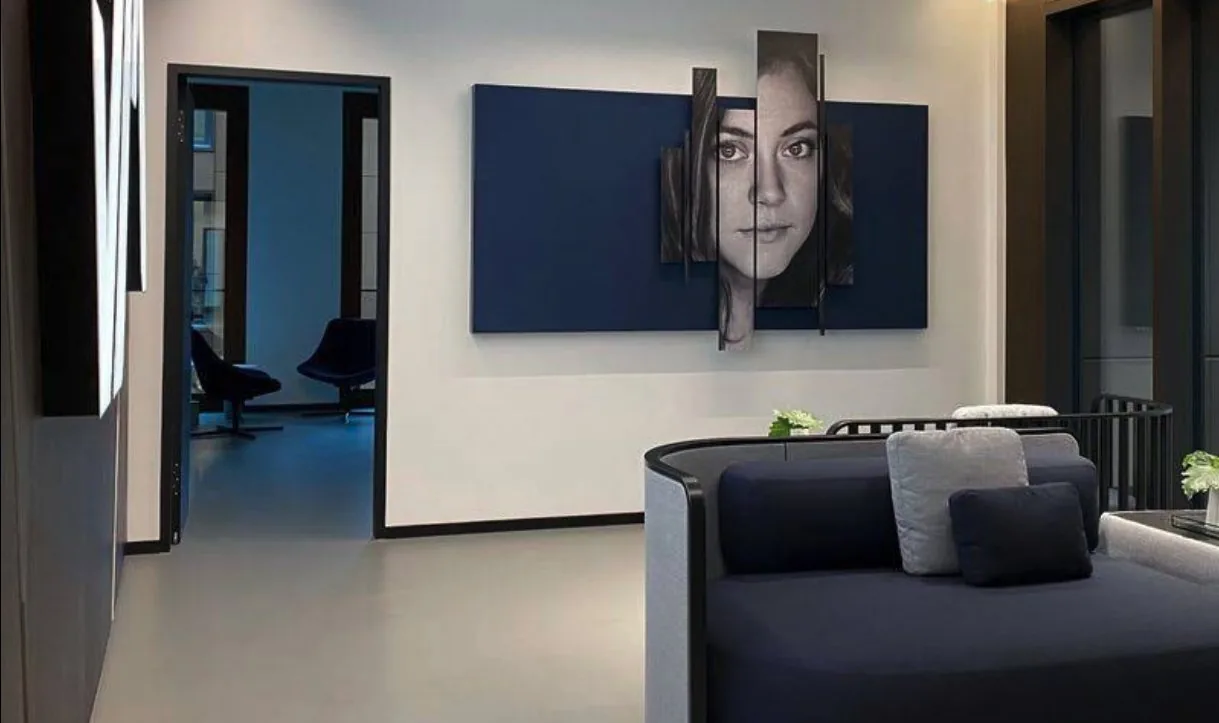
dr.vision practice, FrankfurtOpening hours

Frankfurt

Junghofstraße 16, 60311 Frankfurt am Main
Mon–Fri
8:00–19:00
Sat
9:00–15:00
  • Phone069 509 586 770 · available 24 hours
  • ParkingFree in the building (Junghofstraße parking garage)
  • Public transitHauptwache (S/U), 5 min on foot
Plan route
Rooms at the Düsseldorf locationOpening 2027

Düsseldorf2027

Breite Straße 69, 40213 Düsseldorf (in the Neuer Stahlhof, corner of Graf-Adolf-Platz)

Mon–Fri
8:00–19:00
Sat
9:00–15:00
  • Phone069 509 586 770 · available 24 hours
  • ParkingQ-Park GAP 15 at Graf-Adolf-Platz, 3 min on foot
  • Public transitGraf-Adolf-Platz (subway, streetcar), 4 min on foot

Until opening: preliminary talk in Frankfurt, Patient Care plans your travel.

Plan route

Reception at the Stuttgart locationOpening 2027

Stuttgart2027

Lautenschlagerstraße 23, 70173 Stuttgart (2nd floor, step-free access)

Mon–Fri
8:00–19:00
Sat
9:00–15:00
  • Phone069 509 586 770 · available 24 hours
  • Public transitBörsenplatz (subway), 2 min on foot; main station 5 min

Until opening: preliminary talk in Frankfurt, Patient Care plans your travel.

Plan route
Sources and further reading
  1. Commission for Refractive Surgery (KRC) of the DOG and the BVA: assessment and quality assurance of refractive surgery procedures, as of 05/2024 (procedure descriptions, residual bed, anterior chamber depth). dog.org
  2. German Ophthalmological Society (DOG): patient information on cataract, glaucoma and AMD. dog.org
  3. The definitions are simplified for editorial purposes; detailed information and sources are on the linked topic pages.
Arrange an appointment