 dr.vision
Real questions
The topics come from the consultation hours and from what people search for online. Each page answers one question.
Start here
What suits you?
Find out in 2 minutes which procedure suits your eyes.
Start the Suitability CheckOr by age:
< 45yearsGet rid of glasses & contact lenses 45–64yearsGet rid of reading glasses 65+yearsCataract & glasses-free★★★★★ 5.0 · 376 Google reviews · 20,000+ procedures
Decide well
What you should know beforehand.
Who operates?Prof. Dr. Mehdi ShajariFOCUS Top Doctor · operates on every patient personally What does it cost?Laser from €3,498 · Lenses from €6,886Prices for both eyes Is it safe?Safety & risks When will I be fit again?Work, sports, driving Would you rather read in peace first?Decision Guide Freedom from GlassesProcedures
Laser or lens?
Laser eye surgery
SMILE ProSmartSightFemto-LASIKTrans-PRKPRKPresbyond (laser away your reading glasses)All laser procedures at a glanceLaser procedures compared ›Lens surgery
ICLLens exchange (reading glasses)Cataract surgery with premium lensLens types: trifocal, EDOF, toricLens types compared ›Start here
Something wrong with your eyes?
A thorough eye check-up with us clarifies what is behind it.
Book an eye check-up★★★★★ 5.0 · 376 Google reviews
Eye guides · dr.vision
50 questions. Answered honestly.
Honest answers to the questions you really have before a treatment: costs, risks, laser or lens, cataract. Every answer is given at the top in one sentence, medically checked by Prof. Dr. Mehdi Shajari. Afterward, we are happy to advise you personally.
The six questions almost everyone asks.
Six questions come up in almost every initial consultation: what does it cost, how safe is it, which procedure, from what age, does insurance pay, when am I back to normal. Here are the answers in one sentence, with a link to the detailed page.
Usually €800 to €2,600 per eye in Germany, at dr.vision from €3,498 for both eyes, depending on the procedure.
Read answer02Serious complications are very rare; an infection affects fewer than 1 in 1,000 eyes.
Read answer03Equally sharp; SMILE Pro spares the tear film and stability, Femto-LASIK is more affordable and can treat farsightedness.
Read answer04From 18 with stable values, no upper limit; from about 45 usually Presbyond or lens exchange.
Read answer05No, laser eye surgery is not a statutory insurance benefit; private health insurance (PKV) often pays, depending on the plan.
Read answer06After SMILE Pro usually after 1–2 days, exercise after about a week.
Read answer376 reviews. Average 5.0.
376 Google reviews give dr.vision an average of 5.0 out of 5 stars. dr.vision does not check whether Google reviews come from treated patients.
“Prof. Shajari takes an exceptional amount of time for his patients, explains all the examination steps clearly and patiently answers every question.”
“Dr. Shajari's professionalism and eye for detail were clearly noticeable during the examination. He patiently explained every step to me and answered all my questions.”
“After the examination, Dr. Shajari showed me the results and explained them thoroughly and competently. He patiently answered all my questions.”
“Very nice and ultra-modern practice. Dr Shajari was very friendly and took the time to answer all my questions.”
All guides. Sorted by topic.
Here are all 50 guide, comparison, cost and condition pages of dr.vision in five topics. Search for a keyword or choose a topic: each card shows the core question and the answer in one sentence.
50 guides
We do not have a guide on this yet. Ask us directly: 069 509 586 770 (reachable 24 hours) or via WhatsApp; in the glossary you will find technical terms.
What freedom from glasses and ophthalmology cost, who reimburses what, and how you can spread or deduct the costs.
From €3,498 (Trans-PRK) to €7,876 (trifocal lens) for both eyes, depending on the procedure; you will receive the binding amount in writing after the pre-operative examination.
Read moreGuidesUsually €800 to €2,600 per eye. The differences depend mainly on who operates, which laser is used and how high the safety standards are, and whether pre-operative examination, aftercare and enhancement are included in the price.
Read moreGuidesAt dr.vision €6,998 with a monofocal lens, €7,242 with an EDOF lens and €7,876 with a trifocal lens for both eyes, ICL (additional lens in front of your own lens) from €6,886.
Read moreGuidesdr.vision is a private practice: patients with statutory health insurance pay themselves. Private health insurance and Beihilfe (allowance for German civil servants) reimburse depending on the plan.
Read moreCostsSMILE Pro interest-free over 12 months for €433 a month or over 60 months for a calculated €109 (9.90% effective).
Read moreCostsIn many cases yes: in 2017 the BGH (Germany's Federal Court of Justice) ruled that nearsightedness of −3 D can be an illness; whether your private health insurance (PKV) pays depends on the plan.
Read moreCostsNo, refractive eye surgery is not a statutory insurance benefit under the guideline of the Federal Joint Committee (G-BA); at dr.vision, patients with statutory health insurance are self-paying patients.
Read moreCostsLaser eye surgery usually only if glasses and contact lenses are not possible and the Beihilfe office has agreed beforehand; for cataract the lens up to €270.
Read moreCostsYou can usually claim the costs as extraordinary expenses in your tax return. Whether and how much the tax office accepts is decided case by case, among other things based on your reasonable burden.
Read moreCostsThe examination costs from €120. Patients with private health insurance can submit the invoice to their insurer, patients with statutory health insurance pay themselves. We inform you transparently about the costs in advance.
Read moreWhich path suits your eyes: laser or lens, SMILE or LASIK, which artificial lens.
Three things decide: your diopters (laser up to about −8 D), the thickness and shape of your cornea, and your age, because presbyopia starts at about 45.
Read moreComparisonNone for everyone: SMILE Pro/SmartSight is ahead for dry eyes and sports, Femto-LASIK for farsightedness, Trans-PRK for a thin cornea and price.
Read moreComparisonEqually sharp after three months; SMILE Pro needs only a 2–4 mm access instead of a flap and so protects the tear film and stability, Femto-LASIK costs less.
Read moreComparisonUp to −6 D, laser is usually the smaller procedure; above −8 D, with a thin cornea or dry eyes, the ICL is almost always the better choice.
Read moreComparisonMonofocal for a lot of night driving or a retinal disease, EDOF for distance and screens with few halos, trifocal for a life almost without glasses.
Read moreComparisonWith a clear lens between about 45 and 55 usually Presbyond (€6,398), with early clouding, farsightedness or over 60 the lens exchange (from €6,998).
Read moreComparisonFor daily lens wearers under 45 usually after 5 to 12 years; with daily disposable lenses, SMILE Pro pays off after just under 8 years.
Read moreGuidesNight driving, reading and the health of your retina decide: monofocal, EDOF or trifocal suit different daily lives.
Read moreThe questions before and after the procedure: age, risks, cornea, pregnancy and the time afterward.
From age 18 with values that have been stable for 12 months, with no fixed upper limit; from about 45, Presbyond or a lens exchange usually makes more sense.
Read moreGuidesSerious complications are very rare (infection under 1 in 1,000); common but temporary are dry eyes and halos.
Read moreGuidesUsually Trans-PRK; Femto-LASIK and SMILE Pro/SmartSight only from 480 µm, and if the cornea is not thick enough, the ICL is the safe alternative.
Read moreGuidesNo, hormones change the values; laser treatment is done after weaning, once two measurements at least 3 months afterward agree.
Read moreGuidesUsually weeks: after SMILE Pro, about 3 in 10 have dry eyes in the first weeks, after that the symptoms lessen month by month.
Read moreGuidesIn about 2 of 100 eyes, at dr.vision 0.6% (SMILE Pro, n = 412); laser enhancement is done after about 3 months at the earliest.
Read moreGuidesAfter SMILE Pro and Femto-LASIK usually back at the office after 1–2 days, sports after about 1 week, swimming and sauna after about 2 weeks.
Read moreAnswers for your age, your values and your life situation.
Four options: SMILE Pro/SmartSight up to −8 D, Femto-LASIK also for farsightedness, Trans-PRK for a thin cornea, ICL from −6 D.
Read moreWho it is forSix paths, also without a procedure; age, the condition of your own lens and your willingness to compromise decide between Presbyond and a lens exchange.
Read moreWho it is forYes, with the right artificial lens; the most expensive is not the best, but the one that suits night driving, reading and your retina.
Read moreWho it is forSMILE Pro/SmartSight and Femto-LASIK up to −8 D, Trans-PRK for a thin cornea, ICL from −6 D, lens exchange from about 45.
Read moreWho it is forYes, with Femto-LASIK up to about +4 D; above that ICL, from about 45 lens exchange.
Read moreWho it is forYes, if it is regular: SMILE Pro/SmartSight up to 5 D, Femto-LASIK up to about 6 D, above that a toric ICL or toric lens.
Read moreWho it is forPolice, armed forces, pilots and fire departments have their own rules on waiting periods and procedures; the page lists them with source and date.
Read moreWho it is forYes: pre-operative examination on a weekday beforehand, laser on Friday, follow-up check on Saturday, most people are back at work on Monday.
Read moreWho it is forTreated in under 72 hours: pre-operative examination and procedure on separate days, follow-up check the next day with us, afterward with your eye doctor at home.
Read moreWho it is forUsually yes, on the same day; each person gets their own procedure, what matters is who drives home afterward.
Read moreWho it is forOften yes, for example if laser eye surgery was declined or a surgery was recommended; what we check depends on your situation.
Read moreEnglishYes: consultation and explanation of all options take place in English, with a 72-hour plan for international patients.
Read morePreventive care, symptoms and treatments in ophthalmology, from the red eye to macular degeneration.
Without risk factors every five years from 40, every two to three years from 60; children once between the 30th and 42nd month of life.
Read moreConditionThe whole eye from front to back: visual acuity, eye pressure, cornea, tear film, lens, retina and macula, contact-free and in about an hour.
Read moreConditionContrasts fade, colors turn yellow, light dazzles; surgery is done when the clouding limits you in daily life.
Read moreGuidesThe surgery takes about 20 minutes per eye, office work is usually possible after 2–3 days, the eye is fully healed after 4–6 weeks.
Read moreConditionWith eye pressure, OCT and visual field; it is treated with drops, SLT laser or surgery, before you notice anything.
Read moreConditionDry and wet AMD; the wet form is treated with injections, and not smoking is the most important protection you can influence.
Read moreConditionFirst the cause: in about 8 in 10 the meibomian glands are involved, which is why watery drops are often not enough.
Read moreConditionWithout retinal changes and with low risk every 2 years, otherwise yearly, with changes often every 3–6 months.
Read moreConditionIf nothing improves after 2–3 days, with pus, in children and immediately with pain, light sensitivity or worse vision.
Read moreConditionA stye is an acute, painful inflammation at the lid margin, a chalazion a firm, usually painless lump in the eyelid.
Read moreConditionEvery child once between the 30th and 42nd month of life, children at risk already at 6 to 12 months.
Read moreConditionFor driver's licenses (car, truck, bus), pilots under EASA and FAA, occupation, insurance and the determination of a visual impairment.
Read moreLook upOver 90 terms from aberrations to cylinder, each explained in one to three sentences, with search.
Read moreWritten and reviewed by the surgeon himself.
Each guide answers one specific question first in two to four sentences with a number, then in depth. Written and medically reviewed by Prof. Dr. Mehdi Shajari, with sources from guidelines and studies. What is not yet proven, we mark rather than claim.
The topics come from the consultation hours and from what people search for online. Each page answers one question.
At the top the short answer with a number, below it reasons, tables, special cases. You decide how deep you read.
Recommendations of the Refractive Surgery Commission (KRC), guidelines, studies and our own results are at the end of every page.
Every page carries the author and review date. Prices are guide prices for both eyes at all locations.
On average 5.0 stars from 376 Google reviews.

A doctor who does both: explain and operate.
The guides are written by Prof. Dr. Mehdi Shajari, who performs the procedures himself. That is why they also say when we advise against a procedure, when another procedure is better and which numbers are not yet proven.
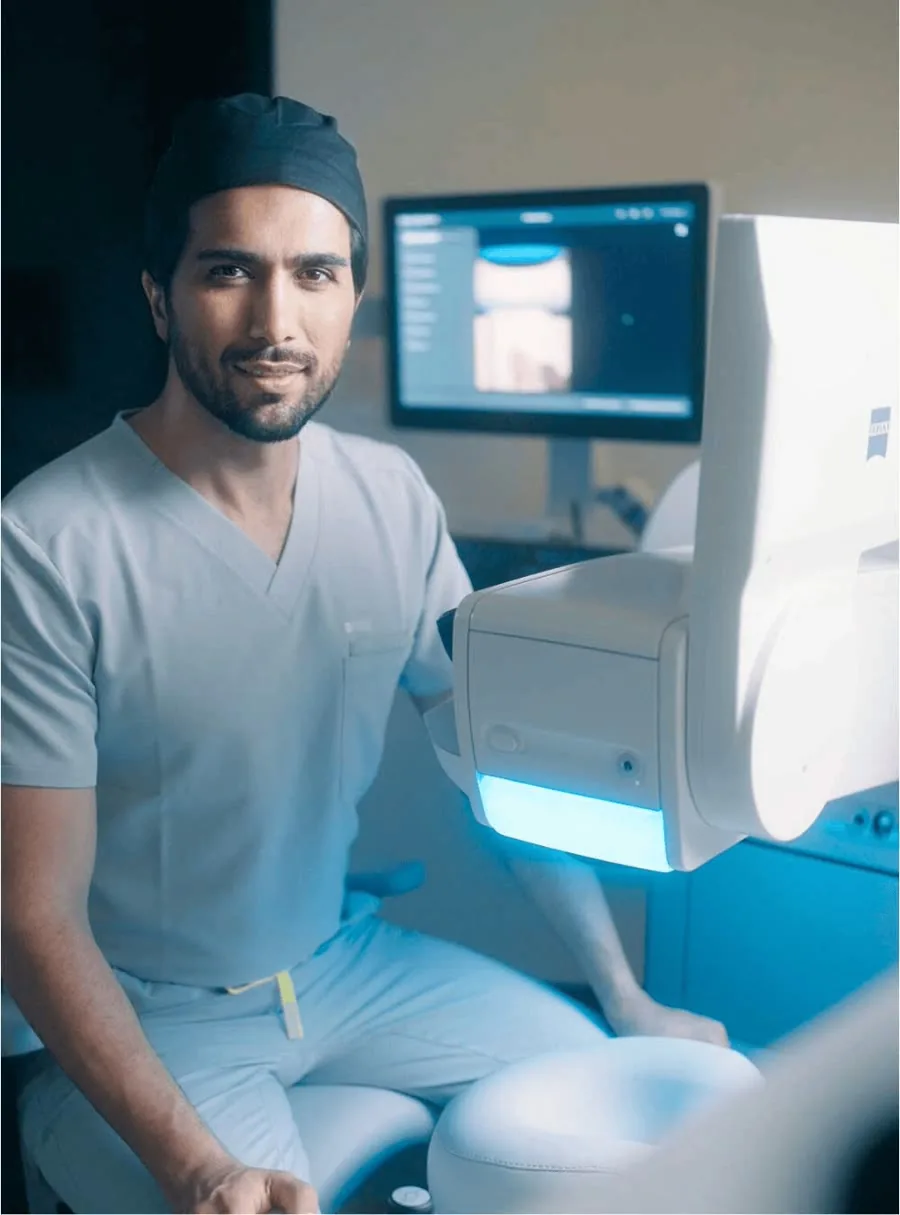
Prof. Dr. Mehdi Shajari, surgeon and author.
Prof. Dr. Mehdi Shajari writes the guides and also medically checks every page. He is a specialist in ophthalmology with a professorship and habilitation at the University of Frankfurt, has published numerous papers on freedom from glasses, teaches and has trained several colleagues in this field. At dr.vision, 20,000+ procedures have been performed.

At dr.vision
Whoever examines you beforehand also operates on you: Prof. Dr. Mehdi Shajari in person.
SMILE Pro/SmartSight, Femto-LASIK, Trans-PRK, ICL, Presbyond, lens exchange and ophthalmology. The guides do not have to favor any procedure.
Every page states for whom a procedure is not suitable, with the limit values of the professional societies.
If you have questions after reading, ask them in the initial consultation.
Still have questions?
The questions patients ask most often about this during consultation hours. Prof. Dr. Mehdi Shajari
Prof. Dr. Mehdi Shajari, specialist in ophthalmology with a professorship and habilitation at the University of Frankfurt. He also medically reviews every guide, and the review date is on every page.
From guidelines and recommendations of the professional societies (such as the Refractive Surgery Commission of the DOG and BVA), from studies and from our own evaluated results. The sources are at the end of every page.
No. The guides explain what applies in general and which questions you should ask. Whether a procedure suits your eyes is only shown by the pre-operative examination with measurement of cornea, tear film, lens and retina.
Every page states its review date. We update the guides when recommendations, prices or the state of studies change; prices are guide prices for both eyes at all locations.
Type a keyword into the search field or choose a topic. Each card shows the question and the answer in one sentence; the link leads to the detailed page. The glossary explains technical terms.
Call Patient Care (069 509 586 770, reachable 24 hours) or write via WhatsApp (Mon–Fri 8:00–19:00, Sat 9:00–15:00). We add frequently asked questions as new guides.
Yes, the Decision Guide summarizes procedures, costs and questions for the pre-operative examination. You receive it free of charge by e-mail or WhatsApp.
The initial consultation and pre-operative examination for freedom from glasses are included in the surgery price; without a procedure they are charged separately. Patient Care clarifies the process, costs and appointment in advance free of charge by phone or WhatsApp. As a private practice, dr.vision bills examinations in ophthalmology according to the German fee schedule for physicians (GOÄ). Patients with statutory health insurance are self-paying patients, private health insurance (PKV) reimburses according to the plan, Beihilfe (allowance for German civil servants) according to your Beihilfe rate.
Medically reviewed by Prof. Dr. Mehdi Shajari · As of October 2026
How would you like to continue?
You make the appointment by phone or online. The next step after reading is the initial consultation for freedom from glasses or an appointment in ophthalmology. Prof. Dr. Mehdi Shajari and his team examine your eyes and answer your questions using your own measurements.
In Frankfurt, Junghofstraße 16 · detailed pre-operative examination with Prof. Dr. Mehdi Shajari
Our locations.
 Opening hours
Junghofstraße 16, 60311 Frankfurt am Main
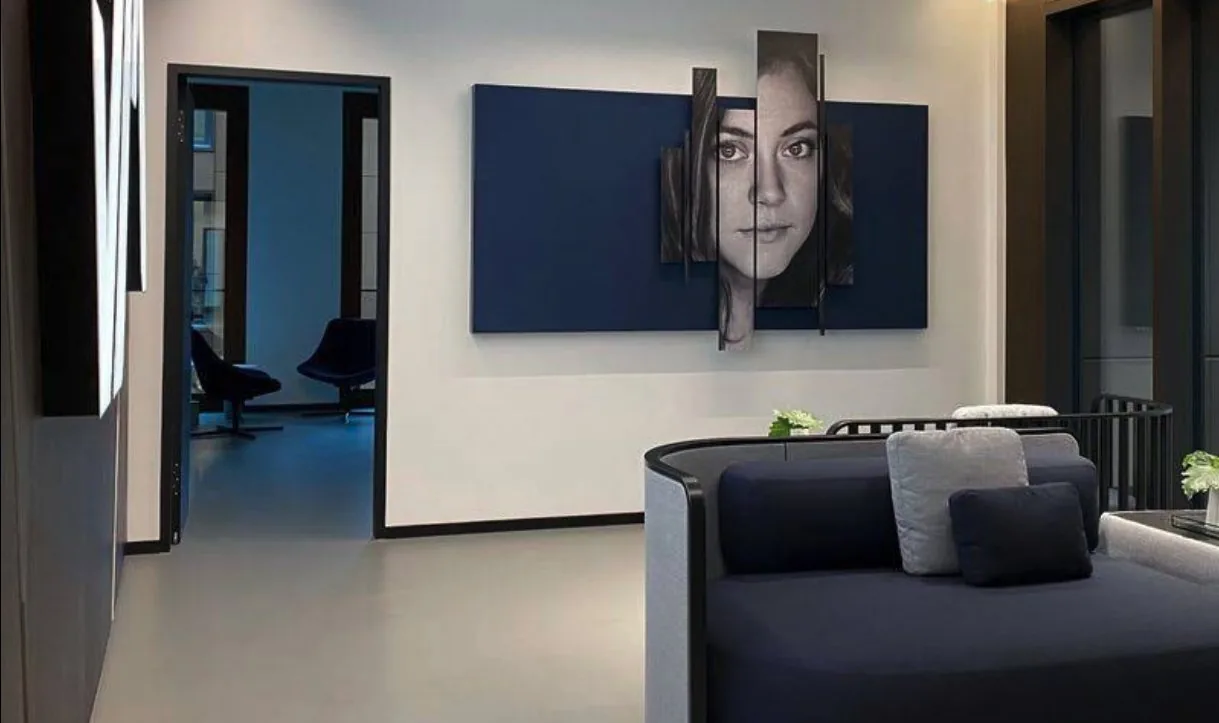 Opening 2027
Breite Straße 69, 40213 Düsseldorf (in the Neuer Stahlhof, corner of Graf-Adolf-Platz)
Until opening: preliminary talk in Frankfurt, Patient Care plans your travel.
Plan route Opening 2027
Lautenschlagerstraße 23, 70173 Stuttgart (2nd floor, step-free access)
Until opening: preliminary talk in Frankfurt, Patient Care plans your travel.
Plan route